
The Capable Academy | Training and Influence
The Fundamentals Must Evolve With You
Reflections from reconnecting and training with Master Rickson Gracie
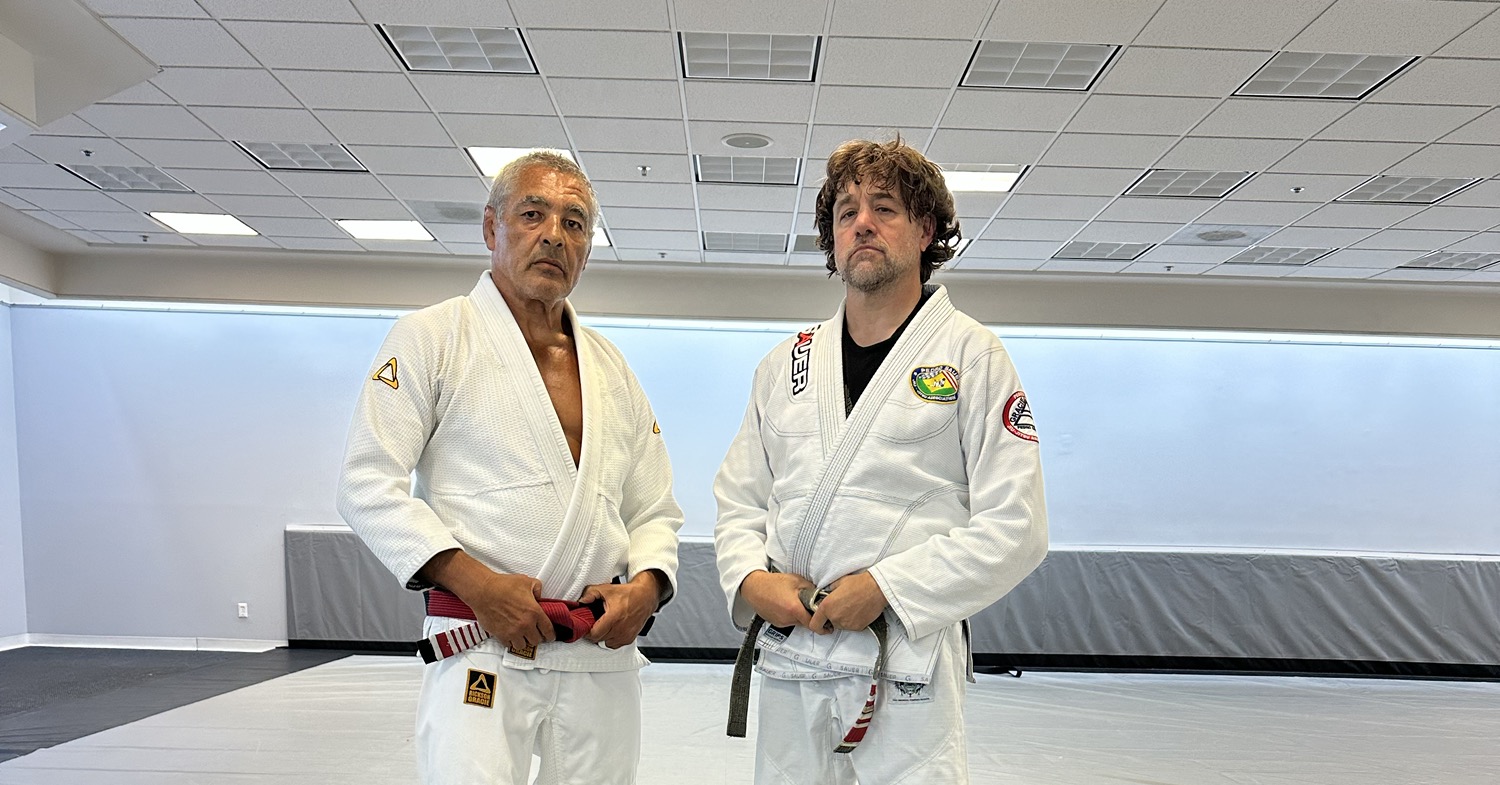
I recently had the opportunity to reconnect with Master Rickson Gracie during an almost two-hour private training session in Vero Beach, Florida.
I have been fortunate to train with Master Rickson periodically over the years because of his close relationship with my teacher, Master Pedro Sauer. It had been several years since I had last seen him, so I appreciated the opportunity to spend time with him again, continue learning, and revisit the art through his perspective.
Master Rickson is a legendary figure in the martial arts and one of the most respected practitioners in the history of Gracie Jiu-Jitsu. He is also a mentor and teacher to Master Pedro.
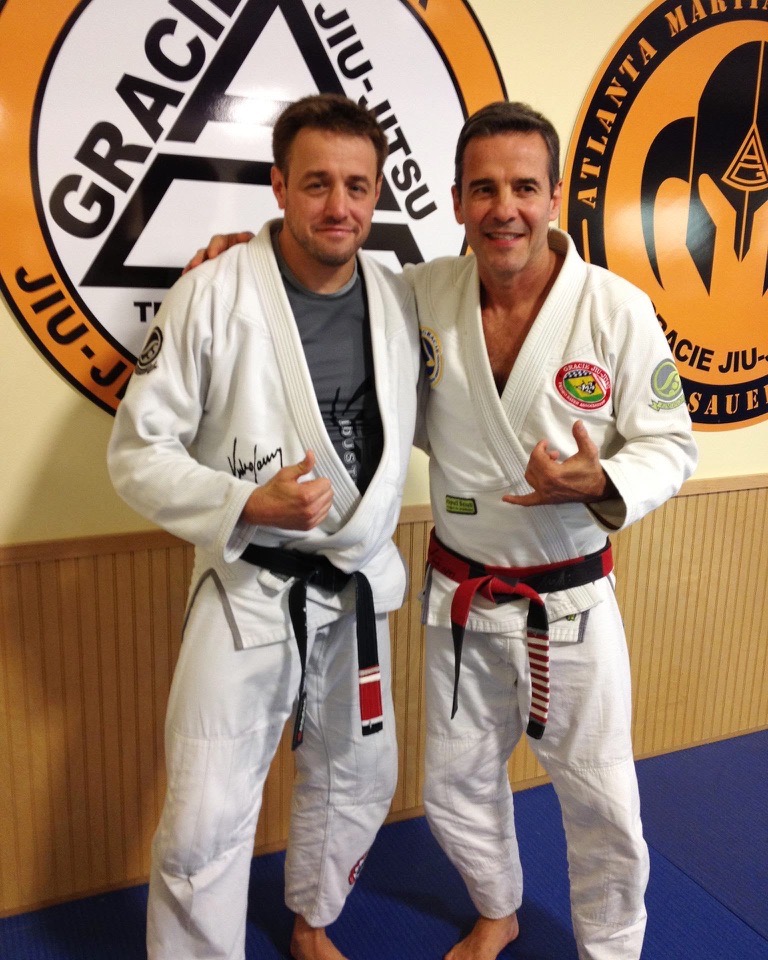
I have trained under Pedro for more than 30 years. That relationship made this session especially meaningful. I was reconnecting not only with an extraordinary martial artist, but also with one of the people who helped shape my teacher’s understanding and expression of the art.
There is a certain continuity in experiences like this. Knowledge moves from teacher to student, but it should never become static. Each generation must continue studying it, testing it, refining it, and allowing it to evolve.
That idea became one of the central lessons of the session.
Returning to the Fundamentals
The session focused heavily on the fundamentals of Jiu-Jitsu.
Fundamentals are interesting because they are often the first things we learn and the first things we assume we understand. After enough years of training, it is easy to look past them in search of something more advanced, more complex, or more impressive.
But the longer I train, the more I recognize that the fundamentals are often where the greatest depth is found.
There is a significant difference between being familiar with a movement and truly understanding it.
You may know the general shape of a position. You may know where your hands and feet are supposed to go. You may have performed the movement hundreds or even thousands of times.
Then a master makes one small adjustment. A change in structure. A better angle. A more intelligent connection. A shift in pressure, posture, timing, or alignment.
Suddenly, something you thought you understood becomes new again.
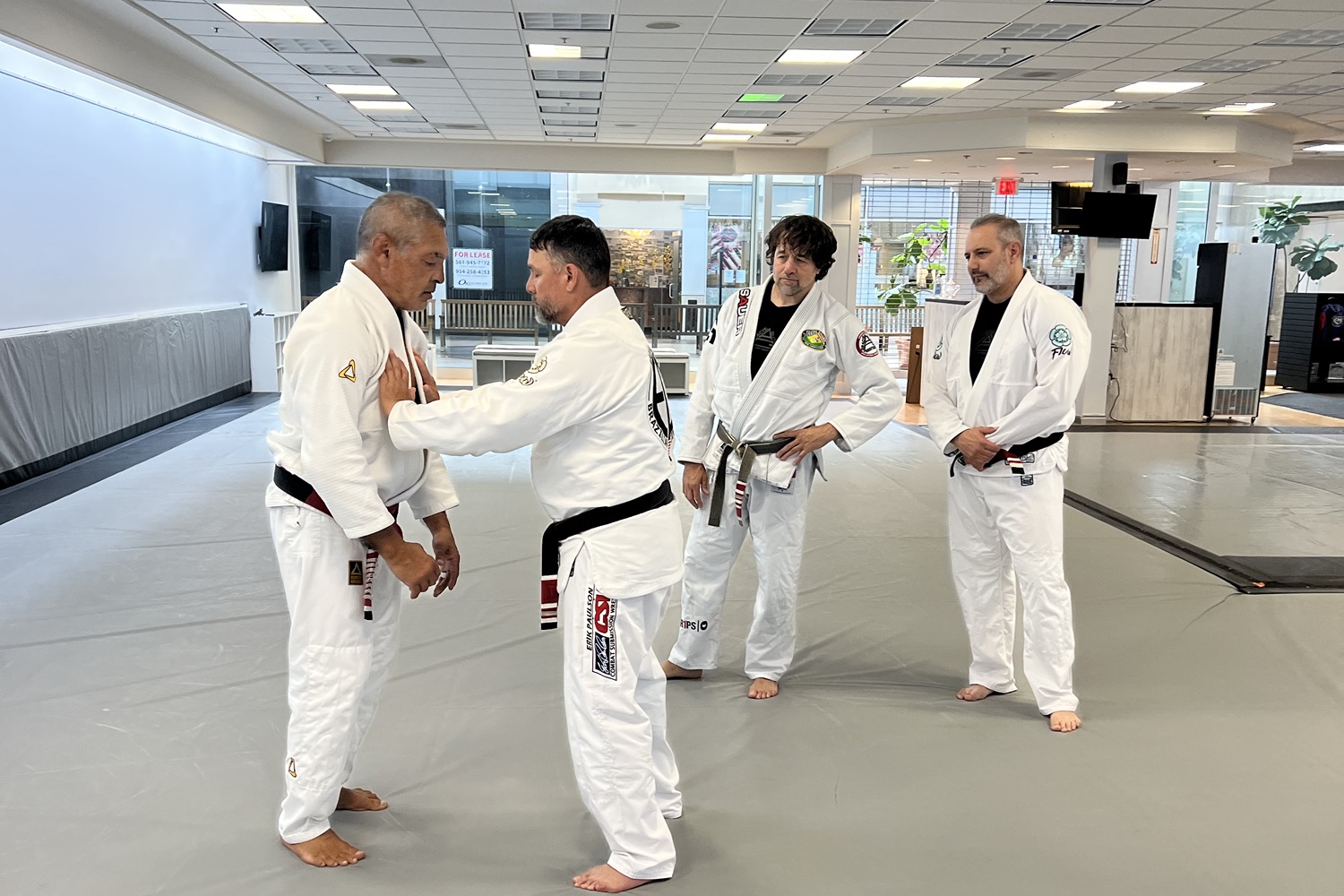
That was one of the most valuable parts of this session. Master Rickson’s depth of knowledge concerning the fundamentals is second to none. He demonstrated how small mechanical details can transform something familiar into something more efficient, functional, and complete.
The movement remains simple, but the simplicity now has greater depth.
That is mastery.
Simplicity Is Not Shallowness
People sometimes confuse simplicity with a lack of sophistication.
In reality, genuine simplicity is usually the result of tremendous refinement.
A beginner may perform something simply because he does not yet see all its components. A master performs it simply because he understands which components are essential and which ones can be removed.
Those are two very different forms of simplicity.
The master has examined the movement, tested it, refined it, and removed unnecessary effort. What remains may look basic, but it contains decades of accumulated understanding.
This is why I have said for years that simplicity is mastery.
The goal is not to collect the greatest number of techniques. The goal is to develop a deeper understanding of the principles and mechanics that allow technique to function.
A fundamental movement should not remain frozen at the level where you first learned it. As your sensitivity, experience, judgment, and physical understanding develop, your relationship with that movement should develop as well.
You return to it with better questions. You notice details that were previously invisible. You begin to understand why it works rather than simply remembering what to do.
Principles and Expression
What Evolves, and What Remains
When I say that the art must evolve with you, I am not suggesting that its underlying principles should be discarded. The principles remain. What evolves is your ability to recognize them and express them.
Leverage remains. Structure remains. Connection, balance, timing, pressure, alignment, sensitivity, and economy of motion remain.
- Leverage
- Structure
- Connection
- Balance
- Timing
- Pressure
- Alignment
- Economy of Motion
A fundamental technique is not merely a memorized arrangement of the hands, feet, and body. It is an expression of several principles working together. As your understanding grows, unnecessary movement begins to disappear. Excessive tension is reduced. Your timing improves. Your connection becomes clearer. You begin producing a greater result with less effort.
This is closely related to what Master Rickson describes as the invisible element of Jiu-Jitsu. The most important change may be almost impossible for an observer to see. It may be a subtle adjustment in weight distribution, pressure, connection, or relaxation. The movement appears nearly identical, but the person receiving it feels an entirely different result.
That is one reason a master can return you to a technique you have practiced for decades and make it feel new.
The technique did not suddenly change. Your ability to perceive it changed.
Modern motor-learning research offers a useful parallel. Deliberate practice is not merely repetition. It targets particular aspects of performance and uses informed feedback. Research also suggests that directing attention toward the intended effect of a movement can improve performance, retention, and transfer. Varied practice may also help a skill survive changing conditions.
A movement becomes more useful when it can survive different partners, positions, speeds, pressures, and environments. This gives us a practical way to revisit any fundamental.
Choose one movement you believe you already understand and ask:
- Where am I using effort that is not producing a result?
- Where is the structural connection within the movement?
- What changes when the partner’s size, pressure, or position changes?
- Which elements are essential, and which have become habits?
- Does this expression still fit the body and capabilities I have today?
- Can I maintain the principle while adapting the application?
Those questions turn repetition back into study.
The goal is not to abandon what you learned. The goal is to understand it well enough that it can remain useful throughout your life.
The principle remains stable.
Your expression of it becomes more intelligent.
The Art Must Grow With You
During the session, Master Rickson expressed an idea that I will paraphrase this way:
What you do must evolve. It must grow with you.
I am a tremendous believer in this principle, so it was meaningful to hear it reinforced by him.
Training cannot remain static because the person training does not remain static.
Your body changes. Your responsibilities change. Your injuries, capabilities, priorities, and understanding change. The way you practiced an art at 25 may not be the way you should practice it at 45, 55, or 65.
That does not mean the principles of the art have been abandoned. It means your understanding and application of those principles have matured.
An art that cannot grow with the practitioner eventually becomes a collection of memories.
A living art continues to reveal itself.
It adapts without losing its foundation. It becomes more efficient without becoming careless. It becomes simpler without becoming empty.
As we evolve, our training should help us become more capable, more perceptive, and more intelligent in how we use the human machine.
If our methods never change, we should ask whether we are preserving important principles or merely protecting familiar habits.
More Than 30 Years of Study
Seeking the Masters
I believe it is important to seek out the masters of an art and spend time with them whenever the opportunity is available.
That requires an investment. It takes time, energy, travel, preparation, and a willingness to place yourself in the position of a student again.
You must enter the room prepared to listen and willing to discover that something you thought you understood may not be as complete as you believed.
That can be uncomfortable, especially after decades of experience. It is also essential.
You do not know what you do not know.
A master may show you a mechanical detail that changes a familiar technique. He may offer a different perspective that changes how you organize your training. Sometimes one observation can alter how you approach the art for years afterward.
That kind of knowledge is rarely found by casually consuming more information.
It is found by seeking the right people, entering the right rooms, and paying close attention.
The purpose is not simply to collect another technique. The purpose is to gain a perspective that improves how you see.
Once your perspective changes, your approach changes. When your approach changes, new growth becomes possible.
Knowledge Must Remain Alive
My connection to Master Rickson through Master Pedro also reinforced something important about lineage.
Lineage is not simply a list of names or a historical record. It is a living transmission of knowledge, experience, principles, and perspective.
A teacher does not simply hand a student a collection of techniques. A teacher offers a way of seeing the art.
A Living Transmission
The student has a responsibility to preserve what is essential while continuing to study, question, test, and grow. Respecting the source of the knowledge does not require freezing it in time.
In many cases, the best way to respect that knowledge is to understand it deeply enough that it can continue evolving without losing its integrity.
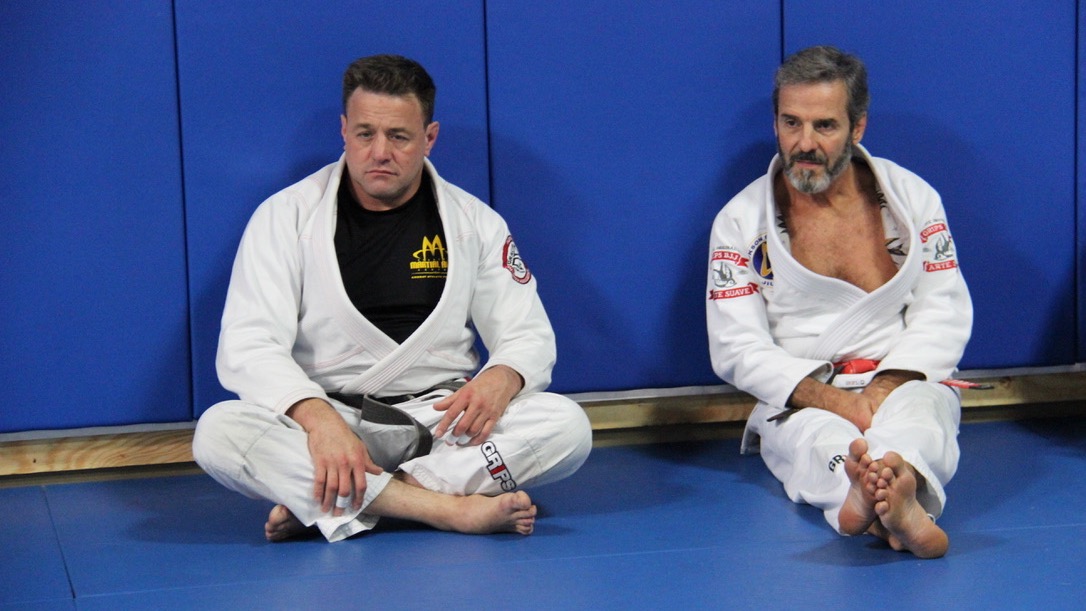
After more than 30 years with Master Pedro, I am still learning from the knowledge he has shared with me. Training with Master Rickson allowed me to reconnect with an earlier source of that knowledge and see familiar ideas through another layer of experience.
The fundamentals were recognizable, but the depth was new.
That is what living knowledge should do.
It should remain grounded in its principles while continuing to reveal greater levels of understanding.
Becoming a Beginner Again
One of the greatest dangers of experience is allowing what you already know to prevent you from seeing what is still available to learn.
The beginner knows that he does not know.
The experienced practitioner can forget.
I have always tried to maintain the mindset of a perpetual student. I want to remain willing to return to the beginning, look at the fundamentals again, and ask whether there is another layer that I have not yet recognized.
Training with Master Rickson reinforced the value of that mindset.
After decades in the martial arts, the answer is not always to move farther away from the basics. Sometimes the answer is to return to them with better eyes.
The movement may be the same. The student is different. The understanding is deeper.
The art has evolved because the person practicing it has continued to grow.
That is one of the great gifts of lifelong training. We are never simply repeating the past. If we remain open, attentive, and willing to learn, we can continue discovering greater depth within the things we thought we already knew.
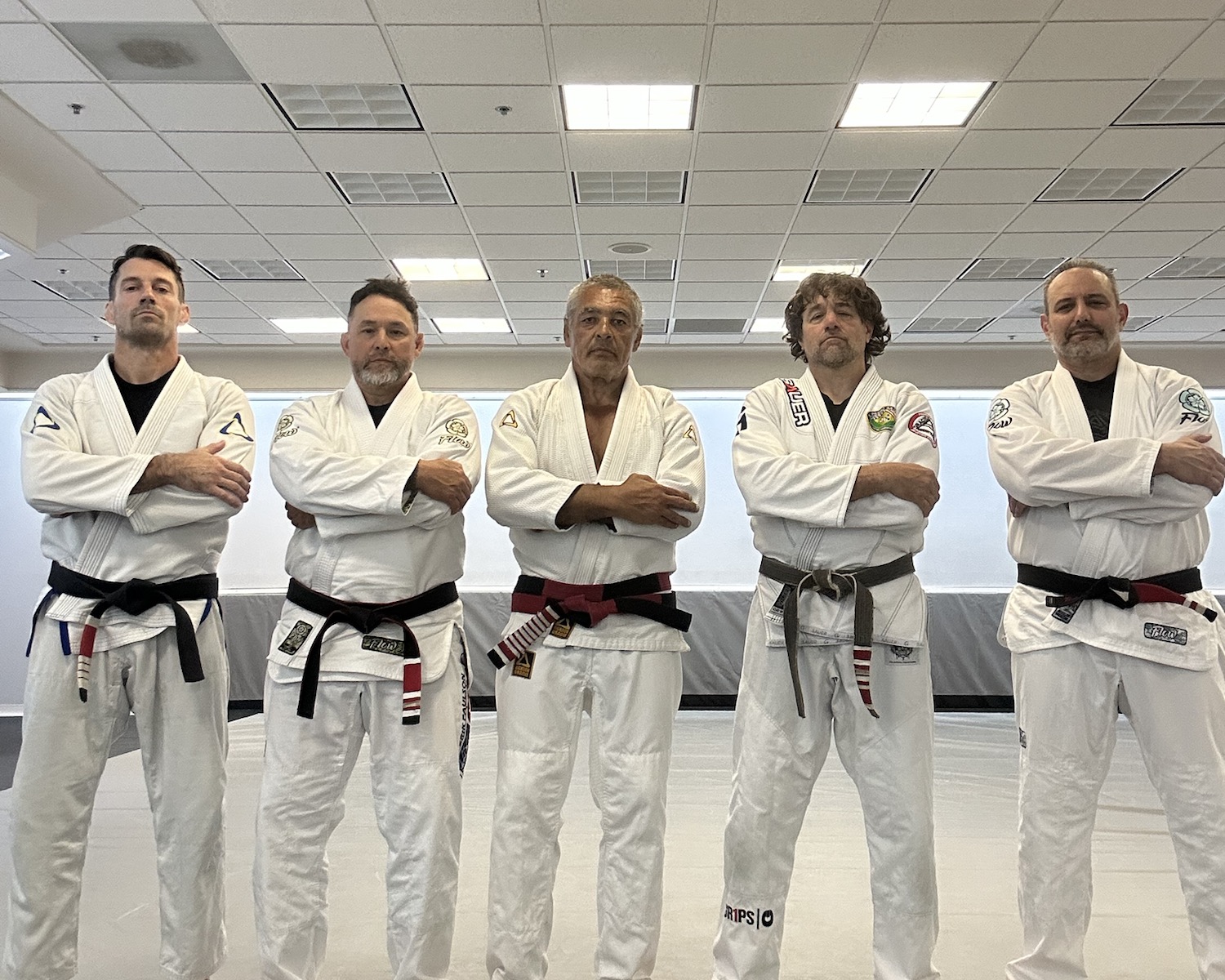
The fundamentals do not become less important as we advance.
They become more visible.