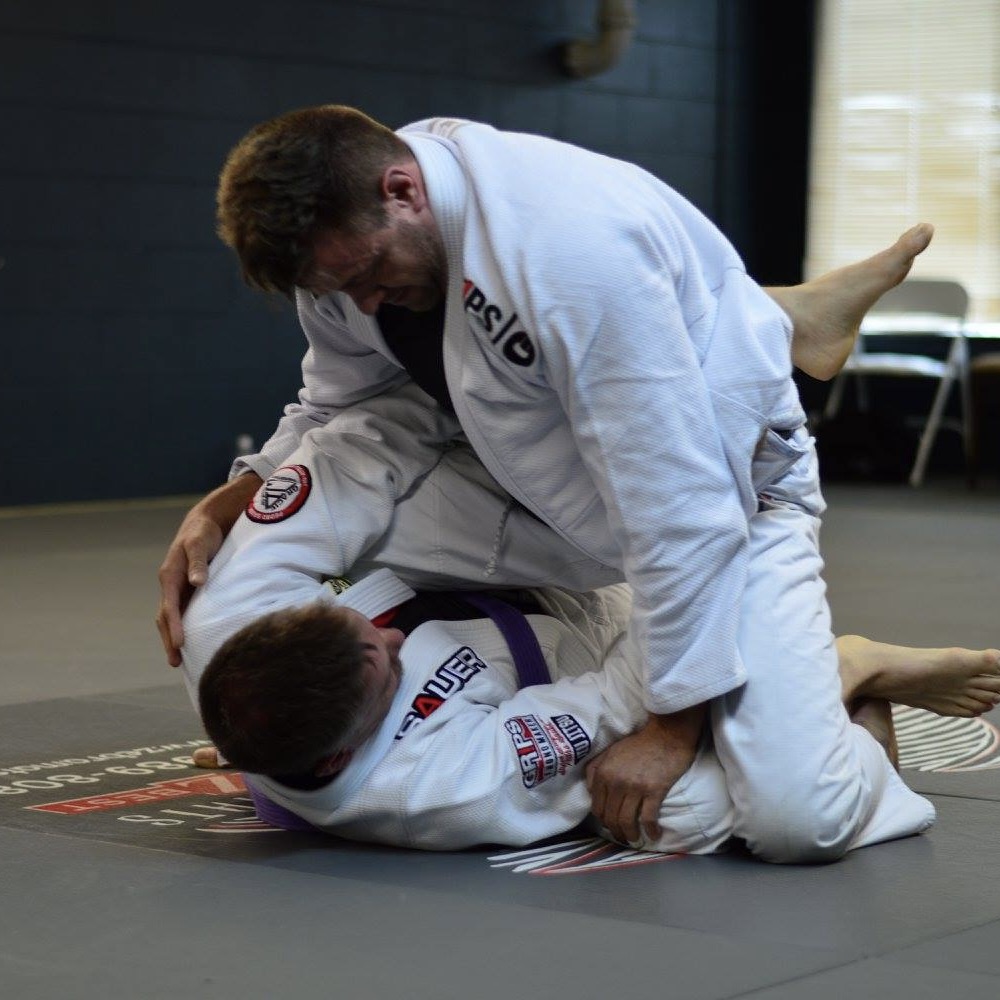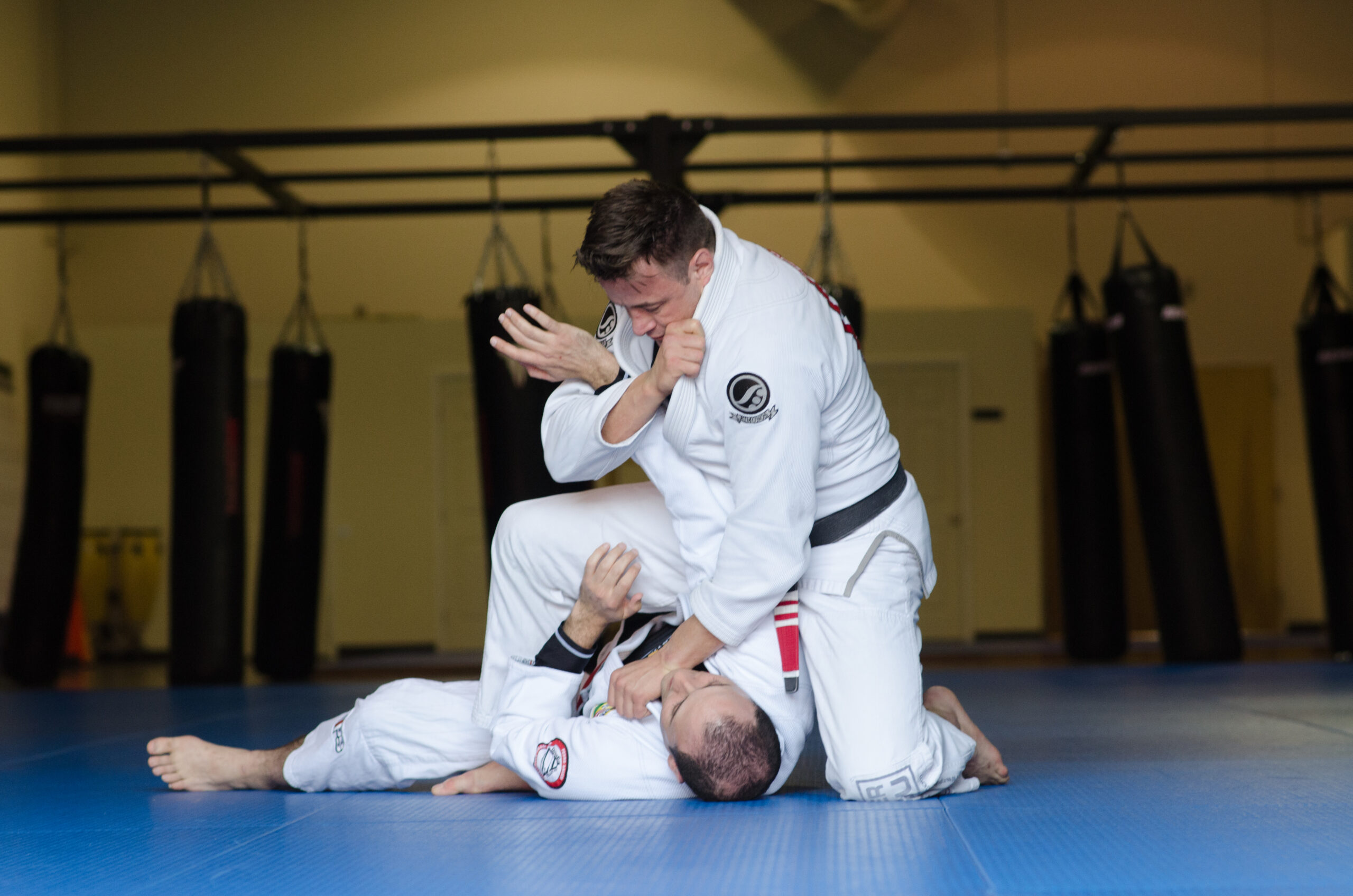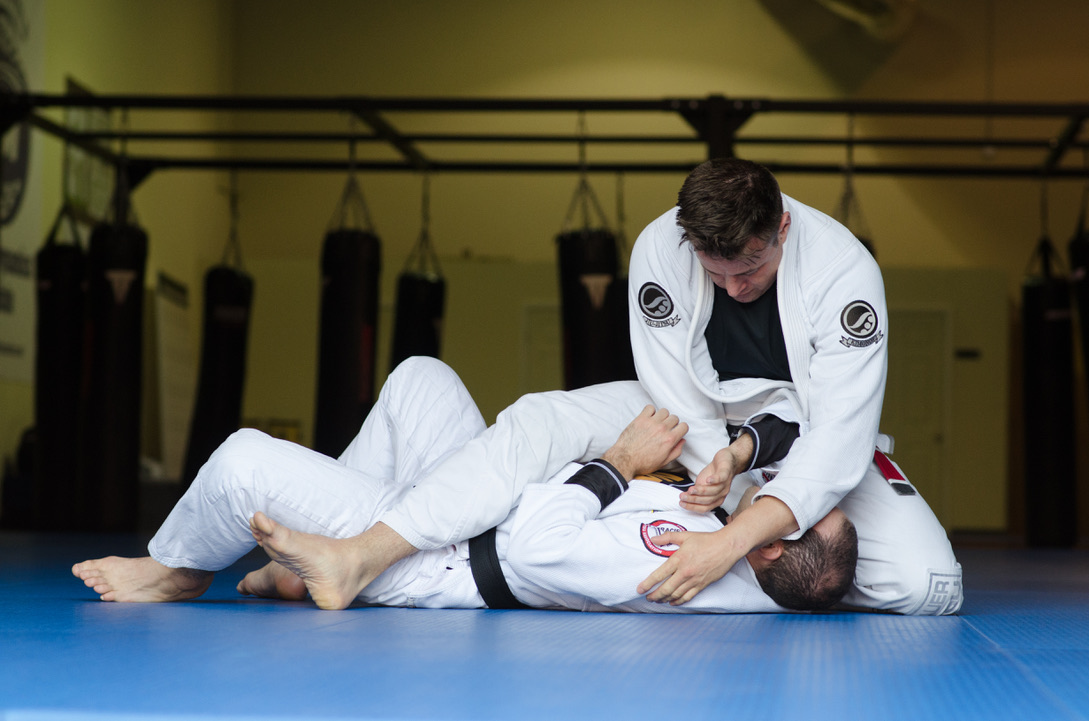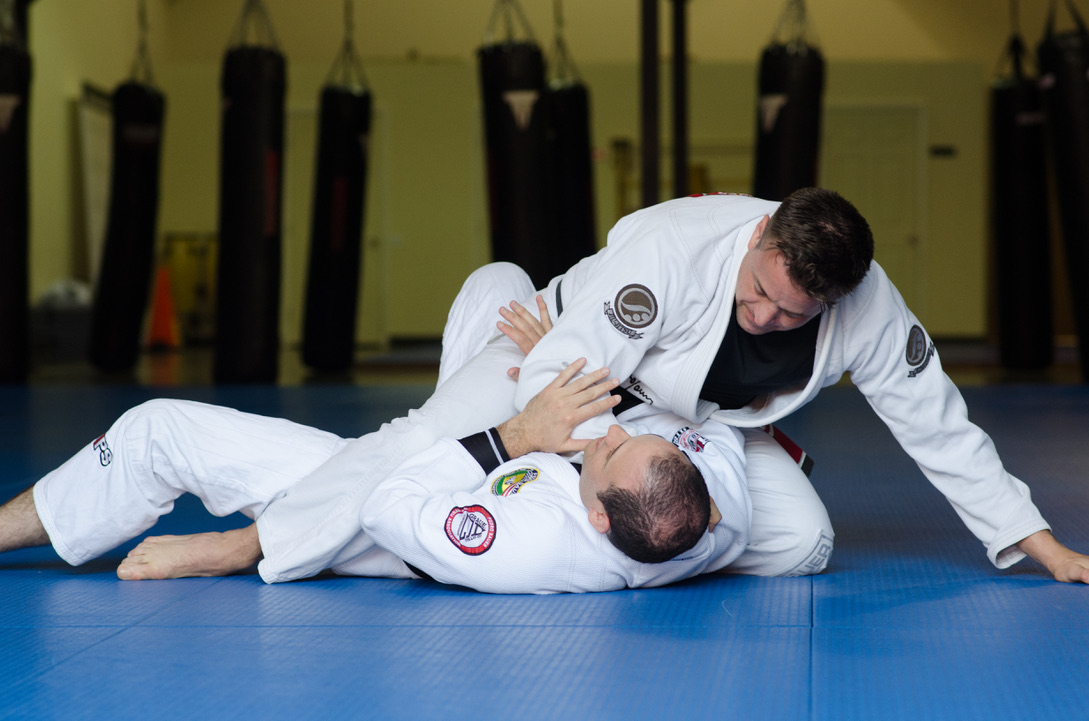
LIVING MECHANICS
Brazilian Jiu-Jitsu • Grappling • Self-Defense

Living Mechanics Brazilian Jiu-Jitsu

Precision In Structure. Designed For Self-Defense.

A structured Jiu-Jitsu and grappling methodology built around leverage, body mechanics, positional understanding, pressure, alignment, movement, and real-world application.

Mechanics Leverage, alignment, pressure, frames, and body structure.
Curriculum A clear educational path for students, instructors, and academies.
Self-Defense Jiu-Jitsu viewed through real-world application, protection, and survival.
ORIGIN
Why Living Mechanics Was Created

A Self-Defense-First Grappling Methodology Rebuilt From The Fundamentals Up

Living Mechanics was created because the mechanics, positions, and habits that work well in grappling do not always hold up when weapons, observation, retention, striking, and real-world consequences enter the equation.

When The Environment Changed, The Fundamentals Had To Change

Through law enforcement, bodyguard work, military training environments, and working with specialized professionals, Alan Baker began to recognize that traditional grappling mechanics did not always support the needs of real-world self-defense.

Certain positions were excellent inside the grappling environment, but they did not always allow for weapon retention, disarming, environmental observation, or the ability to deliver destructive force when necessary.

That realization forced a deeper examination of the baseline mechanics of Jiu-Jitsu. Alan went back to the foundation of his grappling and began adjusting the way he moved, positioned, controlled, observed, and created force.

The Core Question What would Jiu-Jitsu look like if the fundamentals were rebuilt around real-world tactical needs?
01

Weapons Change The Grappling Problem

When firearms, blades, or other weapon systems are present, position, pressure, movement, access, retention, and control must be viewed differently.

02

Observation Matters In The Real World

In self-defense, the opponent may not be alone. Living Mechanics places value on posture, awareness, and the ability to maintain observation while managing the fight.

03

Position Must Support Force

A position may be strong for grappling, but if it does not allow striking, control, access, retention, or transition, it may not serve the tactical goal.

04

Fundamentals Had To Be Rebuilt

Living Mechanics began by adjusting the most basic habits of Jiu-Jitsu so the platform could support grappling, weapons-based work, and ballistic striking later.

The Result

A Unique Way To Train Jiu-Jitsu

Living Mechanics can be trained as a mechanically intelligent Jiu-Jitsu method, even for students who do not currently train with weapon systems. It also builds the platform for those who want to progress into weapons-based grappling, weapon retention, disarming, and ballistic striking integration.

Grappling Cleaner mechanics, structure, pressure, and positional understanding.
Weapons A platform that can support retention, disarming, and access concerns.
Force Positions that can support striking, control, escape, or escalation when required.
DIFFERENT
What Makes Living Mechanics Different

It Is Not Just A Different List Of Techniques

Living Mechanics is a different way of organizing the fundamentals so Jiu-Jitsu can support grappling, self-defense, observation, weapon-conscious movement, retention, striking, and real-world application.

The System Identity

The Fundamentals Are Organized Around A Different Goal

Many Jiu-Jitsu systems are organized around control, position, submission, and sport-based progression. Living Mechanics values those skills, but it also asks a different question: does the position still serve you when the environment changes?

If weapons, observation, striking, retention, disarming, harder surfaces, or multiple variables are introduced, some habits that work well in grappling may begin to fail. Living Mechanics adjusts the baseline mechanics so the practitioner is not trapped inside a purely grappling-based mindset.

Core Distinction Living Mechanics is built to make the fundamentals more transferable beyond the mat.
01

Weapon-Conscious Mechanics

The mechanics are built so they can support weapon retention, weapon access, disarming, and later integration with weapon-based grappling.

02

Observation & Environmental Awareness

The student is trained to avoid becoming visually locked into the grappling exchange. In the real world, the opponent may have a wingman, a weapon, or other environmental variables.

03

Force-Ready Positioning

The position should not only control the opponent. It should also allow the practitioner to strike, create space, retain a weapon, access a tool, escape, or escalate when required.

04

Self-Defense First

The curriculum is not limited to sport-based goals. It is built through the lens of self-protection, consequences, surfaces, weapons, and tactical decision-making.

05

A Platform For Future Integration

Even when a student begins with Jiu-Jitsu only, Living Mechanics builds the structure for later integration of gun retention, weapon retention, disarming, and ballistic striking. The fundamentals are built now so the advanced layers can be added later.

The Practical Shift

From Grappling-Only Thinking To Tactical Function

Standard Grappling Lens
  • Win the position
  • Control the opponent
  • Advance toward submission
  • Focus primarily on the person in front of you
  • Operate inside the rules and assumptions of the training environment
Living Mechanics Lens
  • Win the position without losing tactical options
  • Control while preserving observation and mobility
  • Maintain access to force, tools, escape, or transition
  • Account for weapons, surfaces, and additional people
  • Build fundamentals that can transfer beyond the mat
PATHWAYS
Two Ways To Train Living Mechanics

A Jiu-Jitsu Method And A Tactical Platform For Future Integration

Living Mechanics can be trained as a unique Jiu-Jitsu curriculum for better mechanics and structure, or as a foundation for weapons-based grappling, retention, disarming, striking, and real-world self-defense integration.

Path One
Living Mechanics Jiu-Jitsu

A Mechanically Intelligent Way To Train Jiu-Jitsu

This path is for students and instructors who want a more structured, mechanically sound approach to Jiu-Jitsu. The focus is on body organization, leverage, posture, pressure, frames, movement, and positional understanding.

A student does not have to train with weapons to benefit from Living Mechanics. The curriculum improves the way the practitioner understands grappling, controls position, manages pressure, and builds a stronger foundation for long-term growth.

Better Mechanics Structure, leverage, alignment, pressure, and intelligent body position.
Stronger Fundamentals Core grappling habits adjusted to support better control and movement.
Self-Defense Lens Jiu-Jitsu trained with awareness of consequence, context, and real-world application.
Path Two
Tactical Grappling Integration

A Platform For Weapons, Retention, Disarming, And Force

This path is for students, instructors, protection professionals, law enforcement, military personnel, and serious practitioners who want the structure needed for weapon-conscious grappling and self-defense application.

Living Mechanics builds the platform first. Once the fundamentals are in place, the practitioner can begin adding layers such as weapon retention, weapon access, disarming, observation, tactical positioning, and ballistic striking integration.

Weapon-Conscious Movement Positions and mechanics that account for weapon access, retention, and disarming.
Observation & Awareness Training habits that help the practitioner avoid becoming locked into tunnel vision.
Force-Ready Positioning Positions that can support striking, control, escape, retention, or escalation if required.
The Training Progression

Build The Platform First. Add The Advanced Layers Later.

Living Mechanics does not require every student to begin with weapons-based training. The curriculum first develops the mechanics, structure, and positional habits that make the advanced integrations possible. For some students, that becomes a better way to train Jiu-Jitsu. For others, it becomes the foundation for weapons-based grappling, retention, disarming, and ballistic striking.

01 Mechanics
02 Position
03 Observation
04 Integration
INSTRUCTOR
Instructor Training Program

Learn, Train, And Teach The Living Mechanics Approach

The Living Mechanics Instructor Training Program is designed for instructors, academy owners, and serious practitioners who want to understand, train, and teach the Living Mechanics approach with structure and support.

Program Purpose

Built For Those Who Want To Go Deeper Than Technique Collection

Living Mechanics was built on the principle that grappling alone is not fighting. The instructor program gives serious students and instructors a way to study the mechanics, curriculum, philosophy, and real-world application behind the system.

This program is for those who want to deepen their understanding of Living Mechanics Jiu-Jitsu, learn how to teach it effectively, and become part of a growing network of people training the material from a self-defense-first perspective.

Instructor Path Develop the ability to understand the material, train it with purpose, and communicate it clearly to students.
Living Mechanics Overview Watch this introduction to the system and its approach to Jiu-Jitsu, mechanics, and real-world application.
What’s Included

Instructor-Level Access, Support, Events, And Curriculum

01

Instructor-Level Online Academy

Gain access to an extensive video library with detailed instructional material, concept breakdowns, written lessons, curriculum guidance, and support content for studying the Living Mechanics system.

02

Instructor Forum & Guidance

Get access to the private instructor environment where members can ask questions, exchange ideas, receive guidance, and work toward a deeper understanding of the material.

03

Two Major Training Events Each Year

Instructor program members receive access to two major annual training opportunities: the Living Mechanics Conference and the Living Mechanics Training Camp.

04

Written Curriculum & Support Materials

The program includes structured written curriculum and support materials designed to help instructors teach, organize, and implement the Living Mechanics material.

05

Instructor Network

Become part of a growing group of instructors and practitioners studying the system, developing the curriculum, and sharing the Living Mechanics approach.

06

Teaching Implementation

Learn how to present the material inside your own academy or training group while maintaining the principles, mechanics, and self-defense-first perspective of the system.

Annual Training Events

Train With The Instructor Network

Instructor program members can attend the major Living Mechanics training events each year to refine their understanding, train with other practitioners, and continue developing the material directly.

Event One Living Mechanics Conference
Event Two Living Mechanics Training Camp
CURRICULUM
Curriculum, Rank & Progression

A Curriculum Built Around Rank, Progression, And Pillars

Living Mechanics organizes Jiu-Jitsu education through structured rank progressions and multiple training pillars, not just a long list of techniques.

More Than Technique Accumulation

Many Jiu-Jitsu systems organize training around a large collection of techniques. The student may learn positions, escapes, submissions, and transitions, but the deeper educational structure is often left unclear.

Living Mechanics takes a different approach. Each level of rank is organized through multiple pillars of development, allowing the student to grow in mechanics, curriculum knowledge, movement, philosophy, and self-defense application at the same time.

This gives students and instructors a clearer path. The goal is not simply to collect more moves. The goal is to understand how the material connects, how the body should function, how movement develops, and how the training applies beyond the mat.

Core Question Living Mechanics does not only ask, “What techniques does this student know?” It also asks, “How does this student move, think, connect, observe, adapt, and apply the material at this stage of development?”
Rank-Based Development

Each Level Has A Purpose

The curriculum is designed to help students understand what they are developing at each stage of training. Rank is not treated as a random collection of requirements. It is used as a progressive educational map.

01 Build Mechanics
02 Learn Curriculum
03 Connect Movement
04 Understand Purpose
The Four Training Pillars

The System Is Organized Through Multiple Areas Of Development

01
Pillar One

Mechanics

Mechanics is the detailed study of leverage, position, skeletal alignment, pressure, frames, breathing, body structure, and intelligent movement.

This pillar helps students learn how to interact with pressure without relying only on strength. It teaches them how to organize the body, use structure, and become more efficient under stress.

02
Pillar Two

Curriculum

Curriculum is the ranked technical progression of the program. It gives students a clear path through positions, escapes, controls, transitions, submissions, and core Jiu-Jitsu development.

Techniques are important, but in Living Mechanics they are only one part of the larger educational method. The curriculum helps the student understand where each skill belongs and how it connects to the whole.

03
Pillar Three

Flow Drills

Flow drills teach students to move intelligently from position to position. They develop timing, transitions, submission flow, positional changes, and the ability to respond as the situation changes.

These drills begin simply and become more advanced as the student grows. The goal is to develop movement earlier and help students connect the art into a living, functional skill set.

04
Pillar Four

Philosophy

Philosophy gives the student a clear understanding of what they are trying to develop and why. Each level has a training focus that helps keep the student on track.

This pillar connects mindset, purpose, self-defense perspective, rank development, and the deeper principles behind the training method.

Why This Matters

The Student Learns The System, Not Just The Moves

When rank, curriculum, mechanics, flow drills, and philosophy are organized together, the student develops a more complete understanding of Jiu-Jitsu. They learn how to move, how to think, how to connect the material, and how to apply it with purpose.

Structured Every rank level has direction and purpose.
Progressive The material builds over time instead of staying disconnected.
Integrated Mechanics, movement, curriculum, and philosophy support each other.
SELF-DEFENSE
The Self-Defense Perspective

Keep The Correct Lens On As You Train

Living Mechanics Jiu-Jitsu can support sport-based training, but it was designed through a self-defense lens where strikes, weapons, surfaces, observation, and real-world consequence must be considered.

Training Philosophy

Jiu-Jitsu Changes When The Goal Changes

There are different ways to look at Jiu-Jitsu. You can look at it through a sport lens, a grappling lens, a self-defense lens, or a tactical application lens. Each lens changes the decisions you make, the positions you choose, and the habits you build.

Living Mechanics was designed to keep the self-defense perspective in view. The goal is not to reject sport-based training, but to understand that some positions and habits that work inside a controlled grappling environment may not serve the same purpose when strikes, weapons, hard surfaces, multiple people, and environmental variables are involved.

This is why the system places value on observation, structure, weapon-conscious mechanics, access to force, positional function, and the ability to adapt when the situation moves outside the clean conditions of the academy floor.

The Training Lens The question is not only, “Can I win this grappling exchange?” The deeper question is, “Does this position still protect me, serve my objective, and allow me to respond if the environment changes?”
01

Strikes Change The Position

Some positions are strong in sport grappling, but become vulnerable when strikes are possible. Living Mechanics keeps the possibility of impact in the conversation.

02

Surfaces Change The Decision

Pavement, concrete, walls, vehicles, confined spaces, and unforgiving environments change what is smart, safe, and tactically useful.

03

Weapons Change The Objective

Access, retention, disarming, control, and weapon awareness must influence how the practitioner moves, positions, protects, and responds.

04

Observation Changes The Habit

Real-world training must account for additional people, exits, space, environment, and the possibility that the opponent is not alone.

Done correctly, the martial arts will give you a lifetime of fitness. Its methods cannot be matched by any other system of physical fitness and physical development.

Professor Alan Baker
Practical Application

The Goal Is Functional Jiu-Jitsu That Transfers Beyond The Mat

Living Mechanics helps students build a foundation that can support grappling, control, escape, striking, weapon retention, disarming, and continued development. The system gives students a way to train Jiu-Jitsu while keeping real-world application in view.

Protect Maintain structure, awareness, and positional safety.
Control Use mechanics and leverage to manage the opponent.
Respond Preserve options for escape, force, tools, or transition.
GRAPPLING
A Longstanding Tradition Of Grappling

Built On Decades Of Grappling, Ground Fighting, And Multi-System Study

Living Mechanics is not a single-style interpretation of Jiu-Jitsu. It is shaped by decades of grappling, ground fighting, pummeling, self-defense training, teaching, and real-world application.

Alan Baker grappling and teaching
47+ Years Training, Teaching & System Development
Grappling Foundation

A Broad Grappling Background Refined Through Self-Defense

In the world of grappling, pummeling, and ground fighting, Professor Alan Baker brings a deep and diverse background. His experience includes Gracie Jiu-Jitsu, Combat Submission Wrestling, Bob Byrd’s lineage, Catch Wrestling, Shooto, Greco-Roman Wrestling, Chinese Shuai Jiao, Chinese Chin Na, Chinese Ground Fighting, Dog Boxing, Silat, and other related methods.

With 47+ years of training and teaching, and more than 30 years focused heavily on grappling and ground fighting, Alan’s perspective has been shaped by many instructors, systems, and professional environments.

Living Mechanics grew from this broad foundation, but it was refined through the lens of self-defense, protection work, law enforcement, military training environments, and the need to make grappling function beyond the clean conditions of the mat.

The Result A grappling curriculum shaped by many systems, organized through mechanics, and filtered through real-world self-defense application.
01

Gracie Jiu-Jitsu

4th Degree Gracie Jiu-Jitsu Black Belt under Master Pedro Sauer, with decades of study, teaching, and refinement in the art.

02

Combat Submission Wrestling

Representative Coach in Combat Submission Wrestling under Master Erik Paulson, bringing a strong submission grappling and mixed grappling influence.

03

Bob Byrd Lineage

2nd Degree Black Belt under 8th Degree Master Bob Byrd, adding another important layer to Alan’s long-term grappling development.

04

Multi-System Grappling

Study across Catch Wrestling, Shooto, Greco-Roman Wrestling, Shuai Jiao, Chin Na, Dog Boxing, Silat, and related systems.

Systems & Influences

A Wide Lens On Grappling And Ground Fighting

Living Mechanics is informed by multiple systems, but it is not limited by any one of them. The goal is to identify the mechanics, principles, and training methods that hold up when grappling must serve a larger self-defense and tactical purpose.

Gracie Jiu-Jitsu Combat Submission Wrestling Catch Wrestling Shooto Greco-Roman Wrestling Shuai Jiao Chin Na Dog Boxing Silat
START
Get Started With Jennifer Wood

Begin The Process For Living Mechanics Instructor Training

To begin the process for the Living Mechanics Instructor Training Program, contact Jennifer Wood. She can help you understand the next steps, answer initial questions, and get you connected with the program.

Program Contact

Jennifer Wood Handles The Initial Process

Jennifer can help you get started with the Living Mechanics Instructor Training Program, understand the process, and connect with the proper next steps.

Reach out if you are an instructor, academy owner, serious practitioner, or organization interested in learning more about Living Mechanics training, instructor development, or upcoming opportunities.

01 Send Your Inquiry
02 Review Next Steps
03 Get Connected
Email Jennifer Wood
Contact Card
Jennifer Wood
Operations Director

Jennifer is the Operations Director, responsible for overall operations, scheduling, and booking. 

EMAIL HER HERE

Email
What To Include

Help Jennifer Understand What You Are Looking For

In your message, include your name, academy or organization, location, martial arts background, interest in the program, and whether you are asking about instructor training, private training, seminars, or future Living Mechanics events.

Instructor Interest Let her know if you want to enter the instructor training path.
Academy Information Include your school, city, state, and current teaching background.
Training Goals Share what you want to understand, study, or bring to your academy.
PRIVATE ACCESS

The Warrior • Scholar • Protector Philosophy

Join Alan's Inner Circle and receive private access to the philosophy behind the path.

This private resource introduces the foundation behind Alan's work: capability, understanding, responsibility, self-mastery, lifelong learning, personal development, and the pursuit of becoming stronger, wiser, and better prepared for life.

You'll also receive training insights, articles, event updates, book releases, podcast announcements, and personal lessons from the Warrior's Path.

The private page link will be sent by email. Unsubscribe anytime.