
By Sifu Alan Baker
There comes a point in every warrior’s life when the pursuit of power, precision, and performance gives way to a deeper question. How do I preserve it? After decades of training in the martial and combative sciences, I came to realize that longevity is not simply the absence of decay. It’s a skill. It can be trained, refined, and lived.
In the C-Tac System, we study the Combat Blueprint, a guiding outline for mastering the combative arts. It’s a framework that organizes chaos, turning experience into structure and reaction into skill. But within the Warrior’s Path Program, there’s a different kind of map. One not aimed at surviving violence, but at mastering vitality. This is The Longevity Blueprint.
The Longevity Blueprint is the internal counterpart to the Combat Blueprint. It’s the map for sustaining the body, themind, and the energy system that carries a warrior through a lifetime of performance. It’s forged through experience, through decades of martial practice, recovery from injury, and exploration of physical culture, breathwork, fasting, and mindset. It’s built from the same universal truths that have shaped warriors across time: discipline, balance, adaptability, and the intelligent management of energy.
In the Warrior’s Path Program, the Longevity Blueprint serves as the master outline for how we study and refine the human machine. It’s organized into five timeless pillars: Expansion, Flexion, Breath, Dietetics, and Mindset. These aren’t just fitness topics. They’re universal tools for sustaining life force, optimizing health, and extending the path of capability deep into age.
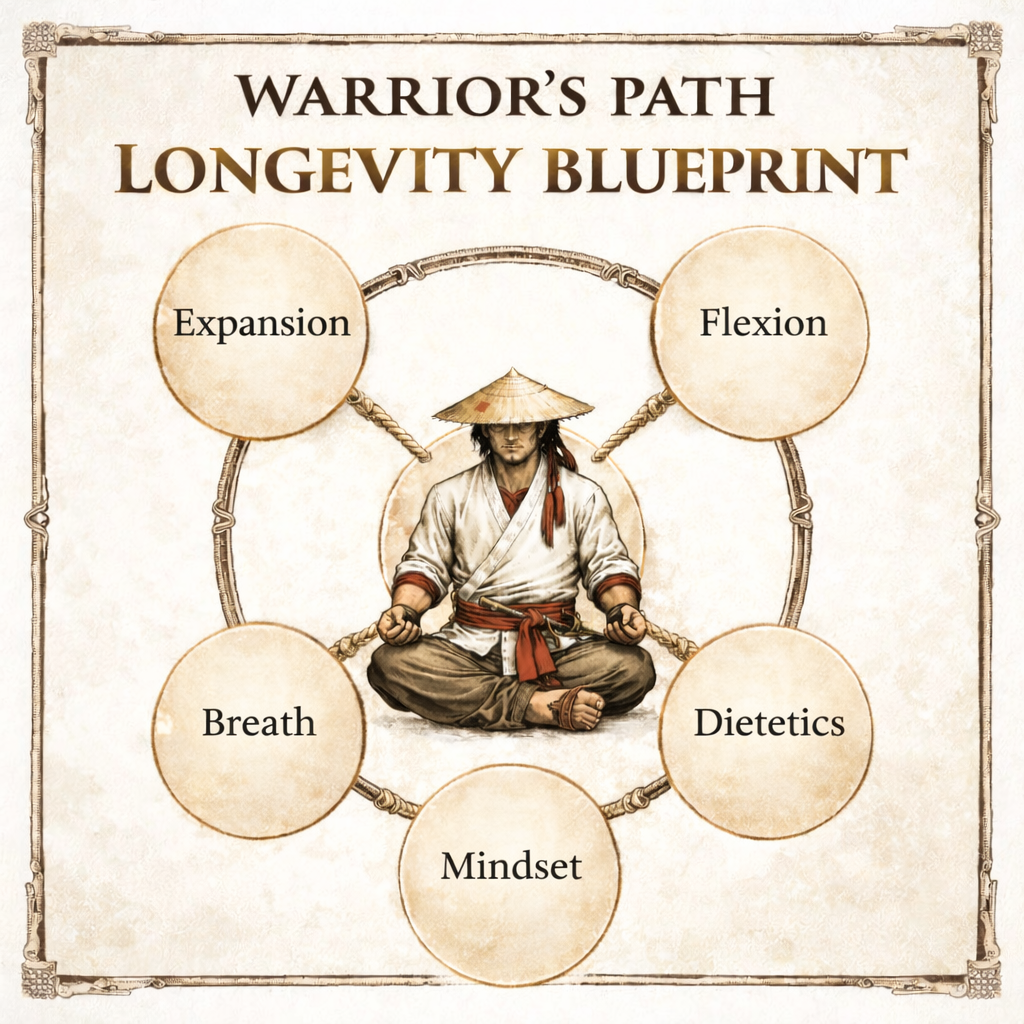
Modern society glorifies the sprint, the quick transformation, the 30-day fix, the weekend breakthrough. But mastery is built through cycles. In the same way a blacksmith tempers steel with heat and rest, a warrior builds resilience through expansion and contraction, effort and recovery, fasting and refeeding, focus and silence. Each of these rhythms forms part of the Longevity Blueprint, a system not only for living long, but for living well, with strength, clarity, and capability intact.
The principles inside this framework are drawn from everything I’ve studied: the energy sciences of traditional Kung Fu, the functional mechanics of modern physical culture, the introspective awareness of meditation, and the tactical precision of combat. Much of this knowledge was hidden behind layers of mysticism in the old systems, often protected or misunderstood. Over the years, I’ve stripped away the unnecessary mystery, kept the essence, and translated it into a system anyone can train. The result is a codified approach to physical longevity grounded in both ancient wisdom and modern science.
The Longevity Blueprint is the long game. It is the system I use to keep the machine operational for decades, not just seasons. I built it the same way I built The Combat Blueprint, by paying attention to patterns that show up over and over in real training, real bodies, real injury cycles, and real life. Over time, I noticed something important. Most people do not lose capability because they are lazy or weak. They lose it because they never had the information to make the change. They train hard for performance, but they do not train intelligently for durability, recovery, and long-term output. The Longevity Blueprint is how we fix that.
Origins and the parallel to The Combat Blueprint
The Combat Blueprint is about surviving violence and winning in chaos. It is how you build a body and mind that can function under stress, under pressure, and under impact. The Longevity Blueprint runs on the same philosophy, but the battlefield changes. Instead of a violent encounter, the opponent is time. Instead of a single fight, it is a long campaign. The tactics are not just strikes and grappling. The tactics are recovery, discipline, movement quality, nourishment, and nervous system control. Just like combat, longevity has predictable problems, predictable failure points, and predictable outcomes when you ignore the fundamentals. So I built a framework that gives you the fundamentals and puts them in the right order.
Its role in the Warrior’s Path Program
In the Warrior’s Path Program, longevity is not a side topic. It is part of the code. A warrior is not only dangerous. A warrior is capable, disciplined, and durable. The goal is not to become a highlight reel. The goal is to build a body that can protect, provide, and perform for decades, and a mind that can stay steady through stress and adversity. Longevity is leadership. It is self-respect. It is a responsibility. If you want to be a strong example in the world, you have to show up consistently, and you cannot do that if your machine breaks down every year.
The Five Pillars
The Longevity Blueprint is built on five pillars. These pillars are not random topics, and they are not wellness trends.They are categories of mastery that determine how long you stay capable and how well you function while you are here. I teach them through the lens of a martial artist because that lens is honest. Martial arts builds an environment in which you can test the human machine. Martial training exposes weaknesses fast. It reveals what your joints cannot handle, what your breathing cannot regulate, what your diet cannot support, and what your mindset cannot endure. When you build these five pillars, you make a framework for human longevity that is practical, measurable, and earned through disciplined action.
Expansion: Decompression and Structural Renewal
What I mean by expansion is simple. Your body needs space. Space in the joints, space in the spine, and space in the way you breathe and carry yourself through the day. Most people live compressed. They sit for hours, they drive, they stare down at screens, they train hard, they brace their way through stress, and they rarely do anything that restores length and openness back into the system. Over time, compression becomes your default posture and your default body state. That is when aches become “normal,” mobility starts disappearing, and injuries begin showing up like clockwork, not because you are weak, but because you are chronically closed down.
Structural renewal is the practice of reversing that trend on purpose. It is the disciplined act of creating space again, so the machine can operate the way it was designed to operate. We spend so much time in a state of contraction that we forget it is a state. Then the body adapts to it. Hips tighten, shoulders roll forward, the ribcage stiffens, the neck shortens, and the nervous system starts living on alert. Eventually that contractive state stops being temporary and becomes your baseline, and that baseline leads to damage.
There are two energies in the universe, expansion and contraction. You can see it everywhere, in breath, in movement, in effort and recovery, in stress and restoration. The human machine is no different. Contraction is not the enemy. Contraction is power, output, protection, and performance. But if you never train expansion, you end up strong but stuck, harsh but brittle. Longevity requires balance. The problem is nobody teaches this. Most people are taught to grind, to brace, to tighten up, to push harder, and they are surprised when their body starts collecting consequences. Expansion is how you keep the structure clean, the joints resilient, and the nervous system calm enough to recover, so you can keep walking the path for decades.
Joint Decompression as a Skill
Decompression is not a stretch session you do when you are already beat up. It is a skill set, and you train it like any other skill. The goal is to create separation, glide, and clean movement where a joint has gotten sticky, jammed, and compressed from years of sitting, stress, impact, repetitive training, and bad positions. When a joint starts moving the way it was builtto move, the muscles stop trying to guard everything, the tendons calm down, and the nervous system gets a clear signal that the body is safe. A lot of what people call tightness is really protection. The body is locking down because it does not trust the position you are in. Decompression restores trust.
This is not just about feeling better, either. Decompression changes performance. You move cleaner, you breathe better, and you can generate force without feeling like you are grinding gears. Your mechanics sharpen up because the structure is no longer fighting itself. In the Longevity Blueprint, decompression is one of the fastest ways to restore capability without adding more load, because it is not another workout. It is structural maintenance. It is teaching the machine to reset.
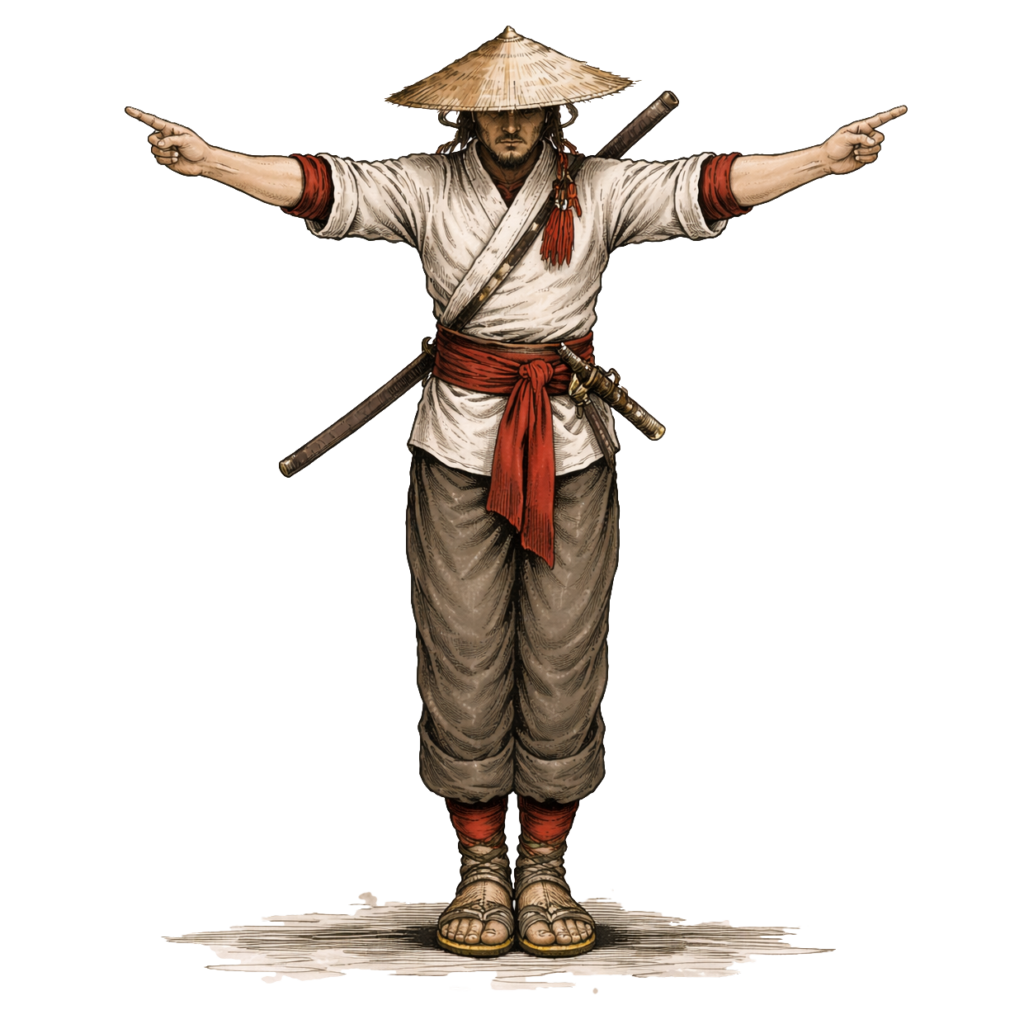
And just like a child learns to walk, you can learn to decompress your joints. You just need the knowledge and you need a little practice. Most people have never been taught how to create space inside their own body, so they think the only options are to suffer through it, stretch harder, hang from a rack, or pay someone to “fix” them. I am not saying professionals do not have value. I am saying you should not be dependent. You do not need inversion benches. You do not need fancy equipment. You do not need someone adjusting you every time you get tight. If you learn to do it yourself, it becomes as normal as flexing your bicep. You can do it anywhere. You can stand in one spot, change your posture, change your breath, and expand the joints from the inside out.
That kind of self skill is rare, and I have my opinions on why it stays rare. When you can handle your own maintenance, it cuts into the bottom line of industries that profit from keeping you dependent. You cannot sell a miracle when the person can create results on their own. That may be part of why this knowledge is still hidden, or at least not openly taught to the average person. But it is real, it is trainable, and it works.
I have taught decompression to students for years, and I have watched it change people. They move with less pain. They recover faster. They stop collecting the same nagging injuries. They start training hard again without feeling like their bodies are constantly on the edge of breaking. In my experience, this is one of the most powerful longevity skills there is, because it gives you back control. Not in theory, but in your daily life, in your training, and in how you carry yourself as you get older.
Indian Clubs and Circular Renewal
Indian clubs are one of the best tools ever created for structural renewal, and the funny part is that they look too simple for modern minds. People want complicated. They want shiny machines, specialty attachments, and some new trick that feels advanced. Clubs do not look advanced. They look like something your grandfather would have trained with, and that is exactly why they still work. They are pure mechanics. Leverage, momentum, timing, and control. And when you use them correctly, they rebuild the body in ways that most modern training simply ignores.

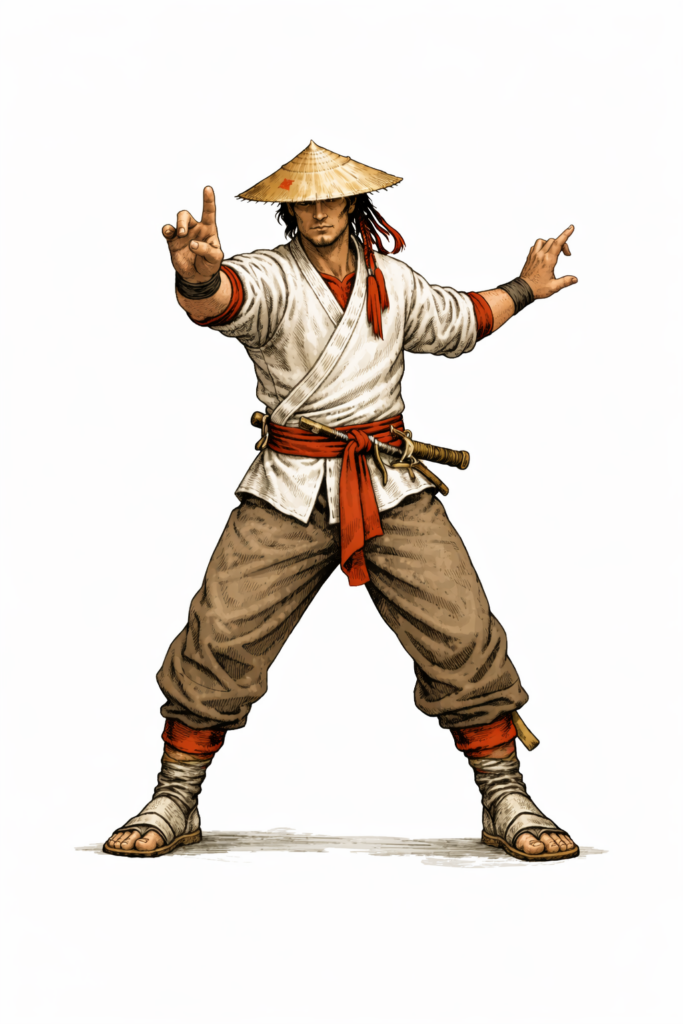
Clubs rebuild the shoulders, elbows, wrists, and upper spine through circular motion, coordination, and controlled range. They teach the joints to move through arcs, not just straight lines, and that is a big deal. A lot of modern strength work happens in linear patterns. Press, pull, hinge, squat. All useful, but incomplete. Real movement is rotational. Real movement is spirals, angles, and transitions. Life is not linear, and fighting is definitely not linear. If your joints only know straight lines, you can be strong and still be brittle. Clubs restore the missing lanes in your movement, and that is where durability lives.
Another hidden benefit is how clubs force you to organize your whole body, not just your arms. You cannot swing clubs well with a collapsed posture and a distracted mind. The moment you lose alignment, your circles get sloppy, your shoulders tighten, and your breath gets choppy. So the clubs become a teacher. They demand coordination. They demand rhythm. They demand awareness. And without even calling it breathwork, they pull you into synchronizing breath and movement, which is one of the simplest ways to train nervous system regulation while you are “just working your shoulders.” Calm breath, smooth motion. Smooth motion, calm breath. That loop matters.
Over time, this kind of circular training brings back joint integrity and durability, especially for people who lift, grapple, or strike a lot. Those three worlds create a lot of tension and compression in the shoulders and upper spine. You get strong, but you also get jammed. Clubs are one of the cleanest ways I know to bring the joints back to life without grinding them down. They restore glide. They restore coordination between the shoulder blade and the arm. They restoreconfidence in rotation. And when rotation comes back, the body stops guarding everything like it is in a constant emergency.
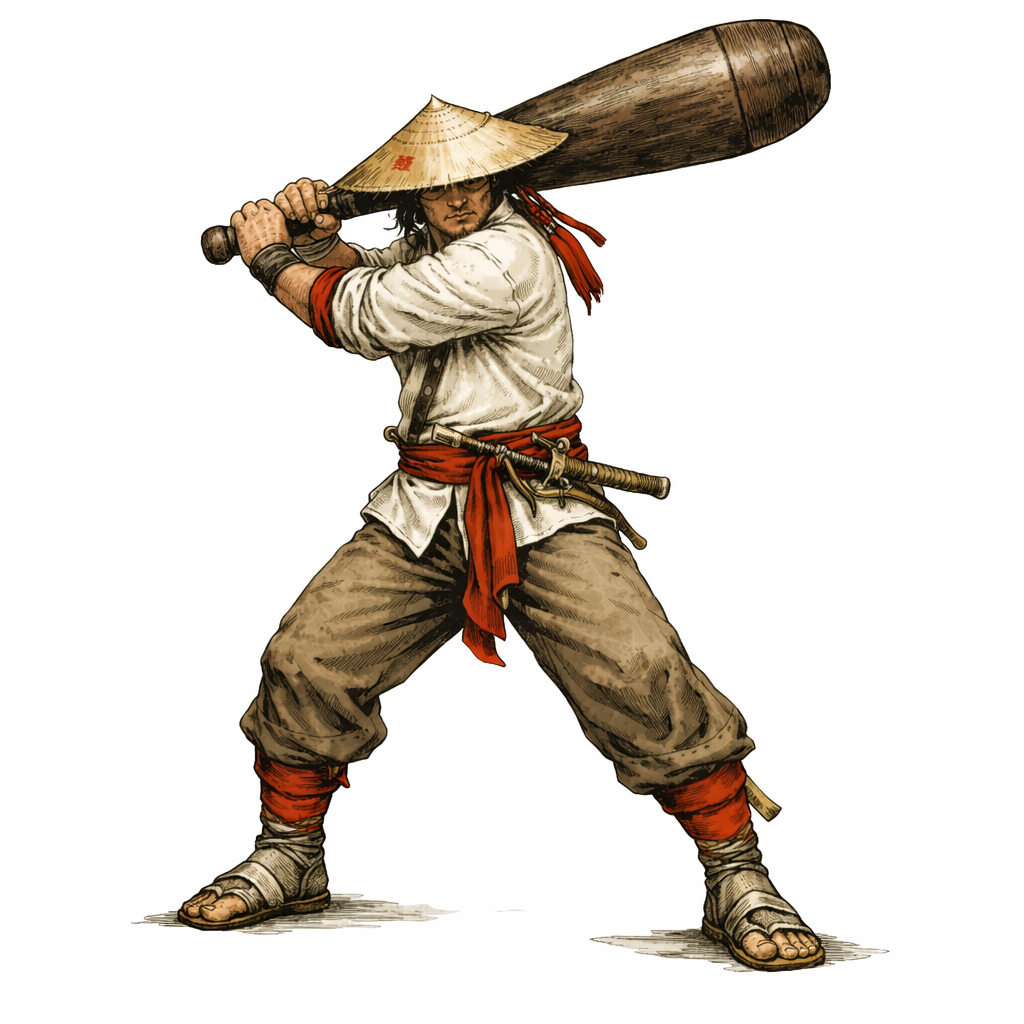
In the Warrior’s Path Program, we use Indian clubs in a unique way. I do not start people with the tool. I start them with the state. First the practitioner learns how to create expansion and maintain it. An open state. Space in the joints. Length in the spine. A posture that is strong without being stiff. Most people cannot hold that state because they have livedcompressed for years. So we teach them how to open the machine on purpose, and once they can maintain that, then we apply tools inside that state. One of the first tools I introduce is the Indian club, because the club teaches you how to move while staying open.
I was first introduced to Indian club training in my twenties through a Burmese martial art, and I have used it for the majority of my life. Even back then, I could feel that the training was different. It was not just exercise. It was structural education. But when I later combined clubs with the expansion state, it gave a whole new meaning to the work. Doing clubs by themselves is fantastic. Adding posture and expansion turns them into a precision instrument. The circles become cleaner, the shoulders feel like they have room again, and the upper spine starts moving the way it was built to move.
That combination has helped me recover from very traumatic shoulder injuries in my life. Not with magic and not with shortcuts. With intelligent repetition, correct mechanics, and a body state that supports healing instead of fighting it. That is why I trust this tool. It is simple, but it is not easy. And if you train it the right way, it becomes one of the most effective methods I know for long-term shoulder health, upper body resilience, and structural renewal.
The Physical Culture Principle of Tool Use
One of the defining traits of a healthy human being is tool use. We are not just creatures that move. We are creatures that build, carry, shape, and solve. From the first time a human picked up a rock to smash, cut, or grind, something changed. The tool extended the body. It gave us leverage, reach, and efficiency. It let us do work that our hands alone could not do. And over thousands of years, tool use became more than survival. It became part of our nervous system, part of our problem-solving, and part of how we express intelligence in the physical world.
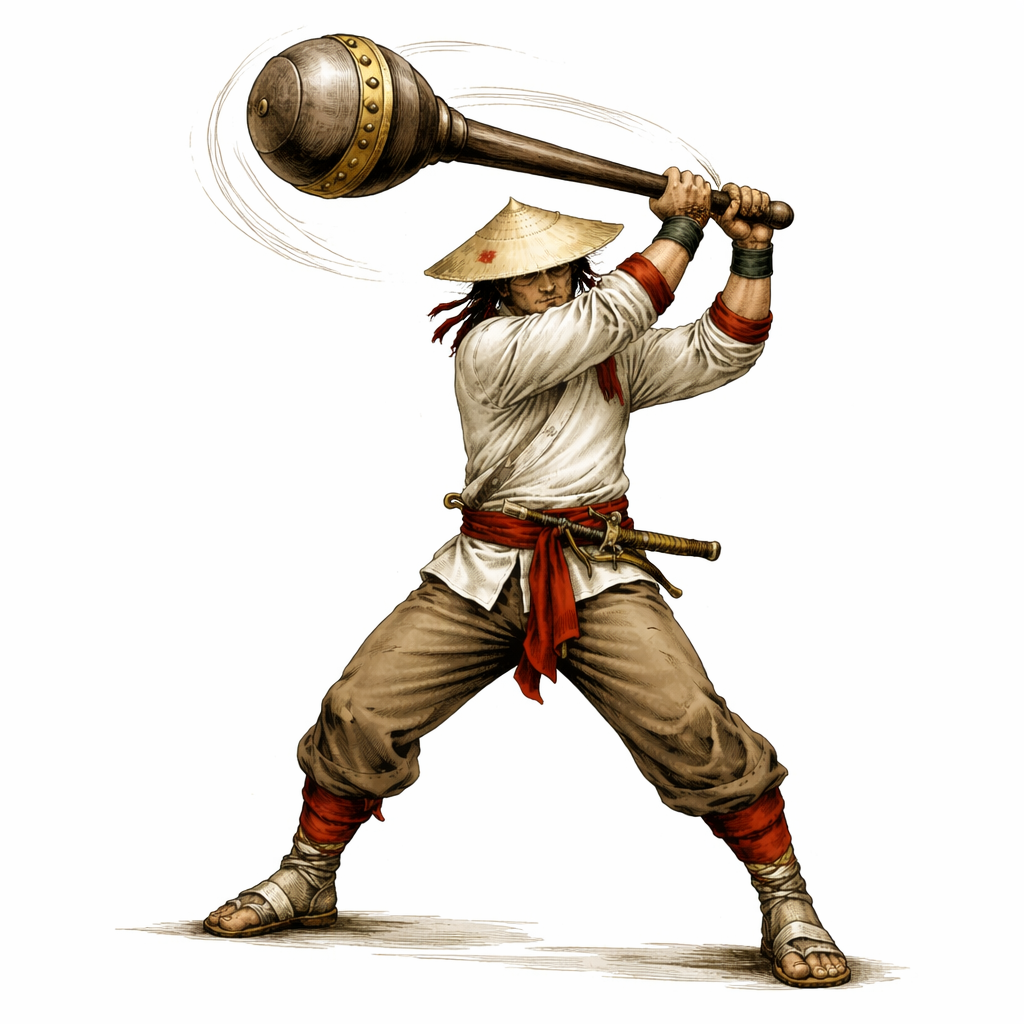
Physical culture understood this. Real physical culture was never only calisthenics or muscle building. It was the training of a capable human being. A person who could lift, carry, climb, strike, throw, breathe, recover, and operate under load. And a major part of that capability was learning to handle tools with competence. When you train with a tool, you are training more than strength. You are training coordination, timing, grip integrity, joint alignment, posture, and the ability to generate force through the whole chain. You are training the mind to direct the body with precision.
Tool work also teaches you something modern training often forgets. Real strength is not just how much you can lift in a straight line. Real strength is how well you can create and control force in the angles, arcs, and awkward positions that life actually demands. Carrying a sandbag, swinging a club, moving a kettlebell, pulling a rope, chopping with an axe, or even doing manual labor, these are all forms of strength expression that create a dense, durable body. They forge structural integrity, not just muscles.
There is also a deeper point here. Tool use keeps you honest. A tool gives you feedback. If your posture is off, the tool punishes you. If your grip is weak, the tool exposes you. If your timing is sloppy, the tool makes you pay attention. Tools are teachers, because they amplify your mistakes. And when used correctly, they rebuild your body in a way that aligns with real-world function.
In the Warrior’s Path lens, tool use is not a hobby. It is part of the longevity blueprint. When you maintain the skill of using tools, you maintain the skill of being useful. You stay capable in your home, your work, your training, and your daily life. You stay connected to the physical world instead of becoming fragile inside a comfort bubble. And that capability, that self-reliance, becomes a form of confidence that no motivational quote can replace.
A human who loses the ability to use tools loses a piece of what makes them human. A human who trains tool use on purpose is sharpening the blade of their own development. They are building strength that applies. They are building coordination that lasts. They are building the kind of body that can keep showing up, year after year, with function, with durability, and with a quiet sense of readiness.
The Wuji State and Structural Reset
The Wuji state is ground zero. It is the baseline state where alignment, relaxation, and awareness meet. You are balanced, upright, and present without unnecessary tension in the system. Most people have no idea how much tension they carry until they try to stand still and realize they cannot. They fidget, they shift, they brace unconsciously. Their nervous system has forgotten what true neutral feels like. Wuji is not passive. It is active awareness with minimal effort. It is learning howto hold structure without strain, how to breathe without forcing, and how to exist without overworking the body. When you train Wuji, you are training the ability to release compression from the inside out. You learn to stack the skeleton, soften the breath, and let the body hang instead of clenching. This is decompression that starts in the nervous system and ends in the joints. In my experience, Wuji is one of the most powerful recovery tools there is because it restores function while it restores state.
One of the great things about learning the Wuji exercise is that it teaches posture, real posture, not the superficial kind people think of when they hear “stand up straight.” In Kung Fu, we use posture as a tool to obtain relaxation, or what I call un-tension. When the skeleton is stacked correctly, the bone structure holds the weight of the body, not the muscles.The tissues can turn off. The nervous system calms down. But if you are out of posture, you are forced to use muscular effort just to hold yourself up. That constant, low-level tension becomes your background noise. It quietly drains energy, restricts blood flow, stresses the joints, and over time, it damages the body from the inside out.
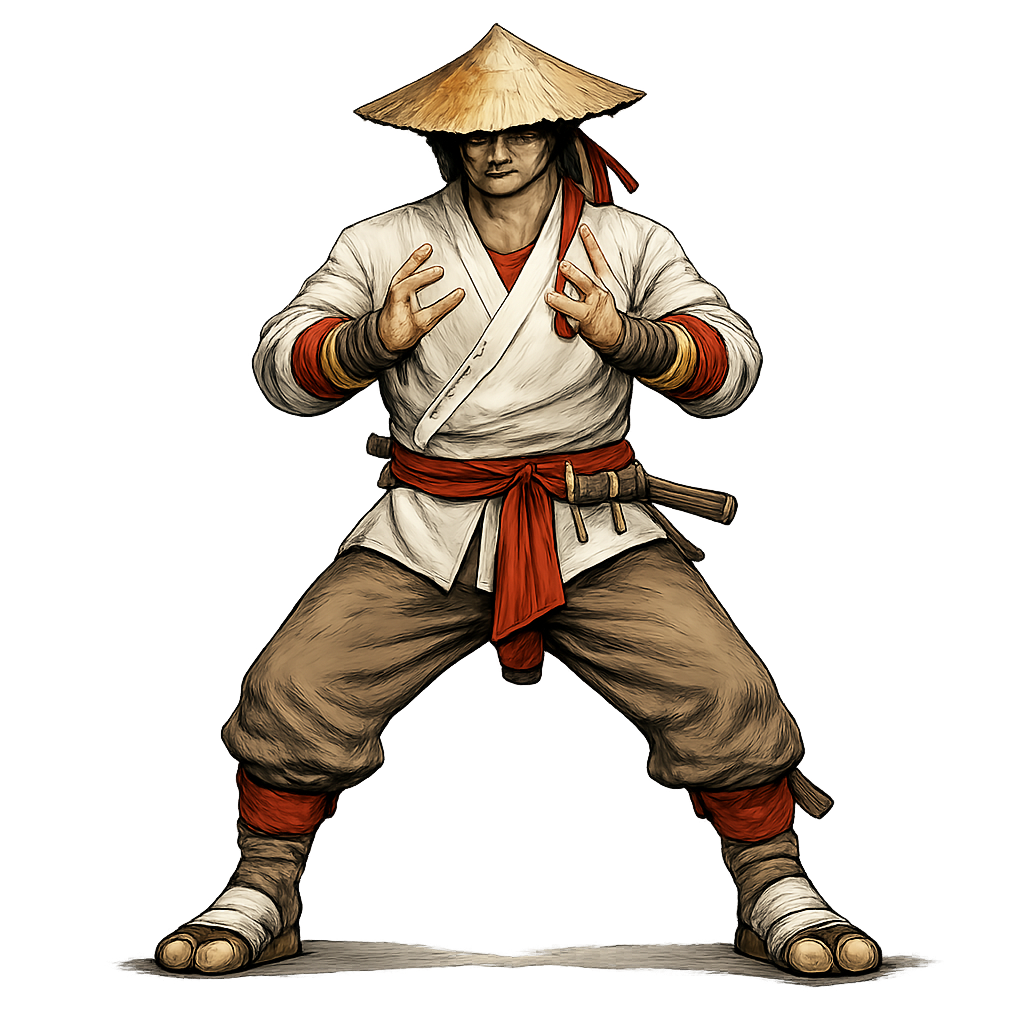
Posture has a massive effect on your overall health. The early pioneers of the Physical Culture movement understood this deeply. They trained posture not for appearance, but because they discovered its influence on the organs, breathing, digestion, and circulation. When the spine is misaligned, organs become compressed, the diaphragm loses its range, and oxygen exchange drops. A crooked spine does not just look bad; it changes the way your body works. Correct posture restores space for the organs to operate, lets the diaphragm move freely, and helps the heart and lungs do their jobefficiently. The old masters of Physical Culture, like Eugen Sandow and Bernarr Macfadden, spoke about posture as the foundation of vitality and endurance. They knew that proper structural alignment was one of the great secrets of longevity.
Kung Fu held this wisdom too, though it expressed it differently. That is where I was first introduced to it. In Kung Fu, posture was not just about health; it was about survival. We learned it through stance training and the study of fighting positions. These stances are often misunderstood today. People see them as outdated drills, but they are actually advanced methods for studying posture in movement. They teach how to find alignment in action, how to maintain it under stress, and how to move with structure while generating force or absorbing impact. Once you learn how to hold posture in combat, applying it to everyday life becomes effortless.
In today’s world, posture has been written off as something your mother nagged you about when you were slouching at the dinner table. But the truth is, posture is power. It affects how you breathe, how you move, how your organs function, and how your nervous system communicates. It determines how long your structure lasts. If you want longevity, if you want to move through life without pain, if you want to feel strong and capable as you age, you must reclaim posture as a skill, not a concept. Wuji training gives you the foundation for that. It is where structural health, energy flow, and the calm mind of a warrior all begin.
Ancient Wisdom Meets Modern Joint Science
The old systems understood something that modern people are relearning through research and rehab clinics. Joints thrive on movement quality, joint centration, hydration of the tissues, and controlled variability. Ancient training methods emphasized circles, spirals, hanging, breathing, and postural discipline because those methods maintain the body’s internal mechanics. Modern joint science gives us language for it. We talk about synovial fluid movement, cartilage nutrition through compression and decompression cycles, tendon load tolerance, and the role of the nervous system in guarding and pain. Different vocabulary, same truth. If you want structural renewal, you cannot just smash your body with intensity. You have to restore space, restore glide, and restore control.
How This Fits the Longevity Blueprint
Expansion is the counterweight to compression. If you train hard, you must train renewal just as deliberately. Decompression, Indian clubs, and Wuji are three of my most trusted methods because they work together. Decompression restores space. Clubs restore movement skill and tissue resilience through circles. Wuji restores state, alignment, and internal quiet. When you practice all three, you are not just “recovering.” You are rebuilding the structure you live in. That is what keeps the warrior capable for the long haul.
Flexion: Mastery of Tension and Strength Control
Why Flexion Matters
If expansion is space, flexion is structure. Flexion is your ability to create tension on purpose, hold it, move with it, and then release it when the job is done. Most people are either soft and unstable, or they are locked up and living in a constant brace. The Warrior’s Path approach is different. We train flexion as a skill so the body can shift gears. That is longevity. That is performance. That is resilience.
The 1 to 10 Dial
In my books, I talk about tension like a dial, not an on-and-off switch. A “1” is a body that is basically limp. No usefultone, no structure, no readiness. A “10” is a fully activated body, everything online, full intent, full output. Most people live in the middle without realizing it. They exist between about a 4 and a 6. They cannot truly un-tense below a 4, and they cannot fully activate above a 6. They are stuck in a narrow band, and over time that band becomes their normal.
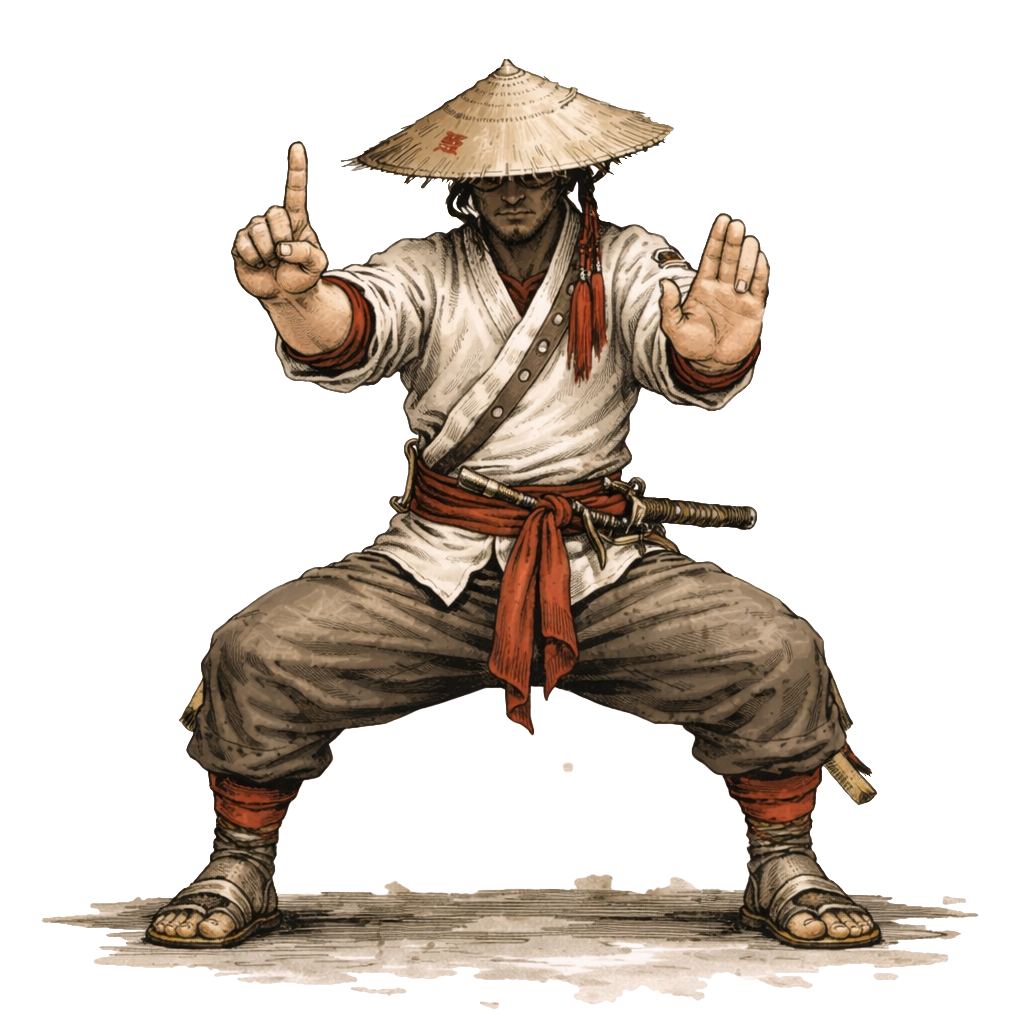
The goal is not to live at a 10. The goal is control. You want access to both sides of the scale. When you can drop lower, you recover faster, you sleep better, your breathing improves, and your joints stop getting cooked by constant low-grade bracing. When you can rise higher on command, you become stronger, more stable, and more capable under pressure. That range is a longevity advantage because your body is no longer trapped in one nervous system setting all day, every day.
Here is the part that surprises people. Being able to reduce tension on purpose often makes you more effective physically, not less. When you are carrying unnecessary tension, you move like you are fighting yourself. You waste energy, your timing gets sloppy, your joints get sticky, and everything feels heavier than it should. When you learn to un-tense, you become more substantial. Your structure carries the load. Your movements get cleaner. Your power shows up without the grind.
This is not just training talk. This is stress management at the level that matters. Most people cannot relax without an outside trigger. They rely on alcohol, drugs, scrolling, or some kind of escape to force the nervous system down. I am not judging that, I am pointing out the cost. If you cannot downshift on command, you pay for it with sleep, recovery, decision-making, and eventually health. Once you build real skill in flexion control, you do not need chemicals to experience calm. You can create it anywhere because it is trained, not hoped for.
The top end of the dial is tied directly to strength and output. The more you can activate the system in a clean, organized way, the more force you can produce. But your body will put up a fight, and it is supposed to. One of the key mechanismshere is the Golgi tendon organ. Think of it like a protective braking system that helps prevent you from generating more force than the tissues can safely tolerate. If your nervous system senses danger to the tendon or joint, it will inhibit the muscle. In other words, you might feel like you are trying to flex harder, but the body is holding you back to keep you from tearing yourself apart.
Your body has tremendous strength that you cannot access by accident. You have to train for it. You have to teach the nervous system that higher levels of tension can be created safely, in good alignment, with good breathing, and with control. That is a major area of study in the Warrior’s Path Program. We do it for fighting, but we also do it for longevity, because the same skill that helps you produce force also helps you protect joints, stabilize posture, and resist injury. The long game is simple. Expand when you need space, flex when you need structure, and own the dial so you are not trappedin the middle for the rest of your life.
Stone Warrior and Strength Under Control
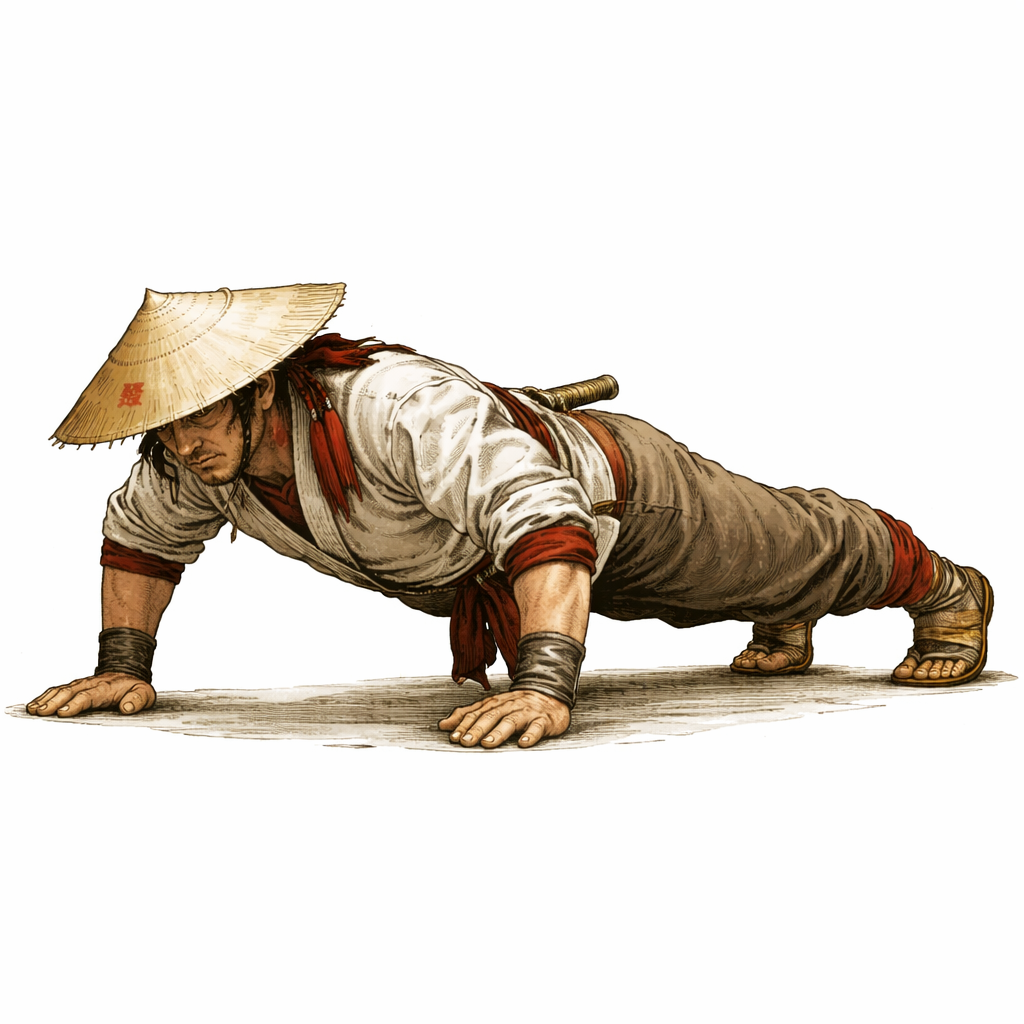
Stone Warrior is one of the clearest training methods I have ever used for teaching this concept. It is not about being stiff. It is about becoming dense. It is the study of turning the body into a unified structure where tension is organized instead ofchaotic. When you do it correctly, your posture locks in, your breathing gets quieter, your mind gets sharper, and you start learning how to generate pressure without burning energy. This is the difference between flexing and bracing. Bracing is panic. Flexion is commanded. One of the tools I teach to learn this is the Stone Warrior push-up.
Stone Warrior Push Up Setup
Start in a strong plank. Hands under shoulders, feet about hip width. Before you move, “build the frame.” Grip the ground with the hands like you’re trying to twist the floor apart without letting them actually move. Lock the forearms into a stable line. Spread the upper back, then set the shoulders down and wide so you feel connected, not shrugged. Now set the ribs. Not crunched, not flared. Just stacked. Glutes lightly on, quads on, legs straight and alive. This is not a relaxed push-up position.
Create the Tension
This is where Stone Warrior becomes Stone Warrior. Imagine you are flexing your whole body, like you’re turning yourself into a single piece of steel. Hands grip. Forearms tighten. Lats lock in. Belly braces like you’re about to take a shot. Glutes and legs tighten. You should feel like you are radiating pressure through the entire system, not just the arms. Your body becomes one unit.
The Descent
Lower as one piece. No sag, no worm, no collapse in the midsection. Elbows track in a strong lane, not flared out wide and not pinned tight to the ribs either, somewhere around that 30 to 45 degree range depending on your build. Keep pulling the floor toward you as you lower. Think of it as an isometric row happening inside the push-up. You are not dropping. You are owning every inch.
The Bottom Position
Pause for a beat at the bottom without losing structure. Chest close to the floor, body still one unit, breath controlled. This pause is important because it exposes weakness. If you cannot hold the bottom without shaking apart, you do not own the tension yet.
The Ascent
Drive the ground away and keep the body welded together. Do not let the shoulders ride up. Do not let the hips pop first. Do not let the head lead. Press as a single machine. At the top, finish with full extension but keep the scapula controlled, not dumped forward. You should feel strong, tall, and organized.
Internal Alignment and the Hidden Layer of StrengthInternal alignment is what most people miss because they think strength is only a muscle thing. Internal flexion is how you create pressure through the connective tissue, the fascia, and the alignment of the skeleton, not just through raw contraction. It is an internal “pulling together” of the system that makes you hard to break, hard to fold, and hard to move. This is why some people feel freakishly strong without looking like bodybuilders. They are not just strong, they are integrated.
Muscular Bandwidth
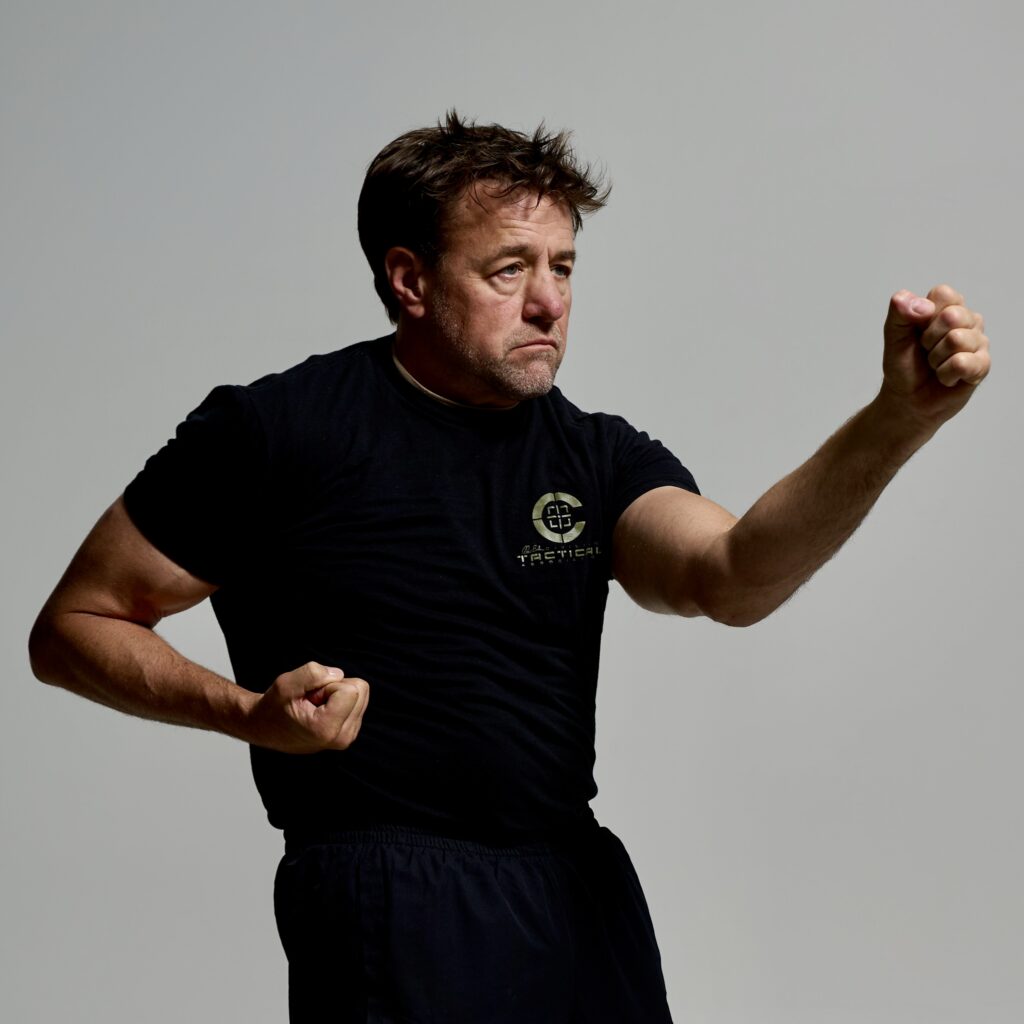
Muscular bandwidth is the range of tension you can access on command, and just as important, the range you can release on command. Most people do not have a wide range. They live in the middle. They walk around half-braced, half-stressed, half “on” all day long. That means they are spending their strength before they ever need it. By the time it is time to perform, whether that is lifting, sprinting, grappling, striking, or just handling a hard day, they are already burning fuel.
When you learn to turn off unnecessary tension, you get something back that most people do not even know they lost.You get more usable capacity. It is like clearing apps off a phone so the system can run faster and cleaner. Your baseline becomes calmer, lighter, and more efficient. Your movement improves because your joints are not being squeezed by tension that does not belong there. Your timing improves because you are not late to your own motion. And your endurance improves because you stop wasting energy fighting yourself.
This is where the “gears” show up. If your default is a 5 out of 10, you do not have much room to accelerate. You might be able to spike to a 7, but you cannot hit a true 9 or 10 without the body slamming the brakes. And you cannot drop to a 1 or 2 either, which means you never truly recover. A wide bandwidth gives you options. You can cruise at a low setting, then instantly shift into high output when it is time to move. That is an explosive range. That is athletic gear shifting. Not hype. Not adrenaline. Skill.
In fighting terms, this matters because speed is often tension control, not fast-twitch genetics. The person who can stay loose while they move and then hit hard for a split second is the person who looks “fast.” They are not wasting motion. They are not telegraphing with tension. They are not muscling through the whole exchange. They are relaxed until the instant they are not, then they are right back to relaxed. That is bandwidth.
In training terms, bandwidth changes everything. Lifting feels different because you can create full-body tension when you need it, then release it the moment the rep is done. Grappling feels different because you stop burning your arms and start using structure, pressure, and timing. Striking feels different because power becomes a pulse, not a constant clamp.Even mobility work changes because you are not “stretching” a guarded nervous system. You are giving the body a signal that it can open.
And that is the real point. Muscular bandwidth is not just about being able to flex harder. It is about being able to livebetter. The person who can downshift on demand sleeps better, recovers better, thinks more clearly, and handles stress without needing a chemical off switch. Then, when it is time to be dangerous, time to be athletic, time to perform, they have more available because they have not been leaking it all day.
Breath: The Bridge of Control
Breath is the bridge between the body and the mind. It is the single system you can control consciously that also operates unconsciously, which makes it the most direct access point to your internal state. Most people breathe automatically and inefficiently. Their breath is shallow, trapped in the chest, and disconnected from their posture. Over time, this pattern locks the nervous system in a mild fight-or-flight state. They are constantly ready for battle, even when there is no battle to fight. Breath training is how we reclaim control of that bridge. It is how we take back authority over the body’s internal command system.
The Full Cycle Breath
In the Warrior’s Path Program, everything begins with the Full Cycle Breath. This method reconnects the breath to the body in a way that most adults have forgotten since childhood. It teaches you to expand the abdomen first, then the ribs, and finally the chest, filling the lungs from bottom to top like a wave. This pattern activates the thoracic diaphragm, the muscle that nature designed to regulate breathing, posture, and internal pressure. When trained regularly, the Full Cycle Breath resets the nervous system, improves posture, and increases oxygen exchange without strain.
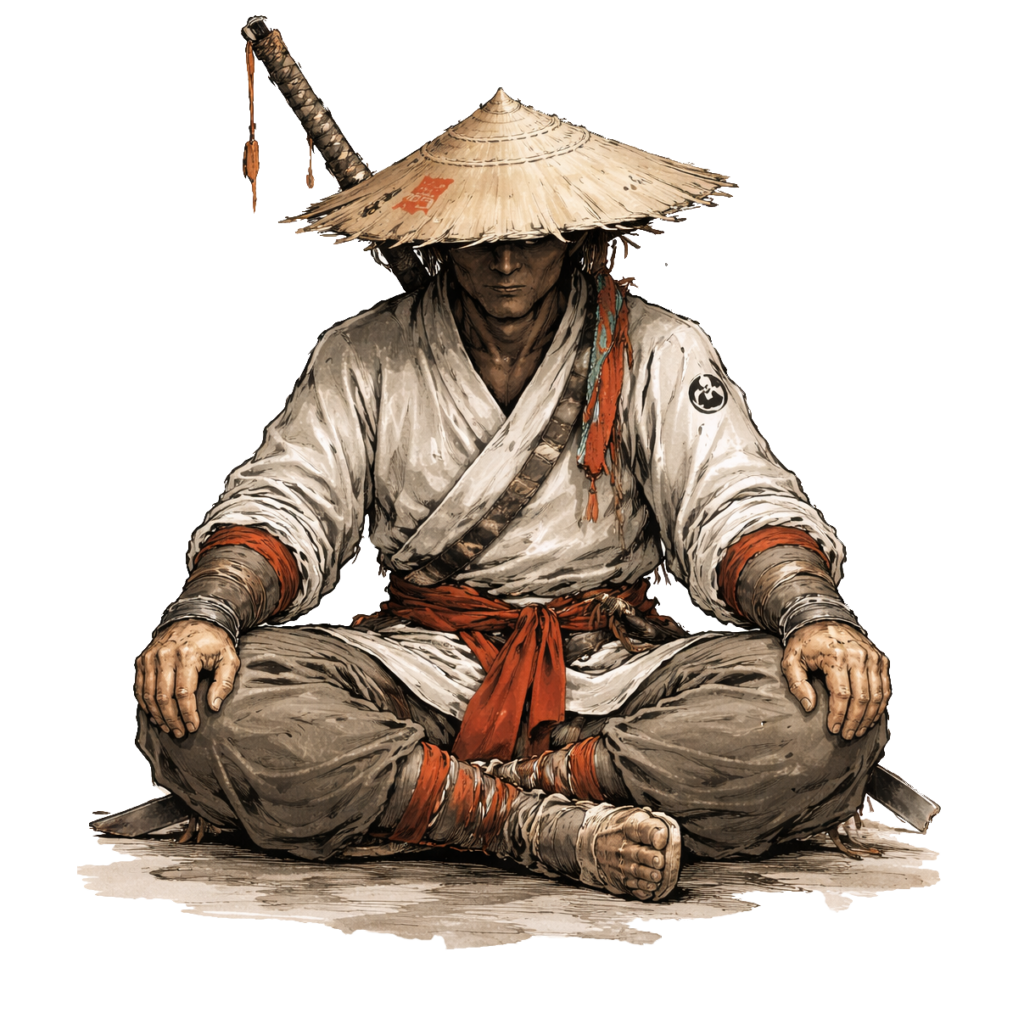
Learning this breath is not just about mechanics. It is about awareness. Each inhale is expansion; each exhale is release. You are literally training the same principle that governs the entire Longevity Blueprint, the balance between contraction and expansion. You start to feel where your body holds tension, how your breathing gets trapped in certain postures, and how that state affects your thinking. Over time, you learn to use breath as a reset button. The moment stress starts to climb, you breathe through it, not into it. The moment you start to lose control of your physiology, you bring it back through this simple, powerful cycle.
When you go looking for breath training today, most of what you find is packaged systems. It’s the Ice Man way, the yoga way, or somebody’s branded method with a label on it. What I rarely see is someone teaching breath in a way that gives you real ownership over it, meaning they teach you how to create.
Here’s what I mean. Instead of handing you a “routine,” I want to teach you the alphabet of breathing, the basic building blocks that everything else is made from. If you learn the alphabet, you can build your own words, your own sentences, your own language. You stop being dependent on the creator of this breath or that breath, because you understand the mechanics underneath it. You can build what you need, when you need it, based on the situation you are in.
That’s why we start with Full Cycle Breath. I’m not trying to give you a script to follow. I’m teaching you how to write for yourself.
Qigong Roots and the Ancient Connection
The roots of this practice go back thousands of years. In Qigong and internal Kung Fu systems, the breath was seen as the “commander of chi,” the force that connects mind, body, and spirit. Ancient masters understood that the breath was the gateway to awareness and longevity. Every movement, every strike, every meditation was built on rhythmic breathing. They used it to lower heart rate, control emotion, and recover energy between exertions.
What is remarkable is that modern science is finally catching up to what those masters knew intuitively. Today, we talk about breath as a regulator of the autonomic nervous system. We can measure how it affects heart rate variability, cortisol levels, and the vagus nerve. The same breathing techniques once considered mystical are now used by neuroscientists, psychologists, and high-performance coaches to manage stress, improve focus, and regulate emotion. What was once “chi” is now physiology, the same truth, different language.
Stress Regulation and the Modern Warrior
Stress is unavoidable. What determines your health and performance is not the presence of stress but your ability to recover from it. Breath is the switch that lets you move between the sympathetic state (fight or flight) and the parasympathetic state (rest and recover). Most people get stuck in the sympathetic loop. They wake up tense, train tense, and go to bed tense. Their body never actually gets the message that the fight is over. Over time, this burns out the system, weakens the immune response, and accelerates aging.
Through the Full Cycle Breath and other breath control methods, we retrain the system to move between those states smoothly. You learn to use the exhale as a brake, slowing the pulse, dropping the shoulders, and letting the mind clear. You learn to use the inhale as an ignition switch when it’s time to activate power. The same mechanism that can send you into panic can also pull you back into composure when trained. This is the foundation of stress mastery.
Breath and Modern Neurophysiology
In modern neurophysiology, we now know that breath directly influences the vagus nerve, which acts as the primary communicator between your body and brain. Deep, controlled breathing stimulates this nerve, signaling safety to the nervous system. That signal cascades through every organ, heart rate slows, digestion improves, and inflammation drops. Controlled breathing even affects brainwave patterns, improving focus, memory, and decision-making under pressure.
For the warrior, this is critical. Combat, whether physical, emotional, or psychological, always begins with the breath. When the breath is shallow and chaotic, the mind follows. When the breath is rhythmic and steady, the mind becomes still, and the body obeys. I have seen highly trained individuals lose control in stressful environments simply because they lost control of their breathing. Breath control is life control.
The Bridge Between States
When you understand how to use breath, it becomes a bridge between all areas of training. It connects strength to calmness, intensity to composure, and expansion to flexion. It becomes your way of moving between tension and relaxation with purpose. This is what keeps you from burning out, from aging prematurely, and from losing control in the face of chaos.
In the Longevity Blueprint, breath is not just another pillar; it is the thread that ties the entire structure together. It restores balance between effort and recovery, it regulates the body’s internal systems, and it teaches mastery over the one thing that influences everything else, your state. If expansion is space and flexion is power, then breath is the bridge that unites them both.
Dietetics: Discipline, Fasting, and Autophagy
In the Warrior’s Path, food is more than fuel; it is a tool of discipline and self-mastery. The ancient warriors, monks, and philosophers all understood that fasting sharpens awareness, clears the body, and resets the mind. Fasting was never just about denying food; it was about breaking attachment. It forced the practitioner to take control of the body’s most primal urges, and through that control, they gained freedom. In a modern world of constant consumption and overstimulation, fasting reawakens this old skill; it reintroduces restraint, patience, and clarity.
From a physiological perspective, fasting activates one of the most remarkable mechanisms of longevity known to science: autophagy. Autophagy, meaning “self-eating,” is the body’s natural process of cellular recycling. When we go without food for long enough, the body begins to clean house; damaged cells, toxins, and waste products are broken down and repurposed. This cellular housekeeping reduces inflammation, strengthens immunity, and slows many of the processes associated with aging. You are not just skipping a meal; you are activating an internal repair system that evolution built to keep you strong and resilient.
The rhythm of fasting is not about starvation; it’s about timing. I often refer to it as metabolic rhythm. In the same way that the breath has its cycles of inhale and exhale, your metabolism has cycles of intake and rest. Modern eating habits have eliminated the “rest” phase, keeping the digestive system on full alert from sunrise to midnight. This constant intake prevents the body from ever switching into renewal mode. By reintroducing fasting windows, even short ones like 16:8 or OMAD (one meal a day), you restore this natural rhythm. You give your system time to reset, recharge, and heal itself from the inside out.

Fasting also trains emotional and mental control. Hunger exposes your attachments. It will show you how quickly your body tries to control your mind. When you master fasting, you master the voice inside that says, “I need this now.” It builds the same kind of willpower we develop in martial arts, patience, endurance, and presence. It reminds you that discomfort is temporary and that growth always hides behind it.
There is a clear connection between fasting and the warrior’s way. Both require awareness of state, control of impulse, and the ability to act with intention rather than reaction. In the modern world, fasting becomes a form of rebellion against the culture of excess. It is a discipline that keeps your mind sharp, your body efficient, and your spirit grounded.
Science continues to affirm what ancient warriors already knew: the body renews itself through cycles of deprivation and regeneration. Fasting lowers insulin levels, balances hormones, boosts mitochondrial function, and triggers autophagy. It helps the body maintain lean muscle mass while eliminating waste. It sharpens cognition and improves emotional regulation by stabilizing neurotransmitters. But beyond the science, fasting reconnects you to something primal; it reawakens your sense of control over your own biology.
As I’ve said before, the body is a machine. Fasting is how we service that machine. It is how we clean the engine, reset the system, and prepare for the next mission. When approached as a warrior’s practice, fasting is not deprivation; it’s refinement. It builds the type of inner strength that reflects in everything you do, from how you move to how you lead. When discipline meets science, longevity follows.
I look at food like a professional looks at tools. Not by how exciting it is, but by what it does. How does it affect my energy, my inflammation, my sleep, my joints, my mood, my recovery, my waistline, my blood sugar, my performance, and my long-term health? I know that is a hard shift for people, because most of the world is trained to chase taste and comfort first, and then deal with the consequences later. That is exactly why food ends up controlling them instead of the other way around.
Now, I am not saying you can never enjoy your favorite things. You absolutely can. Stepping out once in a while is part of being human, and it is part of living a full life. The goal is not perfection. The goal is awareness and control. The goal is to be the man who decides when you indulge, instead of being the man who is constantly negotiating with cravings, impulses, and habits that run the show.
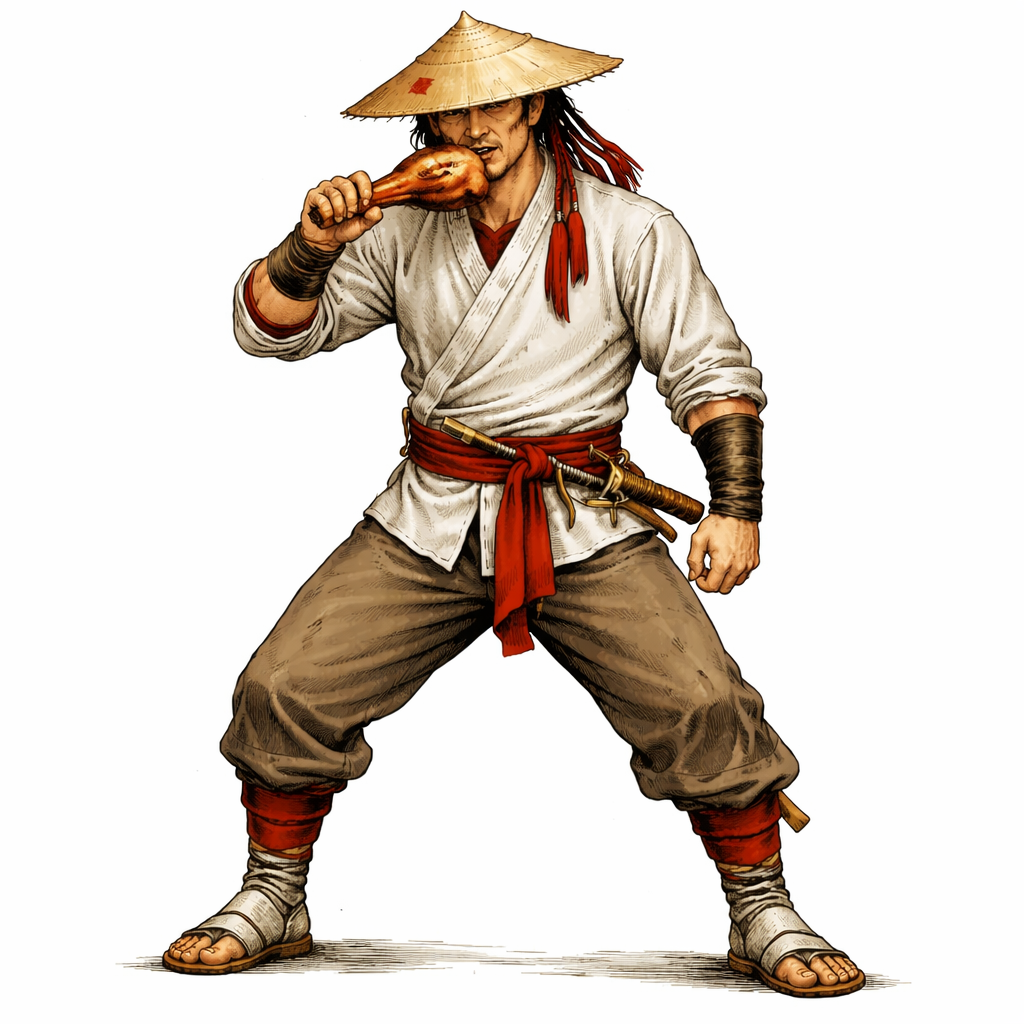
The first and most important step is knowledge. You have to understand the science of food, period. Not internet trends, not marketing labels, not the newest diet cult. Real understanding. What food does in the body, why it does it, and how the body responds over time. Most people never get that education. They just eat what tastes good, what is convenient, what they grew up with, or what they were advertised into wanting. Then later in life, when their body starts pushing back, they finally need the knowledge they never built.
Because food is not just entertainment, food is a tool. Sometimes you need that tool to repair and reset the human machine. There are times when your body will feel out of control, your weight creeps up, your recovery slows down, your inflammation rises, your energy tanks, and your labs start drifting in the wrong direction. That moment is where most people panic, or they surrender. They tell themselves, ” This is just what happens when you get older. And I disagree with that. I have watched too many people regain control when they finally learn what they are doing and why they are doing it.
A big part of the problem is that the systems that are supposed to educate people do not teach this. They teach you almost everything except how to run your own body. So you have to seek it out. You have to dig for it. You have to become a student of your own health. That is one of the things I want to change inside the Warrior’s Path program. I want my people to at least know what they do not know, and then have a clear path to build the knowledge and the discipline to take control back.
Mindset: The Internal Landscape of the Warrior-Scholar
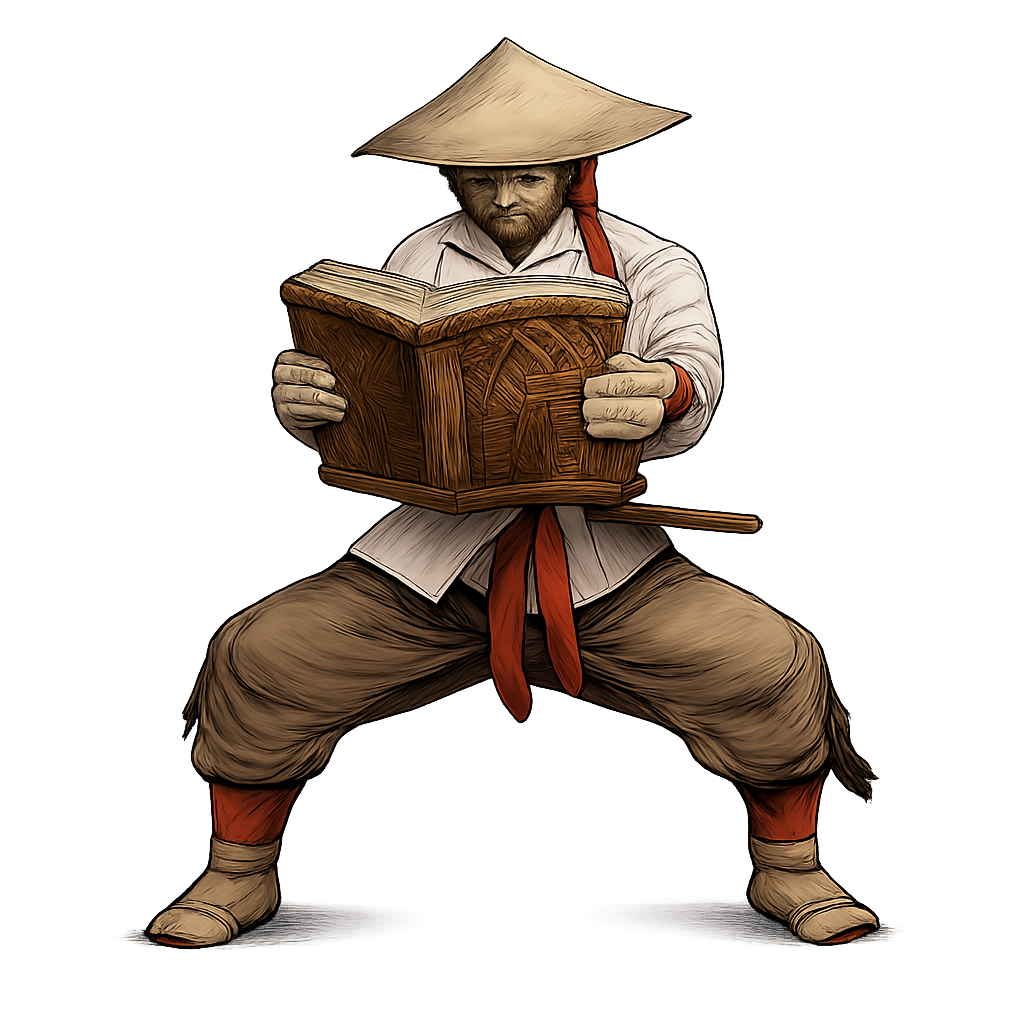
The internal landscape is a vast area of study. There is no way I can give you a full map of everything involved in this terrain inside one section, because the mind is not a single skill. It is a system. It is perception, attention, emotion, memory, impulse, identity, decision-making, and the stories you tell yourself about who you are and what you are capable of. What I can do is lay out the major points we cover in the Warrior’s Path program, and show you how mindset becomes a form of longevity training. Not just mental toughness, but mental durability. The ability to stay clear, capable, and stable as the years stack up.
Most people think their problem is discipline, motivation, or willpower. In reality, their problem is state. If your internal state is chaotic, fatigued, anxious, or distracted, your decision-making suffers, your impulse control drops, and the smallest stressor feels like a crisis. That is not a character flaw. That is a nervous system problem. State training is the practice of learning how to shift yourself on purpose. How to move from agitation to calm, from scattered to focused, from passive to ready, from overwhelmed to present.
This is mental longevity because the older you get, the more you need the ability to regulate yourself. Stress piles up. Responsibilities pile up. Your time becomes more valuable. If you cannot control your state, you get dragged by life. If you can control your state, you can stay useful, grounded, and dangerous in the right way. Calm when you need calm. Fire when you need fire. Then back to calm again.
Internal Timing: The Invisible Advantage
Internal Timing: The Volume Knob You Control. Timing is not just a fighting concept. Timing is life. It is when you speak, when you pause, when you press, when you release, and when you act. The real skill is not reacting faster. The real skill is controlling your internal tempo so you stop getting pulled around by stress, fatigue, and emotion.
The Lesson From Kung Fu: You Are In Charge. One of the earliest lessons I learned as a teenager in Kung Fu was simple and brutal in the best way. You are in charge of the tempo of your body. Your body runs on an internal rhythm, and if you do not command that rhythm, your environment will. Stress will. Mood will. Comfort will. Most people live like a leaf in the wind, their energy rising and falling based on whatever they are dealing with in the moment. A trained warrior does the opposite. He chooses the gear.
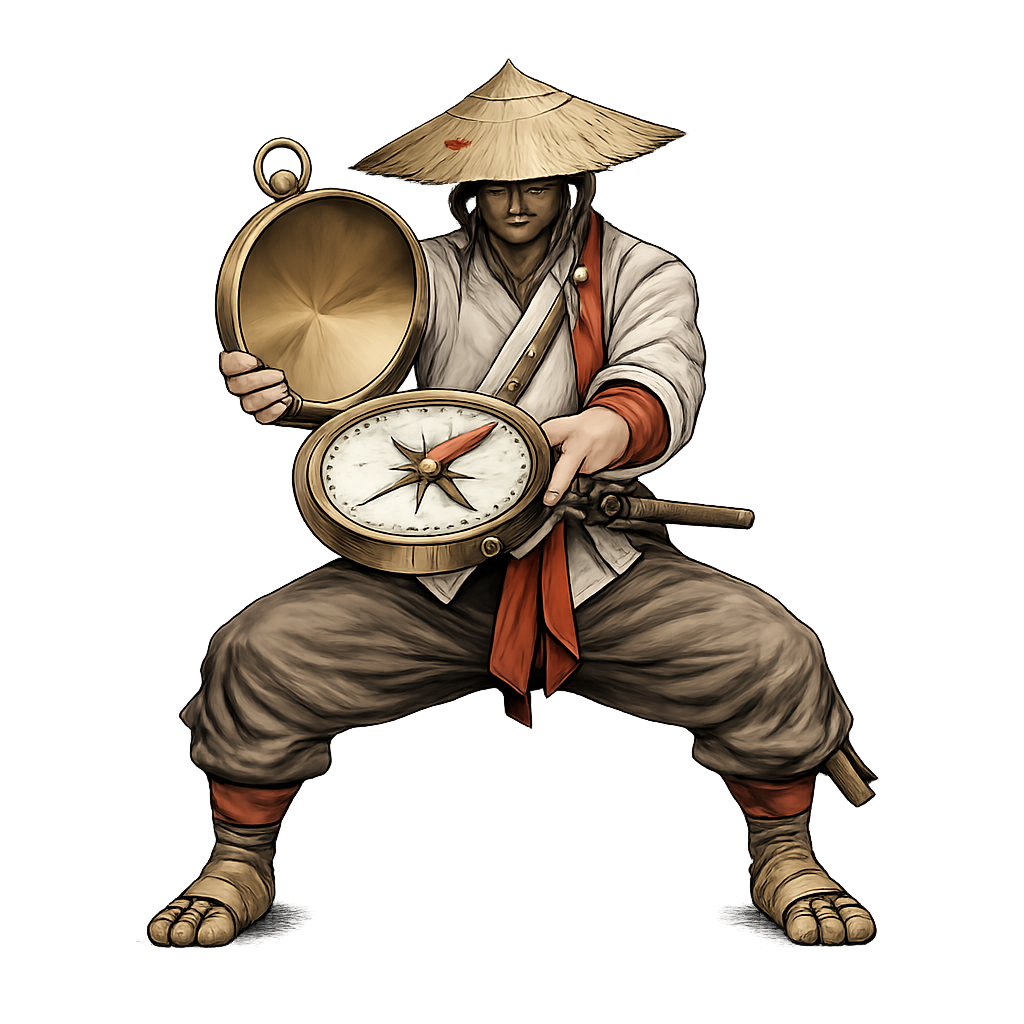
Internal Tempo In Real Life: How You Do Anything Is How You Do Everything. I learned this lesson in the unglamorous moments, not just in drills. My teacher used to have a buddy and me doing odd jobs around the Academy, and our hustle was not impressive. He would run circles around us and tell us to upgrade our hustle volume. It was not just about moving faster. It was about commanding output when motivation was low. That is where the life lesson lives. How you do anything is how you will do everything. If you let your rhythm collapse when nobody is watching, it will collapse when it matters.
Reclaiming Rhythm Under Fatigue: The Moment You Become Dangerous. The body always wants the path of least resistance. When fatigue hits, it starts negotiating. It starts dragging. That is where internal timing is forged. When your body wants to slow down but your mind decides otherwise, you are training leadership from the inside out. I still train this the same way today. In the gym, on the final sets, or during Thai rounds, when the rest periods start pulling my tempo down, I treat those moments as the actual training. I elevate posture, I re-engage breath, and I bring my internal rhythm back online because the mind is in command.
Pressure Testing Across The Combat Blueprint: Rhythm Under Stress. This is one reason internal timing transfers across every combative environment. Striking has its own pace and demands. Pummeling and clinch work have a grinding pressure that drains output. Ground fighting adds gravity, friction, and a second human being trying to break your structure. Weapons environments add chaos and consequence. The common denominator is stress. Under stress, rhythm fades, timing falters, and people start reacting instead of operating. That is the moment you practice the skill. You override the drift, reclaim your tempo, and restore your focus, even when tired, even when overwhelmed, even when you do not feel like it.
Posture: The First Physical Trigger For Timing Control. Posture is not your mom nagging you. Posture is a physiological command. Structural alignment changes your breathing, your perception, your emotional tone, and how you show up in the room. Your body is an antenna, always transmitting and receiving. When the antenna is bent, slouched, collapsed, orout of integrity, your signal gets weak. You lose clarity, and you lose rhythm. When you stand tall, head balanced, chest open, shoulders set, weight distributed, you send a message to your nervous system that you are present and in command. In stressful moments, posture is often the first thing to go, which is exactly why it must be trained until it becomes automatic.
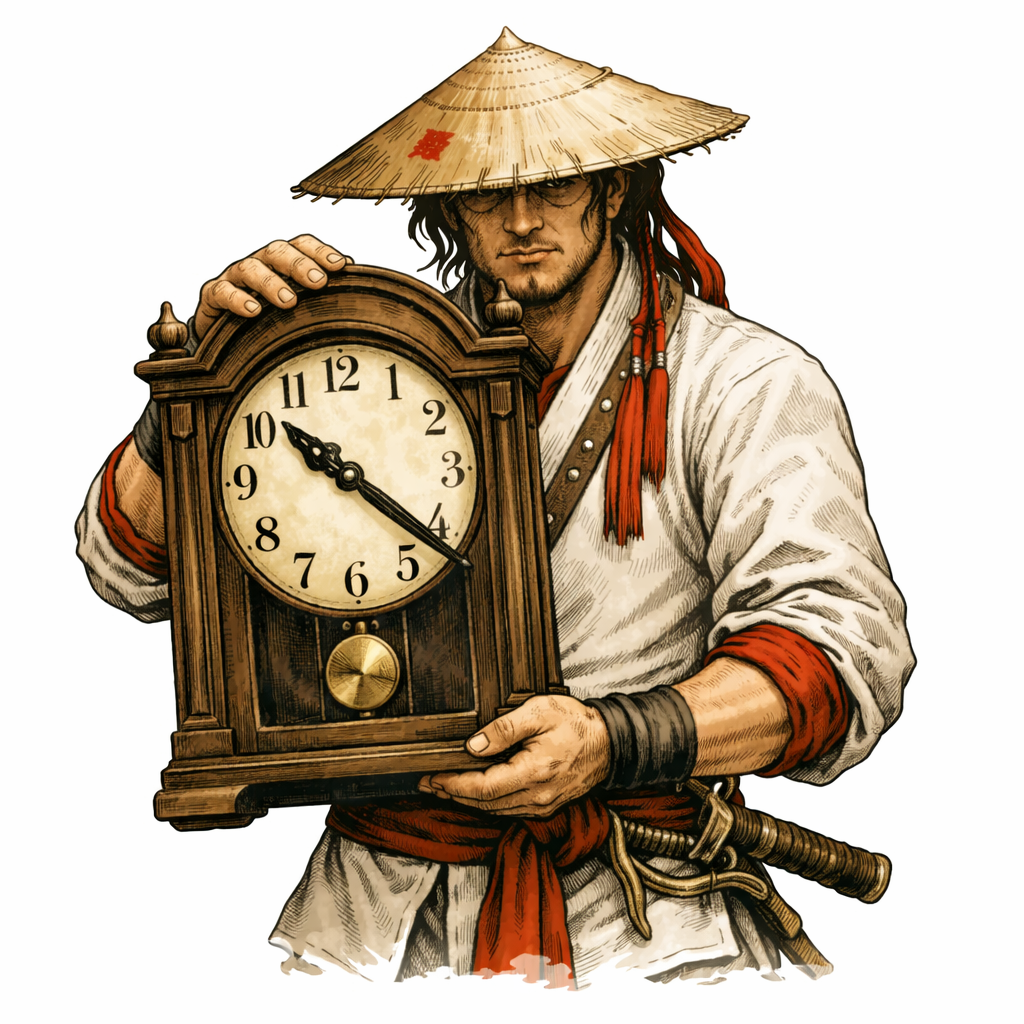
Breath Rhythm Versus Body Rhythm: The Bridge Of Control. A major upgrade happens when you learn that the rhythm of your breath and the rhythm of your movement do not have to match. Under stress and exertion, untrained people let their breath chase their bodies. The body speeds up, and the breathing becomes shallow, rapid, and high in the chest, which leads to breath starvation and panic physiology. Training changes that. When the body tempo rises, you can keep the breath slow, smooth, and full, low in the torso, driven by the diaphragm. That separation becomes an anchor. You can be working hard without becoming internally chaotic. That is self-leadership in real time.
Why This Is Longevity: Less Reaction, Less Wear And Tear, internal timing is longevity because it reduces needless conflict, reduces needless stress, and reduces the damage that comes from living in constant reaction mode. When you can turn the volume up without losing yourself, and turn it down without needing a crutch, you stop getting dragged by the world. You can step into a hustle period when opportunity shows up, then downshift and recover like a professional. That ability to shift gears on command is not just performance. It is healthy. It is emotional stability. It is a calmer nervous system over the decades, and that is a real form of mental longevity.
Mind Boxing: Training the Fight in the Mind
Mind boxing is the internal practice of identifying what is really happening in your head when pressure hits. The mind will throw punches. Doubt. Fear. Anger. Excuses. Catastrophizing. Ego. You can either get hit and stumble around in your own emotions, or you can learn to recognize the patterns and defend yourself inside.
Mind boxing is not positive thinking. It is tactical thinking. It is the ability to catch a thought, challenge it, and replace it with something functional. Not something pretty. Something useful. The goal is to build a mind that can take impact without breaking structure, just like training your guard, your footwork, and your balance. This is how you keep your mind strong in hard seasons, and how you prevent the slow mental decay that comes from years of unmanaged stress and negative loops.
Stillness With Awareness
Wuji is not only a posture. Wuji is philosophy. It is ground zero. It is the idea that before you add, you must remove. Before you build power, you must eliminate waste. Before you chase more, you must return to the center.
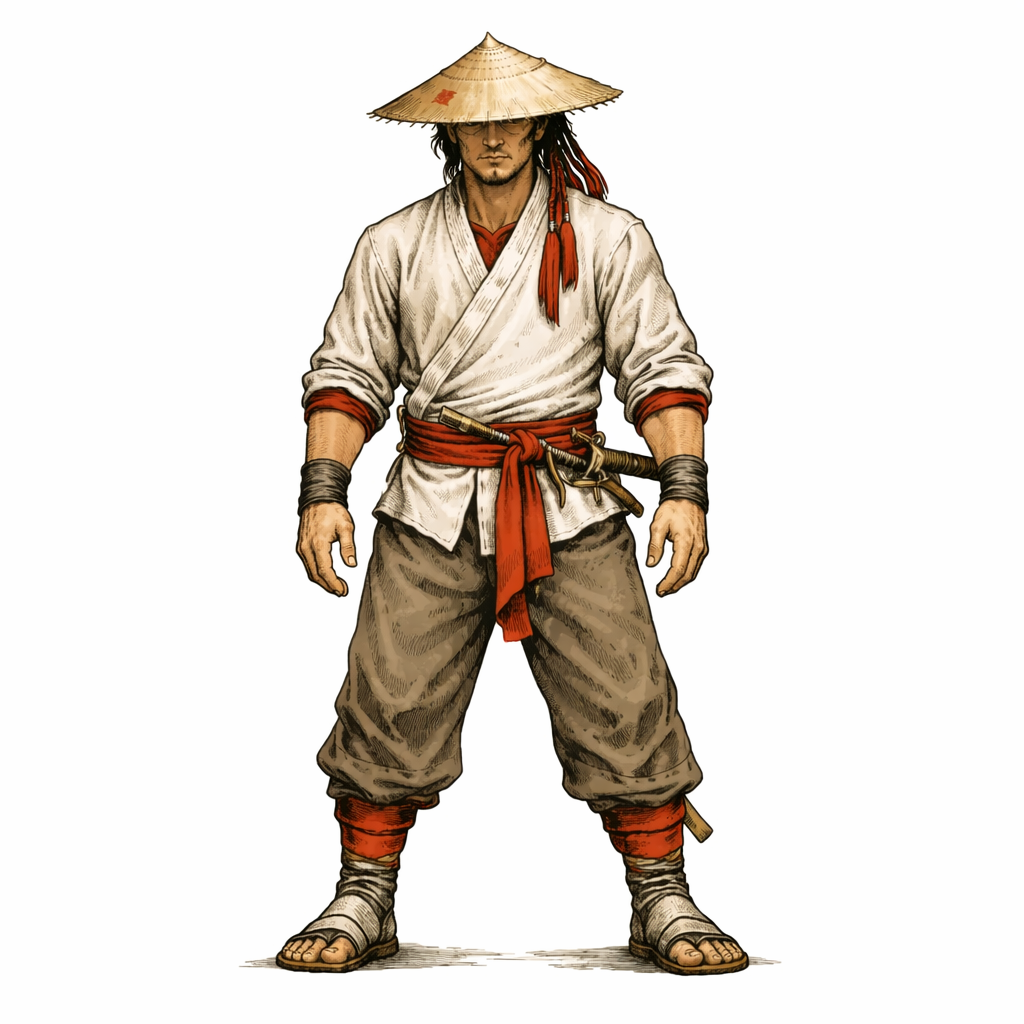
Most people cannot be still without reaching for stimulation. Noise, scrolling, entertainment, distraction, constant input. That is not relaxation. That is avoidance. Wuji teaches you to be present without needing to be entertained. It teaches you to feel what is going on inside you without flinching away from it. That is mental longevity because it restores clarity, patience, and self-command.
When you can return to Wuji, you can reset the system. You can drop unnecessary tension. You can stop the mental spirals. You can regain posture in the mind the same way you regain posture in the body.
Mental longevity is not luck. It is trained. It is a daily practice of state control, timing, awareness, and the discipline to return to center. The Warrior-Scholar does not rely on motivation. He relies on systems. He does not rely on comfort. He relies on standards. He does not rely on perfect circumstances. He relies on internal order.
And this is the real point. Your body will age. That is inevitable. But your mind does not have to decay into bitterness, anxiety, impulsiveness, or distraction. You can train the internal landscape the same way you train your mechanics, your breathing, and your strength. You can become the kind of person who gets older, but sharper. Quieter, but more capable. More calm, more precise, and more dangerous in the ways that matter.
If you want, I can expand this section next into a few sub-sections that make it even more practical, including a short “state reset protocol,” a simple internal timing drill, and a Mind Boxing framework you can use when you are under pressure.
Walking the Path of Enduring Strength. The Longevity Blueprint is not five random topics stitched together. It is a system, and like any good system, the power is in the integration. Expansion gives you space and structural renewal, so the machine stops living in a collapsed, compressed state. Flexion gives you command of tension so you can turn the volume up when it matters and turn it down when it is time to recover. Breath becomes the bridge that connects posture, nervous system, and performance, allowing you to regulate stress instead of being ruled by it. Dietetics becomes a discipline in action, using food and fasting as tools to reset the body, restore metabolic rhythm, and keep the system clean and capable. Mindset becomes the internal landscape, the state training that keeps you from living in reaction mode and helps you operate with timing, awareness, and composure.
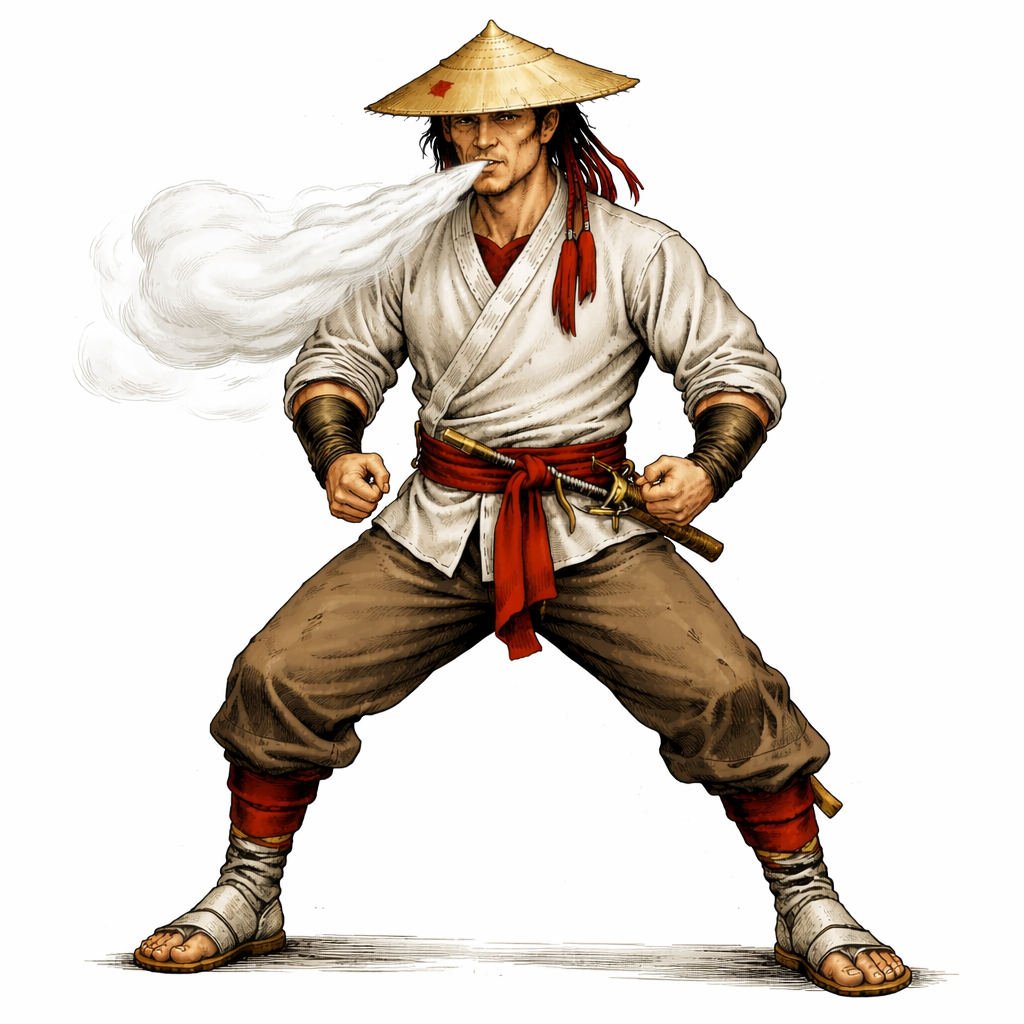
The Pillars Work Like A Single Machine. This is what most people miss. They chase one pillar and ignore the others. They lift hard but never decompress. They stretch but never develop strength density. They do breathwork, but eat like they are trying to sabotage their future. They diet but live in a stressed-out body state that keeps them inflamed and exhausted. The Warrior-Scholar does not play that game. He understands that the human machine is one unit. Structure affects breath. Breath affects state. State affects digestion and recovery. Tension affects movement quality. Movement quality affects joint health. Joint health affects training consistency. Consistency affects identity. Identity affects everything.
Small Reps, Long Timeline. The path is built through small actions stacked over time. A few minutes of expansion and decompression daily keeps the joints from getting sticky and the spine from collapsing. Practicing flexion control keeps you from living in that half-tensed, half-fatigued middle range that most people accept as normal. Full Cycle Breath keeps you out of breath starvation and gives you a way to downshift in the middle of pressure. Discipline with food, combined with strategic fasting when needed, keeps you from becoming a slave to cravings and helps you maintain control of your body as you age. Mindset training keeps you from burning out your system with constant internal noise and gives you the timing to push, pause, or pivot when life demands it.
Capability For Life. The goal is not just to live longer. The goal is to stay capable. To keep your body useful, your mind clear, and your spirit steady. To be the kind of person who can still train, still protect, still work, still lead, and still enjoy life, not as a fragile version of yourself, but as a refined version. This is what it means to walk the Warrior’s Path through the lens of longevity. You are forging a body that lasts, a nervous system that obeys, and a mind that stays sharp. Enduring strength is not a genetic lottery ticket. It is a skill set. And the man who trains the skill set earns the outcome.
Shift Your Perspective, Take Action, And Create Change
Gentleman in Conduct. Scholar in Thought. Savage in Action.
~ Sifu Alan ┃ www.sifualan.com ┃ www.civtaccoach.com┃www.prtinstructor.com
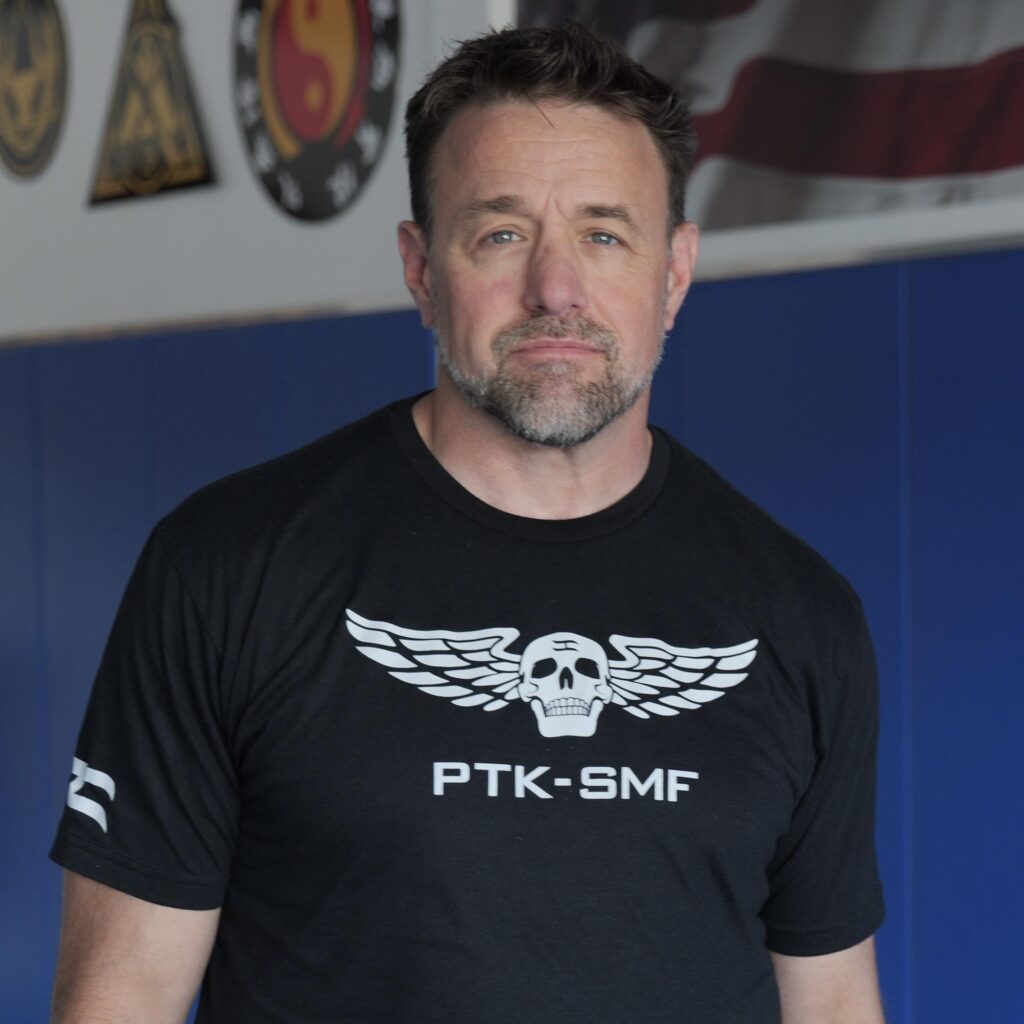
Sifu Alan Baker is a nationally respected authority in Defensive Tactics Program Development, High-Performance Coaching, and martial arts, with over 45 years of training experience across multiple systems. As a lifelong martial artist and tactical instructor, Alan has dedicated his career to creating practical, adaptable, and effective training systems for real-world application. He has worked extensively with law enforcement agencies, military units, and private security professionals, designing programs that emphasize scenario-based training, everyday carry (EDC) integration, and combative efficiency under pressure.
Alan’s client list includes elite organizations such as the Executive Protection Institute, Vehicle Dynamics Institute, The Warrior Poet Society, ALIVE Active Shooter Training, Tactical 21, and Retired Navy SEAL Jason Redman, among many others. He is the creator of both the C-Tac® (Civilian Tactical Training Association) and Protection Response Tactics (PRT) programs—two widely respected systems that provide realistic, principle-based training for civilians and professionals operating in high-risk environments.
In addition to his tactical and martial arts work, Alan is the founder of the Warrior’s Path Physical Culture Program, a holistic approach to strength, mobility, and long-term health rooted in traditional martial arts and the historic principles of physical culture. This program integrates breathwork, structural alignment, joint expansion, strength training, and mental discipline, offering a complete framework for building a resilient body and a powerful mindset. Drawing from his training in Chinese Kung Fu, Filipino Martial Arts, Indonesian Silat, Burmese systems, and more, Alan combines decades of experience into a method that is both modern and deeply rooted in timeless warrior traditions.
Alan is also the architect of multiple online video academies, giving students worldwide access to in-depth training in his systems, including Living Mechanics Jiu-Jitsu, C-Tac® Combatives, breathwork, functional mobility, and weapons integration. These platforms allow for structured, self-paced learning while connecting students to a growing global community of practitioners.
Beyond physical training, Alan is a sought-after Self-Leadership Coach, working with high performers, professionals, and individuals on personal growth journeys. His coaching emphasizes clarity, discipline, focus, and accountability, helping people break through mental limitations and align their daily actions with long-term goals. His work is built on the belief that true mastery begins with the ability to lead oneself first, and through that, to lead others more effectively.
Alan is also the author of three books that encapsulate his philosophy and approach: The Warrior’s Path, which outlines the mindset and habits necessary for self-leadership and personal mastery; The Universal Principles of Change, a practical guide for creating lasting transformation; and Morning Mastery, a structured approach to building a powerful daily routine grounded in physical culture and discipline.
To explore Alan’s books, digital academies, live training opportunities, or to inquire about seminars and speaking events, visit his official website and take the next step on your path toward strength, resilience, and mastery.