
The cheat codes that keep you capable when speed and strength start to fade
I talk about developing timeless tools all the time, because I’ve watched the same story play out for decades. A student starts training, gets excited, gets strong, gets fast, learns a pile of techniques, and for a while, they feel unstoppable. Then life shows up. Mileage shows up. Injuries show up. Stress shows up. Work, family, travel, responsibility, time under tension in the real world. Somewhere down the road that same student starts saying the sentence that makes my eye twitch: “I’m just not what I used to be.”
That sentence usually doesn’t mean they lost their heart. It means they built a skill set that was too dependent on perishable traits. They built their combative identity on speed, youth, and horsepower, and they never installed the deeper operating system that makes the human machine efficient. They trained the outside of the movement but never learned how to control the inside of the movement. They became good at doing things, but they didn’t become good at being something.
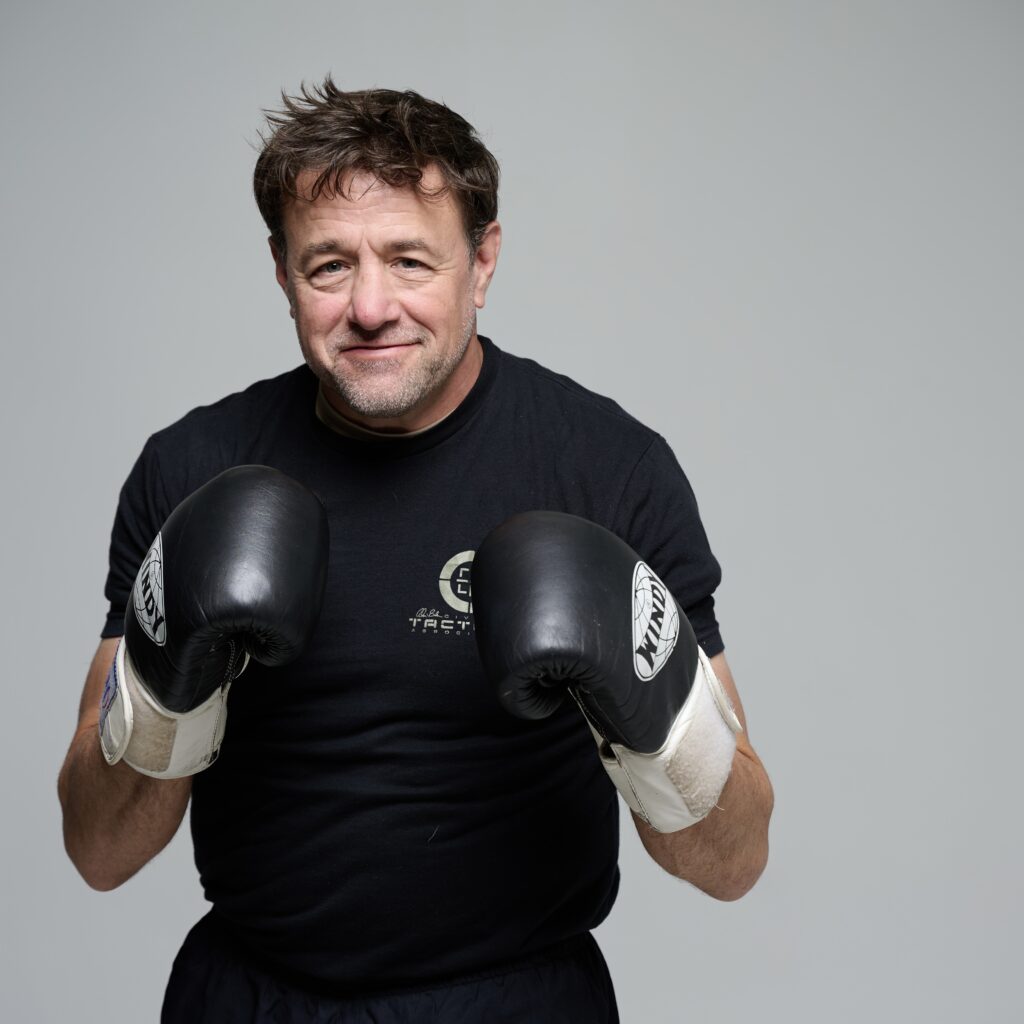
Speed and strength matter. I’m a strength guy. I’ve been in the gym since I was 14, and I still love it. I’ve got a serious power rack in my garage, and it gets used. I believe in building the machine. I also believe in protecting the machine. But I’ve also learned, from both experience and watching thousands of students over the years, that if your entire game is builton perishable skills, time will eventually collect the bill. When that happens, most people don’t adjust their method; they lower their expectations. That’s where “good old days” talk comes from. It’s not wisdom. It’s surrender disguised as nostalgia.
Timeless tools are how you stay dangerous for decades. Not by pretending you’re 25 forever, but by learning how to use your body like it came with an owner’s manual and you finally decided to read it. Timeless tools are attributes and body states that don’t depend on a specific technique, a specific stance, or a specific athletic peak. They are internal capabilities. They are “how,” not “what.” When you train the “how,” you can express it through a thousand “whats,” in any system, under any ruleset, and in any environment.
One of the places I teach this is through the principle of layered skill development. The short version is that you don’t just train techniques, you train layers of capability that make techniques real. If you want a deeper dive on the differencebetween training technique versus training attributes versus training body state, this article ties directly into what we’redoing here: Technique, Attributes, or State: Which Are You Training?. That framework is the backbone of this entire conversation, because timeless tools live in the attribute and state layers, not in the technique layer.
In this article, we’re going to talk about a handful of timeless tools I use constantly, both in my own training and in how I teach. We’re going to talk about projection, root, expansion, and internal timing. These tools show up in striking, grappling, weapons integration, movement, and even in how you carry yourself day to day. These are not tricks. They are not secrets. They’re skills. They require education, attention, repetition, and honest training. Once you have them, they’reyours. Nobody can take them away from you.
“Research your own experience. Absorb what is useful, reject what is useless, add what is essentially your own.”
— Bruce Lee
Perishable skills vs timeless tools
Let’s get clear on the difference. Some qualities fade no matter how tough you are. Speed is perishable. Max strength is perishable. Explosive power is perishable. Recovery is perishable. Even if you train hard, even if you’re disciplined, even if you stay in shape, those qualities change as you accumulate years and wear. You can slow the decline, you can stay strong and athletic, but you’re not exempt from biology.
Timeless tools are different. They don’t require youth. They require understanding. Timeless tools include things like efficiency of movement, timing and placement, structure and alignment, tension control, rhythm control, momentum direction, joint “space” and decompression, breath control, and nervous system regulation. These are the tools that make a smaller person feel harder to move, make an older person feel heavier, make a less athletic person feel strangely “fast,” and make a calm person feel like a problem when chaos hits.
Traditional kung fu systems often did a better job at this than modern training cultures, not because they were mystical, but because they were designed for long timelines. They began with the end in mind. They assumed you were going to train for life. They assumed you would age. They assumed you would lose some horsepower. So they built tools early that would keep you effective later. That’s why I jokingly call these skills cheat codes for the human machine. You learn them now, so you’re good at them when you need them later.
If you only trained the perishable stuff, then later in life, you don’t have a new gear to shift into. You just have a broken gear you miss. That’s the core of the problem.
Now let’s get into the tools.
“The body should be treated more rigorously, that it may not be disobedient to the mind.”
— Seneca
Timeless Tool 1: Projection
The energetic counter to speed
Projection is one of my favorite timeless tools because it changes the game quickly. Projection is the ability to project movement from specific parts of the body. Sometimes it’s from the center. Sometimes it’s from the extremities. Sometimes it’s the entire body arriving as one unit. A practitioner who understands projection will look “fast” to someone who doesn’t. But what’s really happening is not magical speed. It’s an efficient direction of momentum.
That’s why I often say projection is the energetic counter to speed. Speed says, “I move quicker than you.” Projection says, “I arrive sooner than you expect, with less wasted motion.”
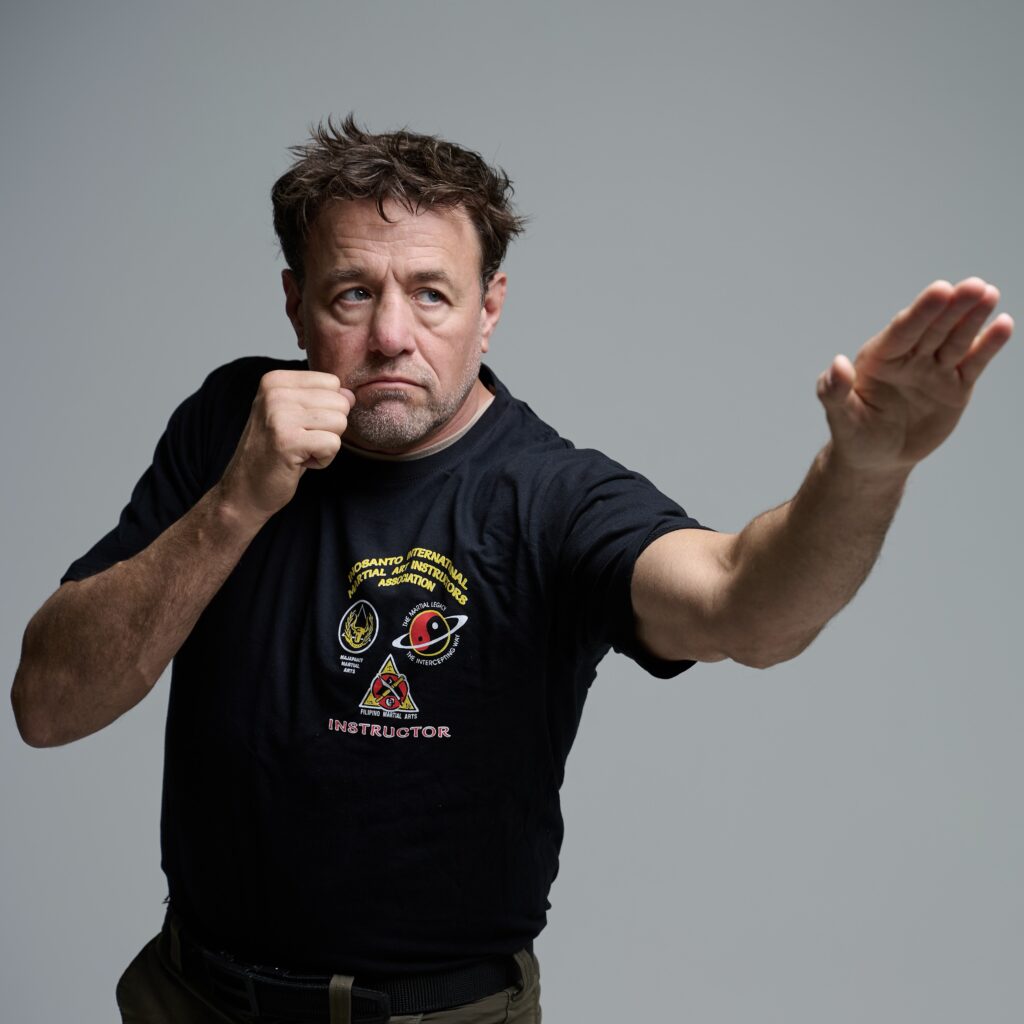
When the projection starts to click, the feeling changes. Most people feel like they’re pushing themselves into motion. They muscle the movement. They shove themselves around. Their feet push, their shoulders push, their arms push, their head pushes forward, and the whole thing looks like effort. Projection feels like you’re being pulled in a direction. It feels like the movement is happening through you, not because you forced it. That sounds poetic, but it’s practical. It is the difference between a movement that wastes energy and a movement that uses energy.
Projection can show up in small ways. You can project through a hand strike so it feels like your body “arrives” with the punch instead of your arm reaching with the punch. You can project a step so it feels like your center carries you, not your legs dragging you. You can project a clinch entry so the connection happens like a snap and not like a wrestle. You can project a grip in grappling so your structure bites immediately instead of slowly. In all cases, projection is the skill of delivering motion with minimum delay and minimum waste.
A lot of people chase speed like it’s a personality trait. It’s not. Speed is trained, and speed is also partially given. Some people are blessed with it. Others build it. But either way, speed is still perishable. Projection is a method. Method survives.
One of the best ways to understand projection is to look at someone who is not physically imposing, but who seems to arrive first anyway. Their movement doesn’t ramp up. It doesn’t wind up. It doesn’t warn you. It just appears. That’sprojection. They don’t look like they’re trying hard, but they are producing result. That’s why it feels like “he’s so fast.” You’re not seeing the tool. You’re seeing the effect.
Projection also changes the cost of movement. It moves you with less effort and it helps you achieve more. It makes using the human machine easier. It’s like a tool from your owner’s manual that you lost when you were just getting started, or you chose not to read. Projection helps you direct momentum in the body to do the work for you. That matters in fighting. It also matters in life. It changes your energy budget.
If you’re a coach, projection is one of those things you should be building early, even if you don’t call it projection. It can be taught through striking, footwork, grappling, even basic calisthenics. The point is not the label. The point is the internal skill. The label just gives the student a handle.
When you understand projection, you stop trying to be fast. You start trying to be efficient. That is the long game.
“The art of Life is more like that of the wrestler than of the dancer; for the wrestler must always be ready on his guard, and stand firm against the sudden, unforeseen…”
— Marcus Aurelius
Timeless Tool 2: Root
Tension control, substance, and taking the brakes off the body
Root is another timeless tool, and it might be the most misunderstood because people think it’s just “being heavy” or”being stable.” That’s part of it, but it’s not the whole thing. Root is the ability to control tension in your body. It’s your ability to control flexion, relaxation, and the relationship between the two. Most people walk around with levels of tensionin their bodies that they have no control over at all, and the scary part is they’re not even aware of it. Their baseline is braced. Their shoulders sit up by their ears. Their jaw is clenched. Their hip flexors are locked. Their hands are tight for no reason. They are constantly running low-grade fight or flight in the background like a bad app draining the battery.
When you learn tension control, you get back access to levels of athleticism you didn’t even know you had. You can literally take the brakes off your muscular system. You become more explosive without “trying to be explosive.” You become stronger without adding a pound to the bar, because you stop leaking force through unnecessary tension and misalignment. You become more coordinated because you can change gears smoothly. And you become more substantial in everything you do.
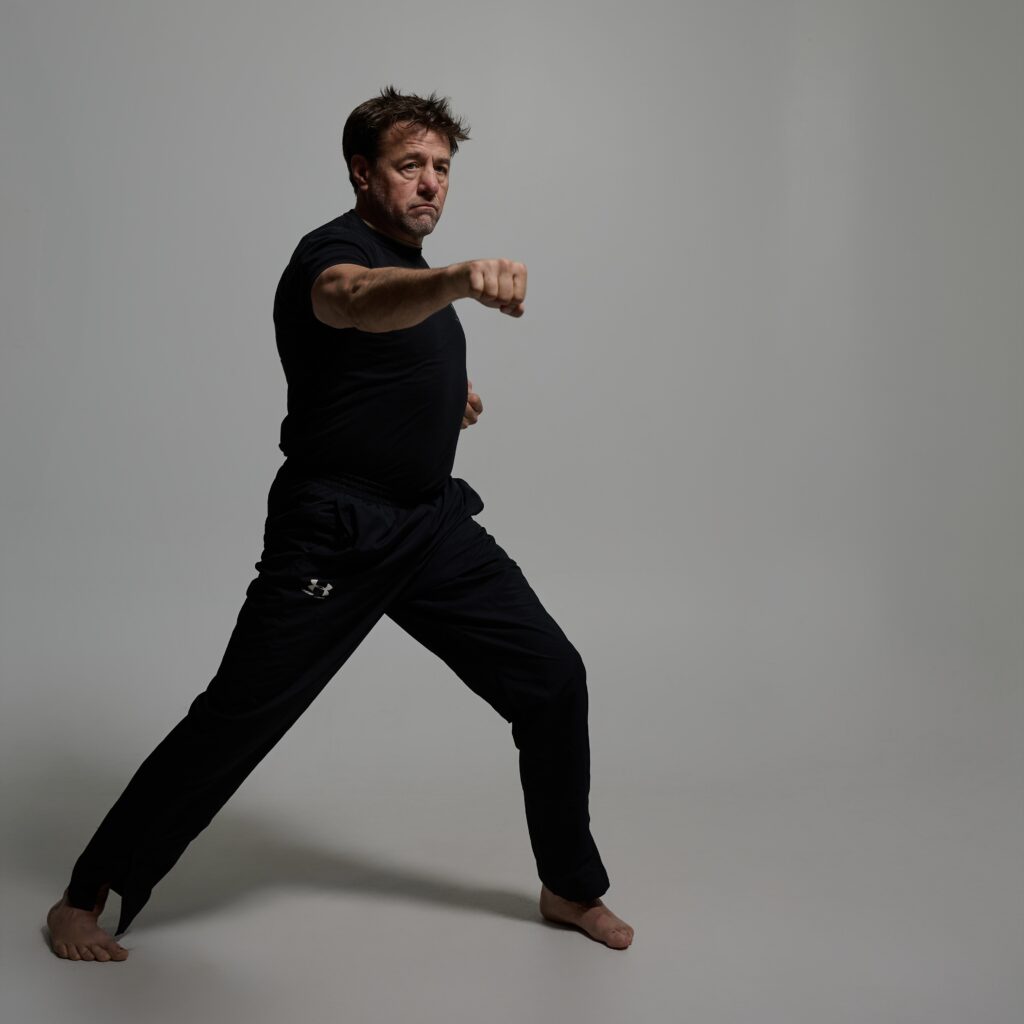
Substance is a big part of how root shows up. You will feel heavier like a tree when you put your hands on someone. You will feel heavier when you are grappling or pummeling. You will hit much harder on pads, the way old-school heavy-handed boxers did, because the strike has body behind it, not just arm behind it. You can see versions of this in many martial arts, but in my experience, the kung fu systems I studied were the best at teaching it as an organized process. They didn’t just say “relax.” They taught you how to relax without collapsing. They taught you how to be loose without being sloppy. They taught you how to be heavy without being slow. That’s the skill.
Here’s the paradox. Most people think that more tension equals more power. Sometimes it does, for a moment. But chronic tension is not power. Chronic tension is friction. It’s wasted fuel. It’s poor timing. It’s reduced sensitivity. It’sreduced speed. It’s reduced endurance. It’s also a fast track to pain.
This is where the research world actually supports the old warrior training ideas. Relaxation techniques and downshifting the stress response have been shown to reduce cortisol and reduce the subjective and physical experience of stress. Studies on breathing and progressive muscle relaxation show changes in heart rate, blood pressure, anxiety, and other markers that basically say the same thing your nervous system already knows: when you can turn the dial down, you get better control, better recovery, and a more capable body.
Now let me translate that into fighter language. If you can’t control your tension, your opponent controls it for you. If you live at an eight out of ten all day, you have nowhere to go when it’s time to actually perform. You’re already redlined. That’s why so many people gas out under pressure, even if they’re “in shape.” Their nervous system is inefficient. Their breath is inefficient. Their baseline tension is stealing their fuel.
Root means you can choose your level of tension based on the task. It means you can be soft when you should be soft, and hard when you should be hard. It means you can be relaxed while staying ready. That is one of the core combative states. You want a state of action, not a state of panic.
A good way to think about tension control is like a dimmer switch, not an on-off switch. Most people only know two settings. They are either floppy or they are rigid. Root gives you the full range. It gives you the ability to have tone without being tight, and to have relaxation without being weak.
"Civilize the mind and make savage the body.”
~ Mao Zedong
The benefits of releasing tension and stress from the body
Let’s talk benefits in a way that actually matters.
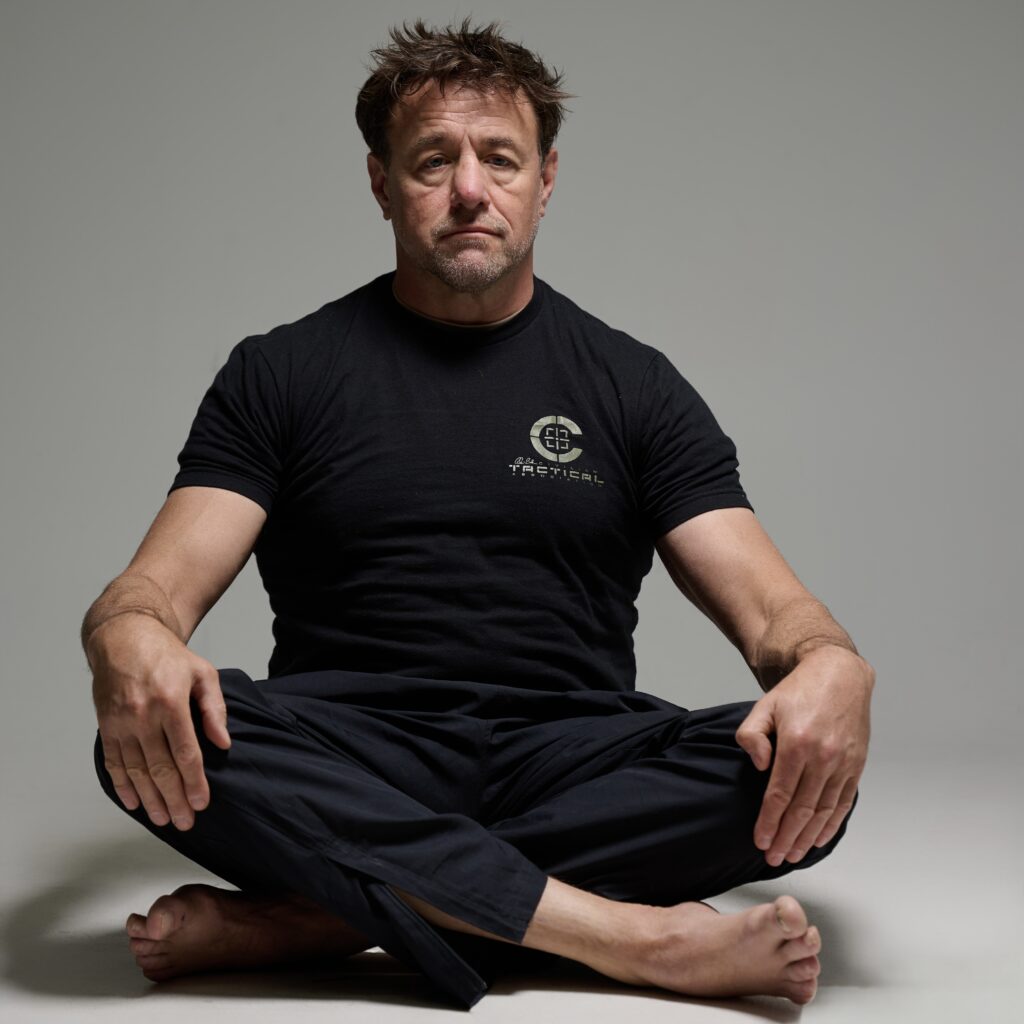
When you learn to reduce unnecessary tension, you improve movement quality because joints and muscles can do their jobs without fighting each other. You improve breathing mechanics because the rib cage, diaphragm, neck, and shoulders stop behaving like they’re in a car crash. You improve recovery because you can access parasympathetic downshift more easily, which is part of how the body restores. The research literature on relaxation and breathing repeatedly tiesrelaxation to reductions in stress physiology and improvements in measures like blood pressure, heart rate, and anxiety, which are all connected to the nervous system state you walk around in.
You also improve pain patterns. Chronic muscle tension is commonly linked with stress, and relaxation-based interventions are studied in the context of chronic pain with measurable physiological effects, including reduced muscle tension and stress markers. That doesn’t mean relaxation is a magic cure for everything, but it does mean you should stop pretending tension is always a virtue. Tension is a tool. Tools are used on purpose. If your tool is stuck in the “on”position, it’s not a tool; it’s a problem.
From a combatives perspective, tension control improves your ability to strike with snap, because snap requires relaxation before contraction. It improves your ability to grapple with pressure, because pressure requires structure and timing, not constant squeezing. It improves your ability to move fast because speed is often the product of reduced friction and correct sequencing, not the product of trying harder. It improves your endurance because you stop wasting energy. And it improves your ability to think, because if your nervous system is constantly flooded, your decision-making shrinks.
This is why root is timeless. You can be 25 and benefit from it. You can be 55 and depend on it.
If you want to connect this to the “good old days” problem directly, there’s another post on your site that hits this theme head-on: Developing Timeless Tools And The Good Old Days. It’s the same warning in a different suit: if you only train what fades, you’ll eventually fade with it.
“Old age, Laelius and Scipio, should be resisted, and its deficiencies should be supplied by faithful effort. Old age, like disease, should be fought against. Care must be bestowed upon the health; moderate exercise must be taken; the food and drink should be sufficient to recruit the strength, and not in such excess as to become oppressive. Nor yet should the body alone be sustained in vigor, but much more the powers of mind; for these too, unless you pour oil into the lamp, are extinguished by old age.”
— Cicero, De Senectute
Timeless Tool 3: Expansion
Decompressing the joints and reclaiming space in the body
Expansion is the ability to decompress the joints of the body. This is a learned skill. Just like an infant learning to walk, once you have it, it’s yours. You don’t need a rack to hang from. You don’t need someone else to do it for you. You can learn to create space in your joints at will. You just need the source of knowledge, and you need to be willing to do the work.
I’ve taught this for decades because it affects everything. It affects your movement, your comfort, your resilience, and your ability to train hard without breaking down. Expansion is not just “stretching.” Stretching is one tool. Expansion is a skill. It’s a method of actively creating joint space and joint integrity, not passively pulling on tissues until something gives.
The regular practice of expansion and contraction of the joints conditions them. In my experience, it helps make joints stronger, denser, and more pliable. It improves flexibility and range of motion. It improves the quality of movement. It also improves your relationship with pain and stiffness, because a lot of what people call “getting old” is really just the body losing options.
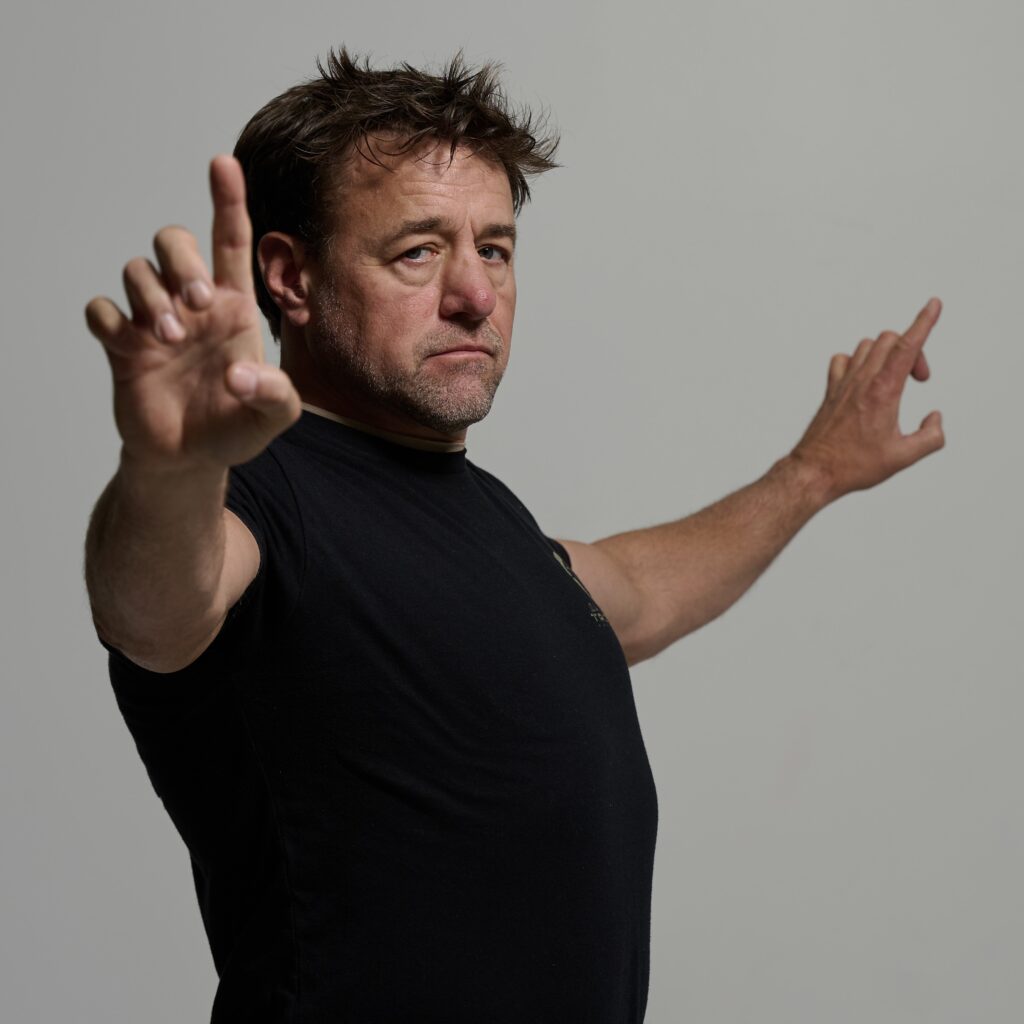
I have a strong opinion about this. Your joints hold your youth. Once they start to lose pliability, your body starts to freeze. The body becomes a set of locked doors. Movement becomes negotiation. People start living inside a smaller and smaller range until the range becomes their prison.
That’s why I separate joint range into three categories.
Range of motion is what most people were taught in basic school gym class. They were taught to touch their toes and call it mobility. They were taught to “stretch” and hope for the best. That’s surface-level movement education.
True range of motion is the aligned range of motion. It means you move through a range while maintaining skeletal alignment and mechanics. That’s important in combatives because alignment is how you build power and protect joints while producing force. A sloppy range is not the same as a usable range.
The range of expansion is the amount of decompression you can create in a given joint. The more you train that skill, the more it increases. It’s not an infinite range, but it is trainable. It’s also protective. It makes your movement feel different because you have space to rotate, to sink, to rise, to spiral, to absorb, and to transfer force without grinding your own structure.
“In speaking to you, men of the greatest city of the West, men of the State which gave to the country Lincoln and Grant, men who pre-eminently and distinctly embody all that is most American in the American character, I wish to preach, not the doctrine of ignoble ease, but the doctrine of the strenuous life, the life of toil and effort, of labor and strife; to preach that highest form of success which comes, not to the man who desires mere easy peace, but to the man who does not shrink from danger, from hardship, or from bitter toil, and who out of these wins the splendid ultimate triumph.”
-  from the opening of Roosevelt’s The Strenuous Life (Chicago, April 10, 1899)
The benefits of healthy joints, and why movement feeds the joints
Let’s talk about what the science side says, because it lines up with what the old systems were pointing at through training. Joint structures like cartilage have limited blood supply and rely heavily on joint fluid and loading-unloading cycles for nutrition and waste exchange, which is one reason why movement matters. A patient-oriented explanation from the University of Washington notes that articular cartilage gets oxygen and nutrients from joint fluid, and that loading and unloading squeeze fluid out and then allow it to seep back in with nutrients. The health of cartilage depends on its being used.
That’s the boring medical way of saying what every old-school coach knew: movement is medicine, if it’s the rightmovement and the right dose.
Public health and arthritis organizations have been consistent about this for years. The CDC emphasizes that physical activity can reduce joint pain and improve function and mood for people with arthritis, and that flexibility work helps maintain the range of motion so you can keep doing normal life activities. The Osteoarthritis Action Alliance also highlights that flexibility and range-of-motion exercises contribute to cartilage health and protect joints. Harvard Health points out that stretching helps maintain joint range of motion, and without it, muscles shorten and tighten, increasing the risk of joint pain and injury patterns.
In other words, if you want your body to keep moving like a weapon system, you have to maintain the hinges. You don’tignore the joints and then act surprised when your movement options collapse.
Expansion training, when taught correctly, is one of the ways to maintain joint options. It’s not the only way. Strength training supports joints, too, because muscles stabilize joints, and strength gives you control through range. Stretching has evidence behind it for improving the range of motion and, in specific populations, reducing pain. The point is not to pick one method like a religion. The point is to build a joint strategy that keeps you training for decades.
From a combatives lens, healthy joints are not just about comfort. They’re about performance. If your hips don’t open, your footwork becomes flat. If your thoracic spine doesn’t rotate, your striking becomes arm punches. If your shoulders don’t glide, your clinch becomes strained. If your ankles are locked, your base becomes brittle. Joint options are tactical options.
That’s why expansion is timeless. You can keep improving it deep into life, and it keeps paying dividends.
“If there is no struggle, there is no progress.”
— Frederick Douglass
Timeless Tool 4: Internal Timing
Tempo control is a life skill, not just a fight skill.
Internal timing is a timeless tool because it gives you control over your tempo and rhythm, which means you gain control over how you show up in the world. This is not just about fighting. This is about leadership, decision-making, stress management, and performance under pressure.
You operate at an internal rhythm, and the mastery of that rhythm is one of the most underrated skills a warrior can possess. When your timing is owned, you can push when it matters, stay calm when chaos hits, and avoid being dragged around by whatever environment you walk into. That theme is front and center in your article, ” Controlling Your Internal Timing.”
Here’s the hard truth. Most people let their surroundings determine what their tempo is. They let social media set their nervous system. They let work emails set their breath. They let traffic set their mood. They let conflict set their posture. They are constantly being played like an instrument by the outside world.
Internal timing is learning to stop doing that.
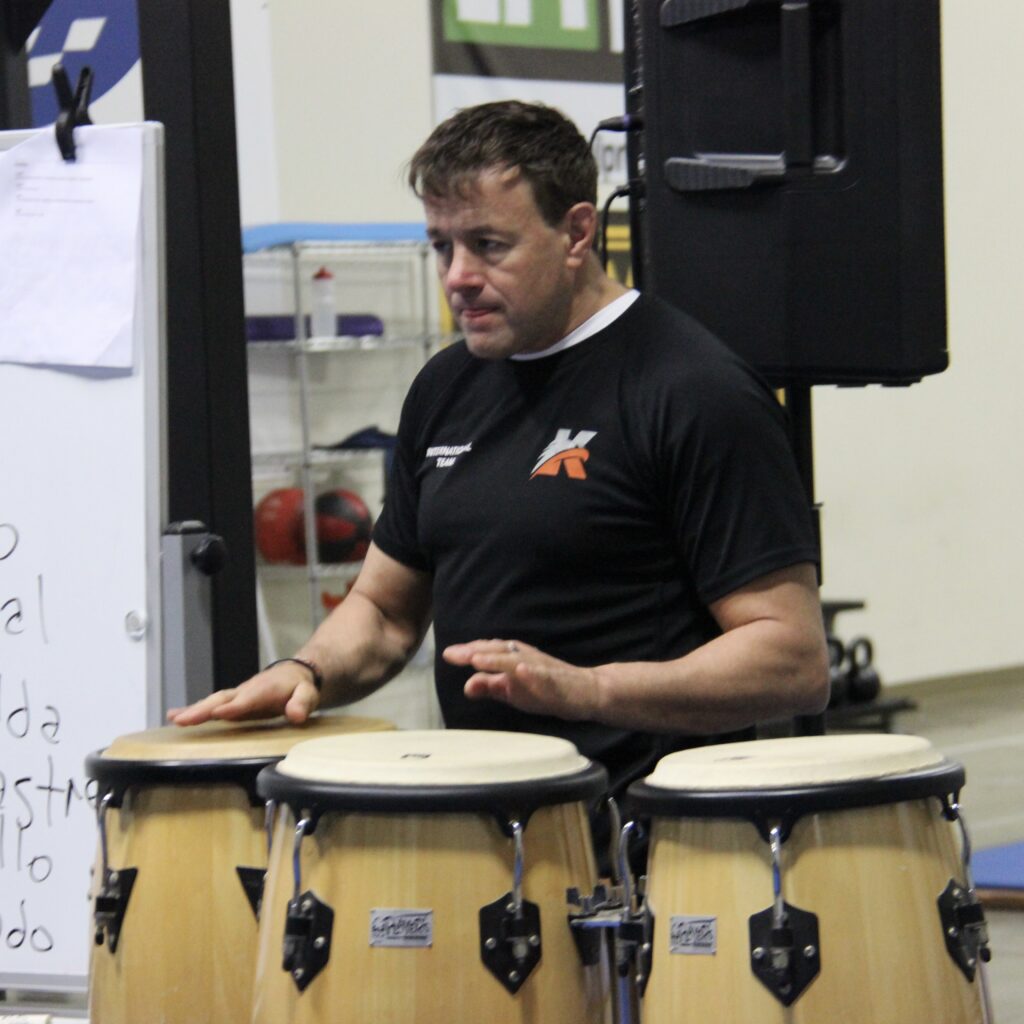
It’s learning that you can turn your tempo up or down as you see fit. Yes, there are times when the body has to choose. A true surprise can spike you before you get a vote. That’s biology. But there are far more moments in life where you canchoose, and most people just don’t know they can.
In fighting, internal timing is the difference between rushing and arriving. It’s the difference between flinching and acting. It’s the difference between swinging because you’re emotional and striking because you’re aligned. It’s also the difference between getting caught in the opponent’s rhythm versus imposing a rhythm that forces them to adapt.
In life, internal timing is the difference between reacting and responding. It’s the difference between being a high performer and being a high-strung performer. It’s the difference between having intensity on purpose and living in intensity by accident.
If you’re a coach, teaching internal timing doesn’t mean you give speeches. It means you build training that demands rhythm control. It means rounds where the student must change pace on command. It means drills where they have to slow down and still be sharp. It means awareness work where they can feel their own breath and tension while they move.It means teaching them how to be calm without being passive, and how to be aggressive without being reckless.
Internal timing is also one of the bridges between the combative arts and the Warrior’s Path philosophy because the same person who can control their tempo in a clinch can also control their tempo in a business meeting, in a family conflict, and in a personal crisis. The skill transfers.
That’s what makes it timeless.
“To constantly and persistently cultivate the whole of the body… that is physical culture.”
— Eugen Sandow, Strength and How to Obtain It (1897)
The real point: Timeless tools are what you have when the plan fails
If you take nothing else from this article, take this. Techniques are valuable, but techniques are not the foundation. The foundation is the body state and attributes that make techniques work under stress. When you build timeless tools, you stop being dependent on perfect circumstances. You stop being dependent on youth. You stop being dependent on motivation. You stop being dependent on “feeling good.” You start being dependent on the method.
Projection teaches you to arrive with less effort and more result. Root teaches you to control tension and become substantial. Expansion teaches you to reclaim joint space and keep your movement options alive. Internal timing teaches you to own your rhythm instead of being owned by the world.
This is why layered skill development matters. It forces you to train deeper than choreography. It forces you to build tools that survive.
If your current training is mostly technique collection, I’m not telling you to throw it away. I’m telling you to upgrade it. Use techniques as vehicles to train attributes and state. Ask yourself, “What tool is this drill building?” If you can’tanswer, you might just be doing choreography.
And if you’re already feeling the effects of age or mileage, understand this. You’re not done. You’re just being invited to train smarter. You may not always be blessed with speed and strength. But you can always be blessed with method, if you’re willing to learn it and put the reps in.
That’s the warrior-scholar path. You build the body, you study the operating system, and you refuse to become a museum exhibit of your own past.
Timeless Tool 5: Intelligent Placement
Being in the right place at the right time.
Intelligent placement is a timeless tool, and it’s one of those skills that makes a practitioner look “fast” without needing speed. When I say intelligent placement, I’m talking about positioning your body and your extremities inside an engagement so you are ahead in timing. You’re not chasing the exchange. You’re already where you need to be. If your hand is in the right place at the right time and your opponent tries to fill that space with a punch, a grab, or an angle change, that intelligently placed hand will catch the movement, not because you’re stronger or quicker, but because you trained your body to be there in advance.
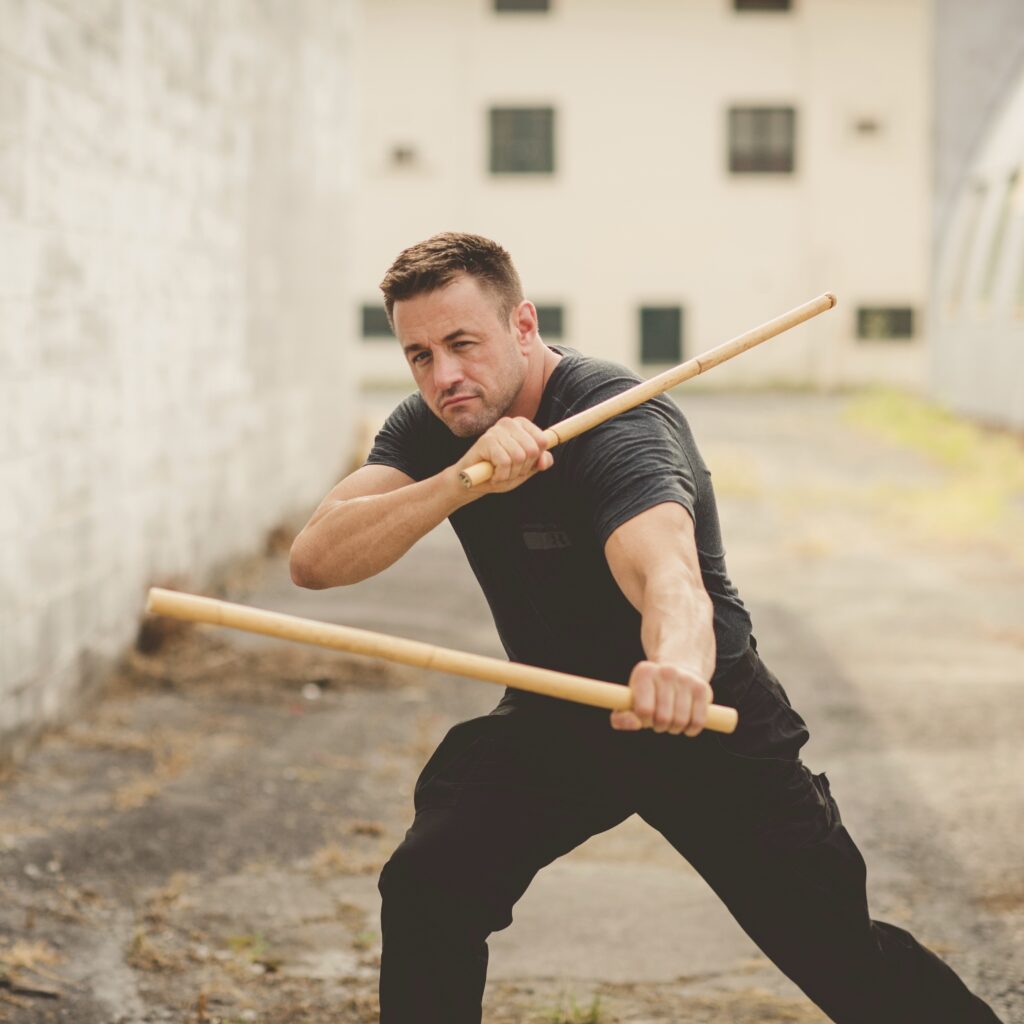
This is a huge skill because most people cover up poor placement with bursts of speed. They get out of position, then they use athleticism to recover. They’re constantly playing catch-up. They’re always one beat behind, so they have to sprint to get back on schedule. That works when you’re young, when your nervous system is sharp, and when your body is loadedwith horsepower. But it’s a costly way to fight, and it becomes even more expensive over time. The intelligent practitioner invests in training the body to know where to be ahead of time. When you are consistently in the right place at the right time, you don’t have to “be fast.” You just have to be correct. To the opponent, it feels like you’re beating them to every moment. In reality, you were already there waiting on them.
You can train intelligent placement in different categories, but two show up constantly. The first is footwork and positioning of the body. If you train intelligently, your feet and your frame naturally arrive at the right angle, at the rightdistance, in the right lane. You see a lot of this in Filipino martial arts because the environment they’re preparing for forces the issue. When edged weapons are on the table, being out of position is not a small mistake; it’s a catastrophic one. That threat makes positioning honest. It makes angles real. It makes the relationship between distance and timing something you respect. You learn quickly that “almost right” is not right.
The second category is placement of the hands in and around the body. This is where I see a common leak. A practitioner will be using one hand for a task, and the other hand is just hanging out at their side, offline, not doing anything useful. It may not be there long, but even a few moments of that is enough for the wrong thing to happen at the wrong time. A better option is to keep that non-working hand online, living between you and the opponent, even if it’s not actively striking or grabbing. It’s there as a sentinel. It’s there as an early-warning system. And if the opponent suddenly fills the space with a punch, that hand is already in position to catch, intercept, shield, redirect, or create a beat of contact that buys you time. That’s the whole point. You didn’t react late. You arrived early.
People ask, “How do I train to be in the right position at the right time?” The answer is intelligent drilling. Drilling has gotten a bad rap in the martial arts world because some people don’t understand what drills are for. You’ll hear someone watch a drill and say, “That’s not how fighting works,” and that comment usually comes from ignorance. Either they’reignoring reality, or they were never taught how drills are supposed to be designed. Drills are not meant to be a fake version of a fight. Drills are meant to program the nervous system so you have reliable placement under pressure. Drills are how you train the body to do the right thing without needing to stop and think about it, especially when you’restressed, distracted, fatigued, or surprised.
The problem isn’t drilling. The problem is lazy drilling. Doing the same thing over and over and hoping the right thing magically appears is not training, it’s gambling. Intelligent drilling requires understanding what you’re trying to program and what variables need to be present for that program to be real. You have to understand how to build the progression, how to scale it from cooperative to alive, and how to include timing, distance, angles, and decision-making in the correct order. You’re not just repeating motion, you’re installing a response.
One of the best ways to use intelligent drilling is to let reality identify the problem first. Maybe you notice that in kickboxing you keep ending up square when you should be bladed, or you keep overreaching and getting pulled into counters. Maybe in grappling, you keep losing inside position in the clinch, or you keep giving up an underhook, or you’reconsistently late on frames. Once you identify the pattern, you have two choices. You can find an existing drill that targets the problem, or you can build one. That’s not disrespecting any martial art. That’s actually how martial arts were created in the first place. Somebody had a problem in conflict, they developed a method to solve it, and they trained that methoduntil it became reliable. You can do the same thing inside your own training, as long as you understand what you’rebuilding and you pressure-test it honestly.
This is why intelligent placement is timeless. Being in the right position at the right time doesn’t require strength. It doesn’t require youth. It doesn’t require speed. It doesn’t require those perishable attributes that fade over time. It requires intelligent movement, intelligent training, and a willingness to stop living off athletic recovery and start living off correct positioning. When you build this tool, you don’t just look better. You feel calmer. You waste less energy. You get hit less. You control more. You create time where other people feel rushed. And that’s one of the highest forms of skill in the combative arts.
"Throw the kick to where your opponent is gong to be."
- Me
A practical way to start applying this immediately
Start noticing what you rely on.
If you rely on muscling techniques, you need projection.
If you rely on bracing and squeezing, you need root.
If you feel stiff, limited, or “frozen,” you need expansion.
If your environment controls your life rhythm, you need internal timing.
Then pick one tool and train it for 30 days, intentionally. Not randomly. Intentionally. Keep training your normal program, but choose one timeless tool to focus on and look for it in everything you do. Look for it in your warm-ups. Look for it in your strength training. Look for it in your striking. Look for it in your grappling. Look for it in how you walk, how you stand, how you breathe, how you carry stress.
That’s how these tools become real, not by reading about them, but by building them into the machine.
Want To Go Deeper With Your Study?
All of the concepts you just read about live inside my Warrior’s Path Program. I’ve spent over 45 years in the martial arts, and a big part of that journey was studying multiple kung fu systems that were built to develop timeless tools, not just flashy techniques. Over time, I took what I learned, pressure-tested it, and condensed it down into a process that’spractical, digestible, and actually trainable for real people with real lives. That’s where this material comes from.
If you want to go deeper, you can study it inside the Warrior’s Path Online Video Academy, where I break these tools down step-by-step and show you how to train them in a way that sticks. If you’d rather learn in person, this is also material I teach through private coaching, workshops, and seminars on a regular basis. If you want details or want to see what option fits you best, you can reach out and contact me directly through my website.
The Old-School Physical Culture Mindset
Indian clubs, rings, and the quiet intelligence of training for life
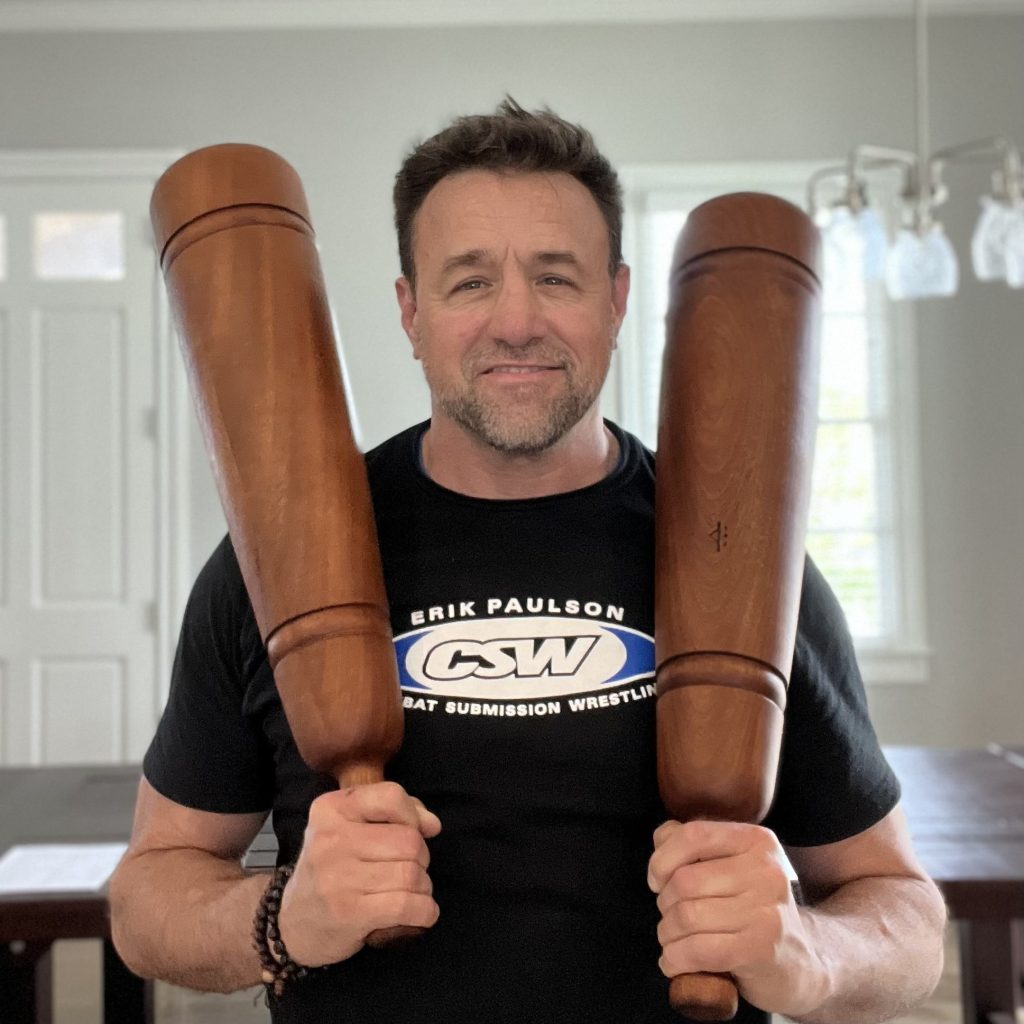
When people talk about the old-school Physical Culture era, most of them only see the surface. They picture Indian clubs swinging in big arcs, gymnastic rings hanging in a bare training hall, rope climbs, kettlebells, thick-handled dumbbells, and calisthenics done with discipline. And yeah, I love that stuff. But the real value of that era was never the equipment. It was the mindset. That generation trained the human machine for the long haul. They weren’t training for a weekend, they weren’t training for a highlight reel, and they weren’t training for likes. They were building capability. They were training to be useful. They were training to stay in the game.
What I respect most about that perspective is the quiet intelligence behind it. They understood that injury is a debt. It’s not a badge of honor. Getting hurt doesn’t make you tough, it makes you unavailable. Physical Culture was hard training, but it was intelligent hard. They cared about quality movement, repeatable work, strong positions, and a gradual build of volume. The goal wasn’t to survive one savage session. The goal was to be able to train again tomorrow, and still be training ten years from now. That’s a very different mindset than the modern “redline everything” approach a lot of people have adopted.
Another major piece of Physical Culture was unitary motion. They trained the body to move as one piece. That’s why rings were such a big deal. Rings don’t let you cheat. If your shoulder, ribs, spine, hips, and feet aren’t communicating, the rings expose it immediately. Indian clubs did the same thing in a different way. Clubs teach you that the shoulder doesn’t move correctly if the scapula doesn’t move correctly, and the scapula doesn’t move correctly if the ribs are locked up, and the ribs don’t move correctly if your breath is shallow. The whole chain has to cooperate. Without even realizing it, you’re training connected movement and integration. You’re building the body as a unified machine.
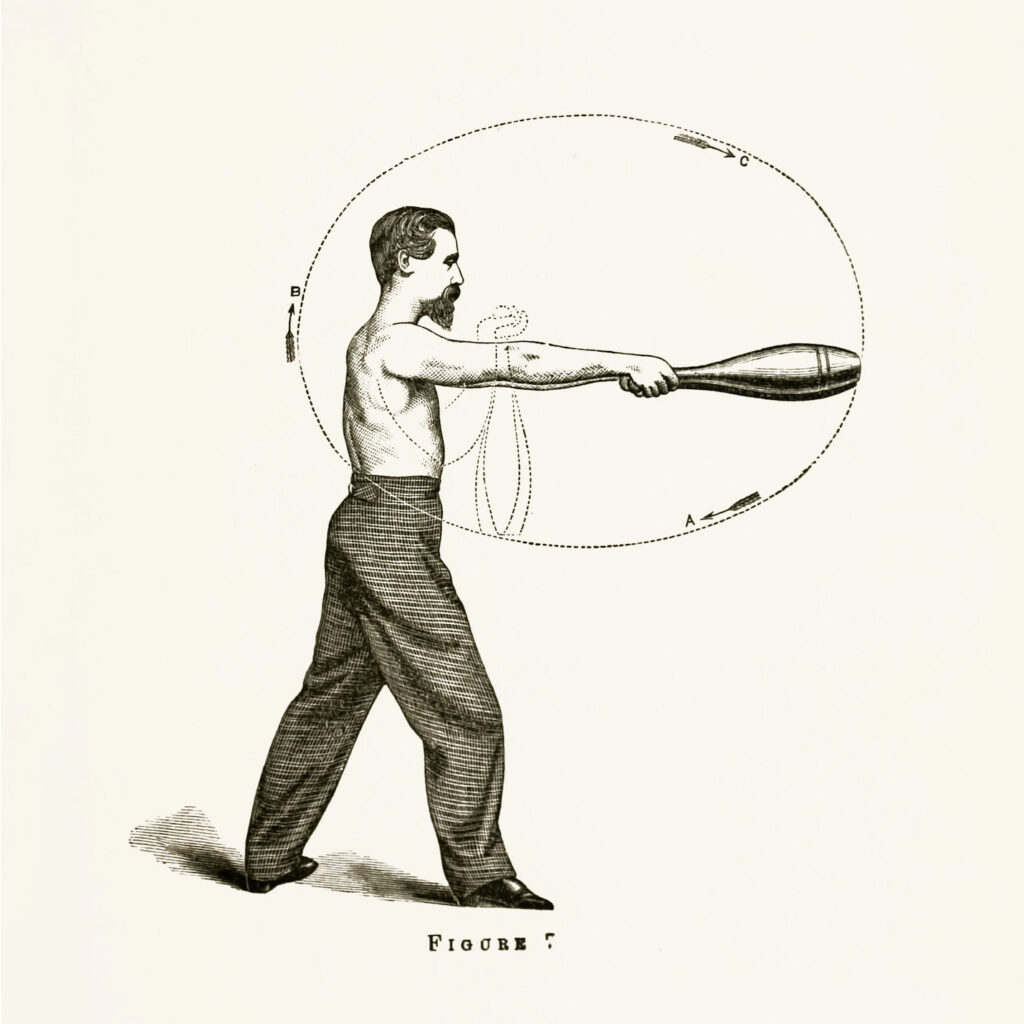
And the third piece that ties directly into what we’ve been talking about in this article is timing. Physical Culture trained timing into the body constantly. Not just “fight timing,” but internal rhythm, sequencing, and the ability to express power smoothly. Indian clubs have a rhythm and a cadence. If you rush them you feel it in the joints. If you respect the swing, you learn when to relax, when to connect, and how to move through a cycle without friction. Rings do the same thing because stability is always changing. You have to find the right sequence, and you have to find it again and again. That’s timing. That’s nervous system programming. That’s skill.
Now here’s why I’m bringing this up in an article about timeless tools. Because this is the exact same mindset and perspective that was taught to me by my teachers in Kung Fu. The old systems weren’t built for short timelines. They were built for life. They began with the end in mind. They assumed you would age. They assumed you would take hits, collect injuries, and lose some horsepower. So they emphasized the internal tools early: body state control, tension control, structure, alignment, timing, and efficiency. In other words, the things that last.
That’s the connection. The Physical Culture era and the Kung Fu systems I studied share the same core idea: train the machine in a way that keeps the machine operational. Train the body as a unit. Train timing into the nervous system. Avoid injury through intelligent practice. Build tools that do not depend on youth. And when you look at it through that lens, you can see how it ties into everything we’ve covered here: projection, root, expansion, internal timing, intelligent placement. All of those are timeless tools, and they all live inside the same old-school perspective. This isn’t new. It’s just rare now.
“Physical culture is to the body what culture is to the mind… To constantly and persistently cultivate the whole of the body…”
- Eugen Sandow (one of the central voices of the Physical Culture era), in Strength and How to Obtain It (1897).
Sources and further reading
Alan Baker articles referenced
- Technique, Attributes, or State: Which Are You Training?
- Controlling Your Internal Timing
- Developing Timeless Tools and the “Good Old Days”
Research and supporting references
- CDC, Arthritis and physical activity: https://www.cdc.gov/arthritis/basics/physical-activity-overview.html
- CDC, Flexibility exercises for arthritis: https://www.cdc.gov/arthritis/interventions/flexibility-exercises.html
- Harvard Health, The importance of stretching: https://www.health.harvard.edu/staying-healthy/the-importance-of-stretching
- University of Washington Orthopaedics, Articular cartilage and joint fluid (how movement nourishes cartilage): https://orthop.washington.edu/patient-care/articles/arthritis/articular-cartilage.html
- Osteoarthritis Action Alliance, Physical activity and osteoarthritis (range of motion and cartilage support): https://oaaction.unc.edu/resource-library/physical-activity-and-osteoarthritis/
- NCBI (PubMed), Progressive Muscle Relaxation overview and health effects: https://www.ncbi.nlm.nih.gov/books/NBK513238/
- https://www.gutenberg.org/files/65987/65987-h/65987-h.htm (Strength and How to Obtain It (1897).)
Shift Your Perspective, Take Action, And Create Change
Gentleman in Conduct. Scholar in Thought. Savage in Action.
~ Sifu Alan ┃ www.sifualan.com ┃ www.civtaccoach.com┃www.prtinstructor.com
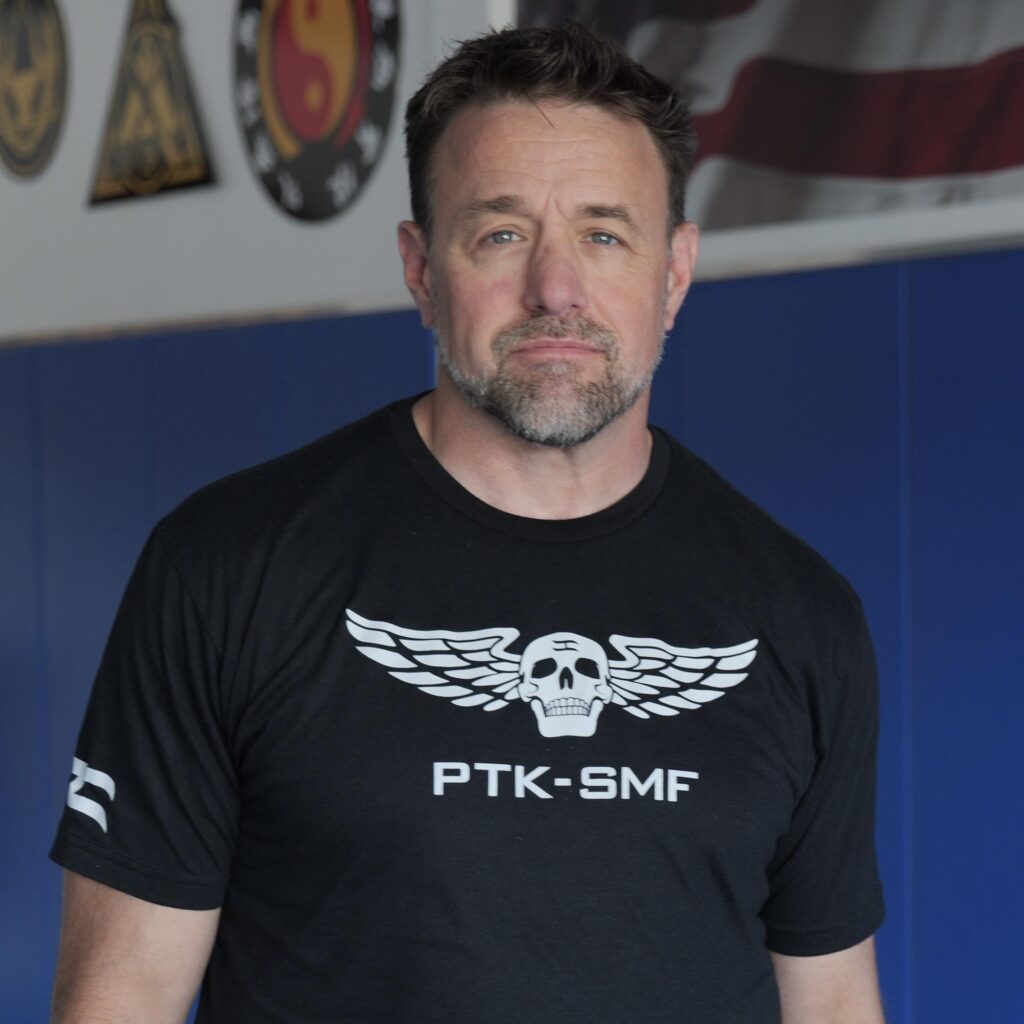
Sifu Alan Baker is a nationally respected authority in Defensive Tactics Program Development, High-Performance Coaching, and martial arts, with over 45 years of training experience across multiple systems. As a lifelong martial artist and tactical instructor, Alan has dedicated his career to creating practical, adaptable, and effective training systems for real-world application. He has worked extensively with law enforcement agencies, military units, and private security professionals, designing programs that emphasize scenario-based training, everyday carry (EDC) integration, and combative efficiency under pressure.
Alan’s client list includes elite organizations such as the Executive Protection Institute, Vehicle Dynamics Institute, The Warrior Poet Society, ALIVE Active Shooter Training, Tactical 21, and Retired Navy SEAL Jason Redman, among many others. He is the creator of both the C-Tac® (Civilian Tactical Training Association) and Protection Response Tactics (PRT) programs—two widely respected systems that provide realistic, principle-based training for civilians and professionals operating in high-risk environments.
In addition to his tactical and martial arts work, Alan is the founder of the Warrior’s Path Physical Culture Program, a holistic approach to strength, mobility, and long-term health rooted in traditional martial arts and the historic principles of physical culture. This program integrates breathwork, structural alignment, joint expansion, strength training, and mental discipline, offering a complete framework for building a resilient body and a powerful mindset. Drawing from his training in Chinese Kung Fu, Filipino Martial Arts, Indonesian Silat, Burmese systems, and more, Alan combines decades of experience into a method that is both modern and deeply rooted in timeless warrior traditions.
Alan is also the architect of multiple online video academies, giving students worldwide access to in-depth training in his systems, including Living Mechanics Jiu-Jitsu, C-Tac® Combatives, breathwork, functional mobility, and weapons integration. These platforms allow for structured, self-paced learning while connecting students to a growing global community of practitioners.
Beyond physical training, Alan is a sought-after Self-Leadership Coach, working with high performers, professionals, and individuals on personal growth journeys. His coaching emphasizes clarity, discipline, focus, and accountability, helping people break through mental limitations and align their daily actions with long-term goals. His work is built on the belief that true mastery begins with the ability to lead oneself first, and through that, to lead others more effectively.
Alan is also the author of three books that encapsulate his philosophy and approach: The Warrior’s Path, which outlines the mindset and habits necessary for self-leadership and personal mastery; The Universal Principles of Change, a practical guide for creating lasting transformation; and Morning Mastery, a structured approach to building a powerful daily routine grounded in physical culture and discipline.
To explore Alan’s books, digital academies, live training opportunities, or to inquire about seminars and speaking events, visit his official website and take the next step on your path toward strength, resilience, and mastery.
More informaton of the study of physical culture.