
Empowering Steps for Victory
Inside every man or woman who trains, there’s a quiet understanding that most people will never touch. You can’t grow without pressure. You can’t sharpen without friction. And you can’t claim you’re building a warrior’s life while avoiding the very challenges that forge your identity. The hard season is not a detour. It’s the curriculum.
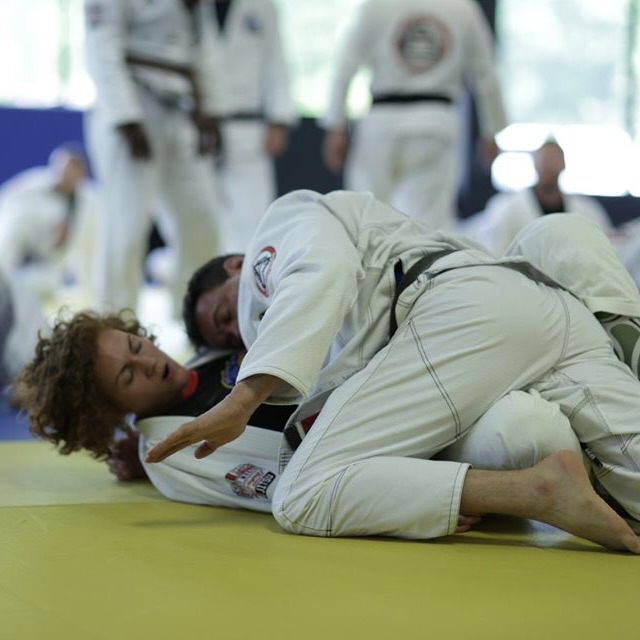
Challenges show up in different uniforms. Sometimes it’s physical, like injury, fatigue, age, or the slow grind of rebuilding strength. Sometimes it’s professional, like business pressure, financial strain, conflict, or uncertainty. Sometimes it’s personal, like relationships, grief, doubt, or the feeling that you’re carrying more than anyone sees. But no matter what mask the challenge wears, the mission is the same: you meet it with clarity, discipline, and forward motion.
The first step is the one most people skip, because it requires honesty. You acknowledge the challenge. You stop negotiating with reality. You stop acting like you can outthink it, outrun it, or numb it away. In a fight, denial gets you hurt. In life, denial keeps you stuck in place while the problem grows teeth. A warrior does not pretend. A warrior identifies.
Acknowledgment is not weakness. It’s power, because it ends the internal argument. When you say, “This is real, and I’m dealing with it,” you reclaim your agency. You stop wasting energy on avoidance and start directing energy into action. If you want to overcome anything, you have to face it first.
Once you acknowledge it, you define it. Most people keep their problems vague because vagueness gives them an excuse to stay overwhelmed. “I’m stressed.” “Life is hard.” “Everything is falling apart.” That’s not definition, that’s fog. Warriors don’t fight fog. You break the challenge down into something you can see, touch, measure, and respond to. What exactly is happening. What is the real obstacle. What is the cost if you do nothing. What part of this is within your control, and what part is outside it.
Think of it like reconnaissance. You don’t walk into unknown territory and hope for the best. You gather intel. You map the terrain. You identify the threats and the resources. In my world, we do the same thing before we step into pressure. If you can’t define the problem, you can’t build the solution.
After definition comes direction, and this is where most people either get sloppy or get unrealistic. You set goals. Not fantasy goals. Not vague motivational slogans. Real targets that create forward progress. The best goals are specific enough to execute, measurable enough to track, and realistic enough to build momentum. You don’t need a perfect plan, but you do need a clear target, because without a target, your effort becomes noise.
I also want you to think in two levels. Level one is the big mission, the long-term outcome. Level two is the next 24 hours. What does winning look like today. Not when you feel inspired. Not when life calms down. Today. The Warrior’s Path is built on daily victories stacked like bricks. That’s how you build an unbreakable foundation.
Now let’s address something people don’t like to admit. You are not meant to do this alone. You seek support. Not because you’re weak, but because you’re serious. Lone wolf energy sounds tough until you realize wolves still hunt in packs. The right support system is a force multiplier. It can be family, friends, mentors, coaches, training partners, or a small circle that holds you to a standard. The key is this: you don’t need people who feel sorry for you. You need people who believe in you enough to tell you the truth, and strong enough to keep you moving.
Support is not a replacement for responsibility. It’s reinforcement. It’s a mirror that helps you see what you cannot see in yourself. It’s accountability when your emotions try to talk you out of the mission.
With definition and support in place, you build a strategy. This is where the warrior-scholar mindset lives. Strategy is the bridge between your current reality and your desired outcome. It is not just “work harder.” It is choosing the right actions in the right order, with the right intensity, for the right amount of time.
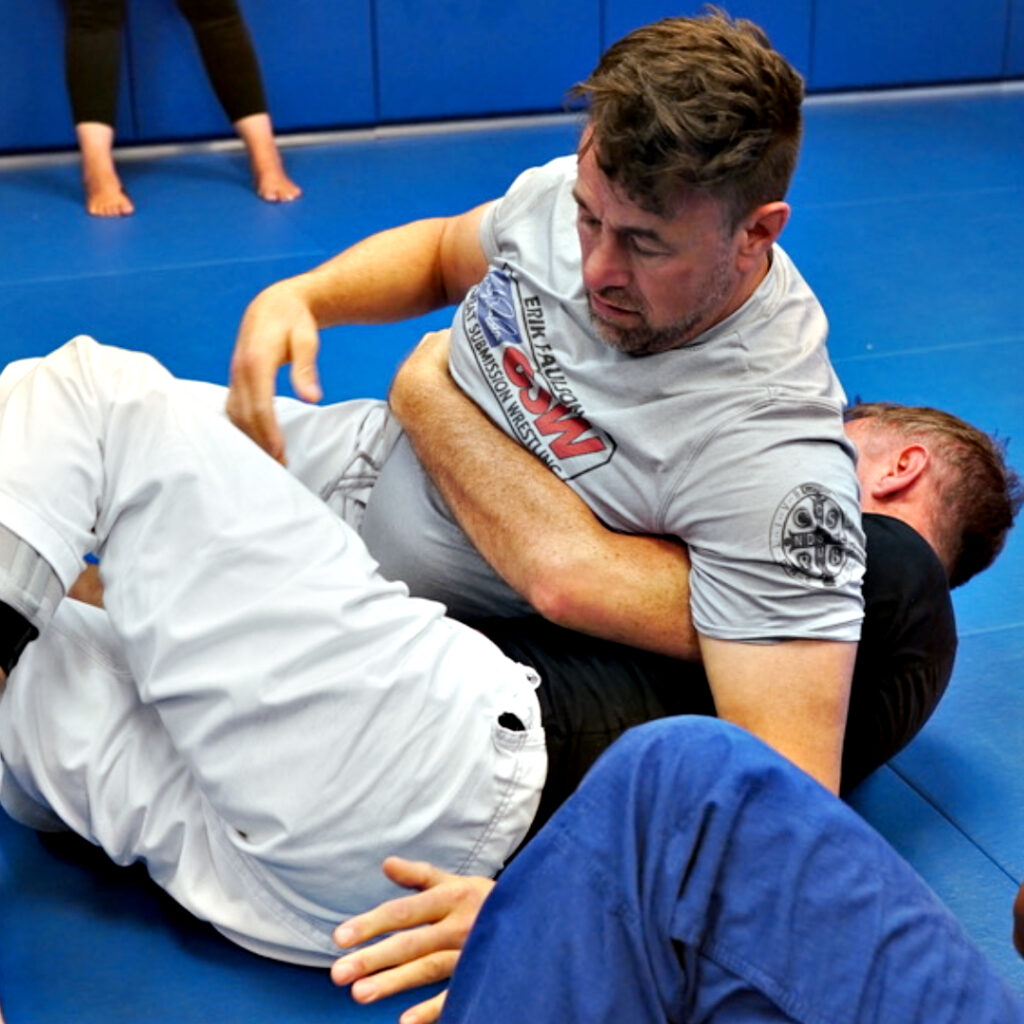
A good strategy breaks the challenge into actionable steps. It eliminates confusion. It gives you priorities. It creates a rhythm. The same way we structure training cycles, you structure your response to life. You don’t walk into the gym and max out every day. You follow a process that builds capacity over time. Challenges work the same way. You don’t win them with one heroic moment. You win them with consistent execution.
Then you take action. This is where your character shows. Planning feels productive, but execution is the truth. You put the plan in motion, even if it’s messy, even if progress is slow, even if you’re not “ready.” Read that again. You don’t wait to feel ready. You act your way into readiness.
Action creates momentum, and momentum changes everything. It builds confidence. It generates feedback. It reveals what works and what doesn’t. The man who moves forward gains information the man who hesitates will never earn.
As you move, you adapt and learn. Real challenges rarely respond to your first attempt. The Warrior’s Path is not stubbornness. It’s intelligent persistence. You stay committed to the mission, but flexible in the method. When something isn’t working, you don’t throw a fit, you adjust. You learn. You refine. You keep moving.
This is also where you have to manage your internal state. Your state drives your decisions. When your nervous system is overloaded, you don’t think clearly. You react. You catastrophize. You quit early. That’s why a warrior trains his body and his breath, not just his skills. Your breathing, your posture, your routines, your recovery, your nutrition, your sleep, and your self-talk all shape your ability to perform under pressure.
In our training world, we talk about “state of action.” That idea applies to life just as much as it applies to self-defense. When pressure hits, can you stabilize yourself and respond with clarity. Or do you spiral. Your state is a skill. Train it.
Now, staying positive does not mean pretending everything is fine. It means you refuse to surrender your mind to the problem. You stay motivated by focusing on meaning and direction. You hold the line. You celebrate small wins because small wins create fuel. You keep your eyes on progress, not perfection.
Self-care belongs here, and I’m going to say it like a warrior: self-care is not softness. It’s maintenance of the machine. If you want to win, you protect your capacity to produce. That means you train, recover, sleep, hydrate, eat like someone who respects the mission, and get your mind right. It also means you take time to decompress and recharge so you can return to the fight with power.
Then you persevere. You keep going, even when the emotional weather changes. You understand that setbacks are part of the process, not evidence that you’re failing. You treat a bad day like weather. It passes. You do not interpret the storm as a prophecy. You keep walking.
And when you make progress, you celebrate success. Not because you’re done forever, but because you’re reinforcing the identity of the person who finishes. You take stock of what you learned. You acknowledge your growth. You recognize the strength you forged. That’s how you build the confidence to face the next mountain.
Belief as a Weapon
Now let’s add a layer most people misunderstand: belief. Confidence is not a vibe. It’s not something you either have or don’t have. Real confidence is a trained expectation built through mastery experiences, good coaching, and learning how to manage your stress response under pressure.
That’s what “belief as a weapon” means. It’s self-efficacy, the internal conviction that you can execute, adapt, and endure. When life humbles you, and it will, self-efficacy is what helps you rebuild without falling into self-pity or paralysis.
How do you build it. You earn it. You set a small target and hit it. Then you hit the next one. You stack wins. You build proof. You stop seeking confidence and start training competence. You also learn to regulate your internal state so you don’t fall apart when stress spikes. A warrior does not need perfect conditions to perform. He needs trained systems.
A Planning Method That Outperforms Motivation
Motivation is useful, but motivation is fragile. If your entire plan is “I hope I feel strong tomorrow,” you’re gambling with your future. That’s why I like a planning method that beats pure inspiration: mental contrasting with implementation intentions, often taught as WOOP.
WOOP stands for Wish, Outcome, Obstacle, Plan. You start with the wish, the thing you want to accomplish. Then you define the outcome, what winning looks like. Then you identify the obstacle, the real one. Not the convenient one. The real friction point inside you or around you that will try to stop you. Maybe it’s distraction. Maybe it’s poor sleep. Maybe it’s a habit. Maybe it’s fear. Maybe it’s your environment.
Then you make the plan using an if-then decision. If the obstacle shows up, then I will do this. This is powerful because it programs your response before the moment of weakness arrives. You stop relying on willpower and start relying on structure.
If you want a simple example, it looks like this: If I start making excuses and want to skip the work, then I will do ten minutes anyway and build momentum. If I feel overwhelmed, then I will slow my breathing, write down the next action step, and move. If I get hit with conflict, then I will pause, assess, and respond with control instead of emotion.
That is the warrior-scholar in action. You don’t just dream. You plan for resistance.
Pressure Training for Life
There’s another upgrade that fits perfectly into this Warrior’s Path framework, and it’s one I live by: you don’t wait for chaos to teach you. You train for chaos.
In combatives, we pressure test. We add intensity, unpredictability, and resistance so you can learn to perform when it matters. That same concept applies to life challenges, and it’s often described as stress inoculation training. The idea is simple. You gradually expose yourself to controlled stress while practicing skills that keep you functional. You build tolerance. You build coping. You build performance under pressure.
This is how you stop being surprised by hardship. You learn to work inside discomfort. You learn to think with an elevated heart rate. You learn to keep your standards even when the moment gets heavy. A warrior does not rise to the occasion. He falls back on his training. That includes physical training, mental training, and state control.
The Challenge Protocol
If you want this article to be something readers can use immediately, give them a repeatable protocol. A sequence they can run anytime life hits them. Here’s a Warrior’s Path challenge protocol you can apply to anything.
You acknowledge the challenge and stop negotiating with reality. You define it clearly and break it into parts you can handle. You pick a target and decide what winning looks like in the next 24 hours. You build support, even if it’s just one solid person who holds you accountable. You create a strategy with actionable steps. You execute the next step, even if it’s small. You adapt as new information shows up. You train your internal state through breath, routines, and recovery so you can think clearly under pressure. You use WOOP to plan for obstacles and lock in an if-then response. You pressure train for life by doing hard things on purpose in controlled doses. And finally, you track your wins, celebrate progress, and reinforce the identity of the person who finishes.
That is how you conquer challenges. Not with hype. Not with wishful thinking. Not with excuses.
With discipline. With clarity. With a steady forward march.
Because the Warrior’s Path is not about a life without problems. It’s about becoming the kind of human being who can handle problems, solve problems, and keep moving while others quit.
And when you live that way long enough, something happens. You stop fearing challenges. You start respecting them.
You realize they were never sent to destroy you.
They were sent to build you.
Shift Your Perspective, Take Action, And Create Change
Gentleman in Conduct. Scholar in Thought. Savage in Action.
~ Sifu Alan ┃ www.sifualan.com ┃ www.civtaccoach.com┃www.prtinstructor.com
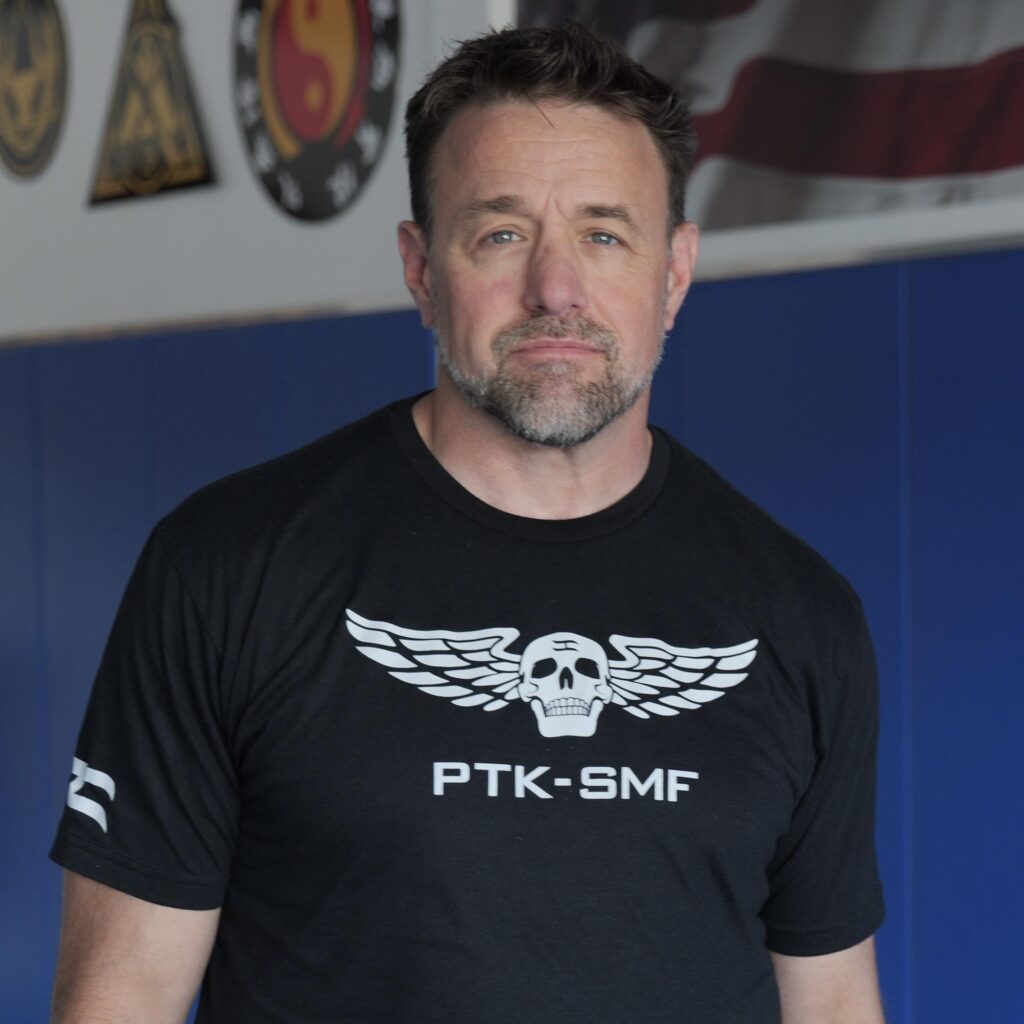
Sifu Alan Baker is a nationally respected authority in Defensive Tactics Program Development, High-Performance Coaching, and martial arts, with over 45 years of training experience across multiple systems. As a lifelong martial artist and tactical instructor, Alan has dedicated his career to creating practical, adaptable, and effective training systems for real-world application. He has worked extensively with law enforcement agencies, military units, and private security professionals, designing programs that emphasize scenario-based training, everyday carry (EDC) integration, and combative efficiency under pressure.
Alan’s client list includes elite organizations such as the Executive Protection Institute, Vehicle Dynamics Institute, The Warrior Poet Society, ALIVE Active Shooter Training, Tactical 21, and Retired Navy SEAL Jason Redman, among many others. He is the creator of both the C-Tac® (Civilian Tactical Training Association) and Protection Response Tactics (PRT) programs—two widely respected systems that provide realistic, principle-based training for civilians and professionals operating in high-risk environments.
In addition to his tactical and martial arts work, Alan is the founder of the Warrior’s Path Physical Culture Program, a holistic approach to strength, mobility, and long-term health rooted in traditional martial arts and the historic principles of physical culture. This program integrates breathwork, structural alignment, joint expansion, strength training, and mental discipline, offering a complete framework for building a resilient body and a powerful mindset. Drawing from his training in Chinese Kung Fu, Filipino Martial Arts, Indonesian Silat, Burmese systems, and more, Alan combines decades of experience into a method that is both modern and deeply rooted in timeless warrior traditions.
Alan is also the architect of multiple online video academies, giving students worldwide access to in-depth training in his systems, including Living Mechanics Jiu-Jitsu, C-Tac® Combatives, breathwork, functional mobility, and weapons integration. These platforms allow for structured, self-paced learning while connecting students to a growing global community of practitioners.
Beyond physical training, Alan is a sought-after Self-Leadership Coach, working with high performers, professionals, and individuals on personal growth journeys. His coaching emphasizes clarity, discipline, focus, and accountability, helping people break through mental limitations and align their daily actions with long-term goals. His work is built on the belief that true mastery begins with the ability to lead oneself first, and through that, to lead others more effectively.
Alan is also the author of three books that encapsulate his philosophy and approach: The Warrior’s Path, which outlines the mindset and habits necessary for self-leadership and personal mastery; The Universal Principles of Change, a practical guide for creating lasting transformation; and Morning Mastery, a structured approach to building a powerful daily routine grounded in physical culture and discipline.
To explore Alan’s books, digital academies, live training opportunities, or to inquire about seminars and speaking events, visit his official website and take the next step on your path toward strength, resilience, and mastery.