
Training The Inner Game So Your Body Knows What To Do
When people watch high-level performers, they often ask some version of the same question: “How do you just flip that switch?” One moment, you are relaxed, laughing, talking with friends. The next moment, your posture changes, your eyes harden, your breathing drops, and your whole presence shifts into a different gear. From the outside, it looks like magic. It is not magic. It is training.
In all of my programs, I come back again and again to a model I call Layered Skill Development. It keeps us from getting stuck at the beginner level of “collect more techniques” and gives us a way to build depth instead of just adding more material. At its core, Layered Skill Development moves through four major layers: techniques, attributes, bodystates, and mindstates. I go into this in detail in my article “Technique, Attributes, or State: Which Are You Training?”, but I will walk through the basics here so you can see how the “switch” fits into the bigger picture.
Technique
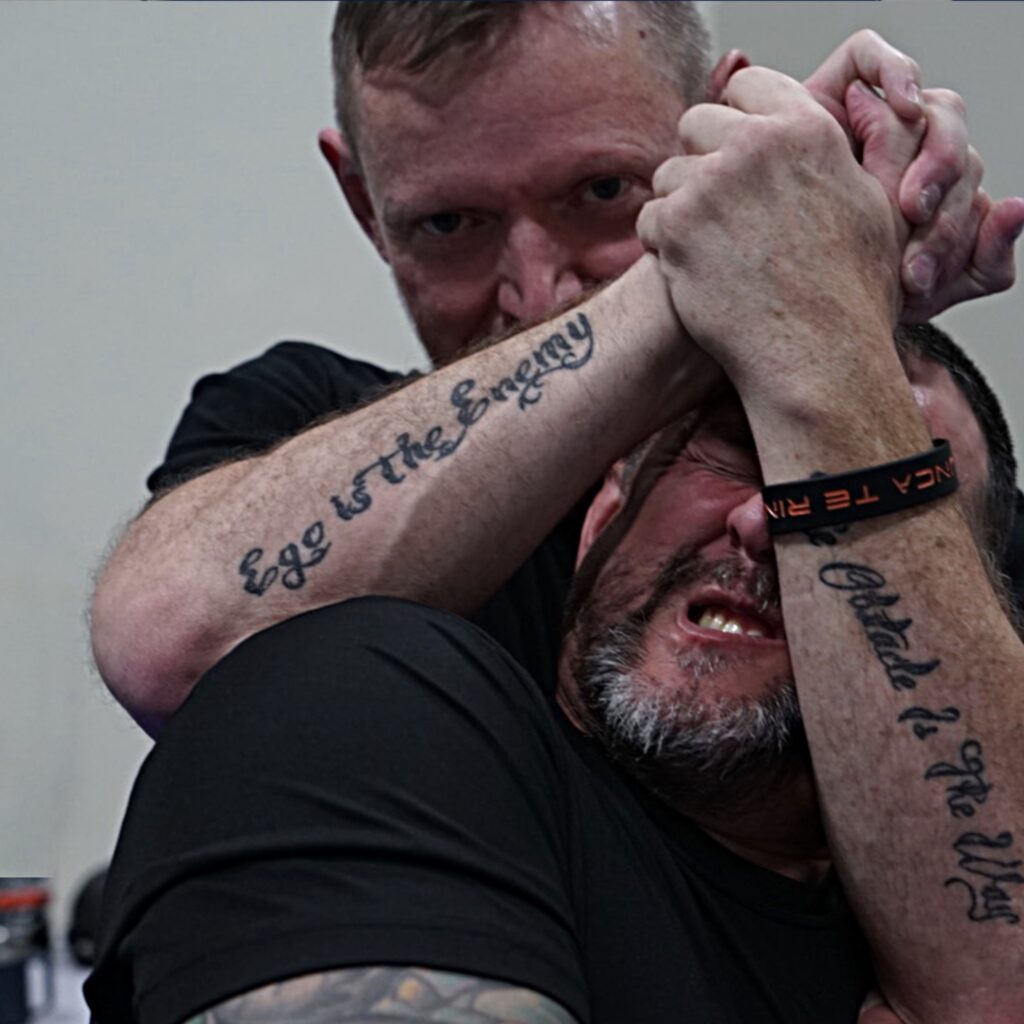
The first layer is technique. This is where most martial artists live. At this level, you are focused on learning what to do: the arm bar, the choke, the takedown, the pensador mechanics, the pad combination, the disarm sequence, the flow drill. You ask, “What does my body do in this situation?” and then you practice those patterns. There is nothing wrong with this layer. You need it. The problem is when your entire training life gets locked in here, and you never move on. I often say, “The best way to teach someone nothing is to teach them too much,” and you can do this at the ‘technique’ level. I see people getting lost in the ‘more technique’ will make me better mindset.
When I look at systems that are intelligently designed and actually produce high quality people, I notice a common pattern. As students progress, things do not get more complicated, they get simpler. The toolbox gets smaller, not bigger. The techniques they rely on most often are usually fewer, cleaner, and more refined. I believe this is one of the key indicators that you are stepping onto the path of mastery. You are no longer chasing volume, you are shaping precision.
Bruce Lee talked about the idea of whittling away the non essentials, and I think that is absolutely true, especially at the technical level of training. In any area we are studying, we should be able to step back and intelligently identify the high percentage techniques for that area. Not all techniques are equal. Some simply work more often, under more conditions, against more types of people. On top of that, what is high percentage for one person is not always high percentage for another. Your body type, temperament, timing, and previous experience all play a role, which is why every individual has to personally work through this filtering process.
In C Tac we also encourage people to search for what we call multi tools. These are techniques or concepts that can be applied in multiple different situations and against a variety of scenarios. Multi tools are important because under stress, you do not have access to an endless library of options. It is very difficult for the mid brain to sort through a giant catalog of techniques when chaos hits. Stress compresses your bandwidth. That pressure forces you to do exactly what I am talking about here: dilute things down to the absolute fundamental, applicable basics. Once you have that list, those become the tools you want to get frighteningly good at.
If you look closely at high level fighters and high level teachers, most of the time their greatness is not based on knowing more techniques than everyone else. It is not because they have some massive secret list in their head. In reality, they are usually extremely good at a relatively small set of techniques and ideas. They have trained those tools to the point where they almost cannot do them wrong. They can apply them on different people, in different environments, under different levels of stress, and they still work. That is the direction you want to move toward if you are serious about the mastery path: fewer tools, better chosen, trained to a much deeper level of ownership.
Attributes
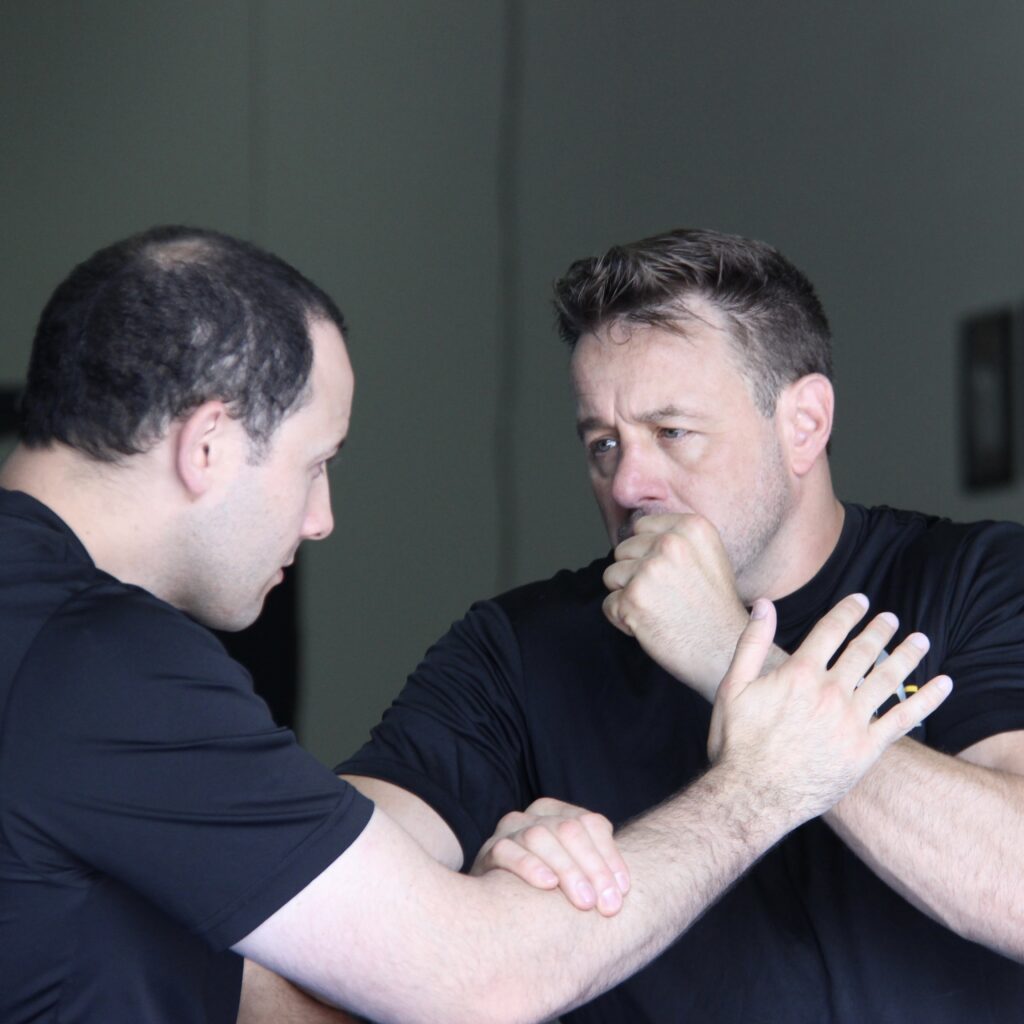
The second layer is attributes. Attributes are the qualities that sit underneath technique and make the technique reliable under pressure. Timing, speed, sensitivity, coordination, durability, balance, explosiveness, endurance, and so on. Two people can know the same choke. The one with better attributes will apply it more consistently when it matters. You do not just hope attributes show up. You build them deliberately through sparring, resistance drills, conditioning, situational rounds, and pressure testing.
In C Tac, when we talk about attribute development, we divide it into two categories. The first category is what I call perishable attributes. These are the qualities that fade over time if you do not constantly train them. Strength, speed, explosive power, and even cardio all fall into this group. You can build them to a very high level, but if you stop training them, they diminish. As you get older, no matter how disciplined you are, there will always be some natural drop off in these areas simply because of age and physiology.
The second category is what we refer to as timeless tools in C-Tac. These are attributes and skills that do not have to be surrendered to age in the same way. A timeless tool is something you can continue to refine, sharpen, and rely on, even as your body changes. One of my favorite examples is the ability to be in the right place at the right time. In C Tac, we often call this training to be ahead of time. It might look as simple as having your hand in the correct position during a drill, or adjusting your body angle before the conflict fully develops. These small positional advantages create big results.
Drilling plays a major role in building these timeless tools. When we repeatedly run intelligent, well designed drills, we are not just working techniques. We are training the nervous system to guide the body into the correct position automatically. Over time, this creates what I call intelligent placement. Your hands, your feet, your head, your hips, and even your line of sight start to move to the right place without you having to think about every detail. That is a timeless tool. You can keep that kind of skill deep into your later years on the mat or in the training hall.
Inside the C Tac attribute section, we maintain a list of these timeless tools that we deliberately train for. Things like timing, distance management, angle control, intelligent placement, tactical decision making, and reading pre fight cues all live in this category. Understanding this distinction becomes critical if you want longevity in the combative arts. You may not always be the fastest person in the room, but if you invest in timeless tools, you can continue to be one of the most capable.
Body state
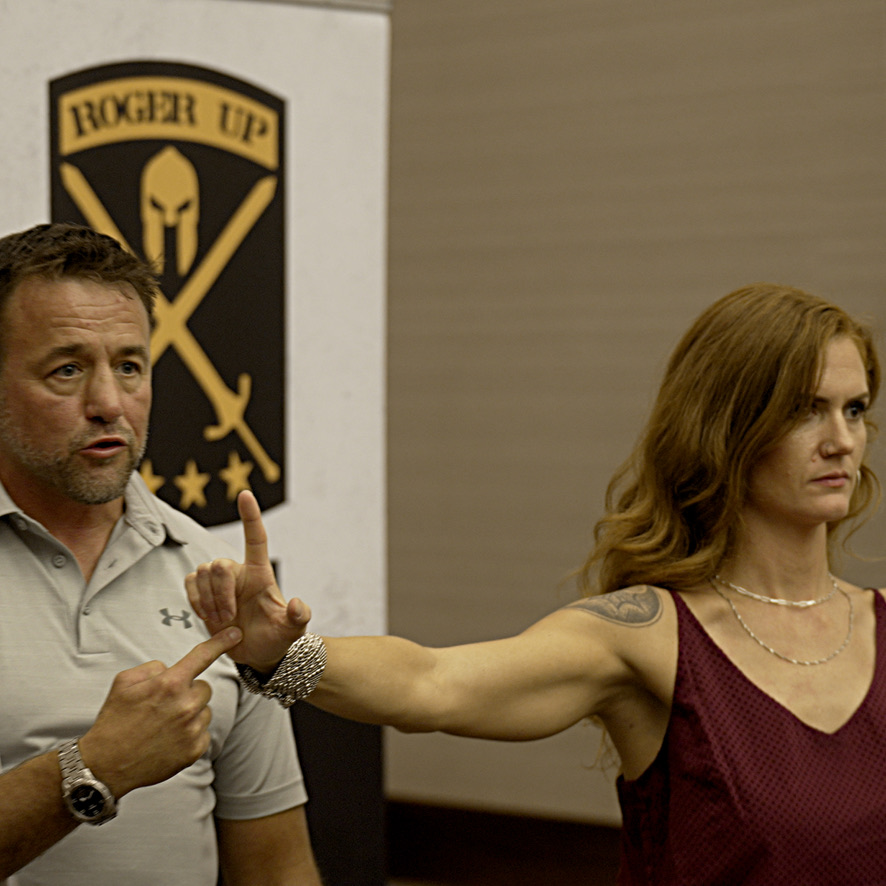
The third layer is body state. This is about how your body is organized in a given moment. Structure, skeletal alignment, breathing, levels of tension and relaxation, where your weight is in the floor, what your eyes are doing, what your face is doing, how “loud” your body is in space. Under stress, many people lose this layer first. They go rigid, breathing shoots up into the chest, shoulders rise, hips disconnect from the floor, and their field of vision collapses. You can have good techniques and decent attributes, but if your body state breaks down, everything else falls apart. This is why I build in drills for posture, breathing, alignment under pressure, state under fatigue, and so on across my systems. One of the first topics I teach in this layer is the principle of root. Root is related to the control of tension in the body, and it is a huge game-changer in whatever you apply it to.
Rooting is what I call a universal principle. By that I mean it is not limited to punching, kicking, or even the combative sciences in general. When you learn how to root correctly, you are really learning how to improve the state you operate from, both physically and mentally. If you can upgrade the state you are in, everything you do inside that state will improve. Your striking improves, your grappling improves, your decision making improves, even how you handle stress at work or at home improves. It is the foundation under the foundation.
This mindset comes straight out of old school kung fu. I was fortunate enough to be exposed to it at a young age by one of my Shaolin kung fu teachers. Back then, rooting, structure, and internal state were treated as serious study, not just side notes. Unfortunately, it is not something you see taught very often anymore. Much of the industry has shifted its attention to external pressure testing models. To be clear, those models are fantastic and I am a big believer in them. You absolutely need to test your material under pressure if you expect it to work in the real world.
However, if you are the type of person who is willing to study at depth, put in focused time, and approach training with real discipline, then layering in these old school universal principle methods will change your game in a way most people never experience. Rooting, breath, alignment, internal timing, and state control let you access power, balance, and calm under pressure that others simply do not understand or even see. That is why I weave these ideas into everything I do, and why I talk about them across all my books, especially in the way they carry over into daily life outside the training hall.
One of the problems is that many of the old school instructors who still have this knowledge tend to present it under a heavy veil of mysticism. That can make it feel vague, confusing, or almost magical, which only increases the difficulty of actually learning it to a level where you can apply it. The truth is, these principles are trainable, repeatable skills. They can be explained, drilled, and pressure tested just like anything else. The culture around some of the arts has hidden them behind mystery for a long time, but once you strip away the fog and approach them with clear language and good training progressions, they become one of the most powerful tools you can plug into your martial arts and your life.
Mindstate
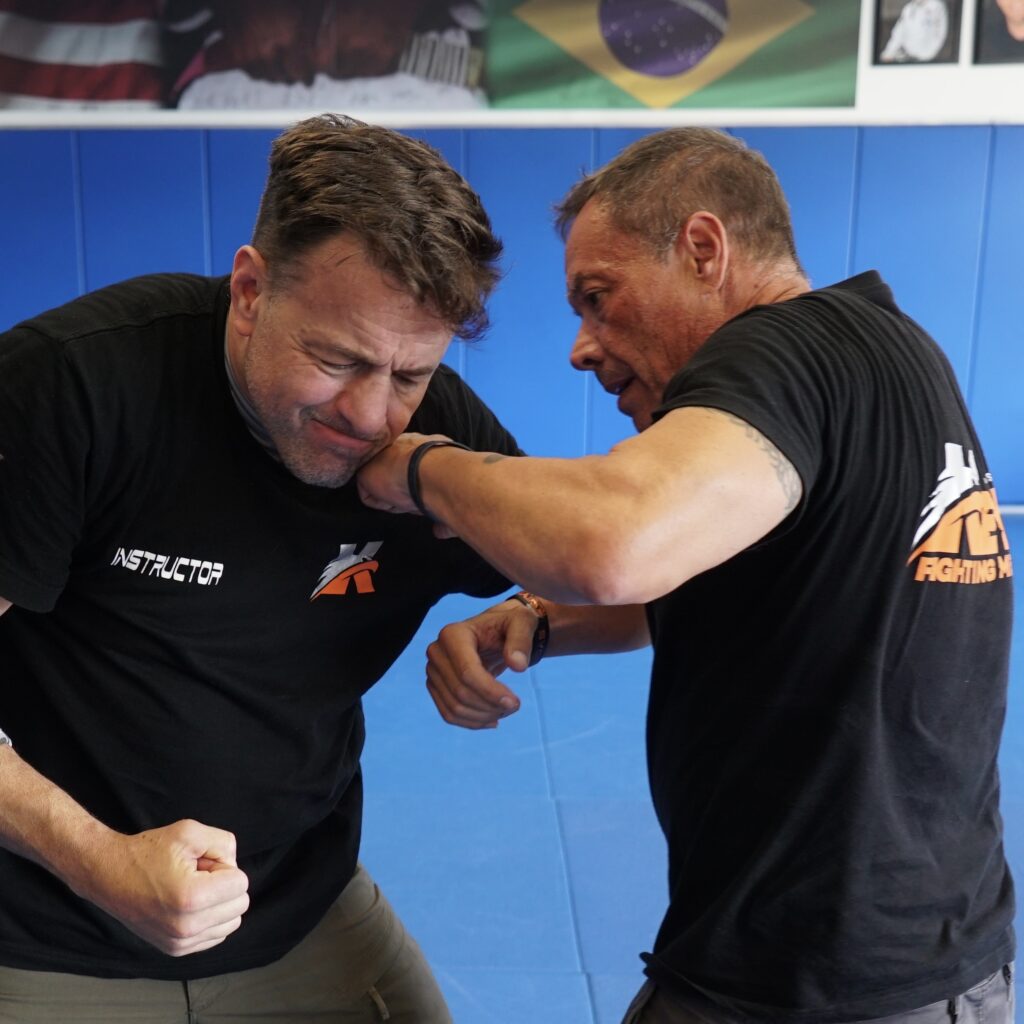
On top of all of this sits the fourth layer: mindstate. This is the internal landscape that governs how the other three layers show up. Mindstate includes your beliefs in the moment, your self-talk, your emotional tone, where your focus is, what you choose to notice and what you ignore, and how you interpret what is happening to you. You can think of it as the “operating system” that runs underneath the technique, attributes, and body state. When I talk about flipping the switch, this is what I am really talking about: the ability to move your entire system into a specific mindstate on demand, so that everything you have built underneath it comes online instantly. If you want a deeper dive on how these layers fit together in curriculum design, you can read my article “Technique, Attributes, or State: Which Are You Training?” after you finish this one.
My first exposure to this kind of work was not through sports psychology textbooks or coaching seminars. It was in my Shaolin Kung Fu training. We talked about training the mind and the inner landscape as seriously as we trained the body. In Chinese, you will see the word “xin” used a lot in this context. It is often translated as “heart-mind,” because in that older way of thinking, the emotional and mental are not separated. It is one thing. You also see the word “shen,” often translated as “spirit” or “consciousness.” Whether the exact word used in class was “xin” or a dialect variation of what I heard as “shin,” the idea was the same: you are not only training kicks and forms, you are training how you think, how you perceive, how you hold your attention, and how you relate to fear and uncertainty. This was scholarly work inside the warrior path.
That early training directly shaped how I approach the mindstate layer today. You are not just building a more dangerous body. You are cultivating a clearer mind and a more stable inner world so that your body can be used wisely. Later in life, I started using the phrase “Mind Boxing” to describe this part of the work. I wrote a dedicated article on it called “Mind Boxing: Developing the Warrior’s State of Mind”. The idea is simple: you are not just boxing with opponents, you are boxing with your own mind.
Mind Boxing is the training time you dedicate to the internal side of your craft. You learn how to cut off unhelpful inner dialogue, generate a specific focus on demand, load an emotional tone that supports performance instead of sabotaging it, and keep your awareness wide or narrow depending on the needs of the moment. Just like pad work and bag work, Mind Boxing is not random. You do not wait for “motivation” to show up. You schedule it, you drill it, you give it structure. That is how you build a mental switch you can trust.
There is one more piece I want to add here that ties all of this together, and that is the concept of Wuji. In my Warriors Path material, I describe Wuji as the base neutral state from which all other states emerge. It is the quiet, undifferentiated state before movement. When I talk about “neutral gear,” I am talking about Wuji. From Wuji, you can shift into the fighting state, the teaching state, the learning state, or whatever mode you have built. I have a full article on this called “The Wuji State: Ground Zero of the Warrior’s Path“. Wuji is the ground zero. The various mindstates we are discussing here are the gears you shift into from that neutral baseline.
State Training
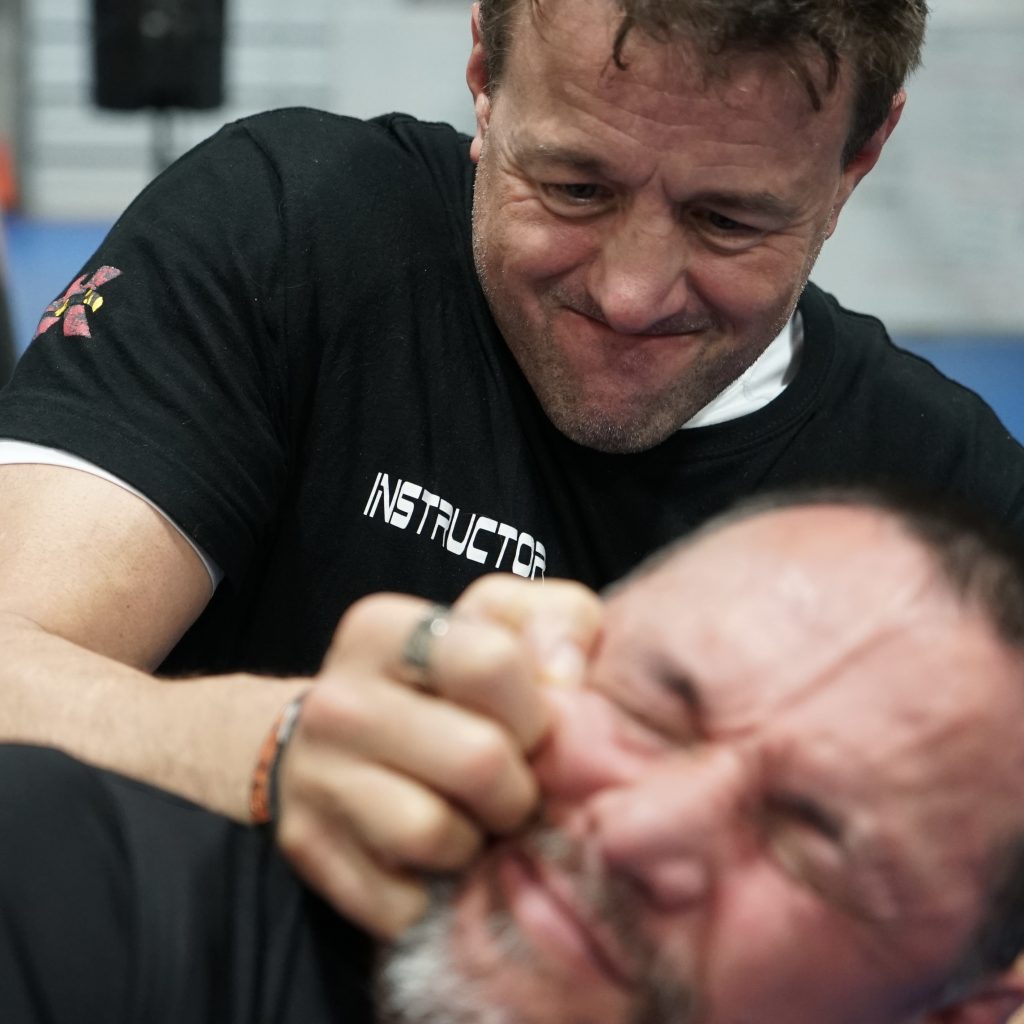
So what is “state training” in practical terms? For me, state training is the training of your whole way of existing in a moment. Mind, body, emotions, breath, energy, focus, all of it. You can think about it like a high-performance car. One mode is for everyday driving: soft suspension, comfortable ride, low RPMs, relaxed feel. Another mode is track mode: tight steering, stiff suspension, fast response. Same machine, different state. In a combative context, state training is whatallows you to be relaxed, approachable, and social one moment, then, when needed, shift into a fighting state where your posture changes, your breathing drops, your intent hardens, and your awareness sharpens. You do not have to talk yourself into it. You flip the switch, and the system boots into the correct mode.
When my teachers first started building this into us, they did not hand us a psychology textbook. They gave us rituals, drills, and specific instructions, and then they made us do it for years. The fighting state we trained was not just about techniques. It was a complete configuration of the machine. We had a specific posture we stepped into. We had a breathing pattern that shifted us from everyday mode into fight mode. We had a specific way of looking, a particular facial expression, and a controlled emotional tone. Our internal language shifted from vague, emotional stories to short functional cues like “drive forward,” “break his base,” “protect your family,” “stay standing.” Everything was simple, direct, and focused.
One important point here: we did not train rage. Rage is loud and dumb. It can feel powerful for a moment, but it makes you easier to manipulate, easier to trick, and more likely to overstep legally. We would refer to this as the young man. We were training with committed intensity, a clear and cold kind of determination that still leaves room for awareness and decision-making. We call this the ‘Old Man’ state, the one with wisdom. Over time, just stepping into the posture and changing the breath would pull the whole state online. That is how you know the work has sunk in. Your anchors start the cascade.
Much later, when I ran into Neuro Linguistic Programming (NLP), I realized that a lot of what we had been doing in the martial arts had parallels in that field. NLP grew out of the work of Richard Bandler and John Grinder in the 1970s, where they modeled successful communicators and therapists and asked, “What are they doing inside their own minds while they work?” They paid attention to internal images, self-talk, body sensations, language patterns, and beliefs. Whether or not you like the “NLP” label as a whole, some of its core ideas line up very closely with what we do in Mind Boxing and state training.
One of those ideas is that you never respond to “reality” directly. You respond to your internal map of it, and that map is made of language, images, associations, and past experiences. Change the map, and your responses change. Another idea is that self-talk is not neutral. The way you speak to yourself changes your emotional state, your confidence, and yourperformance. Sport psychology research has echoed this for years. Athletes who deliberately use constructive self-talk have better focus, less anxiety, and more consistent performance than athletes who let negative loops run unchecked. A third idea, anchoring, is the one that most obviously connects to what I described above. Anchoring is the practice of linking a particular stimulus, such as a posture, a word, a song, or a touch, to a specific state, so that when you trigger the stimulus later, the state starts to come back. For us, we would always use breathing patterns. We had different patterns for different states. All we would have to do is start the breath, and the state would follow. This relates to a quote from my books: “The breath is the bridge,” meaning it is the bridge of control for your body, mind, and emotions.
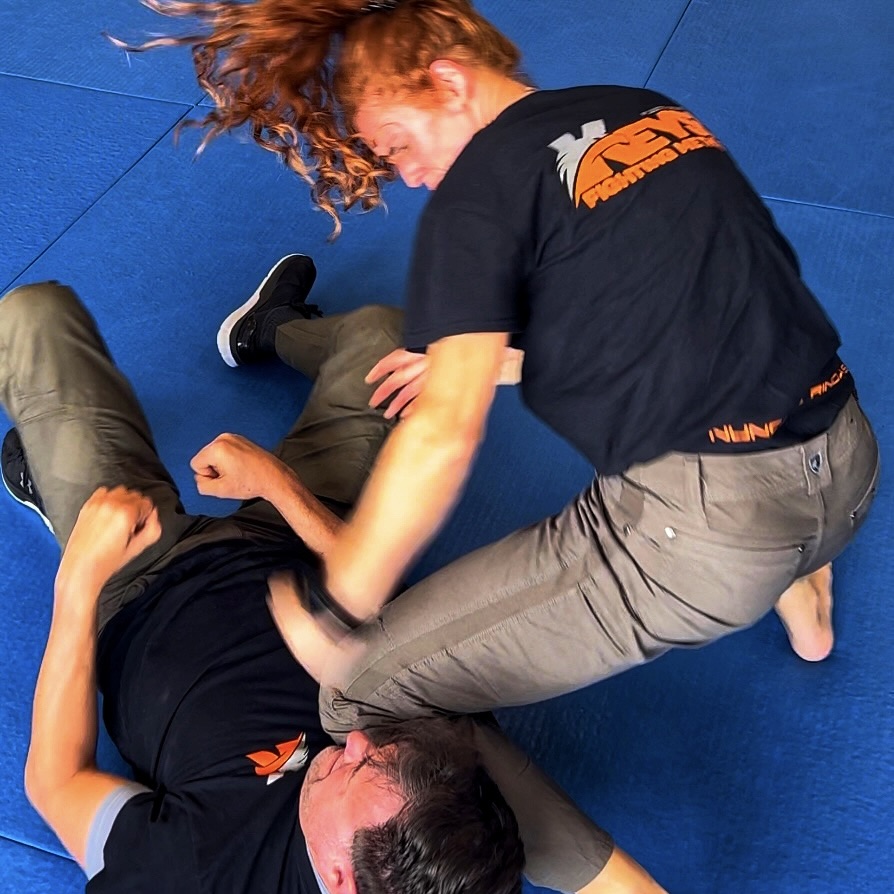
In other words, that fighting stance you step into is an anchor. The breathing pattern is an anchor. The way you tape your hands, the way you touch your belt, the song you play before you step on the mat, all of these can become anchors for particular states. Where NLP gave people a clear language and method for working with these anchors, martial arts often handed them down as tradition and ritual. Today, I like to take the best of both worlds and bring them together on the mat.
Let’s get practical with how self-talk fits into this. Imagine a fighter or a student whose background inner language sounds like this: “I always gas out in the later rounds. I am terrible at takedown defense. Every time I teach, I sound stupid. I am just not a natural fighter.” Those lines feel like descriptions, but they are actually commands to the nervous system. If you repeat them long enough, you will build habits that keep them true. We are not interested in fake positivity, where you just lie to yourself and say, “I am the greatest fighter in the world,” when you have not put the work in. What we are interested in is functional, accurate self-talk that points you toward action, learning, and growth.
So instead of “I always gas out,” you might say, “I used to gas out, now I am building my engine every week.” Instead of “I am terrible at takedown defense,” you say, “My takedown defense is improving. Every round, I learn something about my base and my hips.” Instead of, “Every time I teach, I sound stupid,” you say, “Every time I teach, I get a little clearer.”And instead of, “I am not a natural fighter,” you say, “I am learning to express the fighter that is already there.” Notice that we are not pretending everything is perfect. We are simply framing it as a process and pointing the mind at what you can actually do.
This is exactly the kind of thing I started learning back in my Shaolin days, without having the terminology for it. We were told to guard the gate of the mind, to pay attention to what we allowed to repeat up there, and to deliberately plant thoughts that supported our training rather than undermined it. That carried forward into everything else I have done. I have used those same principles on the mat, in business, in networking, in the gym, and in my physical culture work. NLP simply gave more labels and methods for things I had been doing for years. Mind Boxing is how I bring those concepts together in a way my students can digest and use.
Now let’s talk about designing and implementing different states into your training. You are not limited to one “on/off”switch for fighting. In fact, if you try to live in fight mode all the time, you will destroy your relationships and burn out your nervous system. It is much more useful to build several distinct states, each tied to a specific mission. For example, you can build a fighting state for crisis moments, a learning state for class and study, a recovery state for post-training and days off, a relaxed social state for family and friends, and a leadership or teaching state for when you are in front of a room or leading a team.
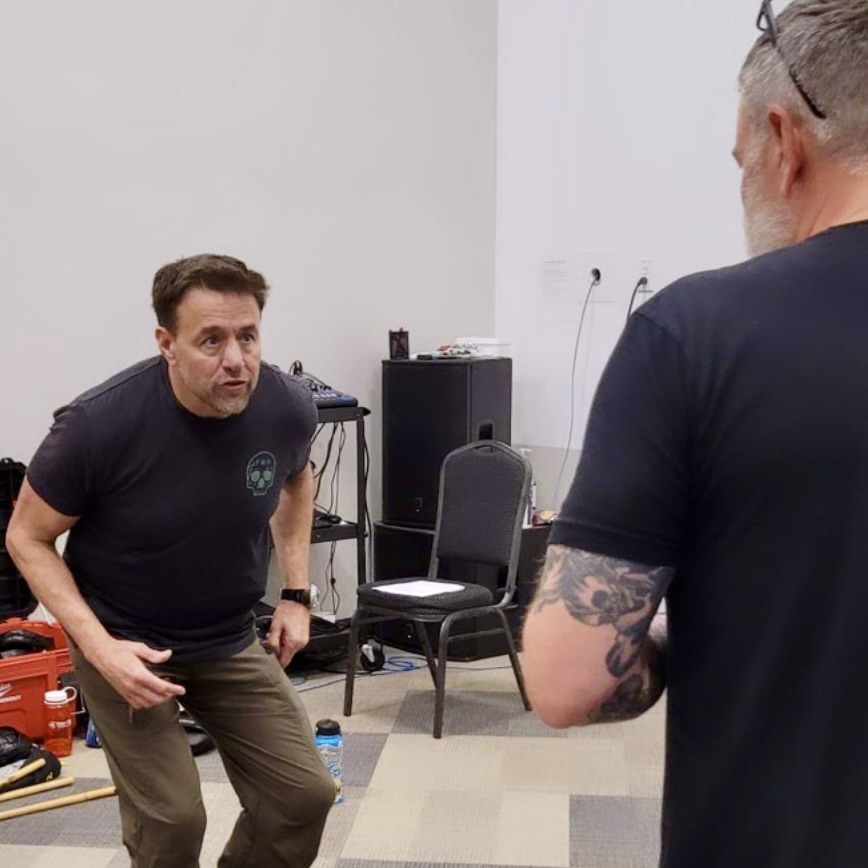
Start by defining what each state is for. A fighting state might be for protecting life and winning the conflict within legal and ethical boundaries. A learning state might be for absorbing new information, experimenting, and retaining it. A recovery state might be for downshifting the nervous system and rebuilding. A social state might be for connecting and listening. A teaching state might be used to guide and support others. Once you are clear on the purpose, you can design the body side and the mental side of that state.
Ask yourself: if I were already excellent at this, how would my body look and feel? A fighting state might have the weight slightly dropped, spine long and engaged, breath deep in the belly, peripheral vision on, hands relaxed but ready. A learning state might have a supported but relaxed spine, eyes soft but focused, jaw free, breath easy. A recovery state might have the body supported by the floor or a chair, long, slow exhalations, and deliberate softening of muscles. Actually stand up and feel these. Step into them. Give your nervous system a chance to recognize each one as a distinct way of being.
Then choose specific anchors for each state. These might be short phrases, a particular breathing rhythm, a posture, a gesture, a piece of gear, or even a song. The key is consistency. When you are going into fighting mode in training, always pair that state with the same anchor. When you are going into learning mode, pair it with that specific ritual. When you are shifting into recovery, give your body the same reliable signals. Over time, the anchor will start to pull the whole state online by itself.
Rehearse all of this under low stress first. Practice switching into your fighting state before you shadowbox or hit pads, then back to neutral afterwards. Practice your learning state ritual before classes, seminars, or self-study blocks. Practice your recovery state at the end of hard sessions. Build the skill of switching, not just staying in one mode. Once it is reliable in calm conditions, start adding pressure: noise, time limits, fatigue, conflict, worries about the outcome. The goal is to hold your state even when the outside world is not cooperating.
That brings us to another key piece of this: internal timing. I wrote a full article on this concept called “Controlling Your Internal Timing“. The core idea is that you do not let the outside world dictate the tempo of your inner world. In conflict, in business, in conversations, you will constantly meet people who try to pull you off your timing. They speak fast, crowd your space, raise their voice, or push you to decide before you are ready. If you let your internal timing get hijacked, your mindstate goes with it. You move from a clear response to a blind reaction.
Each state has its own natural tempo. The fighting state compresses time on the outside while staying relatively slow on the inside. You see more in less time, but your center is not rushed. The learning state feels spacious. There is time to explore, to ask questions, and to connect dots. The recovery state feels deliberately slow. Breathing is long and smooth. Movements are unhurried. Training internal timing means you practice keeping your internal metronome steady, even when the rhythm outside you speeds up or breaks.
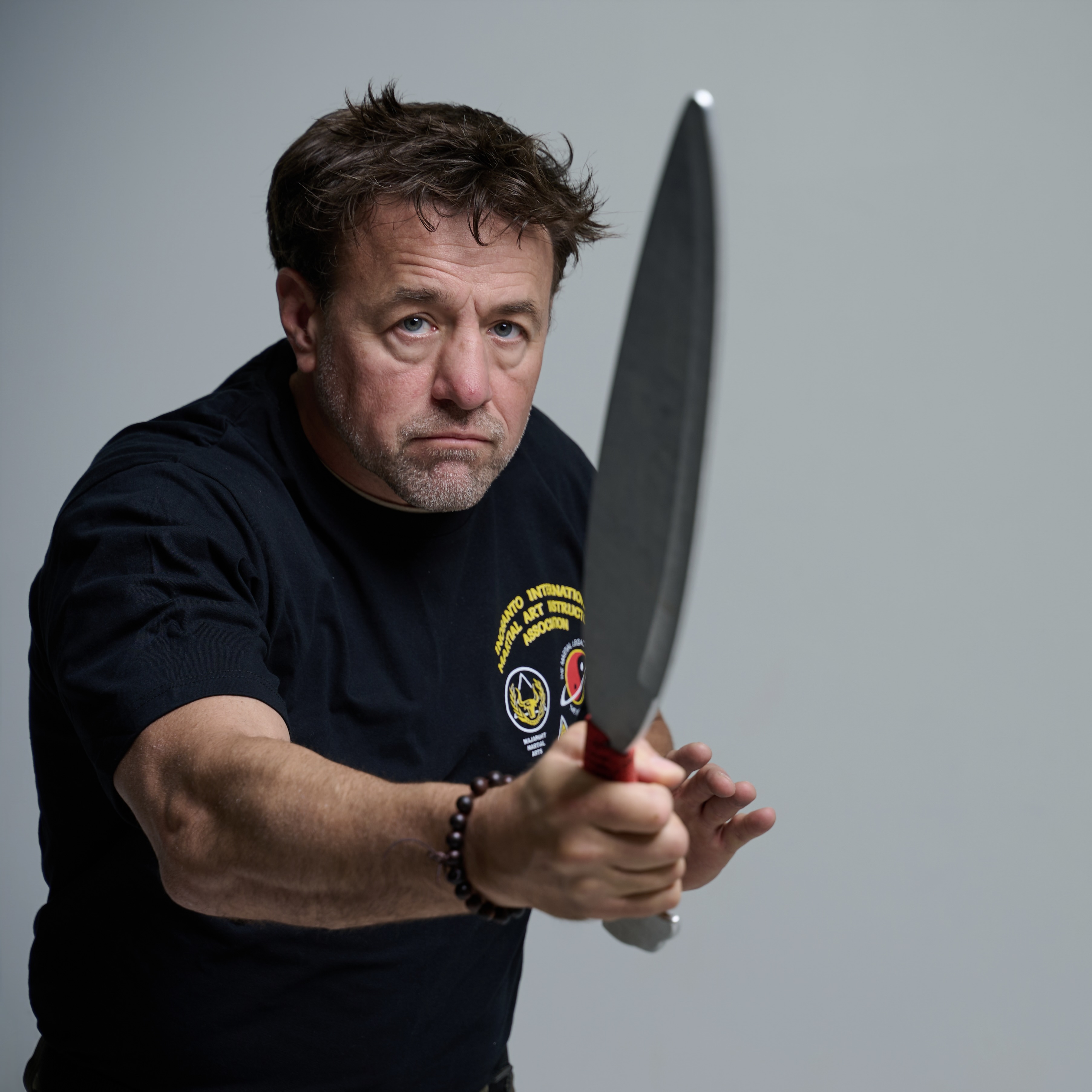
You can drill this in very concrete ways. Have a partner crowd you and talk fast, while your job is to keep your breathing slow and your speech measured. This is not about “winning” the conversation. It is about protecting your timing. In pad work, you can alternate between very fast bursts and slow-motion segments while maintaining a stable inner rhythm. In daily life, you can use traffic, email, and difficult phone calls as training grounds. When you notice yourself speeding up, you deliberately slow your breath and step back into Wuji for a moment, then re-enter the situation from your timing, not theirs.
When you combine Layered Skill Development, Mind Boxing, state design, and internal timing, what you end up with is a complete state training framework. Technique sits at the base, then attributes, then body state, then mindstate. The Wuji state is your neutral gear. From Wuji you can choose which state you need right now. The tools of NLP, internal dialogue, anchoring, breathwork, and ritual give you ways to program those states into your nervous system. Control of internal timing keeps that state from being hijacked when the pressure is on.
You do not want to live in fight mode. You also do not want to be stuck in neutral when you need to protect someone. You want the ability to shift. Relaxed to focused. Curious to decisive. Social to combative. Combative back to calm. That, to me, is the real expression of a mature warrior path. It is not just about how hard you can hit. It is about how intelligently you can exist in the world.
Types of States
Over the years, I have learned to look at my internal world in terms of states. Different missions require different versions of you, and if you can deliberately shift your state, you gain a tremendous advantage. Here are a few of the primary states I work with on a regular basis.
The Fighter State: Turning On Your Combat Mindset
The first is what I call the Fighter State. This is the state you step into when it is time to deal with a combative situation. In this state, your awareness sharpens, your posture and alignment shift, and the body is ready to move without hesitation. Your breathing drops into a depth and rhythm that supports decisive action. Internally, the mental landscape shifts into a higher level of awareness, and the tension in your body adjusts to allow for explosive movement when needed. This was the first state I was trught from one of my first teachers in my mid teens.
The Fighter State is not about rage or losing control. It is about focused aggression, clarity, and the willingness to act decisively in the moments that count.
The Scholar State: Shifting Into Learning Mode
The second is the Scholar State. This is the mode I use for self education and study. When I step into this state, my goal is to absorb information, connect ideas, and truly understand what I am working on. The Scholar State is calm, curious, and open. It is not rushed. It is designed for taking notes, reading, listening, and integrating knowledge at a deeper level. The Scholar State and self educaton is what my forth book is going to focus on.
The Relaxation State: Returning To Calm After Chaos
Next is the Relaxation State. This is the state you need after the fight or after any highly stressful event. In this state the focus is on releasing tension from the body, calming the emotional system, quieting the mind, and recentering yourself. If you never learn how to intentionally enter a Relaxation State, you tend to carry the fight with you long after it is over. That is how people burn out. For a warrior trying to walk a long path, recovery is not optional.
The Training State: Locking In For Work On The Mat
Another one I rely on is the Training State. This is the state I enter when it is time to get on the mat and put in work. The tempo of the body is slightly higher, the nervous system is awake, and there is a specific breathing rhythm that supports sustained training. The mind in the Training State is focused but not overly tense. You are ready to drill, sweat, problem solve, and refine technique.
I actually use more states than this in my personal practice, but these are some of the core ones that show up every week in my life. The important point is that each of these states has its own unique breathing pattern tied to it. For me, breath is the trigger. By shifting how I breathe, I send a signal to the nervous system and it helps me step into the state I need for the moment in front of me.
Once you start to understand this, you realize you do not have to be a slave to whatever random state you wake up in. You can train yourself to choose your state on purpose, and that is a powerful form of self leadership.
Where To Go Deeper
If this article has your wheels turning, here are the main pieces you can explore in more depth. Each one zooms in on a specific part of the state training model we talked about here.
For a full breakdown of techniques, attributes, body states, and mindstates and how they fit into curriculum design, read my article “Technique, Attributes, or State: Which Are You Training?”
For more on the mental “switch,” the Wuji base state, and how I use Mind Boxing as a specific discipline to train the inner game, see “Mind Boxing: Developing the Warrior’s State of Mind” and “The Wuji State: Ground Zero of the Warrior’s Path.”
Mind Boxing:
Wuji State:
For detailed thoughts on how to own your tempo in conflict, on the mat, and in daily life, check out “Controlling Your Internal Timing.”
For More informaotn on the principle of ‘Root’ or tension control in the body, check out “Mastering Tension Control: The Hidden Key to Strength and Resilience“
Each of these articles focuses on one piece of the bigger picture we explored here. Together, they give you a working blueprint for building a body and a mind that can respond to the world with intelligence, capability, and choice.
The Warriors Path Academy
If you are looking for more indepth informaon take a look at the Warriors Path Online Academy
Shift Your Perspective, Take Action, And Create Change
Gentleman in Conduct. Scholar in Thought. Savage in Action.
~ Sifu Alan ┃ www.sifualan.com ┃ www.civtaccoach.com┃www.prtinstructor.com

Sifu Alan Baker is a nationally respected authority in Defensive Tactics Program Development, High-Performance Coaching, and martial arts, with over 45 years of training experience across multiple systems. As a lifelong martial artist and tactical instructor, Alan has dedicated his career to creating practical, adaptable, and effective training systems for real-world application. He has worked extensively with law enforcement agencies, military units, and private security professionals, designing programs that emphasize scenario-based training, everyday carry (EDC) integration, and combative efficiency under pressure.
Alan’s client list includes elite organizations such as the Executive Protection Institute, Vehicle Dynamics Institute, The Warrior Poet Society, ALIVE Active Shooter Training, Tactical 21, and Retired Navy SEAL Jason Redman, among many others. He is the creator of both the C-Tac® (Civilian Tactical Training Association) and Protection Response Tactics (PRT) programs—two widely respected systems that provide realistic, principle-based training for civilians and professionals operating in high-risk environments.
In addition to his tactical and martial arts work, Alan is the founder of the Warrior’s Path Physical Culture Program, a holistic approach to strength, mobility, and long-term health rooted in traditional martial arts and the historic principles of physical culture. This program integrates breathwork, structural alignment, joint expansion, strength training, and mental discipline, offering a complete framework for building a resilient body and a powerful mindset. Drawing from his training in Chinese Kung Fu, Filipino Martial Arts, Indonesian Silat, Burmese systems, and more, Alan combines decades of experience into a method that is both modern and deeply rooted in timeless warrior traditions.
Alan is also the architect of multiple online video academies, giving students worldwide access to in-depth training in his systems, including Living Mechanics Jiu-Jitsu, C-Tac® Combatives, breathwork, functional mobility, and weapons integration. These platforms allow for structured, self-paced learning while connecting students to a growing global community of practitioners.
Beyond physical training, Alan is a sought-after Self-Leadership Coach, working with high performers, professionals, and individuals on personal growth journeys. His coaching emphasizes clarity, discipline, focus, and accountability, helping people break through mental limitations and align their daily actions with long-term goals. His work is built on the belief that true mastery begins with the ability to lead oneself first, and through that, to lead others more effectively.
Alan is also the author of three books that encapsulate his philosophy and approach: The Warrior’s Path, which outlines the mindset and habits necessary for self-leadership and personal mastery; The Universal Principles of Change, a practical guide for creating lasting transformation; and Morning Mastery, a structured approach to building a powerful daily routine grounded in physical culture and discipline.
To explore Alan’s books, digital academies, live training opportunities, or to inquire about seminars and speaking events, visit his official website and take the next step on your path toward strength, resilience, and mastery.