
Capability Academy • Keysi Fighting Method • Intelligent Optics
La Mano Negra
Training the blind side so primary vision, peripheral recognition, protective movement, and intelligent action remain connected under pressure.
Situational awareness is discussed constantly in martial arts, personal protection, executive protection, firearms training, and defensive tactics. Most of the time, however, the advice stops at a slogan: be more aware.
That is not enough. If awareness matters, we have to build intelligent training that teaches the eyes what to recognize, the nervous system how to organize that information, and the body how to act without disconnecting from the larger environment.
Inside Keysi Fighting Method, La Mano Negra, the Black Hand, gives us a way to train that problem. It introduces information from outside the practitioner’s primary visual focus and asks a difficult question: can you remain protected, continue solving the immediate problem, and still recognize what is developing on your blind side?
Situational Awareness Is Not a Training Method
Awareness is an outcome. Telling a student to be aware does not tell them where to look, what matters, how to organize their vision, or how to keep gathering information when pressure begins to change their behavior.
I discuss this often in the C-Tac program. The ability to develop good optics means more than having the eyes open. It means training the eyes to see useful information and building habits that remain available when movement, contact, uncertainty, and consequence enter the environment.
Under pressure, a student may stare at the most immediate hand, bury the face behind the arms, close the eyes at contact, or visually disappear into the person directly in front of them. None of these responses is unusual. They are simply evidence that the student needs a more specific learning process.
Situational awareness is only a slogan until it is converted into specific, progressive training.
The training has to answer practical questions. What visual behavior do we want? What cues should the student learn to recognize? From which body positions? At what distance? With how many possible choices? How much contact can be added before the desired behavior collapses? Those questions turn a broad idea into a teachable method.
Train the Center Without Losing the Edges
Primary vision gives us detail. Peripheral vision gives us change, direction, and movement outside the center of attention. La Mano Negra teaches the practitioner to work with both while the Pensador protects the head and organizes close-range movement.
Teach the Nervous System What Matters
A student cannot respond intelligently to every movement in the room. Training has to establish meaningful patterns. We choose body positions, lines of movement, changes of level, shifts of weight, reaches, touches, and angles that are connected to realistic problems. Then we present those signals clearly enough for the student to recognize them.
This begins in the primary field of vision, where the student can study the relationship between a cue and a useful response. The same cue can then be moved toward the edge of the field. The objective is not to identify a fist, hand, or shoulder with perfect visual detail. The objective is to recognize that the environment has changed and that the change may require action.
La Mano Negra does this well because the Black Hand can appear while another task holds the student’s primary attention. The student may be maintaining the Pensador, receiving pressure, striking, controlling, moving, or solving a positional problem. The secondary cue tests whether awareness remains connected to the rest of the environment.
At the beginning, the cue must be clean. The partner is not trying to trick the student or win the drill. They are supplying information the nervous system can learn. Recognition comes first. Timing, decision, movement, and greater pressure can follow.
Train the Eyes Before the Chaos
People with untrained visual habits often close their eyes when they are placed under stress. This becomes obvious in the Four-Man Box, but the Four-Man Box should not be the first place we try to correct it.
Before a student enters a more demanding environment, we can teach simple habits: get the eyes up, keep the chin organized, look through the available windows in the protective structure, recognize movement at the edge of the field, and reopen the room after dealing with the immediate line of pressure.
These habits can be trained slowly. A partner can move a hand into a peripheral lane while the student maintains a static Pensador. The student can identify direction without turning the whole body. Later, they can orient, touch, shield, move, or strike. The cue can become less predictable only after the earlier behavior becomes reliable.
The point is not to create theatrical scanning. Empty head movement does not equal awareness. The student should be collecting information that can influence a decision. We want the eyes to remain intelligently online, not simply moving because the instructor said, “Look around.”
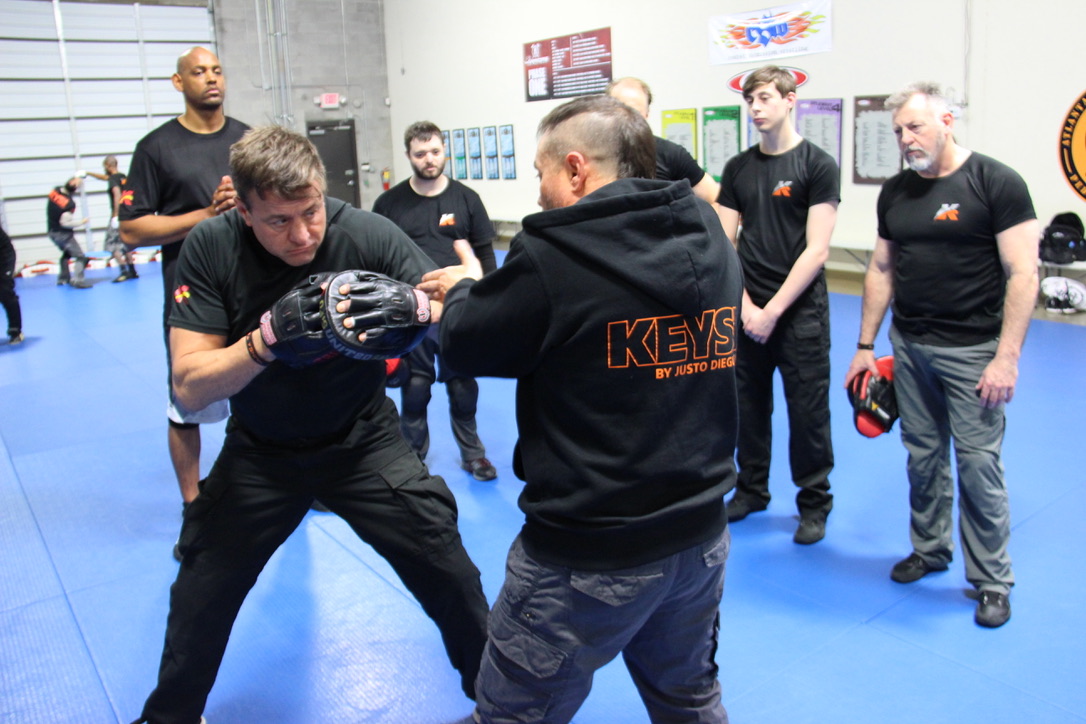
The Pensador Must Protect Without Becoming a Prison
The Pensador is not a single shield position. It is a family of related structures that can articulate around the head and body. The hands and forearms create protection, but the shape has to remain alive. It can strike, cover a secondary line, frame, control, manipulate, and support movement.
The same is true visually. A student has to learn where the useful windows are inside each structure. Small changes in the relationship between the hands, elbows, shoulders, head, and torso can preserve protection while reopening information. The student learns to look from inside the Pensador rather than abandoning it every time they need to see.
This gives La Mano Negra a tactile dimension. When the Black Hand enters close enough to touch the structure, the Pensador can become a receiving surface. The student does not always need a perfect visual picture. Contact supplies information about direction, pressure, and intention. Vision and touch begin to cooperate.
That relationship is essential on the blind side. We will never see every line perfectly. Sometimes the earliest reliable information is a brush against the arm, a change of pressure at the shoulder, or contact arriving at the edge of the shield. The trained structure helps the practitioner receive that information without surrendering the head.

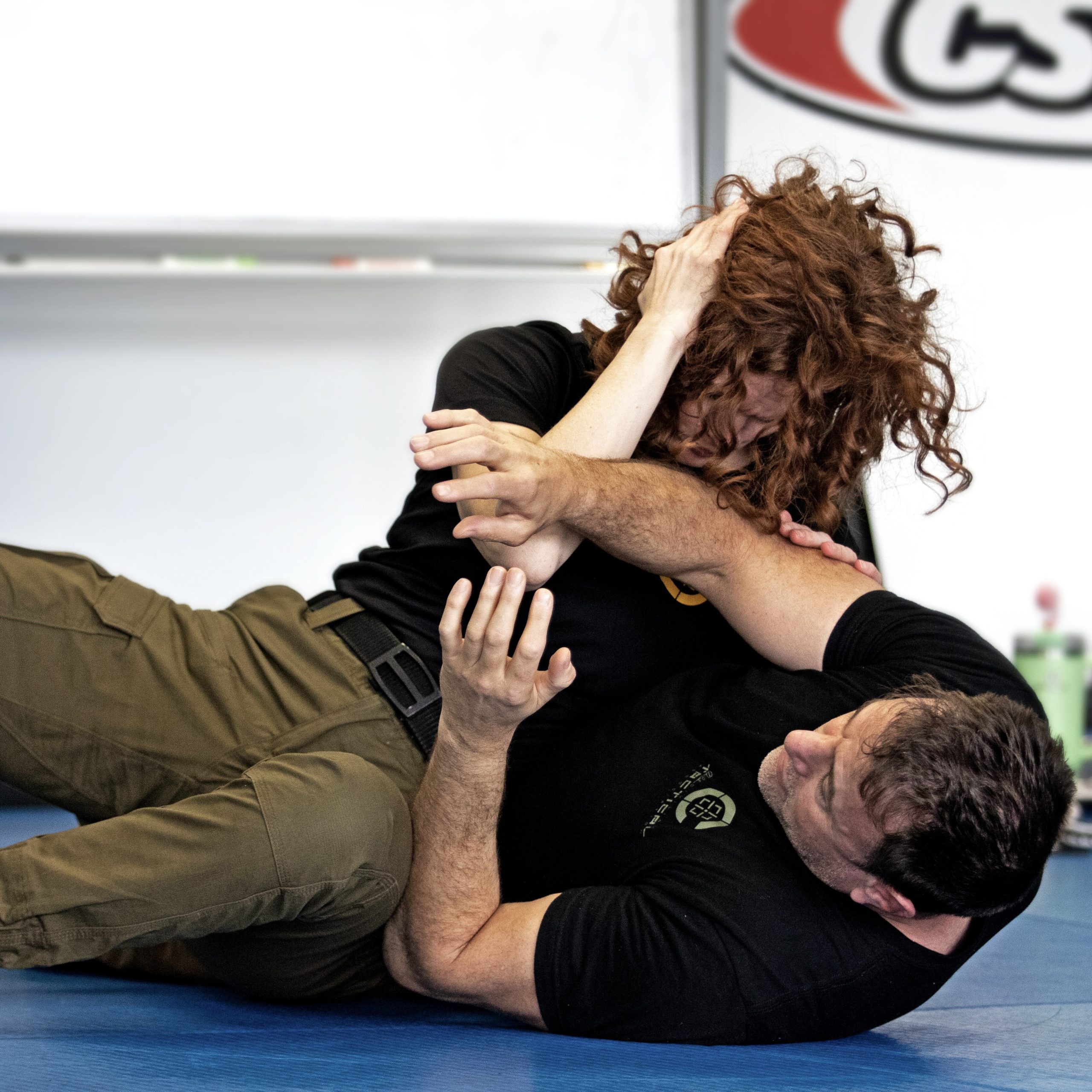
La Mano Negra Is More Than a Blind-Side Attack
It is easy to reduce the Black Hand to an attack arriving from somewhere the student cannot see. That is part of the drill, but it is not the full value of the method.
La Mano Negra develops the habit of recognizing secondary information while another problem occupies the foreground. It asks the student to maintain protective structure, regulate attention, accept incomplete information, and choose a proportionate response. It reveals whether the student can transition from seeing to feeling and back again without becoming mentally attached to a single threat.
It also teaches priority. Not every secondary cue deserves the same answer. One signal may require an immediate turn. Another may be managed by a short shield, a frame, a movement of the torso, or a change of position. A good progression teaches the student to discriminate, not merely react.
Recognition
Notice a meaningful change outside the center of attention without chasing every motion in the room.
Orientation
Turn the eyes, head, torso, or whole body only as much as the tactical problem requires.
Protection
Keep the head and body organized while information arrives from an imperfect angle.
Decision
Choose whether to shield, strike, control, reposition, disengage, or continue solving the primary threat.
La Mano Negra Inside the Four-Man Box
The Four-Man Box is an excellent laboratory for this work because the student cannot give equal attention to every partner. Someone will always be outside the primary field. That makes the training problem honest.
The mistake is believing that more people and more pressure automatically create better training. They do not. The Four-Man Box becomes valuable when each partner has a defined role and the instructor controls the variables. One partner may provide the primary problem. A second may become the Black Hand. The others may hold position, supply movement, limit space, or enter only on a clear cue.
The student can begin with recognition alone. Then the instructor can require orientation, a specific protective response, a movement to a safer line, or a limited tactical choice. The Black Hand can appear before contact, during an exchange, after a positional change, or at the moment the student begins to fixate.
This is one of the reasons the drill exposes visual habits so quickly. When the student locks onto the person in front of them, the rest of the box disappears. When the eyes close at impact, the drill shows it. When the student performs a scan without receiving information, the next cue reveals the gap. The laboratory gives the instructor something observable to coach.
The Skill Has to Leave the Training Floor
A vehicle, wall, chair, doorway, or uneven surface changes both movement and sight lines. C-Tac stress training gives us a way to test protective optics in the environments where close-range problems actually become complicated.
The Progression Determines the Result
There should be multiple levels to this training. If we introduce too much stress too early, the positive behavior we are trying to build can turn into negative rehearsal. The student closes the eyes, hardens the shield, holds the breath, or responds to every cue with panic. Repeating that experience does not automatically make the student better. It may simply make the wrong behavior more familiar.
- Build the visual window. Establish a stable Pensador and identify where the student can see without disconnecting the hands from the head or body.
- Recognize a clear cue. Present one hand or movement in a known peripheral lane. The student acknowledges it without losing the primary structure.
- Add a simple response. The student touches, shields, turns, frames, or moves in response to the cue. Keep the choice limited and the timing generous.
- Occupy the primary field. Give the student a manageable task in front while the Black Hand appears at the edge. The student must solve both without abandoning either.
- Vary timing and angle. Make the cue less predictable, but keep the speed and force low enough for recognition and correction.
- Change the body position. Repeat the work standing, kneeling, seated, and grounded. Each position changes the horizon, mobility, and available protective structures.
- Add environmental limits. Introduce a wall, doorway, chair, vehicle, or obstacle when the student can maintain the earlier habits in open space.
- Increase pressure with purpose. Add pace, force, uncertainty, and multiple tactical options one variable at a time. When the eyes disappear, reduce the load and rebuild.
The instructor is looking for the edge of adaptation. The student should be challenged enough for the old habit to appear, but not so overwhelmed that no correction can take hold. Pressure is useful when it reveals a weakness, allows coaching, and gives the student another opportunity to perform the desired behavior.
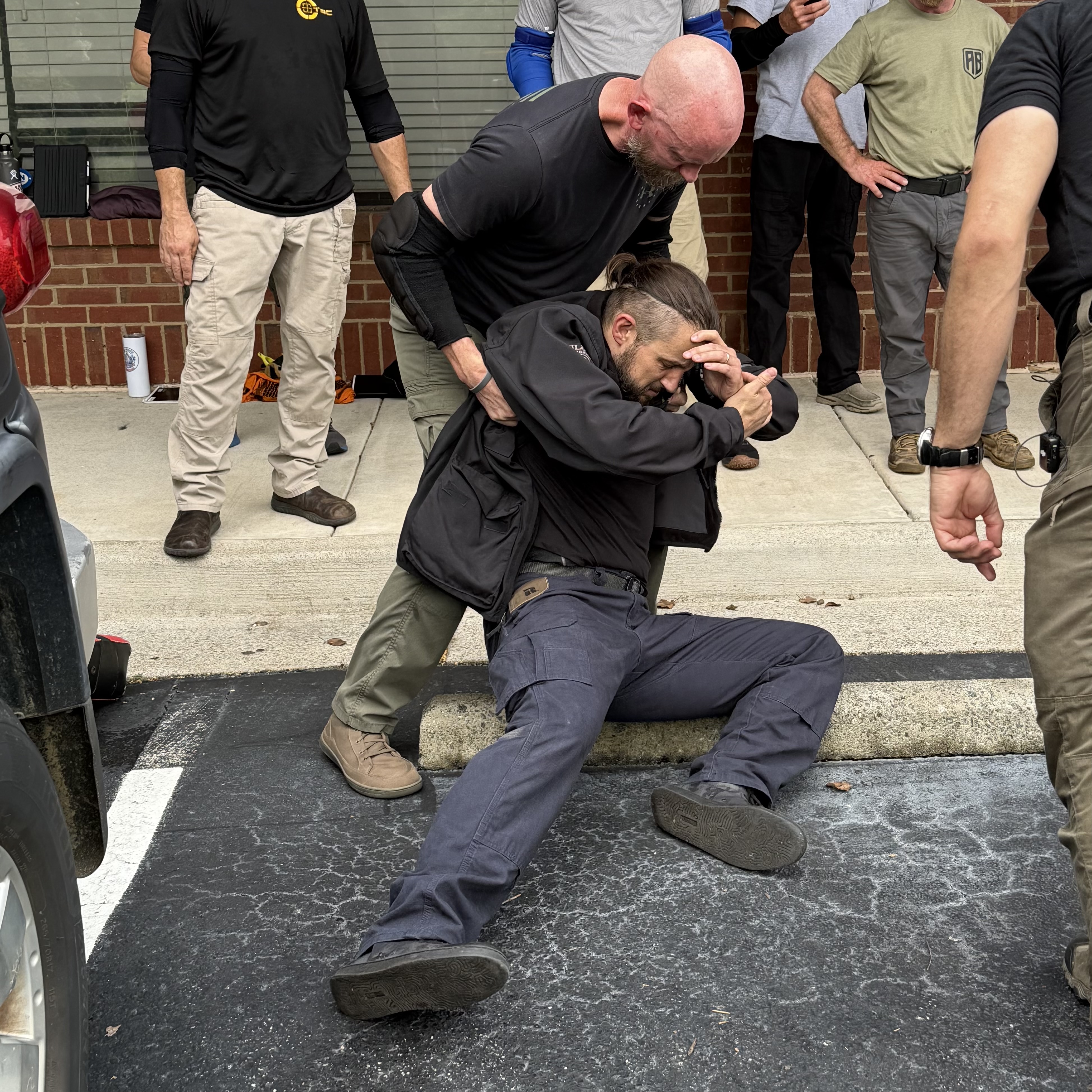
What Goes Wrong When the Drill Becomes the Performance
This kind of training looks exciting. That can create a temptation to skip the developmental work and jump directly into the hardest version of the drill. People want the video, the story, or the feeling of having survived it. The learning objective becomes secondary to the appearance of intensity.
As Keysi has grown in popularity, instructors have reproduced drills they have seen online without understanding the architecture beneath them. They may copy the shape of the exercise but miss stimulus selection, progression, partner roles, pressure regulation, safety, corrective coaching, and the reason the drill exists.
The result can be a busy exchange that looks impressive but trains very little. Worse, it can ingrain the exact habits the exercise was supposed to remove. Students learn to hide, brace, close the eyes, swing without information, or confuse endurance with skill.
A good instructor can slow the problem down without making it meaningless. They can identify whether the failure came from vision, structure, movement, breathing, decision-making, or partner behavior. They can remove one variable, restore success, and then rebuild the challenge. That ability is not visible in a short clip, but it is the difference between stress exposure and intelligent stress training.
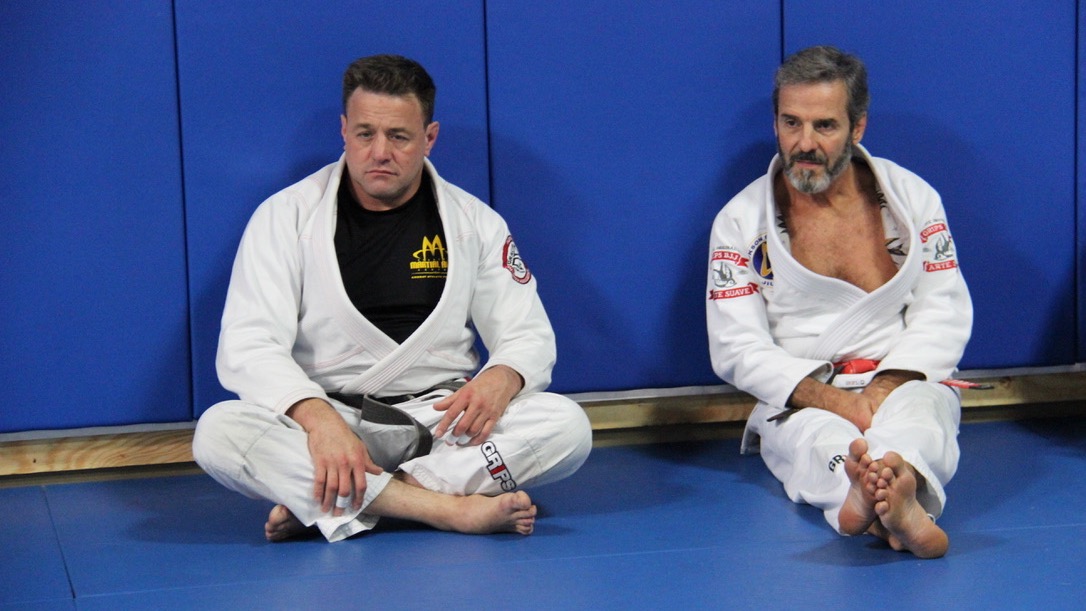
Get Close to the Source
“The water is going to be the cleanest at the mouth of the well.”
Master Pedro Sauer has used this analogy to explain the transmission of knowledge. The farther water travels from the opening of a well, the more opportunities there are for mud and debris to enter it. Knowledge can work the same way. As it passes from person to person, small misunderstandings accumulate and purpose becomes less clear.
After almost fifty years of studying and teaching multiple martial arts, I have learned the importance of getting close to the source, and when possible, close to the creative source. I sometimes describe this through the principle of the sun and the moon. The sun generates light. The moon reflects it. A creative source understands why the method was built, how its parts relate, and how to adapt the training without losing the principle. A reflective instructor may reproduce what they were shown, but reproduction alone does not guarantee understanding.
This does not mean that only a founder can teach well. It means lineage, depth of training, continuing education, and an active relationship to the source matter. Good students become creative instructors when they understand the principles deeply enough to preserve intent while adapting the delivery to the person in front of them.
If this article has led you to look for Keysi training, take time to investigate the person you are considering. Ask where they trained, who trained them, how long they have been involved, what instructor development they completed, and whether they continue to study. Ask them to explain the purpose of a drill, how they progress it, what they observe, and how they correct a student when the desired behavior disappears.
This is especially important with stress training. An instructor who can make a drill hard is not necessarily an instructor who can make it developmental. Qualified coaching will save you frustration and help prevent bad habits from becoming deeply ingrained. Get as close to clean water as you can.
The Blind Side Changes With the Position
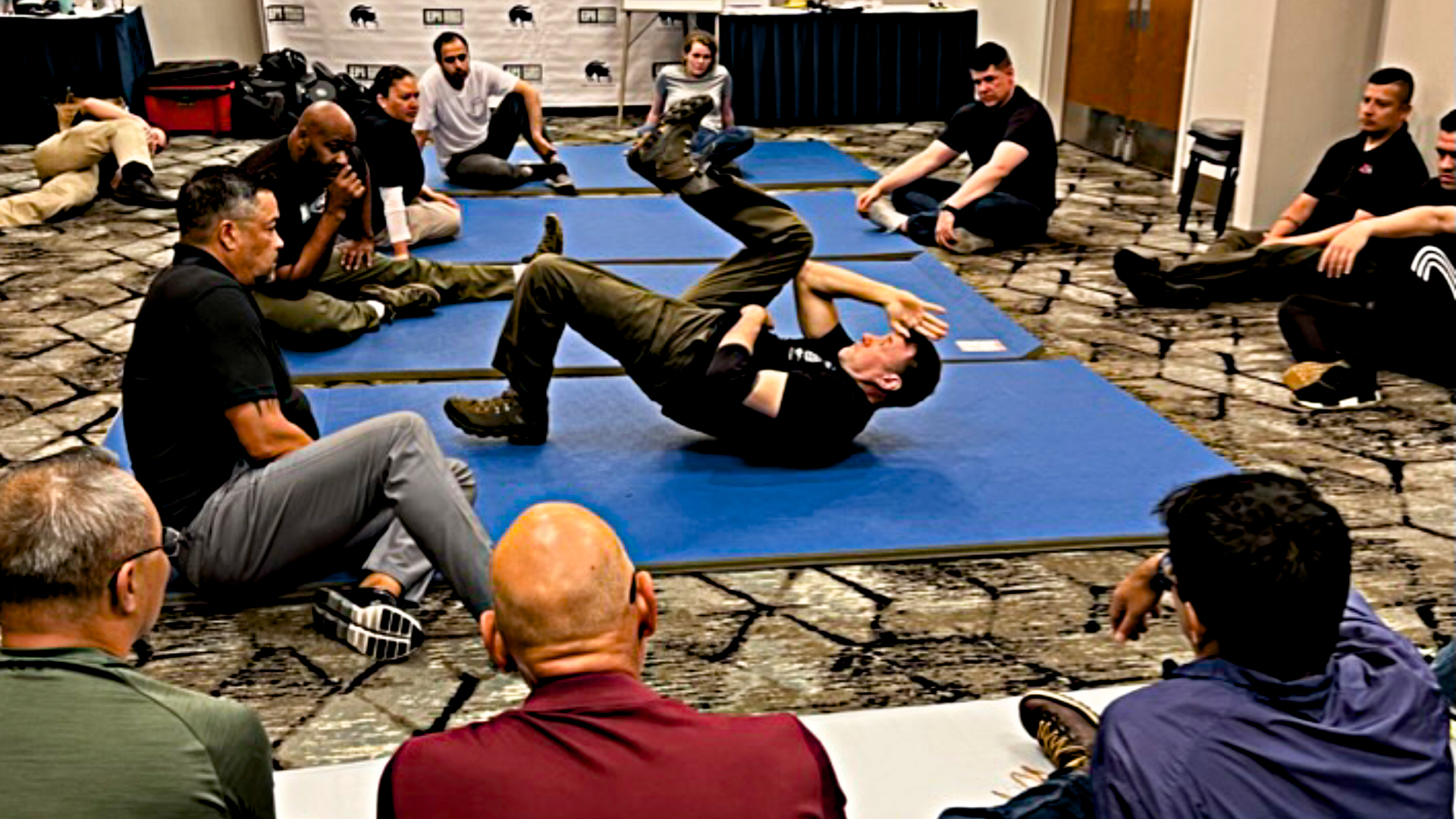
Standing is only one position of the human machine. Keysi’s Around the World framework reminds us to train while standing, kneeling, seated, and on the ground. Each position changes the field of vision and the meaning of the blind side.
When standing, footwork may reopen an angle. While kneeling, the horizon changes and mobility decreases. In a seated position, a chair, wall, or vehicle may block the turn we normally use. On the ground, another person’s body can occupy most of the primary field while the hands and legs create shifting visual barriers.
La Mano Negra can be adapted to each position. The cue may come from a hand, a partner moving at the edge of the field, pressure entering the structure, or a change in the environment. The student learns that optics, protection, and movement must reorganize together.
This is where the Pensador proves its value as more than a standing guard. Because it can articulate around the head and body, it gives the practitioner a connected protective platform from which to receive information in compromised positions.
Intelligent Optics Is a Life Skill
The universal principle is larger than any single martial art. The environment changes, but the task remains: keep collecting relevant information while pressure competes for your attention.
From Keysi to C-Tac and Professional Training
Intelligent optics is a life skill. I have seen versions of this principle in protection-agent training, at Vehicle Dynamics Institute, on the firearms range, in Protection Response Tactics, and throughout the C-Tac program. The technical expression changes, but the underlying requirement remains consistent. A capable person has to see useful information, manage attention, and make decisions while the environment is moving.
Keysi Fighting Method gave me another sophisticated way to study this problem. La Mano Negra and the Four-Man Box show how visual and tactile recognition can be connected to the Pensador in close quarters. C-Tac takes those same universal questions into broader environments, including vehicles, confined spaces, walls, ground positions, protection problems, and team-based stress drills.
This is not about blending systems until their identities disappear. It is about recognizing a sound principle when it appears and understanding how to train it responsibly. The principle does not belong to a logo. The method gives us a specific language and laboratory for developing it.
The bridge between Keysi and C-Tac is capability. Both ask whether the student can access what they know when position, pressure, and uncertainty change the problem. Both require progressive training rather than slogans. Both demand instructors who understand how to create an environment where better behavior can emerge.
Develop intelligent optics, situational awareness, and real-world protective capability through the structured C-Tac Student University curriculum.
When your attention is occupied by the problem in front of you, what training keeps the rest of the environment from disappearing?
Build One Honest Layer
Begin with a stable Pensador and one clear peripheral cue. Keep the pressure low enough that the student can recognize the cue without abandoning protection. Ask for one simple action, then reset and repeat until the visual habit becomes consistent.
Only then should you occupy the primary field, vary the cue, change the position, or add pressure. If the eyes close, the structure freezes, or the student loses the learning objective, remove one variable. Correction is not a retreat from realism. It is how reliable behavior is built.
Over time, move the work into the Four-Man Box and into the positions and environments where the principle must survive. The goal is not to prove that the student can endure a chaotic drill. The goal is to create a practitioner who can remain protected, informed, and capable inside a chaotic moment.
Train the Blind Side Before It Becomes the Problem
We cannot watch every direction at the same time. We cannot guarantee perfect awareness, perfect information, or perfect timing. What we can do is train habits that make visual disappearance less likely and recovery more immediate.
La Mano Negra gives that work a specific shape. It teaches the practitioner to recognize change outside the center of attention, use the Pensador as both shield and sensor, and make decisions without surrendering the problem already in front of them.
The blind side will always exist. The purpose of training is to keep it from becoming an empty side.
When the drill is progressive, the partners are disciplined, and the instructor understands the architecture, the Black Hand becomes far more than an unexpected attack. It becomes a way to train the eyes, the structure, and the nervous system to remain connected to a larger reality.
Capability Academy • Train With Purpose • Build Real Capability