Tactical 21 • Defensive Shooting Fundamentals
Shooting From Cover: Movement, Angles, Reloads, and Real-World Defensive Positioning
In this session from Virginia Beach, John Fleischer from Tactical 21 breaks down how to properly shoot from cover, avoid overexposing yourself, stay off the barricade, move intelligently, reload behind cover, and fight smarter in a real-world scenario.
Media Description
Learning To Work From Cover With Intelligence
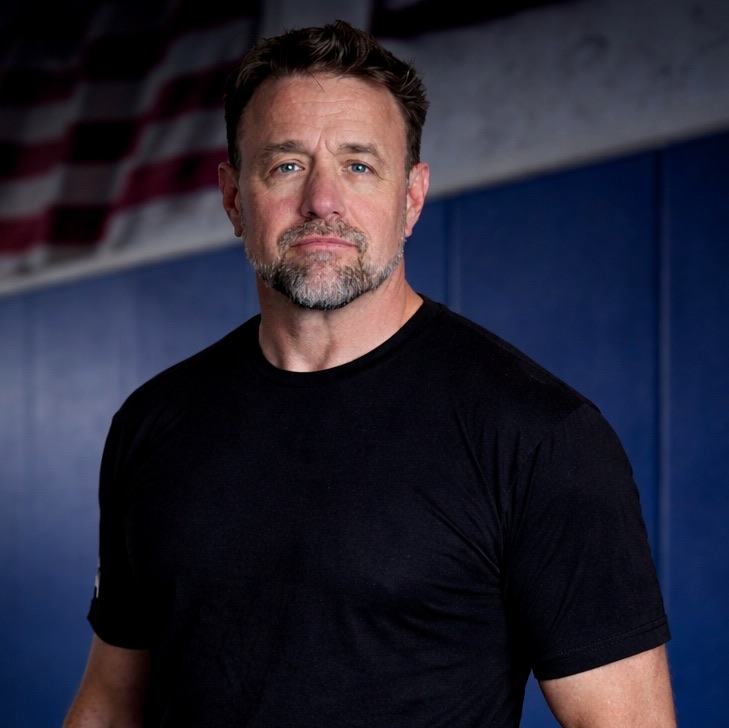
Today I am in Virginia Beach training with John Fleischer from Tactical 21. John brings decades of law enforcement experience, a strong firearms instruction background, and the kind of practical perspective that only comes from years of doing the work.
In this session, we worked on shooting from cover. That may sound simple at first, but the details matter. Where do you place your feet? How far should you be from cover? How much of your body are you exposing? Does your optic clear the cover while your muzzle is still behind it? What happens when you need to reload? What happens when you keep popping out from the same place?
These are the kinds of details that separate casual range work from practical defensive shooting. The goal is not just to stand behind something and fire rounds. The goal is to use cover intelligently while maintaining mobility, safety, awareness, and the ability to continue solving the problem.
Tactical 21 has become one of the training partners connected to my work and the Capability Academy. I often do defensive tactics and shooting events with them in Virginia Beach, and I always appreciate the level of experience and professionalism their team brings to the training environment.
Cover is not a place to hide forever. It is a temporary advantage that should help you think, move, reload, and survive.
Capability Academy PrincipleWho Is John Fleischer?
John Fleischer is the Training and Development Manager for Tactical 21 and serves as the Lead Law Enforcement Master Instructor. He is also a retired SWAT breacher with more than 27 years of law enforcement experience.
John is a native of the Hampton Roads area and recently retired from active law enforcement. During his career, he served as the Lead Master Firearms Instructor at his department’s police academy and held a position as a breacher on the SWAT team.
His certifications include firearms instruction through DCJS, NRA, NTOA, EPI, and USCCA. He also holds certifications in firearms, defensive shooting fundamentals, first aid, active shooter instruction, and range safety.
Today, John manages the Active Shooter and Security Training Department at Tactical 21. That background matters because when John teaches shooting from cover, he is not simply repeating range theory. He is teaching from a career spent around law enforcement training, tactical work, firearms instruction, and real-world problem solving.
Training With Tactical 21
Tactical 21 is one of the organizations I enjoy working with because their team brings a serious, professional, and practical approach to training. These guys are not playing games. They care about the information, they care about the student, and they care about building training that has real use.
I am one of the instructors with Tactical 21, primarily in the areas of combatives and executive protection. That relationship has given me the opportunity to work alongside their team in firearms, defensive tactics, protection, and scenario-based training environments.
For the Capability Academy, relationships like this are important because capability is not built inside one subject. Firearms, defensive tactics, martial arts, executive protection, physical culture, leadership, and self-education can all become learning environments when the instruction is useful and the standards are high.
This lesson is a good example of that. We are not just learning how to shoot around a barricade. We are learning how to think around cover, how to manage exposure, how to preserve options, and how to make better decisions under pressure.
Training On The Range With John Fleischer
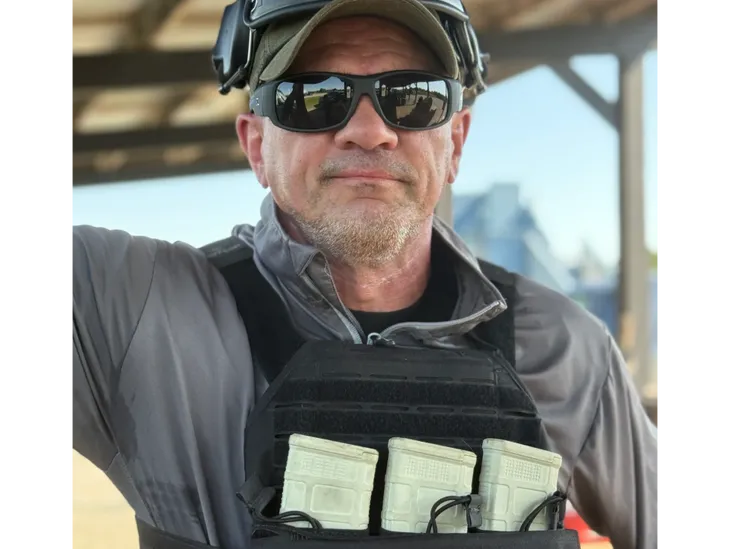
Training with John Fleischer of Tactical 21 in Virginia Beach. John brings decades of law enforcement, firearms instruction, SWAT, and active shooter training experience to the range.
This kind of training matters because the student gets to see the difference between standing still on a range and learning how to work through a more realistic problem. Cover, angles, reloads, changing levels, foot position, and exposure all change the demand placed on the shooter.
Key Lessons From The Range
Do Not Crowd Cover
The closer you get to cover, the more you may have to expose yourself to see and work around it.
Gun Leads The Way
Avoid sticking your head out first. The gun should be in position as you work out from cover.
Reload Behind Cover
If you need to reload or fix a malfunction, do it behind cover when the situation allows.
Cover Is Temporary
One of John’s first points in the lesson was that all cover is temporary.
That is an important mindset. A barricade, a wall, a tree, a column, or even parts of a vehicle may provide protection for a moment, but none of those things should be treated as magic. With the right round, the right angle, or enough repeated impact, cover can fail.
That means you cannot think of cover as a permanent solution. You have to think of it as a temporary advantage. It may give you time to move. It may give you time to reload. It may give you time to assess. It may give you enough protection to create the next decision.
For civilians, the goal is usually not to stay and fight from one piece of cover forever. The goal is to survive the problem, protect the people you are responsible for, and get out of the situation when possible.
That means cover should support movement, not replace it.
Foot Position and Body Alignment
John started by explaining how the foot position changes when working from the side of a barricade.
In a normal shooting stance, many right-handed shooters will naturally have the strong-side foot slightly back. But when shooting around cover, John teaches that the foot on the side you are shooting from should move forward.
If you are shooting from the right side of cover, the right foot comes forward. If you are shooting from the left side of cover, the left foot comes forward.
This helps keep the body square to the target and supports a controlled roll-out from behind cover. The front knee bends slightly, the feet stay planted, and the shooter works from behind the gun instead of leaning out recklessly.
That foot position may seem like a small thing, but small things matter when the problem is real. The body position affects balance. Balance affects control. Control affects accuracy, exposure, movement, and recovery.
Optics, Muzzle Awareness, and Cover
One of the important details in this lesson is the relationship between the optic and the muzzle.
With a pistol-mounted optic, the sight sits above the bore. That means it is possible to see the target through the optic while the muzzle is still behind the cover.
On the range, that mistake may only put a hole through a piece of wood or cardboard. In a real environment, if the cover is concrete, brick, metal, or another hard surface, that round can strike the cover and send fragments or debris back toward the shooter’s face.
That is why muzzle awareness matters. You must know where the gun is, not just where the sight is.
The goal is to present the gun behind cover, keep it just below the line of sight, roll out, confirm the sight picture, take the necessary shots, and roll back behind cover.
The head should not go first without the gun. The gun should lead the way.
If you can see the threat, there is a good chance the threat can see you.
Range LessonWhy You Should Not Crowd Cover
A common mistake is getting too close to cover.
When shooters start moving, reloading, and working both sides of a barricade, they often begin creeping closer without realizing it. That creates problems.
The closer you get to cover, the more you may have to expose yourself to see around it. You also reduce your ability to work angles, move cleanly, and stay aware of what is happening around you.
Staying off the cover gives you space. Space gives you options. Options give you a better chance of solving the problem.
This also applies around vehicles. If you are using a car for cover or concealment, you do not want to crowd the car. If you come up over the hood, you do not rest the gun on the hood and expose yourself unnecessarily. You maintain distance, work your angles, and keep the gun leading the way.
The purpose of cover is not to make you feel safe. The purpose is to help you stay alive long enough to move, think, and act.
Kneeling Behind Cover
John also covered kneeling positions behind the barricade.
The principle was consistent with the standing position: whatever side you are shooting from, that side knee goes down. If you are shooting from the right side, the right knee goes down. If you are shooting from the left side, the left knee goes down.
This is not because kneeling automatically makes you more accurate. The purpose is to help prevent overexposure.
Under stress, especially as fatigue, age, gear, and mobility limitations become factors, a shooter may roll out and unknowingly expose more of the body than necessary. John specifically pointed out the danger of exposing the femoral artery area. That is not a small concern.
A good kneeling position should help manage the exposure, support the gun, allow the shooter to work around cover, and create a more intelligent firing position.
Do Not Keep Appearing In The Same Place
Another important point from the drill was not to keep coming out from the same place.
If you are in a fight and you keep exposing your head or body from the same position, the person shooting at you can begin to time that movement. A skilled or even reasonably patient threat may wait for you to appear in the same spot again.
That is why John had us work different positions around the barricade. One or two rounds from one side. A different number of rounds from another position. A shift from standing to kneeling. A change in height. A change in side.
This makes your exposure less predictable and forces the shooter to think instead of simply repeating one pattern.
Predictability can become dangerous under pressure.
Reloading Behind Cover
One of the training corrections during the lesson involved reloading.
If there is a lull in the fight and you are behind cover, that may be the right time to top off the gun. John explained the value of retaining the partially used magazine and replacing it with a full magazine while staying behind cover.
The important point is not simply the reload technique. The important point is decision-making.
If you have fired a number of rounds and you know the gun is getting light, you need to think ahead. If the problem starts again and you are holding a gun with only one round left, your options have narrowed quickly.
Reloading behind cover, when the situation allows, is about preparing for what may happen next.
This is the same principle we see across all capability development: do not wait until the problem is at its worst to start preparing.
Speed, Accuracy, and Real Feedback
After working the drill, we went downrange and looked at the target.
A high majority of the rounds were in the high chest area, where they needed to be. A few rounds opened up as the speed increased. That is useful feedback.
If you only stand still and target shoot, you may get clean groups, but that does not tell the whole story. Once movement, cover, reloads, angles, changing levels, and stress are introduced, the target begins to reveal more about your actual capability.
That is why this kind of training matters.
The goal is not to look perfect. The goal is to find the truth of what you can do under more realistic conditions, then improve from there.
Speed can expose weaknesses. Movement can expose weaknesses. Cover can expose weaknesses. Reloads can expose weaknesses. That is not a bad thing. That is where the learning is.
Capability Principle
Capability is built when knowledge meets pressure, movement, feedback, and correction.
Shooting from cover is not simply a firearms technique. It is a decision-making problem. It asks the shooter to manage exposure, understand angles, stay aware of the muzzle, reload intelligently, avoid predictable movement, and use cover as part of a larger plan.
The lesson is bigger than the barricade.
Do not crowd your cover. Do not expose more than necessary. Do not keep appearing in the same place. Do not let the environment make decisions for you.
Use the environment intelligently. Keep thinking. Keep moving. Keep solving the problem.
Why This Matters Beyond The Range
A good firearms lesson is never only about the firearm.
It is about judgment, discipline, attention, movement, pressure, and consequence.
This is why range work can become a Capability Environment. The student is not simply learning where to put the rounds. The student is learning how to manage the body, the tool, the environment, the threat, and the next decision.
That is what I appreciate about training with Tactical 21. Their instructors bring real experience, but they also bring a practical teaching style. The training is not built around showing off. It is built around helping people understand what to do and why it matters.
That kind of instruction has value.
If you are in the Virginia Beach area, Tactical 21 is absolutely worth looking into. If you are not in the area, they also travel and provide training for groups and organizations.
You can learn more about them at tactical21.com.
FAQ
What does shooting from cover mean?
Shooting from cover means using an object that may help stop incoming rounds while allowing the shooter to return fire, move, reload, or escape more intelligently.
Why should you avoid crowding cover?
Crowding cover can force you to expose more of your body, reduce your angles, and make movement more difficult. Staying off cover gives you more options.
Why should the gun lead the way?
The gun should be presented as you work out from cover so you are not exposing your head or body before you are ready to address the threat.
Who is John Fleischer?
John Fleischer is the Training and Development Manager for Tactical 21, a Lead Law Enforcement Master Instructor, and a retired SWAT breacher with more than 27 years of law enforcement experience.
How does this connect to the Capability Academy?
This lesson connects to the Academy because it develops practical judgment under pressure. The goal is not simply to shoot from behind a barricade. The goal is to use training, awareness, movement, and decision-making to become more capable.
Sifu Alan Baker
Founder of the Capability Academy
Shift Your Perspective, Take Action, And Forge Your Path To Greatness