Dirt Medicine • Tactical 21 • Trauma Training
Seconds Matter: Tourniquets, Blood Loss, and The Cost of Not Having Your Gear
In this video, Sifu Alan Baker trains with Paul Ekoniak during a live trauma demonstration from a Dirt Medicine masterclass, showing how quickly seconds turn into stress, blood loss, and deteriorating decision-making.
Video Guide
In This Video
- 00:00 Introduction in North Carolina
- 00:30 Setting up the blood loss demonstration
- 01:09 Stress, dexterity, and retrieving the tourniquet
- 02:05 The timer starts
- 03:00 Alan returns with the tourniquet
- 03:15 Shaking hands and stress response
- 04:01 Bleeding stopped
- 04:34 Estimating blood loss
- 05:01 Hemorrhagic shock discussion
- 05:24 What if there were other problems?
- 06:30 Why the demonstration matters
- 06:41 Irreversible shock explanation
- 07:18 Cognitive decline under stress
- 08:13 Returning to the MARCH algorithm
Media Description
What Happens If Your Tourniquet Is Not On You?
What happens if you do not have your tourniquet on you when it matters?
That is the question this training scenario was designed to answer.
In this video, I am training with Paul Ekoniak during a live trauma demonstration from a four-hour Dirt Medicine masterclass. The scenario is simple, but powerful. A simulated severe bleeding injury begins. I do not have the tourniquet on me. I have to run to retrieve it, return, apply it, and stop the bleeding while the clock keeps moving.
This is not a complicated scenario on paper. There is no active threat in the room. There is no cold weather. There is no incoming fire. There is no darkness, confusion, screaming, family member, vehicle crash, or hostile environment to manage.
And it is still difficult.
That is the lesson.
Gear that is not on you is not available when seconds matter.
Capability Academy PrincipleTraining With Paul Ekoniak
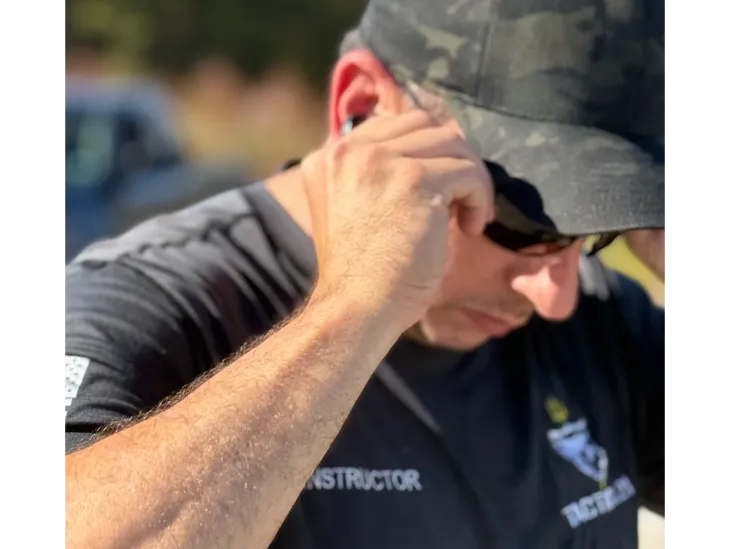
Training with Paul Ekoniak during a Dirt Medicine trauma demonstration. Paul brings deep medical, leadership, firearms, and high-stakes operational experience to the training environment.
Paul Ekoniak serves as Director of Medical Training, Executive Leadership, and Lead Firearms Instructor with Tactical 21. His background includes 14 years as a Senior Corpsman for Naval Special Warfare Development Group and United States Marine Corps teams, supporting conventional and Joint Special Operations Command assets nationally and internationally.
Paul has also served as senior cadre for Department of Defense NAEMT and PHTLS certification programs for TECC and TCCC, working with communities including the United States Army, Naval Expeditionary Combat Command, EOD, SEAL, MARSOC, and Army SOCM teams. He has served as a lead instructor for SOCM and the 18D qualification course for the United States Army.
That kind of background matters. When Paul teaches trauma medicine, he is not simply teaching from a slide deck. He is teaching from experience in demanding environments where time, clarity, pressure, and execution matter.
Paul also brings a strong executive leadership background, with years spent leading teams, solving complex organizational problems, and building cultures around trust, accountability, and performance. That combination of medical experience, leadership, firearms training, and operational discipline makes him a valuable instructor for anyone serious about preparedness.
If you want to connect with Paul, you can contact me through sifualanbaker.com, and I will help make the connection.
Key Lessons From The Demonstration
Seconds Matter
Time lost retrieving gear is time the patient may continue to bleed.
Stress Changes Skill
Fine motor tasks become harder when the heart rate rises and pressure increases.
Carry What You Need
Medical gear cannot help if it is not accessible when the emergency begins.
The Demonstration: A Simple Problem That Gets Hard Fast
Paul set up the demonstration to visually represent blood loss from a severe injury. He made an important point before the scenario began: the bottles were not meant to represent separate people or separate bloodstreams. They represented one system, one human being.
That matters because students often hear medical numbers without truly understanding what those numbers mean. Blood loss can sound theoretical until you see fluid leaving the system while the clock continues to run.
Once the demonstration started, my job was simple. Run upstairs, retrieve my tourniquet, return, and apply it as quickly as possible.
I came back in roughly 43 seconds.
That may sound fast, but the visual told the truth. Blood had continued to leave the system the entire time. Then I still had to apply the tourniquet while my heart rate was elevated and my hands were shaking.
That is where the lesson becomes real.
Stress, Dexterity, and The Hands
One of the first things Paul pointed out when I returned was the condition of my hands.
They were not perfectly calm. I had just sprinted to get the gear. My heart rate was up. My breathing changed. My hands were under pressure. Now imagine adding a real injured loved one, a violent threat, cold weather, darkness, confusion, noise, or fear.
That is why Paul emphasized stress and dexterity.
A tourniquet is not complicated when you are calm, trained, and standing in a controlled environment. But simple tasks become less simple under stress. Straps can twist. The windlass can be hard to control. The hand can shake. The mind can narrow. The body can rush.
That is why training matters.
You do not want your first real tourniquet application to be the day someone you love is bleeding.
Simple tools are only simple if you have practiced with them before the emergency begins.
Dirt Medicine LessonHemorrhagic Shock Is Not A Theory
During the demonstration, Paul explained hemorrhagic shock in practical terms. Shock is connected to a lack of perfusion to the organs. When the body is losing blood, the system begins to fail. Vision can narrow. heart rate can increase. cognitive ability can decline. The person may become less able to think clearly and solve problems.
This is one of the most important parts of the lesson because people often underestimate how quickly a severe bleeding problem can become critical.
In a real situation, you may not have the luxury of calm conditions. You may be dealing with multiple problems at once. You may still need to move, communicate, protect others, call for help, or deal with the threat that caused the injury in the first place.
Paul’s demonstration made the invisible visible. It gave the student a way to see time, blood loss, stress, and decision-making in one training event.
The MARCH Algorithm And Massive Hemorrhage
Paul brought the lesson back to the MARCH algorithm, starting with the first letter: M for massive hemorrhage.
That starting point matters because massive bleeding can become immediately life-threatening. If the bleeding is severe, the priority is to control it as quickly as possible with the appropriate method and training.
This is why tourniquet access matters. It is not enough to own medical gear. The gear has to be available. It has to be staged intelligently. It has to be carried when appropriate. The user has to know how to deploy it under pressure.
A tourniquet buried in a bag, locked in a vehicle, or left in another room may be better than nothing in some circumstances, but it is not the same as having it immediately accessible when seconds matter.
Capability Is Built Before The Emergency
This lesson connects directly to the larger work of the Capability Academy.
Capability is not built by owning gear. It is not built by watching one video. It is not built by assuming you will figure it out when the time comes.
Capability is built through education, training, reflection, experience, and action.
The gear matters. But the person matters more. The training matters. The reps matter. The ability to breathe, think, move, and apply the tool under pressure matters.
This is why medical training belongs in the larger conversation about self-protection. If you carry defensive tools, train martial arts, teach protection, travel with students, lead a family, run events, or spend time around physical training environments, you should also think seriously about medical readiness.
Violence is not the only problem. Injury is also part of the problem.
Capability Principle
Preparedness is not what you own. Preparedness is what you can access, understand, and apply under pressure.
In this demonstration, the tourniquet was available, but it was not on me. That one detail changed the entire problem. I had to move, retrieve it, return, calm myself enough to work, and apply it while the simulated blood loss continued.
The lesson is not fear. The lesson is responsibility.
Carry the right tools. Train with the tools. Know where they are. Practice under pressure. Get qualified instruction. Then keep refining.
Why This Matters Beyond Medical Training
This demonstration is about tourniquets and trauma care, but the lesson is larger than the tool.
It is about preparation before pressure. It is about owning the gap between what we think we can do and what the situation demands. It is about testing assumptions in a training environment before reality tests them for us.
That is what good training does. It reveals the gap.
You may believe you are prepared until you have to run, breathe hard, control your hands, remember the process, and apply the skill while the clock is working against you.
That kind of lesson is valuable because it changes how you think.
Once you see how fast the problem changes, you may carry your gear differently. You may train differently. You may stage equipment differently. You may take medical education more seriously.
That is the point.
Training With Tactical 21
Tactical 21 continues to be one of the training partners I value because their team brings real experience, serious instruction, and practical training to the table.
The instructors at Tactical 21 understand that preparedness is not one subject. Firearms, medical training, defensive tactics, leadership, decision-making, and physical stress all connect.
This Dirt Medicine masterclass is a strong example of that approach. It was not just a medical lecture. It was a reality check. It showed the student what time, stress, blood loss, and access to gear actually mean.
You can learn more about Tactical 21 at tactical21.com.
FAQ
Who is Paul Ekoniak?
Paul Ekoniak is the Director of Medical Training, Executive Leadership, and Lead Firearms Instructor with Tactical 21. His background includes service as a Senior Corpsman supporting Naval Special Warfare and Marine Corps teams, as well as extensive TECC, TCCC, SOCM, and 18D instructor experience.
What is the main lesson of this video?
The main lesson is that seconds matter. If your tourniquet or medical gear is not immediately accessible, the situation can deteriorate quickly while you are trying to retrieve it.
Why does stress make tourniquet use harder?
Stress can raise heart rate, affect breathing, narrow attention, and reduce fine motor control. That is why tourniquet use should be practiced before an emergency.
Is this article medical advice?
No. This article is educational and is not a substitute for qualified medical training or emergency medical care. In a real emergency, call emergency services and use skills you have been properly trained to use.
How does this connect to the Capability Academy?
This connects to the Academy because capability requires preparation, access, training, and the ability to perform under pressure. Medical readiness is part of becoming a more capable human being.
Sifu Alan Baker
Founder of the Capability Academy
Shift Your Perspective, Take Action, And Forge Your Path To Greatness