Capability Academy • Martial Arts • Lifelong Development
The Real Reason I Still Train After 47 Years In Martial Arts
After nearly five decades in the martial arts, training is no longer only about fighting. It is about building a more capable human being.
Opening Reflection
Why Keep Training?
People often ask me why I continue training after 47 years in the martial arts.
It is a fair question.
At this point in my life, I have earned ranks, certifications, instructor credentials, and experiences that I never imagined when I first stepped onto a training floor as a young man. I have traveled around the world, trained with remarkable teachers, taught thousands of students, written books, built businesses, and dedicated most of my life to the study of combat, personal development, and human performance.
So why continue?
Why still attend seminars? Why still take private lessons? Why still spend time on the mats, in the gym, on the range, and in the training hall?
The answer is much deeper than most people expect.
The truth is that the martial arts stopped being simply about fighting a very long time ago.
The greatest gift the martial arts ever gave me was not the ability to defend myself. It was the process of learning how to build myself.
Capability Academy PrincipleThe Martial Arts As A System Of Human Development
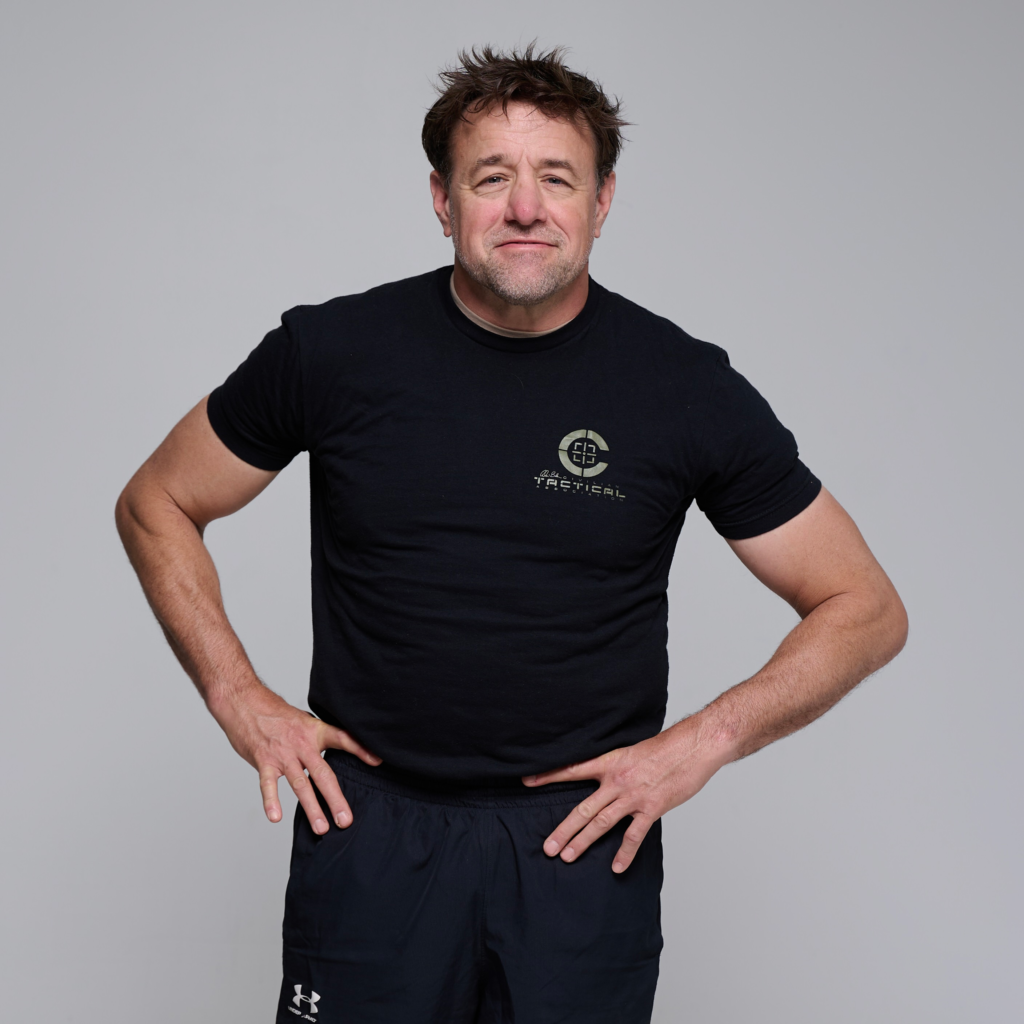
After 47 years in martial arts, the deeper purpose of training is not simply fighting. It is the development of the whole human being.
When most people look at the martial arts, they see punches, kicks, submissions, weapons, and self-defense. They see competition, combat, and physical skills. While all of those things certainly exist within the arts, they are only a small part of what I have come to understand over the course of nearly five decades of training.
I see something much bigger.
I see one of the most complete systems of human development ever created.
The martial arts taught me how to develop my body, sharpen my mind, educate myself, solve problems, endure hardship, and take responsibility for my own growth. What began as a pursuit of fighting skills eventually became an operating system for life.
Physical Culture: Building The Whole Human Being
One of the things that fascinates me about the martial arts is that they represent a form of physical culture that has been tested and refined over centuries.
Throughout history, warriors, soldiers, explorers, protectors, and adventurers relied upon these systems not only to prepare for conflict, but to develop themselves into capable human beings.
Today, physical development is often divided into separate categories. Strength training becomes one discipline. Cardiovascular conditioning becomes another. Mobility training is separated into its own category. Balance, coordination, mental performance, and stress management are treated as independent pursuits.
The warrior cultures of the past did not separate these things because they understood that a human being functions as a complete system.
The body cannot be separated from the mind. The mind cannot be separated from willpower. Willpower cannot be separated from action. Everything is connected.
The combat arts have always reflected this reality.
The Goal Is Capability
A person can spend years lifting weights and develop impressive strength. A person can spend years running and develop exceptional endurance. A person can spend years stretching and become highly mobile.
All of these pursuits have tremendous value. But strength alone does not create a capable human being.
The martial arts demand something more.
They require strength that can be applied, mobility that can be expressed, coordination that functions under pressure, decision-making while fatigued, adaptability in changing environments, and awareness in uncertain situations.
The goal is not simply to build muscles. The goal is to build a human being.
Thinking Through Movement
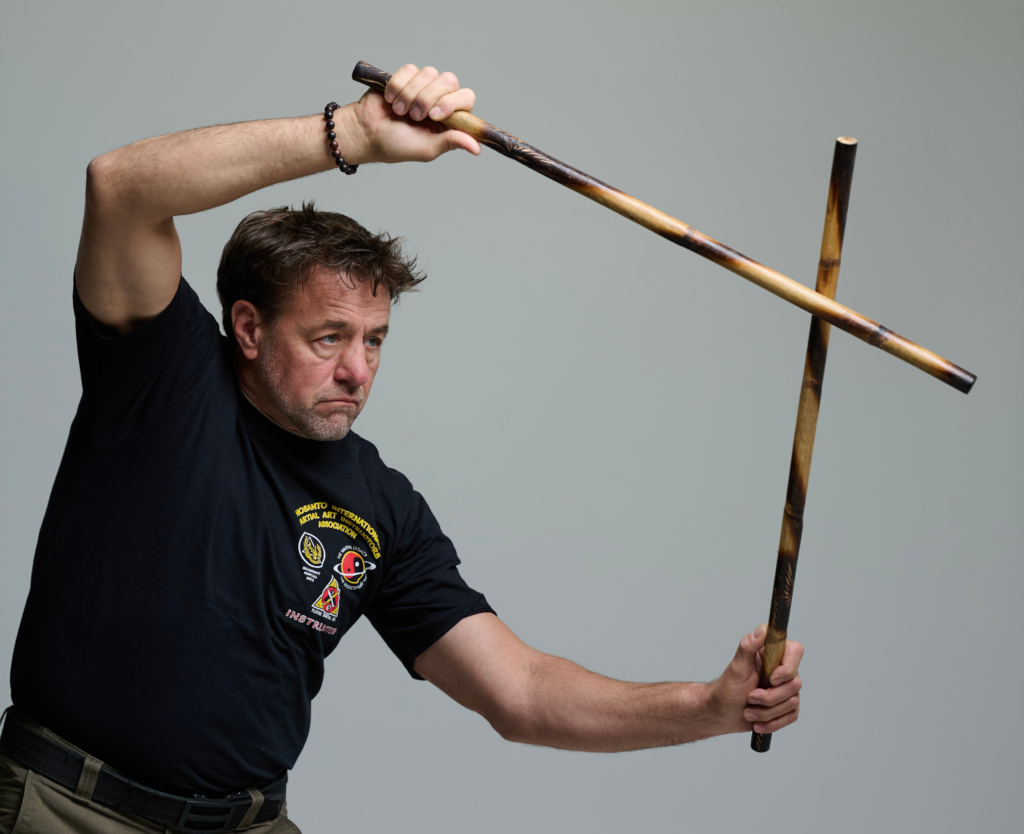
The martial arts teach us to think through movement. Timing, distance, leverage, rhythm, and adaptation become forms of intelligence.
Another lesson that emerged from my training was the understanding that intelligence is not confined to the mind. The body itself can become intelligent.
The martial arts teach us to think through movement.
Every training session becomes a laboratory for learning. Timing, distance, positioning, leverage, rhythm, and adaptation all become forms of intelligence. Through movement we learn awareness. Through awareness we develop perception. Through perception we improve decision-making.
The body becomes an educational tool.
This is one of the reasons I continue to train. Every time I step onto a mat, pick up a training weapon, work through a new movement pattern, or engage in a challenging training session, I am not simply exercising. I am developing awareness and capability.
Movement is not improvement by itself. Improvement happens when movement becomes education.
Training PrincipleFrom Student To Scholar
Perhaps the most important lesson the martial arts ever taught me was the importance of becoming a self-educator.
One of the concepts I discuss extensively in my book, The Scholar Code, is the distinction between a student and a scholar.
The Student
A student often waits to be taught and asks, “What are you going to teach me?”
The Scholar
A scholar actively seeks knowledge and asks, “What do I need to learn?”
The Shift
The shift from student to scholar places responsibility for growth exactly where it belongs: on you.
That distinction changed my life.
The martial arts taught me very early that nobody was coming to build me. Nobody was going to hand me success. Nobody was going to hand me knowledge. Nobody was going to do the work for me.
Ultimately, I was responsible for my own development.
The Universal Principles Hidden Inside The Arts
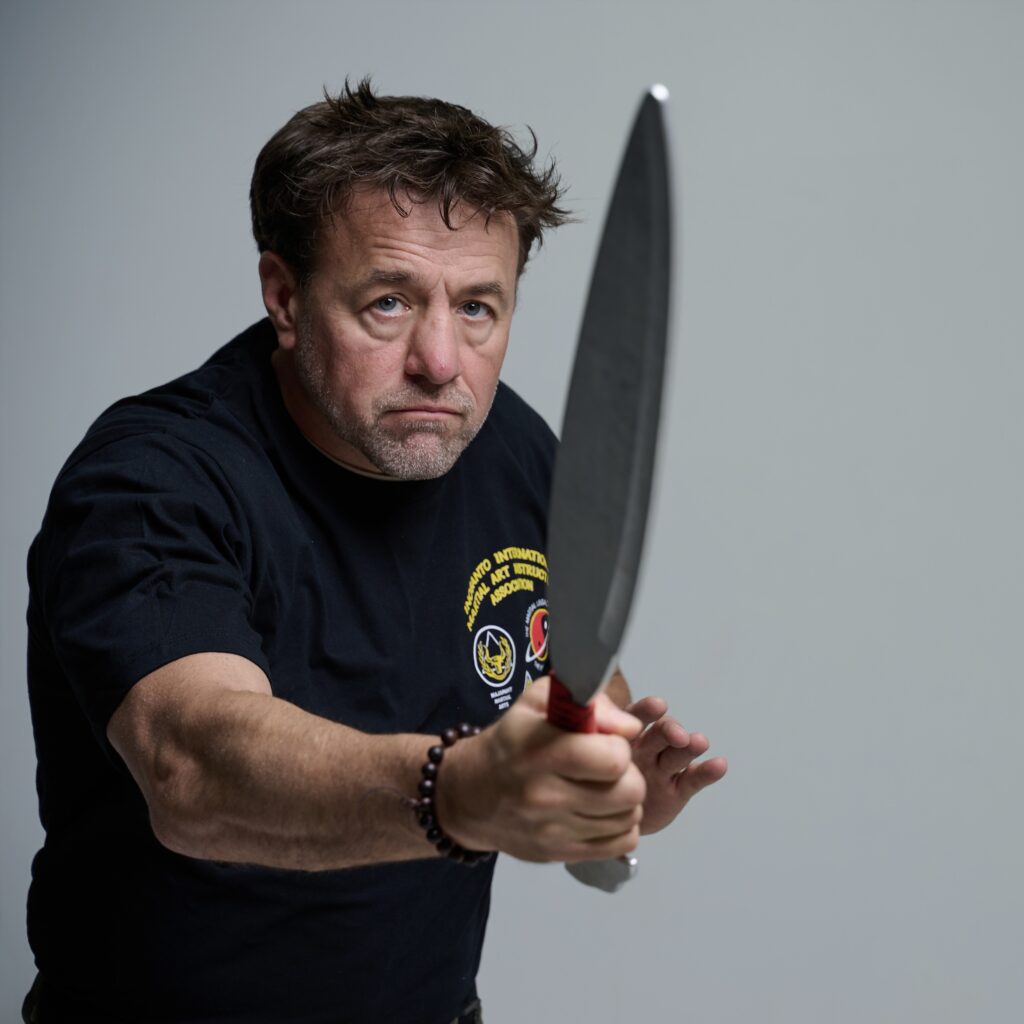
The longer you train, the more you begin to see the principles beneath the techniques.
One of the things that took me many years to recognize is that some of the most valuable lessons I learned from the martial arts were not physical at all.
Many of the techniques I learned decades ago have been modified, refined, or even abandoned over time. What remained were the principles.
Every martial art teaches leverage. Every martial art teaches timing. Every martial art teaches adaptation. Every martial art teaches economy of motion. Every martial art teaches strategic positioning. Every martial art teaches problem solving under pressure.
While these principles are certainly applicable in combat, they are equally applicable in life.
Over time, I found myself applying lessons learned on the training floor to business, leadership, communication, relationships, negotiations, investments, and opportunities.
This realization eventually became part of the foundation for my book, The Universal Principles of Change.
Tools, Weapons, And Human Capability
Another area that has become increasingly important to me over the years is the concept of intelligent tool use.
Human beings are tool users by nature. Throughout history, our ability to create, understand, and effectively use tools has allowed us to survive, build civilizations, explore the world, and solve increasingly complex problems.
The martial arts have always recognized this reality.
Whether it is the sword traditions of Europe and Japan, the stick and blade systems of the Philippines, the weapons systems of Indonesia, or countless military traditions throughout history, warriors have long understood that tools are extensions of human capability.
Tool use develops awareness, coordination, timing, spatial intelligence, and problem-solving ability. When a person learns to effectively use a sword, a stick, a knife, or even a simple hand tool, they are developing a relationship between the mind, body, and environment.
In many ways, the martial arts are teaching us how to become better users of ourselves. The body is a tool. The mind is a tool. Knowledge is a tool. Skills are tools. Systems are tools.
The more effectively we learn to use them, the more capable we become.
Personal Responsibility
One of the realities that the martial arts confront you with very quickly is that nobody is coming to save you.
Nobody is going to do your push-ups for you. Nobody is going to develop your skills for you. Nobody is going to build your strength, improve your mobility, increase your knowledge, or sharpen your mindset.
That responsibility belongs to you.
There is tremendous freedom in accepting this reality. The moment you stop looking for someone else to fix your problems, you begin taking ownership of your life.
The martial arts did not simply teach me how to fight. They taught me how to take ownership.
Willpower, Grit, And Discipline
Perhaps one of the greatest gifts the martial arts ever gave me was the development of willpower.
In today’s world, people spend a tremendous amount of time searching for motivation. The problem is that motivation is temporary. It comes and goes. Some days you feel motivated, and some days you do not.
The martial arts taught me something much more valuable.
They taught me discipline.
Anyone who spends enough time in the martial arts will eventually encounter adversity. You will lose. You will fail. You will struggle. You will become frustrated. You will get injured. You will doubt yourself. You will encounter plateaus where it feels like you are making no progress at all.
Yet somehow, you keep showing up.
Over time, you develop grit, resilience, and the ability to continue moving forward despite discomfort, setbacks, and uncertainty.
This may be one of the most important life skills a person can possess.
Motivation may start the journey, but discipline keeps you on the path when motivation disappears.
The Warrior’s PathLifelong Development
Another reason I continue training today is because the martial arts provide something that becomes increasingly valuable as we get older: a path of lifelong development.
When I was a young man, I trained because I wanted to become stronger, faster, and more skilled. I wanted to learn how to fight. I wanted to test myself. I wanted to explore what I was capable of becoming.
Those motivations were important at the time. Today, my reasons are different.
I no longer feel the need to prove anything. I am not chasing trophies. I am not concerned about being the toughest person in the room.
What interests me now is growth.
I want to continue learning, continue developing, continue exploring new ideas, and continue refining my understanding of movement, performance, leadership, teaching, and human potential.
The People Are Part Of The Gift
The martial arts have also introduced me to extraordinary people. Some of my closest friendships, strongest professional relationships, and most influential mentors entered my life through training.
There is something unique about sharing hardship, challenge, and growth with other people. Training creates bonds that are difficult to explain to someone who has never experienced them.
When I look back over 47 years in the martial arts, I do not primarily remember belts, titles, seminars, or accomplishments. I remember the teachers who guided me, the training partners who challenged me, the students who trusted me, and the friendships that were built along the way.
The techniques are valuable. The knowledge is valuable. The experiences are valuable. But the people are often the greatest gift of all.
The Work Is Never Finished
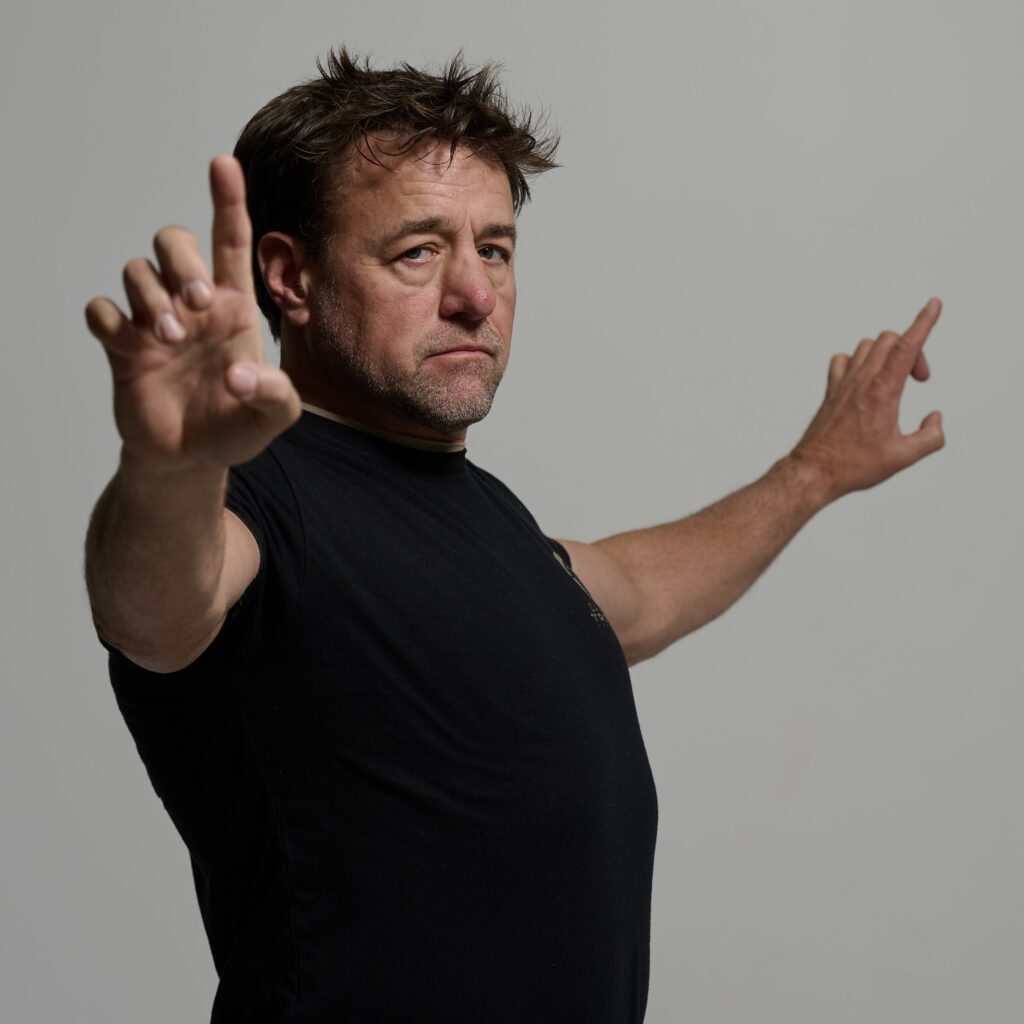
The deeper you go, the more you realize there is still more to learn.
Today, I no longer view the martial arts as a destination. I do not see rank as the goal, nor do I see mastery as a finish line.
Instead, I see an ongoing process of development. I see a path that continues to offer opportunities for growth, learning, and self-discovery.
The martial arts still challenge me physically, mentally, and intellectually. They still expose weaknesses that need attention and strengths that can be further refined. They still provide lessons that extend far beyond fighting.
So when people ask me why I continue training after 47 years, the answer is actually quite simple.
I continue because the process still has value. I continue because there is always more to learn. I continue because the lessons found within the martial arts continue to make me a better man, a better teacher, a better leader, and a better student of life.
After all these years, I have come to believe that the martial arts were never really about learning how to fight. Fighting was simply the vehicle. The true purpose was much larger.
The martial arts were teaching me how to build a human being.
They were teaching me how to build myself.
And that work is never truly finished.
Capability Principle
Capability is not a static achievement. It is a living process.
It is developed through education, training, reflection, experience, and action. It grows when a person accepts responsibility for their own development and continues walking the path long after the need to prove themselves has passed.
The martial arts are one of the great capability environments because they challenge the whole person: body, mind, will, awareness, judgment, discipline, and purpose.
Related Reading
Several of my books explore the ideas inside this article in greater detail.
The Warrior’s Path
A study of mindset, personal development, discipline, and the path of the modern warrior.
The Universal Principles Of Change
A practical look at the principles that govern growth, transformation, and adaptation.
The Scholar Code
A guide to self-education, ownership, and becoming an active participant in your own development.
You can explore Alan’s books here: https://sifualanbaker.com/books/
FAQ
Why does Alan Baker still train after 47 years?
Alan continues training because the martial arts remain a lifelong path of growth, learning, physical development, self-education, and capability.
What does the Capability Academy mean by capability?
Capability is the ability to meet life with greater skill, awareness, discipline, judgment, and purpose.
Are martial arts only about self-defense?
Self-defense is important, but the martial arts also develop discipline, awareness, resilience, problem solving, adaptability, and personal responsibility.
What is the difference between a student and a scholar?
A student often waits to be taught. A scholar actively seeks knowledge and takes responsibility for their own education.
How do martial arts support lifelong development?
Martial arts provide an ongoing environment for physical training, mental discipline, reflection, challenge, learning, and relationship-building across a lifetime.
Sifu Alan Baker
Founder of the Capability Academy
Shift Your Perspective, Take Action, And Forge Your Path To Greatness