
As human beings, we have enormous potential, but one of the greatest limitations placed on that potential is our perspective. Whether we realize it or not, we are constantly drawing conclusions based on our background, ourexperiences, our conditioning, and the things we have been exposed to throughout life. This happens automatically. It is one of the natural functions of the mind. We compare, categorize, interpret, and judge based on what we already know. In many ways, this helps us move quickly through life, but it also creates blind spots. It creates assumptions. It creates filters that can prevent us from seeing beyond what is familiar. This is especially important to recognize if you are in the position of being an educator, because if you are not careful, you will begin to teach from the limits of your own experience rather than from the full scope of what is possible.
I see this constantly in the martial arts, defensive tactics, and self-defense industry. There are a tremendous number of opinions out there. Honestly, it feels like an ocean of them. Today, all you have to do is turn on any social media platform, and you are instantly flooded with everybody’s self-proclaimed important opinion. Everyone has a microphone. Everyone has a hot take. Everyone has a clip, a comment, a reaction, a critique, a formula, a solution, a certification, or some kind ofpolished marketing designed to make them look like an authority. The problem is not that people have opinions. The problem is that too few people have the depth of background to support the weight of the opinions they are promoting.
The real trick is being able to look out across that ocean and determine for yourself what actually has value. What is real? What has depth? What has been pressure tested over time? What is built on years of study, training, and actual thought? What is supported by experience, and what is just noise dressed up in a nice package? Obviously, this principle applies to many different parts of life, but in this article, I am focusing specifically on the field that I have spent more than forty-sixyears in. I am focusing on martial arts, self-defense, and defensive tactics, because that is the world I know, and that is the world where I have seen this issue play out over and over again.
Over those decades, I have been fortunate enough to have access to and train under multiple instructors, some of whom are considered among the best available. I tend to agree with that estimate, and that is one of the reasons I sought them out in the first place. At an early age, I knew what I was going to do with my life. I also realized early on that no single martial art had all of the answers. That realization became one of the guiding principles of my own path. Because of that, I made it a point over my lifetime to seek out and study multiple martial arts and combat-related topics to relate actively. I did not want to become trapped in one room if there were doors leading into ten others. I did not want to confuse loyalty to a system with complete understanding. I wanted to learn. I wanted to expose myself to different ways of thinking, structures, answers, and questions.
This is not unlike what someone does in a university setting. Of course, when you go to a university, you generally have a focus. There is a major field of study. There is something you are going to dig into deeply. But part of your education should also involve exposure to multiple different subjects, schools of thought, and methodologies. That is part of what broadens the mind. That is part of what teaches a person to think. It is not just about memorizing information. It is about learning how to see connections, how to compare frameworks, how to ask better questions, and how to think at a higher level. Exposure to different opinions, techniques, and methodologies broadens perspective. It opens the mind. It allows an individual to move beyond rigid thinking. That is one of the reasons educational systems expose students to multiple disciplines in the first place.
In my experience, some of the best educators I have ever had the honor to stand in front of understood this principle and lived it. They did not simply master one lane and stop. They explored. They cross-referenced. They tested. They were students. They remained curious long after they had already earned the right to be called teachers. Although this approach is not required in the martial arts, defensive tactics, or self-defense industry, having this perspective and following this path does lead to becoming one of the best educators available. It may not be necessary if your only goal is to get a belt, a title, or a position. But it is necessary if your goal is to become a truly high-level educator.
Now let’s push this perspective a little further. If someone realizes that there is value in going beyond the minimum required by the system and then chooses to do it, what does that mean? Imagine that the system requires you to study four subjects in order to get your degree. What if an individual says to himself, I’m going to study eight? Or sixteen? What if he says, I want a broader perspective. I want more information. I want a deeper context. I want to know more, not because the system requires it, but because I know it will make me more capable. That individual becomes more valuable, although it is not required by the standard framework. He does not just fulfill the requirements. He exceeds them by choice.
Taking that kind of approach in our community requires a special level of dedication, discipline, and passion. Because of that, there are not many individuals who have done it. This narrows the field considerably. Most people are content to get by with the bare minimum. That is not always because they are lazy. Sometimes it is just human nature. Human beings want to arrive. We want to become the thing we have imagined in our heads. We look out and see other people who have achieved something, and our goal becomes getting to that point. Once we get there, it is also human nature to stop. Once you have arrived, once you are “the master,” once you have the title, the belt, the role, the position, why go any farther? In the minds of many people, the job is done. You are now the authority. You can now teach. You can now market. You can now tell everyone else that you have the answer.
In my opinion, that is exactly where a huge portion of the population gets stuck. They reach the standard and stop. They meet the requirement and stop. They gain the title and stop. They attain the position and stop. In my experience, it is a very small group that reaches the standard and then deliberately goes past it. It is a very small group that continues to dig deeper even when it is no longer required. It is a very small group that continues to search, continues to study, continues to expose themselves to other viewpoints, continues to test their assumptions, and continues to seek knowledge long after the industry has already given them permission to stop.
Society is structured in a way that supports that stopping point. You can arrive. You can become. You can then move on and focus on life, raising a family, building a business, and everything else that comes with adulthood. There is nothing inherently wrong with that. But there are certain individuals who are wired differently. There are certain individuals who continue well beyond the standard norm in their education, in their training, and in their pursuit of knowledge. These are the individuals I have sought out my entire life. These are the people I personally want to stand in front of. These are the minds I want to learn from. These are the people who shaped my own development. Not only that, but this is also the framework I have tried to apply to my own path. I do not want the minimum answer. I want the deeper answer. I want the broader answer. I want to know what else is there.
This brings me back to the original point. It is important to recognize and understand these types of personalities when you are looking across that huge ocean of options. How do you know who to listen to? How do you know who is worth putting your time, energy, and attention in front of? How do you know who deserves your trust? In any field, but especially in the martial arts and self-defense world, this matters because the consequences of bad information can be serious. Poor training can give people false confidence. Shallow systems can leave huge gaps. Incomplete education can produce instructors who sound convincing but are actually teaching out of a very small box.
Most of the time, your first introduction to an educator is through marketing. It is what they want you to know. It is what they choose to put forward. Usually, they are going to shine the light on the one thing they have depth in. They are going to focus on their achievements, their titles, their promotions, their affiliations, their wins, and their credentials. That is normal. That is how marketing works. The problem is when the consumer stops there. The trick is to take a little more time and look around that one highlighted thing. Look at the rest of their background. How have they spent their life? What have they studied? Have they spent years exploring multiple topics? Have they developed a broader perspective? Do they possess an open mind and the ability to synthesize all of those areas into something that would actually be valuable to you? Or are they just standing in front of you, saying, This worked for me, therefore it will work for you, trust me?
That question is important because one of the marks of a high-level educator is not just that they have accumulated knowledge. It is that he can organize that knowledge, interpret it correctly, and transmit it in a useful way. Plenty of people know things. Far fewer can teach. Plenty of people can perform. Far fewer can explain. Plenty of people have a background. Far fewer have breadth, depth, perspective, and teaching intelligence. It is one thing to be good at what you do. It is another thing entirely to understand why it works, where it works, where it doesn’t, how it connects to other things, and how to communicate that to others in a way they can actually use.
That kind of educator has depth in at least three different areas. First, he has technical depth. He has actually spent enough time in the trenches to know what he is talking about. Second, he has conceptual depth. He understands the principles behind the techniques and can explain them. Third, he has contextual depth. He knows where things belong. He understands environment, timing, range, purpose, legal context, emotional context, social context, and practical application. Without that third layer, a person can know a lot of things and still teach badly.
For me, taking the time to find these high-level educators has been both a blessing and a curse. It is a blessing because I get to place myself in front of people who operate at a higher level. I get exposed to better thinking, deeper knowledge, and better questions. That has had a massive influence on me. It has made me better. It has shaped the way I teach, the way I build systems, and the way I evaluate information. The curse, though, is that once you are exposed to that level of educator, you cannot unsee the difference. You then look back across the field and realize how disappointing many of the available options really are.
Sometimes I honestly ask myself how some people even got into positions of teaching in the first place. Of course, I am looking through a different lens. I have a different perspective based on my background and my experiences. The person standing next to me may not have that perspective. That person may be impressed by things that no longer impress me. That person may not know what he is not seeing. And so I often find myself in rooms where everyone is nodding their heads and applauding individuals I am internally questioning. I am asking myself how they got to the point where they areteaching what they are teaching. I am watching products being promoted that are, quite frankly, ridiculous. But if a person has never been exposed to better, he may not know the difference.
That is one of the real dangers of limited perspective. If your perspective is narrow, your ability to evaluate is narrow. If your experience is shallow, your standards are shallow. If all you have been exposed to is noise, then noise starts to look normal. This is not just a martial arts problem. It is a human problem. People normalize what they are surrounded by. They assume the standard of their environment is the standard everywhere. That is why broader exposure matters. That is why real study matters. That is why perspective matters.
So why make this point? Because if you, as the consumer, can understand this, then you can go back out into the field and look at what is being offered with a more informed eye. You can look past the garbage marketing. You can look past the social media smoke and mirrors. You can look past the comment sections, the hype, the polished clips, the slogans, the emotional manipulation, and the false authority. If you are considering working with an individual, take the time to look into their background. You may even contact them directly and ask them about it. How did they arrive where they arrived? If they are teaching something unique, how was it designed? What is the depth of the product you are considering? Where did it come from? What experiences shaped it? What problem was it built to solve?
Those are fair questions. In fact, they are smart questions. A serious student should ask them. A serious consumer should ask them. A serious educator should be able to answer them.
There are very few high-level educators out there, and I am here to say that they are extremely valuable. If you can find them, and if you are actually looking for a real answer, that is something worth taking seriously. Most people are not looking for a real answer. Most people are looking for a bandage. They want something they can throw over the scratch just long enough to feel good about what they are doing. They want something that gives them the appearance of progress, the emotional comfort of certainty, or the identity of belonging to something. That is enough for many people. But if you are more than a student, if you are a scholar, if you are a real seeker of information and knowledge, then you owe it to yourself to look deeper.
Ask yourself if the person in front of you is one of those individuals who has gone past the standard of the industry. Did they study just one topic, or have they consistently studied multiple topics over multiple years? Have they remained students long after they had the right to stop? Have they done the hard work of broadening their own perspective? Or did they study one or two things, arrive at a point of comfort, and then begin marketing their magic pill to the rest of the world?
Another thing that matters here is how a person handles contradiction. High-level educators can usually hold multiple truths at once. They understand that two ideas can both have value depending on context. They are less likely to be threatened by questions. They are less likely to panic when someone presents a different angle. They are less likely to cling desperately to absolutes. Insecure educators tend to protect their identity by protecting their system. Secure educators protect the truth, even if it forces them to grow. This is another sign worth watching for. Can this person think beyond his own brand? Can he evaluate things honestly? Can he admit limitation? Can he acknowledge the value in something outside of what he personally teaches?
The reason this matters so much in self-defense and defensive tactics is because context is everything. Environment matters. Law matters. Social setting matters. The number of attackers matters. Weapons matter. Size differences matter. Skill differences matter. Emotional state matters. Timing matters. If a person has only looked at conflict through one tiny window, then he is likely to produce one tiny answer. He may be able to produce a very polished answer inside that window, but it is still only one window. The world is bigger than that. Violence is bigger than that. Human performance is bigger than that. Teaching is bigger than that.
This is one of the reasons I have always valued educators who have a broad and tested background. Not because I thinkcollecting systems is impressive. It is not about collection. It is about cross-referencing. It is about perspective. It is about having enough exposure to understand patterns, differences, strengths, weaknesses, and context. It is about knowing when something fits and when it does not. It is about knowing how to build better answers because you have seen enough to understand the question more fully.
A person with depth in one thing can be valuable. A person with depth in multiple things, combined with the ability to think, compare, and teach, becomes extremely valuable. That kind of individual can help you avoid dead ends. He can save you time. He can help you see what matters and what does not. He can help you distinguish between appearance and substance. He can help you build real skill rather than a borrowed identity.
And let’s be honest, there is a lot of borrowed identity in this industry. A lot of people are wearing the language, the clothing, the titles, and the attitudes of authority without having done the work to support it. There is a lot of imitation. There is a lot of packaging. There is a lot of surface. The consumer has to learn how to look past that. If you do not, you can spend years, money, and energy on things that never truly take you where you wanted to go.
At the end of the day, perspective can either limit you or liberate you. If you stay trapped inside your own narrow frame, you will continue to interpret everything through a small lens. But if you deliberately widen that lens, if you seek out higher-level thinkers, if you place yourself in front of people who have gone past the minimum, if you expose yourself to deeper study and better questions, then your entire way of evaluating the field changes. You begin to see with more clarity. You begin to recognize depth. You begin to recognize fluff. You begin to recognize the difference between people who know how to market and people who know how to teach.
That is a powerful shift, and it is one that every serious student, teacher, or consumer should strive for.
There are, in fact, very few high-level educators. But they are out there. They are worth finding. They are worth studying under. They are worth listening to. They are worth the extra effort. If you are serious about growth, serious about understanding, serious about finding what is real, then do not stop at the surface. Look at the background. Look at the years. Look at the patterns. Look at the breadth. Look at the depth. Ask better questions. Refuse to be hypnotized by appearance. Refuse to be sold by noise.
Because if you can learn to do that, you will not only make better decisions about who you listen to, you will also begin to develop a higher standard for yourself. And that may be the most important point of all.
Shift Your Perspective, Take Action, And Create Change
Gentleman in Conduct. Scholar in Thought. Savage in Action.
~ Sifu Alan ┃ www.sifualan.com ┃ www.civtaccoach.com┃www.prtinstructor.com
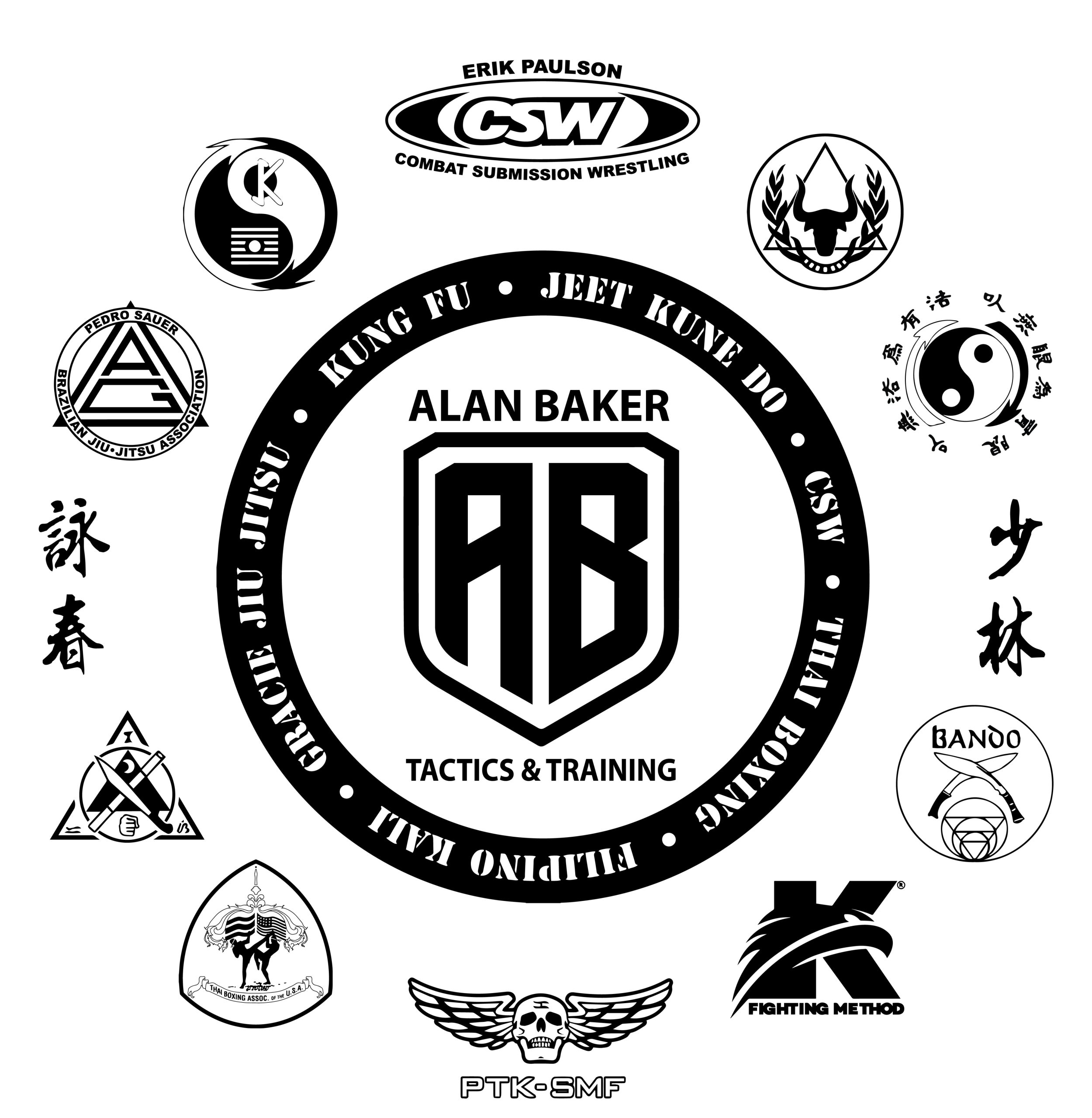

Sifu Alan Baker is a nationally respected authority in Defensive Tactics Program Development, High-Performance Coaching, and martial arts, with over 45 years of training experience across multiple systems. As a lifelong martial artist and tactical instructor, Alan has dedicated his career to creating practical, adaptable, and effective training systems for real-world application. He has worked extensively with law enforcement agencies, military units, and private security professionals, designing programs that emphasize scenario-based training, everyday carry (EDC) integration, and combative efficiency under pressure.
Alan’s client list includes elite organizations such as the Executive Protection Institute, Vehicle Dynamics Institute, The Warrior Poet Society, ALIVE Active Shooter Training, Tactical 21, and Retired Navy SEAL Jason Redman, among many others. He is the creator of both the C-Tac® (Civilian Tactical Training Association) and Protection Response Tactics (PRT) programs—two widely respected systems that provide realistic, principle-based training for civilians and professionals operating in high-risk environments.
In addition to his tactical and martial arts work, Alan is the founder of the Warrior’s Path Physical Culture Program, a holistic approach to strength, mobility, and long-term health rooted in traditional martial arts and the historic principles of physical culture. This program integrates breathwork, structural alignment, joint expansion, strength training, and mental discipline, offering a complete framework for building a resilient body and a powerful mindset. Drawing from his training in Chinese Kung Fu, Filipino Martial Arts, Indonesian Silat, Burmese systems, and more, Alan combines decades of experience into a method that is both modern and deeply rooted in timeless warrior traditions.
Alan is also the architect of multiple online video academies, giving students worldwide access to in-depth training in his systems, including Living Mechanics Jiu-Jitsu, C-Tac® Combatives, breathwork, functional mobility, and weapons integration. These platforms allow for structured, self-paced learning while connecting students to a growing global community of practitioners.
Beyond physical training, Alan is a sought-after Self-Leadership Coach, working with high performers, professionals, and individuals on personal growth journeys. His coaching emphasizes clarity, discipline, focus, and accountability, helping people break through mental limitations and align their daily actions with long-term goals. His work is built on the belief that true mastery begins with the ability to lead oneself first, and through that, to lead others more effectively.
Alan is also the author of three books that encapsulate his philosophy and approach: The Warrior’s Path, which outlines the mindset and habits necessary for self-leadership and personal mastery; The Universal Principles of Change, a practical guide for creating lasting transformation; and Morning Mastery, a structured approach to building a powerful daily routine grounded in physical culture and discipline.
To explore Alan’s books, digital academies, live training opportunities, or to inquire about seminars and speaking events, visit his official website and take the next step on your path toward strength, resilience, and mastery.