
In my 55th year, I’ve found myself doing something that I think a lot of disciplined people eventually do. I’ve started digging up the old habits that worked. Not the trendy stuff. Not the new hack of the month. The foundational practices that built my body, my discipline, and my mindset in the first place.
Over the last few months, since I reconnected with my old fasting habits, I’ve gotten noticeably leaner. I’ve dropped weight, visceral fat, and subcutaneous fat, and the change has been obvious enough that people around me started asking questions. That was the goal. I wasn’t chasing “skinny.” I was chasing leanness, better health markers, and that feeling of being clean and sharp in my own body.
If you don’t know me and you’re reading this for the first time, here’s the short version. I’ve trained consistently in martial arts for over 46 years. I’ve been in the fitness and training world since 1981, and I’ve been teaching professionally since 1990. Over that time, I’ve studied a lot of systems. Some were hard, some were subtle, and some were deeply internal. But across all of them, the real benefit has always come down to one thing: daily practices that compound.
That’s why fasting isn’t “new” to me.
I was introduced to fasting as a teenager by two of my kung fu instructors. Back then it wasn’t framed as a lifestyle trend or a weight-loss gimmick. It was presented as a method. A discipline tool. Something that sharpened you, cleaned you up, and built control over appetite, emotion, and impulse. In other words, it was training.
And I’ve done it consistently over my life. What I hadn’t done, at least not in a structured daily way, was the modern version people call intermittent fasting. Not because I didn’t believe in it, but because life changes. Work gets busy. Travel ramps up. You shift priorities. You drift away from what used to keep you in a certain state.
What’s interesting is that it hasn’t been “just fasting.” The fasting is one part of the equation, but it’s not the only lever I pulled. Along with tightening up my eating structure, I also went back to a lot of the old training methods I used to do regularly: Qigong practice, Shaolin-based conditioning habits, and the daily training mindset I developed in systems like Shaolin Kung Fu, Wing Chun Kung Fu, and others I’ve studied over my lifetime.
That combination has been the real game changer.
Fasting has a way of removing noise. It creates a simpler system. Fewer inputs, fewer spikes, fewer cravings driving the day. But when you combine that with breathing work, joint-opening practices, and those “old school” daily training methods that regulate the nervous system and keep the body moving well, something clicks. Your body starts cooperating again. Energy stabilizes. Recovery improves. You start feeling like you’re training from the inside out, not just grinding yourself down.
Most people look at fasting like it’s only about fat loss. Yes, it can absolutely help you get leaner, and it can help reduce visceral fat, which matters a lot for health and longevity. But for me, it’s also about control. It’s about becoming less reactive. It’s about being able to train, work, and travel without being owned by hunger, convenience, or impulse.
There’s a reason traditional martial arts cultures cared about habits like this. They weren’t trying to create a “beach body.” They were trying to develop a certain state of being. Calm, capable, sharp, disciplined. When your eating is chaotic, your sleep gets sloppy, your training becomes inconsistent, and your mindset gets noisy. When you bring structure back, a lot of that starts to clean itself up.
So this article is me putting it all in one place.
Because I’ve gotten a lot of questions lately. People have asked what I’m doing. They’ve asked how I’m structuring it. They’ve asked why it’s working so well right now. And instead of repeating myself ten different ways in ten different conversations, I wanted a single write-up I can send to students and friends who are curious and who want a simple starting point.
I’m not writing this as medical advice, and I’m not pretending there’s one perfect method for everyone. I’m writing it as a coach who’s been in the trenches for decades, who has tested a lot of methods, and who has come back to a few fundamentals that still work, especially as you get older. I believe insulin control matters more than “time fasting,” what I’ve added back in from the old training methods, and how you can start applying the same concepts in a realistic way even if your schedule is busy.
If you want a clean body, a sharper mind, and more control over your day, you don’t need a miracle. You need a few intelligent habits you can repeat. That’s what this is about.
Lets start here:
Fasting For Survival Lecture by Dr Pradip Jamnadas
In this video, Dr. Pradip Jamnadas lays out a straight, science-based case for fasting as more than “weight loss.” He’s a cardiologist, so he’s coming at it from the angle of survival and disease prevention, and he does a good job explaining why the real issue for most people is not calories, it’s insulin. In his view, insulin is the “elephant in the room” behind metabolic syndrome, stubborn fat gain, diabetes, and a whole chain of modern health problems. If you carry one idea out of this lecture, it’s this: when insulin stays high, you stay locked out of your stored fuel. When insulin drops, the body can finally access what it has stored and start cleaning house.
He also explains what’s actually happening inside the body when you stop eating. First you burn through stored glycogen, then you transition into fat burning and ketosis. One of the big myths he tackles is the idea that your brain can only run on glucose. He breaks down how the brain can run on ketones, and why many people feel mentally sharper once they get past the initial cravings and “habit hunger.” He also hits the psychology piece hard, the cravings, the routine-based eating, and the way most people have been trained to eat on the clock instead of listening to physiology.
Where the lecture gets really interesting is when he talks about the deeper repair mechanisms: autophagy (cell cleanup and recycling), growth hormone increases during longer fasts, and the “rebuilding” effect that can happen when you refeed intelligently. He ties fasting to inflammation control, improved insulin sensitivity, and better metabolic flexibility. He even touches on why chronic snacking can sabotage progress, because every snack spikes insulin and shuts down the very processes most people are trying to turn on.
He also gives practical guardrails that matter, especially if you’re on medications. If you’re taking insulin or certain diabetes drugs, fasting needs to be handled with medical supervision. He talks about hydration, electrolytes, and keeping it simple. Water, and if needed, a little salt. The overall theme is that the body was built for cycles of feeding and fasting, and that many “modern man” problems come from constant intake, processed foods, and staying in a fed state all day, every day.
Quick note: this video is educational, not personal medical advice. If you’re on diabetes meds, blood pressure meds, or you’ve got underlying conditions, talk to your physician before you jump into longer fasts.
Then Lets take a listen to Andrew Huberman
Effects of Fasting & Time Restricted Eating on Fat Loss & Health | Huberman Lab Essentials
Breathwork, Vacuum work, and kung fu methods
Over the same stretch of time that I’ve tightened up my eating window and focused on insulin control, I’ve also increased the amount of breath work and vacuum work I’m doing. For me, those two pieces stack together. The fasting and feeding structure helps control the hormonal side of fat loss, and the breath training helps me change what’s happening inside the body mechanically and neurologically, pressure management, posture, tension, and the way I “run the system” during the day. When you combine the two, it feels like you are not just losing weight, you’re changing how accessible the stored fuel becomes and how efficiently your body can mobilize and use it.
Vacuum work is a big part of that. When I say “vacuum,” I’m talking about the ability to actively draw up and control the lower abdominal wall, link the diaphragm to the pelvic floor, and create real control through the trunk. It’s not a bodybuilding trick. It’s a skill. Done consistently, it cleans up posture, improves bracing without being rigid, and builds better breathing mechanics. It also teaches you how to manage intra-abdominal pressure and tension patterns so you are not living in that constantly “pushed out,” stressed posture that so many people carry around all day. When you get better at that, you move better, you recover better, and you create an internal environment that supports the work you’re doing with diet and training.
In my world, breath work and Qigong fall into three lanes. The first is health-based breath work. That’s the foundation. It’s about regulation, recovery, and keeping the nervous system sane. It’s breathing to downshift, restore, and build basic capacity. The second is scholar-based breath work. That’s more internal, more refined, and more detail-oriented. It’s breathing for sensitivity, awareness, and deeper control of timing, mind-state, and subtle internal mechanics. The third is warrior-based breath work, and that’s where I spend most of my time because of my background. Warrior breath work is more involved because it is not only about relaxation. It’s about performance under pressure. It’s about learning how to generate force, manage tension, hold structure, and stay functional when the heart rate comes up. It teaches you how to shift gears on command: calm when you need calm, intensity when you need intensity, and control the entire time.
That warrior-focused breath work is rarely done in isolation for me. It’s usually paired with kung fu training methods, stance work, tension training, joint-opening work, and movement drills that force you to apply the breath while you’re doing something demanding. That’s where it becomes real. You’re not just breathing on a mat. You’re breathing while you’re building structure, while you’re moving, while you’re under load, while you’re dealing with fatigue. That’s the bridge between “breathwork as a wellness trend” and breathwork as a skill set that supports a warrior lifestyle.
When I put all of this together, the results make sense. I’m controlling insulin and cleaning up the timing of when I eat, which helps my body access stored fat. At the same time, I’m improving the mechanics of how I breathe, how I hold posture, and how I manage tension through the trunk, which improves my overall efficiency and how I train day to day. It’s a full system approach. The diet piece is important, but the breath and vacuum work have been a major multiplier, not just for leaning out, but for getting my body back to moving and functioning like it’s supposed to.
Indian clubs, Persian meels, flow mace work
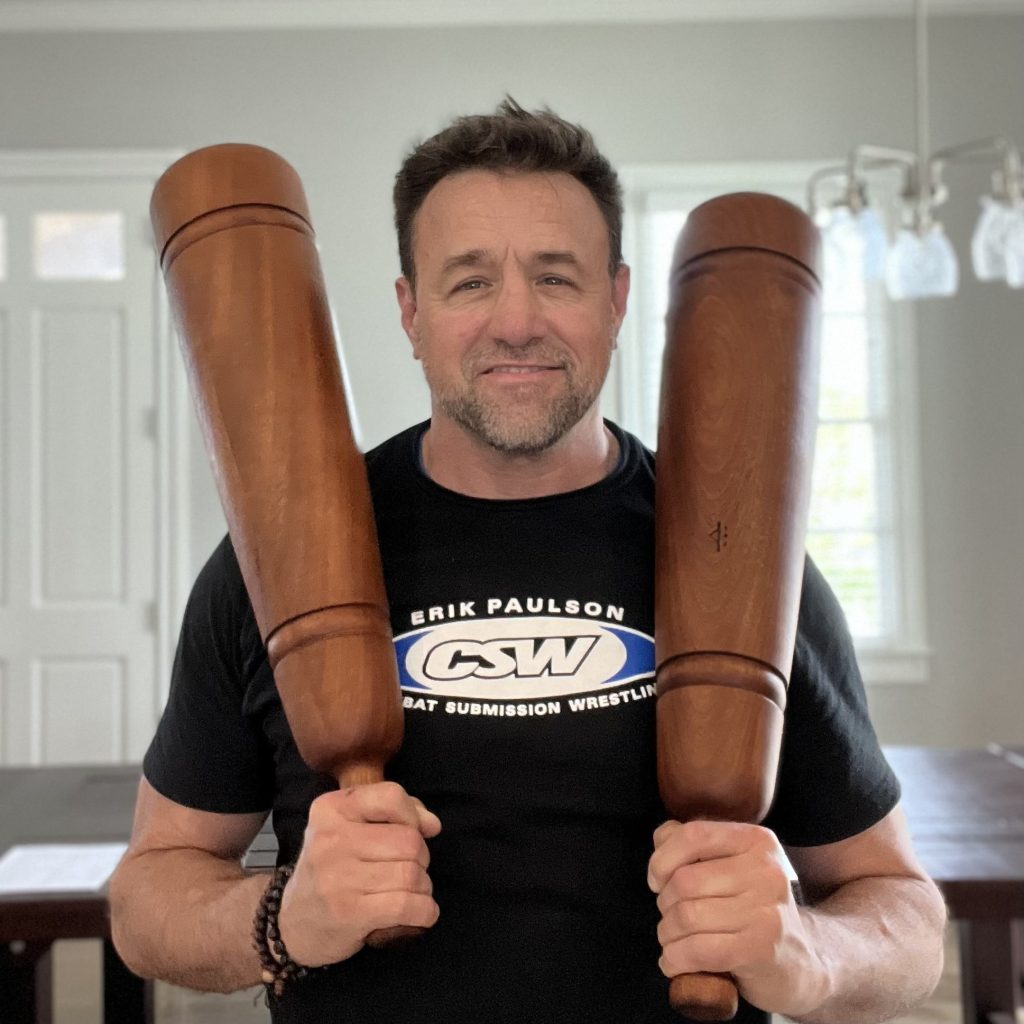
One other major element that’s made a big difference for me has been the consistent addition of Indian clubs, Persian meels, flow mace work, and Filipino Kali sword work into my daily routine. That combination has been a game changer for my upper-body mobility, especially my shoulders, wrists, elbows, and thoracic spine. The biggest proof for me is this: after my shoulder surgery a few years back, I had to rebuild range of motion the smart way. These tools let me do it without having to “muscle” flexibility. They create strength inside the range, and that’s the kind of flexibility that actually sticks.
The benefits go beyond just being able to move your arms around. This type of training opens up the shoulders while reinforcing stability. It improves scapular control and posture. It builds grip endurance and forearm integrity without beating your joints up. It teaches your body how to transition smoothly between tension and relaxation, which carries over into martial arts, strength work, and even daily life. And from a performance standpoint, it’s one of the best ways I know to develop coordination, rhythm, timing, and real-world usable range of motion.
I’ve been training with Indian clubs since I was a teenager because of my early background in Burmese Bando and other Southeast Asian systems that used similar concepts. It’s something I picked back up hard over the last few years, and I can say without hesitation that it’s had a massive positive effect on my body. If I were going to recommend one simple thing for almost anyone, it would be to start with basic Indian club training and get consistent with two movements: the Outward Cast and the Inward Cast. Those two exercises alone can make a noticeable difference in how your shoulders feel, how your posture cleans up, and how your upper body starts to move again like it’s supposed to.
The Warriors Path Longevity Blueprint
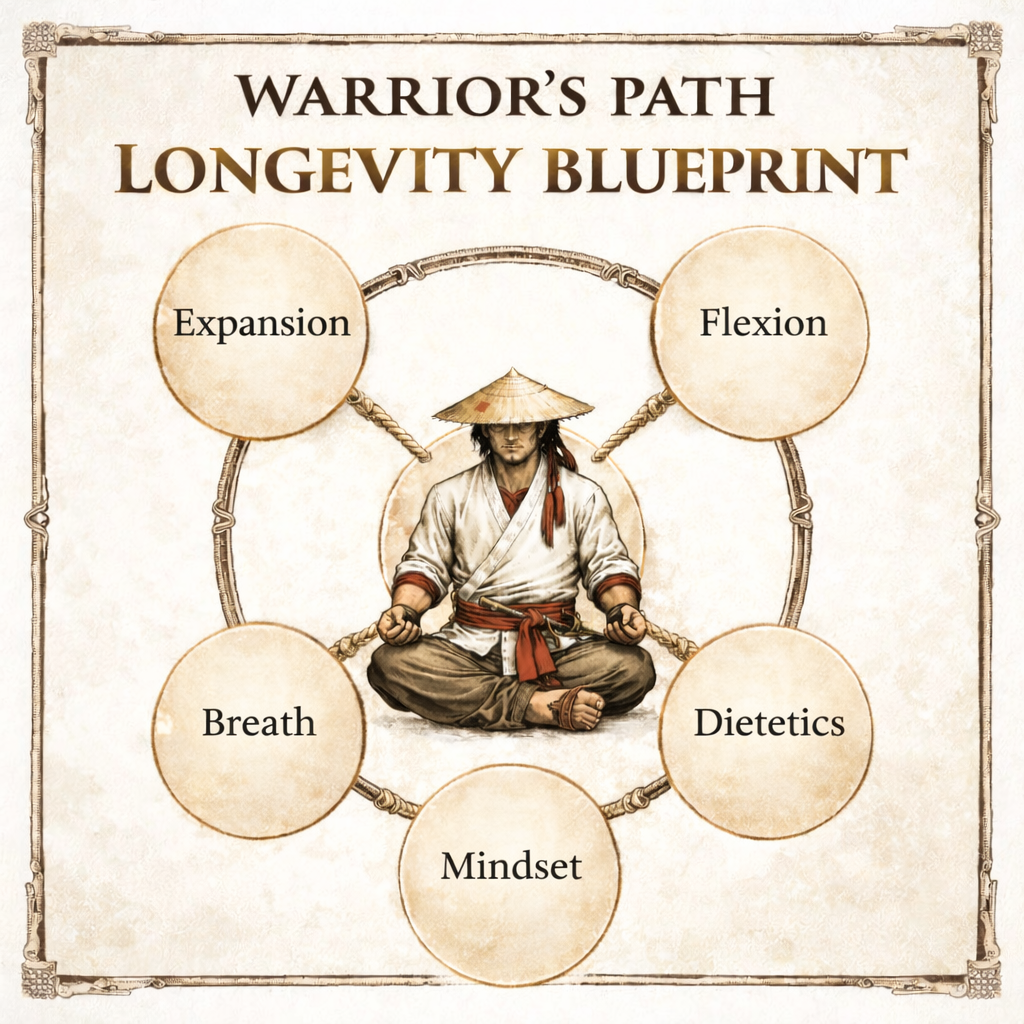
The Longevity Blueprint is the internal counterpart to the Combat Blueprint. It’s the map for keeping the machine running, body, mind, and the energy system that carries a warrior through a lifetime of performance. This wasn’t built in a weekend. It was forged the same way everything real gets forged: years on the mat, years under the bar, recovery from injuries, and a lot of time studying what actually works when life gets demanding. Physical culture, breathwork, fasting, mobility, strength, and mindset all live inside this blueprint, because that’s the real world. You don’t get to separate them.
Inside the Warrior’s Path Program, the Longevity Blueprint is the master outline for how we study and refine the human machine. I keep it organized into five timeless pillars: Expansion, Flexion, Breath, Dietetics, and Mindset. These are not “fitness topics.” These are tools. They’re the levers that help you sustain health, protect capability, and keep your output high as you get older. If you want to keep training deep into age, this is how you do it.
Modern culture glorifies the sprint. The quick transformation. The 30-day fix. That’s not mastery, that’s marketing. Real capability is built through cycles. Pressure and recovery. Expansion and contraction. Focus and silence. Fasting and refeeding. Just like tempering steel, the body needs intelligent stress, then it needs intelligent restoration. The Longevity Blueprint is built around those rhythms so you don’t just live longer, you live better, with strength, clarity, and durability still intact.
A lot of the principles inside this framework come from everything I’ve studied over the years: the energy sciences inside traditional Kung Fu, the hard practicality of modern physical culture, the awareness training from meditation and Qigong, and the precision that comes from combat training. Some of this information was buried under mysticism in old systems, sometimes protected, sometimes misunderstood. Over time, I stripped away the unnecessary mystery, kept the essence, and translated it into a system people can actually train and apply.
This is the long game. I built the Longevity Blueprint the same way I built the Combat Blueprint, by paying attention to patterns that show up over and over in real training, real bodies, real injury cycles, and real life. Most people don’t lose capability because they’re lazy or weak. They lose it because nobody ever gave them the right framework. They train hard for performance, but they don’t train intelligently for durability, recovery, and long-term output. The Longevity Blueprint is how we fix that.
Eating Clean During Feeding

When I do OMAD or a tight feeding window, I don’t treat the meal like a free-for-all. The whole point of fasting, for me, is improving insulin control and getting the body to access stored fuel. If I break a fast with junk, liquid calories, or a big hit of processed carbs, I’m basically undoing the advantage I just built. Clean feeding keeps the insulin response smoother, keeps inflammation down, and makes the next day easier. Better energy, fewer cravings, and better training output.
My foundation is simple: protein and vegetables first. Protein gives you the building material to recover and maintain muscle while you’re leaning out. Vegetables give you volume, minerals, fiber, and the kind of micronutrients that most people are missing when they “diet.” That fiber piece matters because it slows digestion and tends to blunt the blood sugar spike you can get when you eat carbs. In real life, it just makes you feel better and more stable after you eat.
When I do eat carbs, I choose “good carbs” and I use them on purpose. I’m not against carbs. I’m against mindless carbs. If I’m going to bring carbs in, I’d rather it be something that comes with fiber and nutrients, not something engineered to light up your appetite and keep you snacking. Think potatoes, rice, oats, beans, fruit, and other whole-food carbs, not sugar, pastries, breads, and ultra-processed snacks. And most of the time I keep the portion reasonable, especially if the main goal is leaning out.
A clean OMAD meal also means I’m not trying to eat like a teenager. I want food that digests well, supports recovery, and doesn’t turn into a cravings loop the next day. For me that looks like a big serving of vegetables, a solid portion of protein, and then carbs only if they make sense for the day’s training or output. If I trained hard or I’m going to train hard, I may include more carbs. If it’s a lower-output day, I’ll usually keep carbs lower and let fats and vegetables do more of the heavy lifting.
If someone asked me what “clean” looks like in one sentence, it’s this: real food, high protein, high fiber, minimal sugar, minimal processed oils, and zero snacking habits disguised as “fuel.” That’s the combination that makes OMAD sustainable, keeps insulin from spiking all day, and helps your body actually stay in fat-burning mode across the week.
Inflammation Control
When you’re doing OMAD or running a fasting window, tea can be a quiet weapon. It gives you something warm, it helps with cravings, and if you pick the right herbs, it can support inflammation control without turning your fast into a sugar party. The big rule is simple: keep it clean. No sweeteners, no creamers, no “healthy” honey, no flavored syrups. If you’re trying to keep insulin calm and let the body do its work, you want plain tea, plain herbs, plain water.
A few of my go-to anti-inflammatory options are ginger, turmeric, green tea, cinnamon, and hibiscus. Ginger is one of the most reliable, and it’s easy to do as a simple tea with sliced fresh ginger in hot water. Turmeric can be great too, but it’s better as part of your feeding window, or as a very light tea, because it’s fat-soluble and generally works better with food. Green tea is a classic for a reason, but it has caffeine, so I use it earlier in the day. Cinnamon is easy and underrated. A cinnamon stick steeped in hot water gives you flavor without sugar, and it helps keep you from “needing” something sweet. Hibiscus is another solid option and it’s especially nice iced, but it can run tart and it may not be ideal for everyone if blood pressure runs low.
Here’s the practical way to add this into your routine. During the fasting window, rotate 1 to 3 cups of unsweetened herbal tea through the day, especially when cravings pop up or you’re feeling that “habit hunger.” Keep it simple: ginger tea in the morning, green tea mid-day if you tolerate caffeine, cinnamon tea when you want something that feels like a treat, and a calming tea in the evening. During your feeding window, you can take it up a notch by pairing these teas with clean food and anti-inflammatory habits: plenty of vegetables, solid protein, and smart carbs, with minimal processed stuff. That’s when turmeric, ginger, and even a little citrus peel or spice blends can fit in well.
Two quick cautions, because I like people to be smart about this. Herbs can still act like medicine. If you’re on blood thinners, blood pressure meds, diabetic meds, or you’ve got a sensitive gut, be intelligent and pay attention to how you respond. Hibiscus can push blood pressure down for some people. Green tea has caffeine. Licorice root (another common “tea herb”) can push blood pressure up, so I generally don’t treat that one like a casual daily tea.
Bottom line: if you keep your teas clean and consistent, they become part of the system. They help you stay on track during the fast, they support recovery, and they stack the odds in your favor when you’re trying to control inflammation and get the body to actually access stored fuel.
Training In A Fasted State
When people ask me about training while fasting, I tell them the same thing every time: the real conversation isn’t “can you do it,” it’s “do you understand what’s happening in your body when you do it.” Fasted training is one of the simplest ways to shift your physiology toward fat utilization and better metabolic control, because you’re not stacking the session on top of a fresh insulin spike. You’re training in a state where the body is more willing to pull from stored fuel.
Discipline & Self-Control
When I talk about fasting windows, clean eating, and using simple teas or herbs, I’m not just talking about nutrition. I’m talking about discipline. Self-control is a core skill for a warrior, and it’s a skill most people never train on purpose. They train technique, they train strength, they train endurance, but they don’t train the ability to say “no” to impulses, cravings, convenience, and comfort. And that’s exactly what these patterns build.
Every time you hold your feeding window, every time you choose clean food instead of junk, every time you drink something simple and supportive instead of chasing a dopamine hit, you’re practicing command and control over yourself. That matters because in the real world, your body and mind will try to negotiate with you under stress. Hunger, fatigue, frustration, fear, distraction. The person who wins is usually the person who can stay steady and execute anyway. This is one more way to forge that steadiness.
I look at it like this. If I can’t control my inputs, I shouldn’t trust my outputs. The same nervous system that panics in a close-range problem is the same nervous system that looks for comfort when it’s tired, bored, or stressed. Training discipline through food, breath, and routine builds a calm baseline and a higher standard of self-leadership. You’re teaching your body that you’re in charge, not your cravings, not your schedule, not your environment.
That’s why I like these practices. They’re simple, but they’re not easy. They create structure. They sharpen awareness. They build patience. And over time, they harden the mind and refine the body in a way that directly supports training. A warrior should be able to regulate himself. These patterns are one more way to do that, day after day, until it’s no longer a struggle, it’s just who you are.
Shift Your Perspective, Take Action, And Create Change
Gentleman in Conduct. Scholar in Thought. Savage in Action.
~ Sifu Alan ┃ www.sifualan.com ┃ www.civtaccoach.com┃www.prtinstructor.com
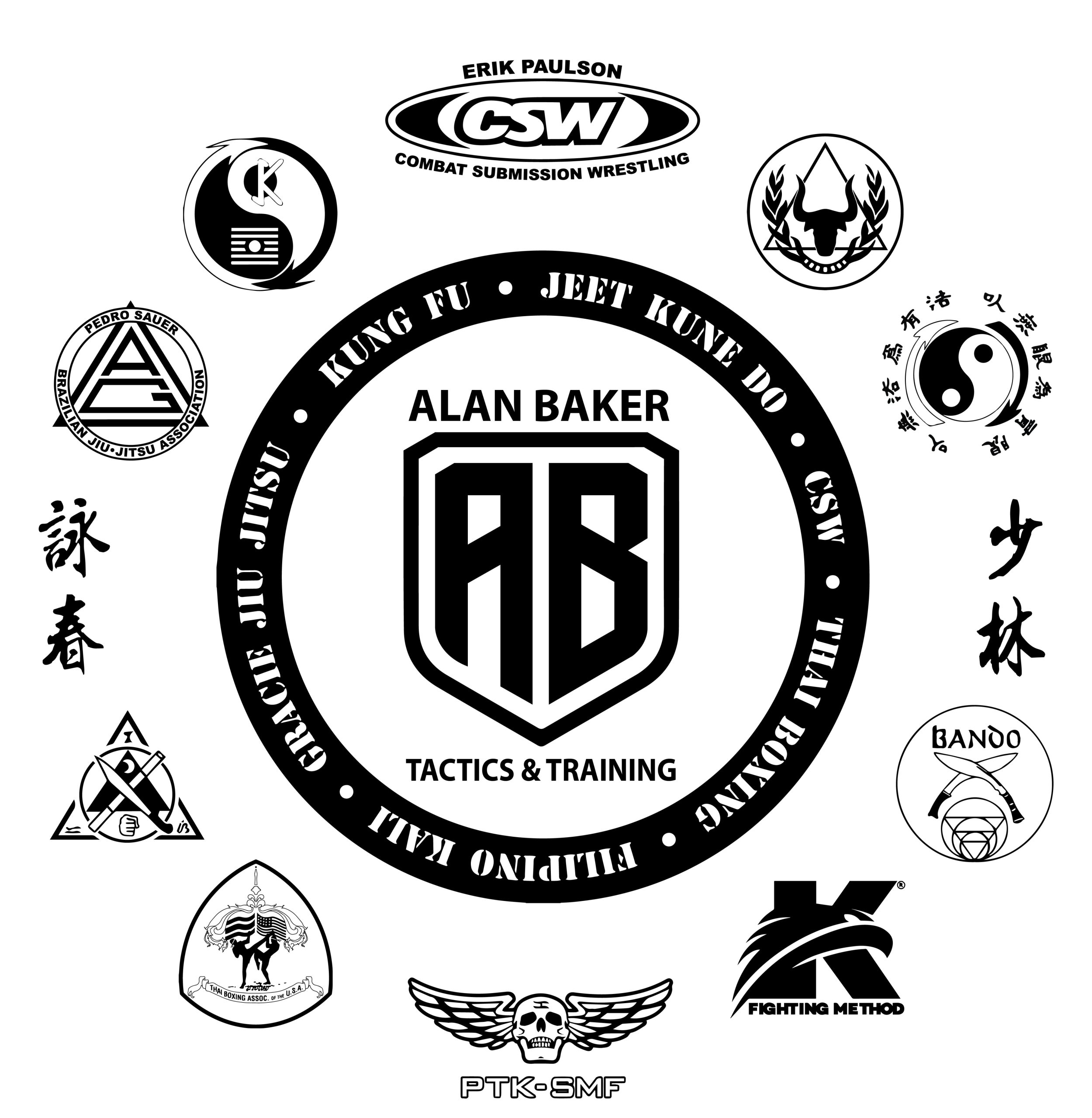
Sifu Alan Baker is a nationally respected authority in Defensive Tactics Program Development, High-Performance Coaching, and martial arts, with over 45 years of training experience across multiple systems. As a lifelong martial artist and tactical instructor, Alan has dedicated his career to creating practical, adaptable, and effective training systems for real-world application. He has worked extensively with law enforcement agencies, military units, and private security professionals, designing programs that emphasize scenario-based training, everyday carry (EDC) integration, and combative efficiency under pressure.
Alan’s client list includes elite organizations such as the Executive Protection Institute, Vehicle Dynamics Institute, The Warrior Poet Society, ALIVE Active Shooter Training, Tactical 21, and Retired Navy SEAL Jason Redman, among many others. He is the creator of both the C-Tac® (Civilian Tactical Training Association) and Protection Response Tactics (PRT) programs—two widely respected systems that provide realistic, principle-based training for civilians and professionals operating in high-risk environments.
In addition to his tactical and martial arts work, Alan is the founder of the Warrior’s Path Physical Culture Program, a holistic approach to strength, mobility, and long-term health rooted in traditional martial arts and the historic principles of physical culture. This program integrates breathwork, structural alignment, joint expansion, strength training, and mental discipline, offering a complete framework for building a resilient body and a powerful mindset. Drawing from his training in Chinese Kung Fu, Filipino Martial Arts, Indonesian Silat, Burmese systems, and more, Alan combines decades of experience into a method that is both modern and deeply rooted in timeless warrior traditions.
Alan is also the architect of multiple online video academies, giving students worldwide access to in-depth training in his systems, including Living Mechanics Jiu-Jitsu, C-Tac® Combatives, breathwork, functional mobility, and weapons integration. These platforms allow for structured, self-paced learning while connecting students to a growing global community of practitioners.
Beyond physical training, Alan is a sought-after Self-Leadership Coach, working with high performers, professionals, and individuals on personal growth journeys. His coaching emphasizes clarity, discipline, focus, and accountability, helping people break through mental limitations and align their daily actions with long-term goals. His work is built on the belief that true mastery begins with the ability to lead oneself first, and through that, to lead others more effectively.
Alan is also the author of three books that encapsulate his philosophy and approach: The Warrior’s Path, which outlines the mindset and habits necessary for self-leadership and personal mastery; The Universal Principles of Change, a practical guide for creating lasting transformation; and Morning Mastery, a structured approach to building a powerful daily routine grounded in physical culture and discipline.
To explore Alan’s books, digital academies, live training opportunities, or to inquire about seminars and speaking events, visit his official website and take the next step on your path toward strength, resilience, and mastery.