

There is too much talk and not enough doing. I was discussing this with a peer last week, and it feels like a fundamental cultural shift. More people are posting, planning, and debating, while fewer actually show up to put in the work. Effort and time in the trenches are getting rare. Opera, non verba, is starting to feel like a superpower, because the ability to act separates the serious from the spectators.
Finding people who will consistently do the work is becoming increasingly difficult, which means those who do become standouts. This is a core trait of the warrior mindset. If you are on that path, put “taking action” on your skills list and train it like any other attribute. Keep your focus simple and practical. Define the next small action, schedule it, show up, and finish it. Track your reps, not your opinions. Review what worked, adjust, and repeat.
Talk has its place, but only action changes your life. If you make execution a habit, you will separate yourself from the crowd of constant talkers and move steadily toward the results you want.
The gap between what we intend and what we execute is real, and psychology has a name for it: the intention–behavior gap. One of the most reliable ways to close that gap is using “implementation intentions,” simple if-then plans that link a cue to an action (for example, “If it is 7:00 a.m., then I start my 20-minute practice block”). These plans consistently boost follow-through because they eliminate the fatigue that comes from making on-the-spot decisions. ScienceDirect PMC
We routinely underestimate how long things take. That optimism, known as the planning fallacy, is a significant reason projects stall while people continue to discuss them. A practical fix is to use the outside view: ask how long the task took the last few times and add a realistic buffer. Treat time like weight on the bar and load only what you can actually lift. Finishing on time builds momentum; overloading pins you to the bench.

Time planning is a powerful life skill. Time is your most valuable resource; once it is gone, you cannot get it back. Spend it deliberately. Planning and scheduling are the tools that make that possible. I can tell you what my calendar looks like a year out, including training, teaching, travel, downtime, and family time, because those blocks are set with intention. If you do not take control of your calendar, it will control you, and the days will slip through your hands.
Turn this into practice by defining a concrete action, estimating using past data rather than relying on hope, and adding a buffer. Block the work on your calendar and protect it like a paid appointment. Batch similar tasks to cut down on context switching, and reserve uninterrupted blocks for deep work. Run a weekly review to reset priorities and reblock time. Leave margin each day for friction and the unexpected, so one delay does not derail everything. Track your actual expenses against your estimates for a month and adjust future plans accordingly. These are powerful tools we teach in the Warriors Path program and in my client coaching.
Choose action. Build structure. Review and repeat. That is the cycle that turns intention into results. Opera non verba is not a motto for hard days only; it is a daily operating system. When you decide in advance, protect your time, and finish the small promises you make to yourself, you change the trajectory of your training, your work, and your life.
Run a seven-day test. Pick one priority. Write a simple if-then plan that anchors it to a time and place. Block 20 to 30 minutes a day for it, then show up and finish regardless of mood. Log your reps, not your opinions. At the end of the week, review what worked, adjust the plan, and set the next seven days. Small wins stacked with intention create momentum you can trust.
Talk has its role, but only execution compounds. If you want a framework and accountability, the Warriors Path program and my coaching are built around these exact tools. As Sifu Fong says, Less talk, more do.
Shift Your Perspective, Take Action, And Create Change
Gentleman in Conduct. Scholar in Thought. Savage in Action.
~ Sifu Alan ┃ www.sifualan.com ┃ www.civtaccoach.com┃www.prtinstructor.com
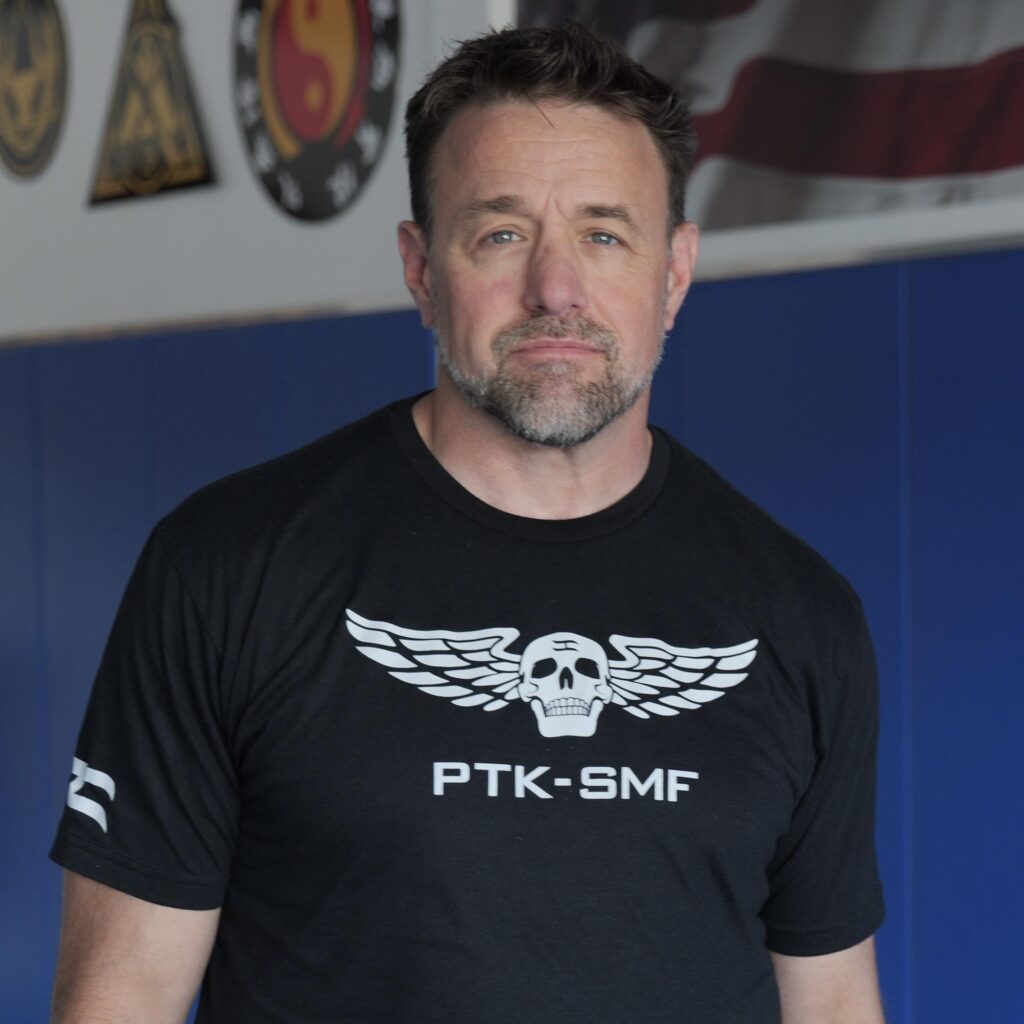
Sifu Alan Baker is a nationally respected authority in Defensive Tactics Program Development, High-Performance Coaching, and martial arts, with over 45 years of training experience across multiple systems. As a lifelong martial artist and tactical instructor, Alan has dedicated his career to creating practical, adaptable, and effective training systems for real-world application. He has worked extensively with law enforcement agencies, military units, and private security professionals, designing programs that emphasize scenario-based training, everyday carry (EDC) integration, and combative efficiency under pressure.
Alan’s client list includes elite organizations such as the Executive Protection Institute, Vehicle Dynamics Institute, The Warrior Poet Society, ALIVE Active Shooter Training, Tactical 21, and Retired Navy SEAL Jason Redman, among many others. He is the creator of both the C-Tac® (Civilian Tactical Training Association) and Protection Response Tactics (PRT) programs—two widely respected systems that provide realistic, principle-based training for civilians and professionals operating in high-risk environments.
In addition to his tactical and martial arts work, Alan is the founder of the Warrior’s Path Physical Culture Program, a holistic approach to strength, mobility, and long-term health rooted in traditional martial arts and the historic principles of physical culture. This program integrates breathwork, structural alignment, joint expansion, strength training, and mental discipline, offering a complete framework for building a resilient body and a powerful mindset. Drawing from his training in Chinese Kung Fu, Filipino Martial Arts, Indonesian Silat, Burmese systems, and more, Alan combines decades of experience into a method that is both modern and deeply rooted in timeless warrior traditions.
Alan is also the architect of multiple online video academies, giving students worldwide access to in-depth training in his systems, including Living Mechanics Jiu-Jitsu, C-Tac® Combatives, breathwork, functional mobility, and weapons integration. These platforms allow for structured, self-paced learning while connecting students to a growing global community of practitioners.
Beyond physical training, Alan is a sought-after Self-Leadership Coach, working with high performers, professionals, and individuals on personal growth journeys. His coaching emphasizes clarity, discipline, focus, and accountability, helping people break through mental limitations and align their daily actions with long-term goals. His work is built on the belief that true mastery begins with the ability to lead oneself first, and through that, to lead others more effectively.
Alan is also the author of three books that encapsulate his philosophy and approach: The Warrior’s Path, which outlines the mindset and habits necessary for self-leadership and personal mastery; The Universal Principles of Change, a practical guide for creating lasting transformation; and Morning Mastery, a structured approach to building a powerful daily routine grounded in physical culture and discipline.
To explore Alan’s books, digital academies, live training opportunities, or to inquire about seminars and speaking events, visit his official website and take the next step on your path toward strength, resilience, and mastery.