

One of the earliest and most profound lessons I ever learned came from my first Kung Fu instructor when I was just a teenager: You are in charge of the tempo of your body. You operate at an internal rhythm, and the mastery of that rhythm is one of the most underrated life skills a warrior can possess.
Back then, my teacher would have me and a friend help out with various odd jobs around the Academy. Looking back, I’ll admit that our hustle wasn’t exactly top-tier. Despite being more than three times our age, our teacher would run circles around us. I can still hear him saying, “You boys need to upgrade your hustle volume.”
He was right. We needed to raise our tempo, especially during the moments when motivation was low. He’d remind us with a phrase that stuck with me ever since:
“How you do anything is how you’ll do everything.”
Most people unconsciously allow their environment or circumstances to dictate their internal energy or their internal timing. They become reactive, letting stress, fatigue, or emotional pressure hijack their rhythm. But here’s the truth: if you’re healthy and self-aware, you have complete control over your internal tempo. Think of it like a volume knob. You can turn it up when you need intensity, and you can bring it down when it’s time for calm. It’s not something you surrender unless you choose to.
Of course, stressful situations can disrupt this rhythm, especially for those who are untrained. That’s why it has to be cultivated deliberately. It has to be forged through reps, reflection, and intentional practice. In our Kung Fu sessions, this concept was embedded in everything we did. After hours of training, when fatigue started to settle in, I was taught to resist the body’s natural inclination to slow down. That moment, when your body wants to quit but your mind decides otherwise, is when you start developing true rhythm control.
As warriors, we must train our bodies to follow our minds. Left to its own devices, the body will always try to take the path of least resistance. It will quit long before the mind does, unless you’ve trained it not to.
I still work on this today. In the gym, during the final sets of a demanding workout, I feel the same internal drag trying to pull me down. That’s when I remind myself: this is the moment to lead. I consciously elevate my posture, quicken my breath, and re-engage my tempo. Not because the body wants to, but because the mind commands it. Another area this comes up for me is when I am doing Thai Rounds. After a series of active rounds, I can feel my body’s time start to slow, especially during rest periods between rounds. This slowing is when you want to train this idea into the body. Even your times of rest can be opportunities to improve the machine.
Internal rhythm control isn’t just a performance enhancer; it’s a vital component of overall well-being. It’s a leadership tool. It teaches you how to show up with presence, how to push when it matters most, and how to stay calm and collected when chaos hits. Whether you’re on the mats, in a protection detail, or simply navigating life’s daily grind, this kind of control sets the tone for everything.
When I work with coaching clients, I often tell them that they’re laying the groundwork today for the opportunities of tomorrow. But when an opportunity shows up, you’ve got to be ready to shift into high gear. I call this a hustle period, a time to lock in, step up, and get it done.
These windows aren’t always comfortable or enjoyable, but they’re essential if you want to operate at a high level. I’ve had opportunities come my way throughout my life, and when they did, I went after them with everything I had. The people offering those opportunities saw the grind I put in, and that commitment often opened the door to even more down the line.
One of the key factors in showing up like that is your ability to recognize and manage your internal timing, your internal tempo. Knowing when to push, when to prepare, and when to pounce makes all the difference. However, this is a life skill that you must develop in advance.
Training The Life Skill Of Internal Tempo
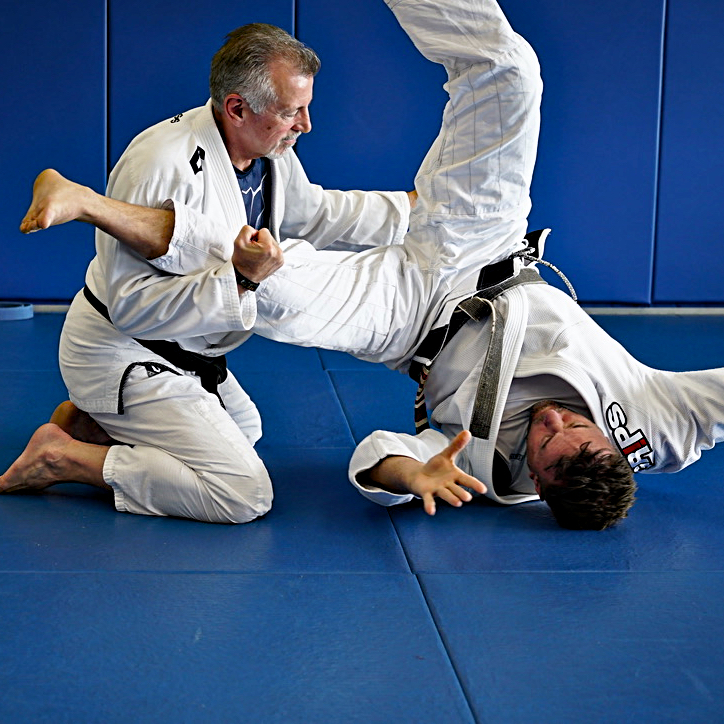
Although I was first introduced to this concept in Kung Fu, I carried it with me throughout my career and applied it across a wide range of martial arts systems. Over time, I deliberately practiced and refined this mental tool within the primal environments outlined in the Combat Blueprint: projectile defense, edged and blunt weapon combat, striking, pummeling, and clinch work, as well as ground fighting.
Each of these environments brings with it its own type of stress and resistance. In ground fighting, you’re engaged in a struggle on the floor, contending with gravity and another human being. In hand fighting and pummeling, you’re locked in close-quarters clinch work, battling for position and control. In striking, the pace and rhythm of boxing or kickboxing push your timing and endurance. In weapons-based environments, whether it’s blade or impact tools, fighting under pressure can be intense and chaotic.
In all of these areas, the common denominator is stress. When faced with a resisting opponent, your body begins to fatigue. Your rhythm starts to fade. Your timing falters. This is the critical moment to implement the mental skill of rhythm control. It’s where you take command of your internal tempo, regardless of how tired, overwhelmed, or outmatched you may feel, and bring your energy and focus back online. You override the body’s instinct to slow down and instead intentionally raise your output.
Training this mindset across all combat environments isn’t optional. It’s essential. The ability to reestablish rhythm even under duress is a powerful performance multiplier. It’s a habit that separates someone who practices techniques from someone who fully embodies the warrior mindset and body state.
Physical Triggers For Internal Rhythm

There are specific external triggers that can influence and regulate our internal rhythm, tools that can either elevate our presence or completely disrupt our performance. One of the first and most foundational ones I was ever introduced to was posture and structural alignment. This lesson came early in my Kung Fu training, but its wisdom has remained consistent across every discipline I’ve studied since.
Proper posture isn’t just about looking confident or maintaining good form. It’s about energy. Alignment influences how you breathe, how you move, how you perceive the world, and how the world perceives you. When you hold yourself in a position of intentional, energetic expression, you’re telling your nervous system that you’re in control, that you’re present and engaged.
Your body is an antenna. It’s constantly transmitting and receiving information, whether you’re aware of it or not. But when that antenna is bent, when you’re slouched, disconnected, or out of structural integrity, your signal weakens. You start to lose clarity, confidence, and rhythm. You become more reactive and less proactive. Your body’s language shifts, and that shift is often subtle but powerful. It affects how you move, how you think, and even how others interact with you.
This is why I emphasize posture as more than just physical discipline. It’s a tactical and psychological state. When the spine is aligned, the breath flows, the mind stabilizes, and your rhythm becomes something you control rather than something you’re pulled by. In stressful moments, it’s often the first thing to go, which is precisely why it must be consciously trained.
Holding a posture that is standing tall with your head balanced, chest open, shoulders set, and weight properly distributed creates a feedback loop of strength and clarity. It sends a message to the body: “We are not folding. We are present. We are in command.” This is one of the simplest yet most profound ways to reset your internal tempo by aligning your external structure.
The Rhythm Of Your Breath

One crucial element to consider is the distinction between the tempo and rhythm of the body and the tempo and rhythm of the breath. These are two separate systems, and while they often sync up naturally under stress or during exertion, training allows you to separate and control them consciously.
If you’ve done breathwork with me through the Warriors Path Program, you’ve likely heard me say this before: your breath has its own rhythm, and it should not always follow the pace of your physical movement. This separation is one of the most powerful internal tools you can develop. When you’re engaged in high-output activity or navigating a chaotic environment, your body’s tempo naturally increases. That’s normal. But suppose your breathing automatically matches that faster rhythm, becoming shallow, rapid, and high in the chest. In that case, you’ll quickly shift into a state of breath starvation and lose control over your physiology.
Through proper breath training, we learn how to override that automatic response. When the body speeds up, we can keep the breath slow, smooth, and full. Ideally, the breathing remains low in the torso, using the diaphragm, and follows a longer, calmer rhythm. That contrast between a physically elevated state and a consciously controlled breath rhythm can become your anchor. It creates a foundation of internal control in the middle of external chaos.
This doesn’t come naturally. It takes consistent training. It takes awareness. And most importantly, it requires you to step into the role of commander over both systems: your physical rhythm and your pulmonary rhythm. With time and repetition, you’ll develop what I call the internal volume knob. You’ll be able to raise or lower the tempo of your movement while keeping your breath steady and independent.
Most untrained individuals breathe with short, shallow patterns high in the chest, especially under stress. This kind of breathing limits oxygen intake and contributes to a state of panic. By learning to breathe fully, deeply, and intentionally, even when your body is moving fast or under pressure, you’re tapping into your full respiratory capacity. You’re grounding your nervous system and maintaining clarity.
The long-term goal is to make this dual-awareness a habit. You want your ability to separate and control your body’s rhythm and your breath’s rhythm to be ingrained into your nervous system. When that happens, it becomes an internal habit that supports you in the most challenging environments, whether you’re in a physical confrontation or dealing with intense mental pressure. This type of control can become a form of self-leadership. It is what allows you to remain calm within the storm. And that’s not just a martial skill. That’s a life skill.
The Body State Of Rhythm And Tempo
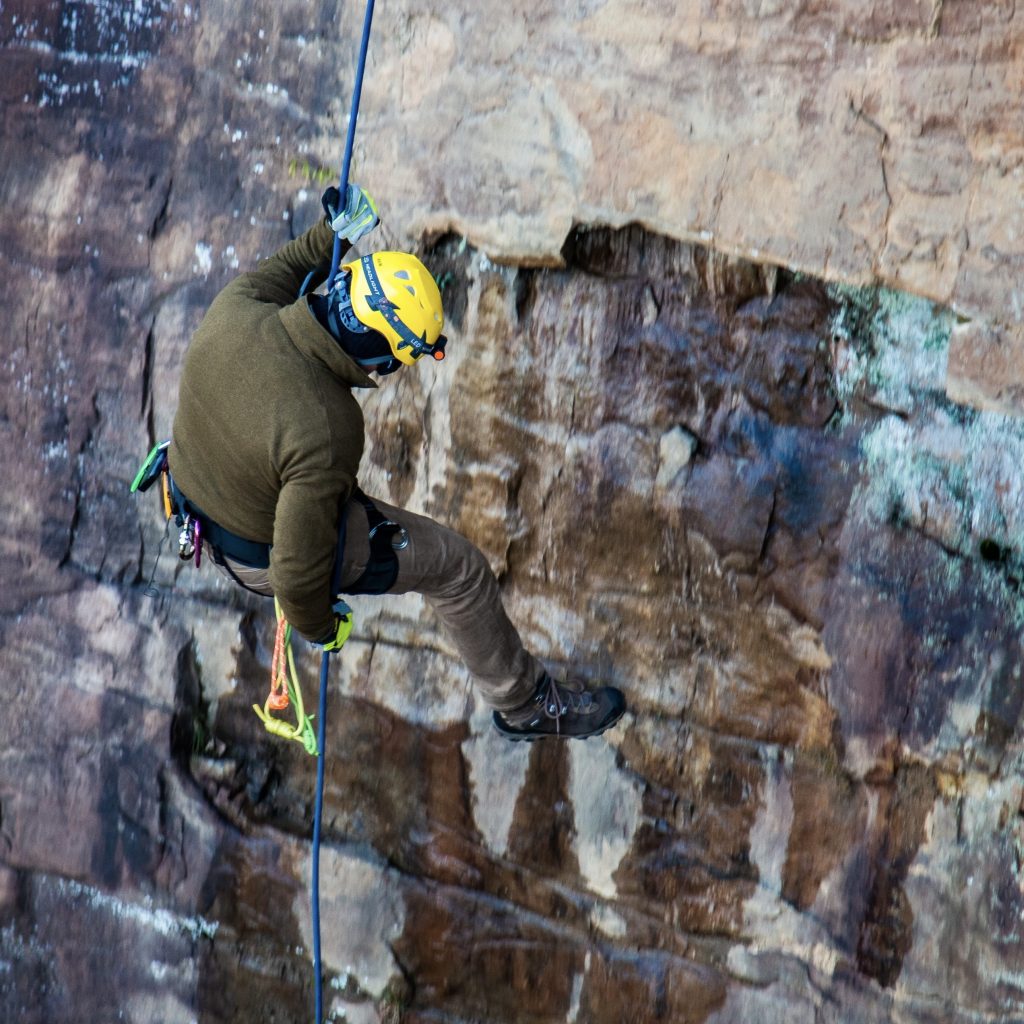
This concept of rhythm and tempo doesn’t just apply to combat or physical training. It’s a powerful life skill that carries over into nearly every aspect of daily life. I originally learned this lesson on the mat, inside the Academy, but over time I began to apply it in ways that reached far beyond martial arts. It has become one of the key tools I’ve used to navigate stress, pressure, and chaos, not only in moments of confrontation but also in business, relationships, fitness, and health.
In life, just like in training, you’re going to face moments that demand everything you’ve got. There will be seasons of hustle, when the opportunity you’ve been waiting for finally shows up, but it requires you to move fast, stay sharp, and give maximum effort to capitalize on it. Those are the times when you can’t afford to fall apart. You need composure under pressure. You need to be able to shift gears on command, to elevate your physical tempo and mental engagement without losing your sense of control.
That’s where this discipline shines. The ability to take control of your internal state, including your breath, posture, and internal rhythm, becomes the foundation you stand on when life throws you into chaos. Whether you’re sprinting through a new business launch, dealing with unexpected conflict in a relationship, or pushing through a grueling training session, the same principle applies: command your state, don’t let the situation dictate it.
Breath control and rhythm control give you the ability to turn your volume up when needed without burning out, and to turn it down when it’s time to recover. They help you stay calm when others are panicking, and focused when others are scattered. I’ve used this approach countless times in the real world, while building businesses, leading teams, navigating personal setbacks, and pushing through long periods of physical and mental strain. It’s not just theory. It works.
When you train rhythm and breath control with intention, it becomes part of your nervous system. It becomes a habit. And over time, it gives you something that most people never develop: command of self. That’s the true goal of this kind of training, not just to fight better, but to live better.
Developing Rhythm and Tempo Control

The first step in mastering rhythm and tempo, whether in training or life, is awareness. You cannot control what you aren’t aware of. Building this awareness starts with baseline check-ins during your daily training. Periodically ask yourself: What is my internal tempo right now? Am I in control of it, or has it been hijacked by the situation or environment? One effective way to build this habit is by setting a recurring alarm on your phone as a reminder to stop and assess. Alongside this, use your breath as a built-in rhythm gauge. If your breathing becomes shallow, fast, or erratic, it’s a clear indication that your rhythm has been disrupted and needs to be recalibrated. These quick check-ins lay the foundation for mastering your internal tempo under more intense conditions.
Once a level of control has been established, the next phase is to train your rhythm under pressure. This is where environmental stress comes into play. Begin incorporating contrast sets into your drills. Execute a movement explosively, then slowly, then return to a fast pace again, all while maintaining smooth, intentional breathing. This not only trains the body to modulate tempo but also builds the ability to maintain composure through shifts in intensity. Push yourself to your fatigue threshold, then challenge yourself to increase your internal tempo. This deliberate effort builds mental resilience and conditions the body to obey the will, even when depleted. Additionally, chaos drills where you add external noise, time pressure, or uncooperative partners are essential. These environments simulate real-world stressors and force you to practice reclaiming rhythm in the midst of disorder, instead of allowing the external world to dictate your pace.
Rhythm and tempo control shouldn’t stop at the edge of the mat or training floor. It must become part of your everyday operating system. Start each morning with a movement-based practice like martial flow, mobility drills, or tai chi. These sessions allow you to set your tempo before the world has a chance to influence it. During your workday, use time-blocked sprints to control mental tempo. For instance, work intensely for 25 minutes, then insert a 5-minute breathwork reset. This structure trains your nervous system to transition smoothly between intensity and recovery. Incorporate intentional pauses throughout the day, brief 30-second breaks where you take control of your breathing and center yourself. These moments of reset will train you to stay in command of your rhythm even during high-stress, fast-paced environments.
Lastly, journaling and tracking your experience are critical to refining your skill. Reflect on which drills or situations caused you to lose rhythm. Document your awareness under pressure and analyze how well you maintained control. Make note of the moments, inside or outside of training, where you successfully applied rhythm management. Equally important, record the situations where you lost it. This reflection establishes a feedback loop that converts awareness into precision, enabling you to continually refine your control over rhythm and tempo.
In the end, rhythm is not just a performance tool. It’s a life skill. When you can control your internal tempo regardless of external chaos, you have begun to master body state.
Shift Your Perspective, Take Action, And Create Change
Gentleman in Conduct. Scholar in Thought. Savage in Action.
~ Sifu Alan ┃ www.sifualan.com ┃ www.civtaccoach.com┃www.prtinstructor.com
Sifu Alan Baker is a nationally respected authority in Defensive Tactics Program Development, High-Performance Coaching, and martial arts, with over 45 years of training experience across multiple systems. As a lifelong martial artist and tactical instructor, Alan has dedicated his career to creating practical, adaptable, and effective training systems for real-world application. He has worked extensively with law enforcement agencies, military units, and private security professionals, designing programs that emphasize scenario-based training, everyday carry (EDC) integration, and combative efficiency under pressure.
Alan’s client list includes elite organizations such as the Executive Protection Institute, Vehicle Dynamics Institute, The Warrior Poet Society, ALIVE Active Shooter Training, Tactical 21, and Retired Navy SEAL Jason Redman, among many others. He is the creator of both the C-Tac® (Civilian Tactical Training Association) and Protection Response Tactics (PRT) programs—two widely respected systems that provide realistic, principle-based training for civilians and professionals operating in high-risk environments.
In addition to his tactical and martial arts work, Alan is the founder of the Warrior’s Path Physical Culture Program, a holistic approach to strength, mobility, and long-term health rooted in traditional martial arts and the historic principles of physical culture. This program integrates breathwork, structural alignment, joint expansion, strength training, and mental discipline, offering a complete framework for building a resilient body and a powerful mindset. Drawing from his training in Chinese Kung Fu, Filipino Martial Arts, Indonesian Silat, Burmese systems, and more, Alan combines decades of experience into a method that is both modern and deeply rooted in timeless warrior traditions.
Alan is also the architect of multiple online video academies, giving students worldwide access to in-depth training in his systems, including Living Mechanics Jiu-Jitsu, C-Tac® Combatives, breathwork, functional mobility, and weapons integration. These platforms allow for structured, self-paced learning while connecting students to a growing global community of practitioners.
Beyond physical training, Alan is a sought-after Self-Leadership Coach, working with high performers, professionals, and individuals on personal growth journeys. His coaching emphasizes clarity, discipline, focus, and accountability, helping people break through mental limitations and align their daily actions with long-term goals. His work is built on the belief that true mastery begins with the ability to lead oneself first, and through that, to lead others more effectively.
Alan is also the author of three books that encapsulate his philosophy and approach: The Warrior’s Path, which outlines the mindset and habits necessary for self-leadership and personal mastery; The Universal Principles of Change, a practical guide for creating lasting transformation; and Morning Mastery, a structured approach to building a powerful daily routine grounded in physical culture and discipline.
To explore Alan’s books, digital academies, live training opportunities, or to inquire about seminars and speaking events, visit his official website and take the next step on your path toward strength, resilience, and mastery.
1 thought on “Controlling Your Internal Timing”