

The blade has remained one of humanity’s oldest and most enduring weapons. From the tribal battlegrounds of centuries past to the modern-day realities of street-level violence, the knife has evolved little in form but significantly in its implications. Today, edged weapon training is experiencing a revival, not just among martial artists but also among civilians, law enforcement officers, and executive protection agents seeking realistic, practical self-defense tools.
Among the most respected and popular systems of blade training is Filipino Kali. With its intricate patterns, flowing movements, and battle-tested effectiveness, Kali has been adopted globally as a premier edged weapon system. For those looking to understand angles, timing, and weapon manipulation, Kali offers an impressive arsenal of knowledge.
However, there is an overlooked but critical issue: Filipino Kali, like many traditional martial arts, was not designed for the legal, social, and visual realities of our modern world. It was forged in a time of tribal warfare and cultural survival, not under the scrutiny of surveillance cameras, witness testimony, or the modern legal system. The result? Many of its movements and techniques, while effective in combat, can become liabilities in the aftermath of a real-world encounter.
In this article, we will explore the strengths of Filipino Kali, highlight the gaps that traditional systems fail to address, and explain how C-Tac fills those gaps by preparing practitioners not only to survive the confrontation but also to navigate its consequences with intelligence and responsibility. Let’s explore why the traditional approach is no longer sufficient and what needs to change if edged weapon training is to serve the modern warrior, protector, or civilian in the real world.
The Strength of Filipino Kali
Filipino Kali has long been admired for its adaptability, intensity, and functional design. It is a combat system born of necessity and refined over centuries of tribal conflict and foreign invasion. From the southern islands of the Philippines to international training academies today, Kali has earned a reputation as one of the most sophisticated and effective blade-based martial systems in existence. I have been very fortunate to study multiple different forms of the Filipino Martial Arts over my career.
At its core, Kali emphasizes efficiency of movement, angular attacks, flow, and adaptability. The practitioner learns to understand how to move with the weapon, rather than against it. Through drills like sinawali, hubud-lubud, and sumbrada, students develop rhythm, reaction speed, coordination, and sensitivity. These repetitive patterns build the neural pathways needed to react instinctively in high-stress situations.
Kali doesn’t just teach how to use a knife; it teaches how to move the body as a complete weapon. Its emphasis on footwork, body mechanics, and line-of-attack theory makes it one of the most comprehensive combat arts available. Practitioners quickly learn that the principles of Kali are transferable and applicable to various contexts. A stick becomes a knife. A knife becomes an improvised weapon. An empty hand becomes a striking tool. This level of integration is one of Kali’s greatest strengths.
Additionally, Kali drills promote fluidity under pressure. Unlike rigid, pre-set kata from other traditional systems, Kali thrives in chaos. It invites the practitioner to flow, adapt, and strike from any position. This makes it extremely valuable for understanding the unpredictability of close-quarter combat, especially when weapons are involved.
It is for these reasons that Kali serves as a strong foundational influence in many modern combative systems, including C-Tac. The techniques, movements, and concepts from Kali provide a rich library of options and ideas, which we call the principle of ‘system as a source. ‘ However, it is also for these reasons that its limitations must be addressed when preparing students for the realities of legal, social, and tactical environments in the modern world.
One of the most valuable elements from Kali is how the systems build drilling platforms that allow students to ingrain appropriate reactions directly into their nervous systems. The design of these structured repetition patterns is not just about technique; it’s about rewiring instinct through intelligent movement. This is a concept I have carried over into nearly every other area of training I do. Whether it’s unarmed combat, firearms integration, or scenario-based self-defense, I use the foundation of these patterned drills to help students condition functional reflexes that hold up under pressure.
It’s not about memorizing a move; it’s about shaping the body’s response so that action becomes automatic, intelligent, and legally defensible.
It is for these reasons that Kali serves as a strong foundational influence in many modern combative systems, including C-Tac. The techniques, movements, and concepts from Kali provide a rich library of options and ideas.
The Legal Disconnect
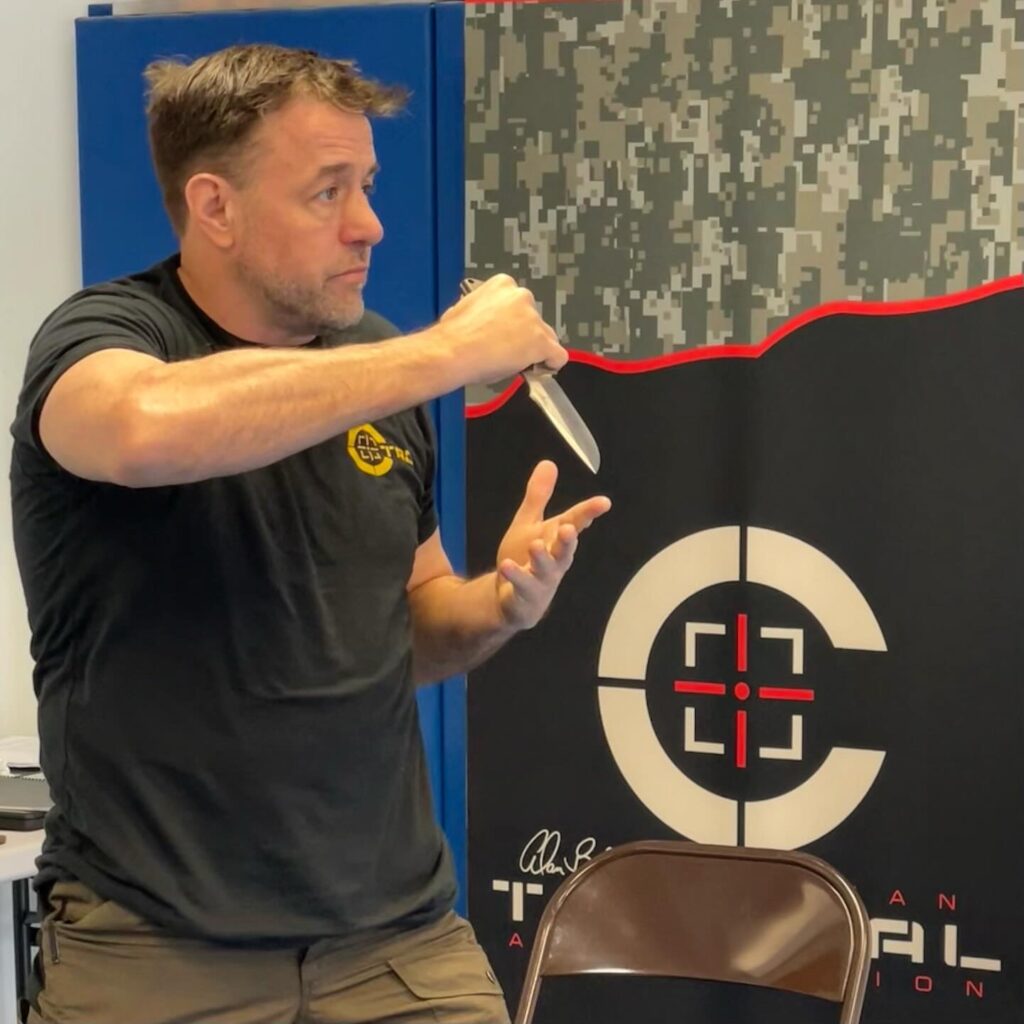
One of the most overlooked aspects of edged weapon training, especially in traditional martial arts systems like Filipino Kali, is legal alignment. While Kali excels in movement, timing, and flow, it was not designed with the modern legal system in mind. Many of its tactics, although effective in a life-or-death encounter, can be interpreted as excessive force or even as premeditated aggression when viewed through the lens of law enforcement, courtroom standards, or civilian witnesses.
In the modern world, your actions during a violent encounter are only part of the story. What happens after the legal aftermath can be just as dangerous, especially if you’ve used techniques or postures that are visually aggressive or tactically difficult to justify. A single frame from a security camera or a cell phone video clip taken out of context can alter the public’s perception of who the attacker was and who was defending.
Unfortunately, many martial arts systems do not account for this. They were not designed to be legally defensible. They were designed for survival, dominance, and battlefield victory. Kali comes from a warrior culture that did not operate under a legal code of conduct similar to today’s standards. And while it absolutely has value as a martial art, it cannot be assumed that its methods will stand up under legal scrutiny without significant modification and context.
This is where the C-Tac approach begins to break new ground. C-Tac recognizes that legality, visual perception, and articulation of force are not secondary concerns; they are essential components of modern self-defense. In C-Tac training, we reverse-engineer our tactics starting from the legal and social expectations of today’s environment. We ask: “Can you explain this in court? Will this look appropriate on camera? Does this meet the threshold of reasonable force for the situation?”
These questions are baked into every phase of our edged weapon curriculum. We don’t just train for effectiveness; we train for survivability in every aspect, including what happens after the fight. This means avoiding overkill, understanding de-escalation cues, and embedding visual appropriateness into our movements. It also means training to articulate why you did what you did, what you perceived, what you feared, and how you responded.
Traditional Kali often conditions the practitioner to take aggressive action with a knife, regardless of the situational context. While this mindset may have served its original purpose in tribal warfare, it does not translate well to the legal and ethical constraints of modern society. In today’s world, every use of force must align with legal standards, particularly the framework of jeopardy, opportunity, and ability to act. These are the pillars used to assess whether your actions were justified under the law.
You cannot simply engage and “turn someone off” because they pose a potential threat. You must be able to articulate that you were defending yourself, and that your response matched the level of force appropriate for the situation. This mindset, rooted in accountability and restraint, must be hardwired into the training itself.
The drills you practice and the habits you build in training are what will surface under stress. If your training prioritizes immediate lethality without legal discernment, then that’s exactly how you’ll respond when pressure hits. Your tactics must be shaped by the realities of the legal system, and in doing so, the expression of your system must evolve.
This doesn’t mean you abandon the capacity for high-level violence. I firmly believe in maintaining access to the full spectrum of violence, including the extreme end where lethal action is necessary. However, these options must be placedwithin a structured force continuum. You train for escalation and de-escalation. You learn to match your response to the threat. That’s what responsible, modern edged weapon training demands.
Avoiding being systemized
When learning a martial art, it’s common to absorb more than just techniques. You also begin to adopt the belief systems embedded within that art. I call this becoming systemized. It’s a subtle, often unconscious process where the philosophy, assumptions, and even personal biases of your instructor and lineage become ingrained in how you think, move, and respond.
At first glance, this may not seem problematic. After all, every system needs structure. But in the context of self-defense, especially in real-world environments, this systemization can create blind spots. You may find yourself hardwired to respond in ways that were appropriate on a battlefield centuries ago but are completely misaligned with the realities of modern law, social norms, or situational nuance.
Worse still, you may inherit your instructor’s personal interpretations, emotional reactions, or philosophical ideals without ever questioning whether they serve you in your context. These ingrained habits, attitudes, or assumptions can become liabilities under pressure. You may act instinctively in a way that feels “right” to your martial identity but is utterly wrong in terms of legality, escalation control, or survivability in the aftermath.
This is why it’s essential to step back and take a “1,000-mile view” of your training. Zoom out. Look critically not just at the techniques you’re learning but at the values, mental models, and default responses they’re instilling in you. Ask yourself:
- Is this system preparing me for reality or tradition?
- Is this training designed around a force continuum that provides me with appropriate options for different levels of force?
- Are the reactions I’m drilling tactically valid and legally defensible in today’s world?
- Is my training expanding my options or locking me into a narrow behavioral pattern?
- Does this training ingrain proper optics and the habit of observing as you are acting? (This should be a part of your training.)
- Does this training consider a second or third opponent and provide you with intelligent options for dealing with them? (not just the “line them up” garbage that is normally taught)
- Does this training prepare me to fight from disadvantageous positions: up against a wall, inside a vehicle, or grounded in a parking lot?
- Does this training provide me with low-level force options and de-escalation methods, including both physical and verbal approaches?
True growth in self-defense training demands more than technical repetition. It requires conscious awareness of what you’re becoming through that training. Because in a critical moment, what you’ve unconsciously absorbed will determine how you act and whether or not you survive, both physically and legally.
What Makes C-Tac Different
C-Tac was not built from a traditional martial arts perspective. It was reverse-engineered from the demands of modern-day violence and accountability. In a world filled with legal oversight, high-definition surveillance, and complex social dynamics, a self-defense system must be more than effective. It must be justifiable, adaptive, and rooted in real-world conditions. That’s where C-Tac sets itself apart.
Legally Aligned Technique Design
At the core of the C-Tac curriculum is a commitment to legal compliance. Every technique, tactic, and transition is designed with the legal system in mind. We train students to make decisions that are not only tactically effective but also legally explainable. We operate within the Jeopardy, Opportunity, and Ability framework, ensuring that force is applied only when truly necessary and in the correct amount.
Scenario-Based Training for Today’s Threats
You’re not likely to square off in a dojo with mats and rules. Real violence doesn’t happen in predictable settings. It happens in cars, in narrow hallways, next to dumpsters, or inside elevators. C-Tac training is built around these environments. You’ll learn how to fight from disadvantageous positions: pressed against a wall, confined in a vehicle, or grounded in a parking lot. These are the conditions where traditional martial arts often fall apart, and C-Tac steps in to fill the gap.
Integration with Civilian Realities
This isn’t a uniform-based system. We train with the tools, clothing, and carry setups that you actually use in your daily life. Whether you’re EDC carrying a blade, a flashlight, or a concealed firearm, the techniques are built around access, retention, and deployment in real-world settings. We also integrate verbal tactics and social strategies because managing the pre-fight environment is often more important than managing the fight itself.
Force Continuum Built In
Most martial systems focus on high-level force. But what about low-level control? What about soft entry options, redirection, verbal disengagement, or managing intoxicated but non-violent individuals? C-Tac includes a true force continuum, from verbal de-escalation to lethal force, with built-in options at each level. This is essential for civilians, professionals, and anyone who understands that the fight is only half the problem. The aftermath is the other.
Covers All Areas Of Combat
In C-Tac, we use the Combat Blueprint as a guiding structure to ensure that training addresses all critical areas of real-world conflict. A complete self-defense system cannot afford to specialize in only one range or weapon; it must prepare the practitioner for all possible areas of the fight. Our curriculum encompasses comprehensive training across the following major categories: firearms, edged and blunt weapons, striking, pummeling, hand fighting, and ground fighting. This includes firearm access, retention, disarming, and engagement in confined or complex environments. It covers both offensive and defensive tactics with edged and blunt weapons.
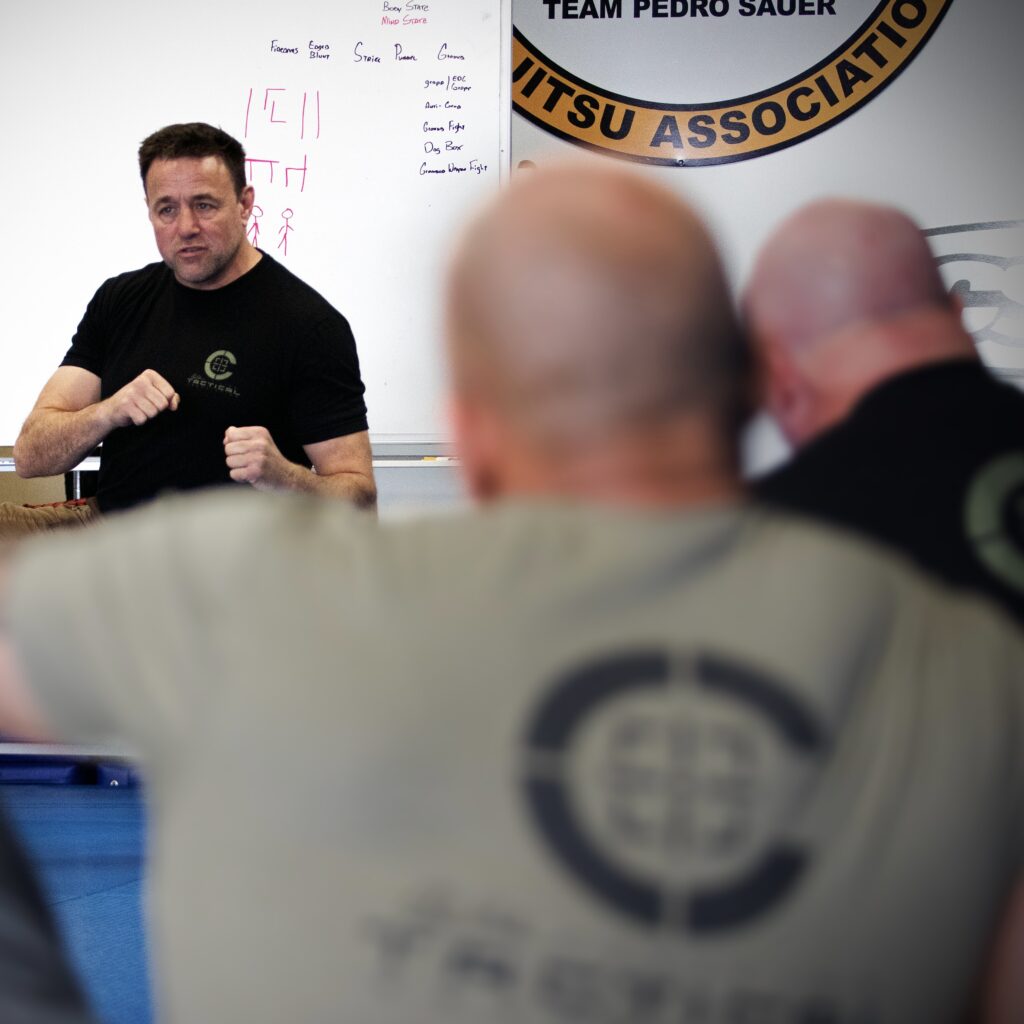
Edged weapon training is essential. It prepares us for one of the most violent and unpredictable forms of conflict. But in the modern world, preparing for the fight is only half the battle. The other half, the one few talk about, is surviving the aftermath: the courtroom, the media, the scrutiny of bystanders and surveillance footage, and most importantly, your conscience.
Filipino Kali has gifted us with a deep well of combative wisdom. It provides drills that engrain reflexes, teach movement that adapts under pressure, and build confidence in the chaos of close-quarters violence. It is, without question, one of the most valuable contributions to the world of martial training. But it is not enough.
Kali was not created for our modern reality. It was not built for legal accountability, public perception, or the moral weight of using force in a civilian setting. If we are going to carry knives in public and train for lethal force, we must go further. We must evolve.
This is where C-Tac comes in. The C-Tac edged weapon curriculum doesn’t replace Kali. It honors it, then adapts it. We preserve the essence of what makes Kali powerful but reframe it through the lens of modern threats, legal responsibilities, and real-world environments. We ask the hard questions: Does this tactic hold up in court? Will this action look justified on video? Does this movement give me options or limit me to a single, dangerous path?
At its core, C-Tac is not about tradition. It is about transformation. It transforms skilled martial artists into informed protectors. It reshapes training habits to reflect legal standards. It conditions practitioners to win not just the fight, but the story that follows.
Shift Your Perspective, Take Action, And Create Change
Gentleman in Conduct. Scholar in Thought. Savage in Action.
~ Sifu Alan ┃ www.sifualan.com ┃ www.civtaccoach.com┃www.prtinstructor.com
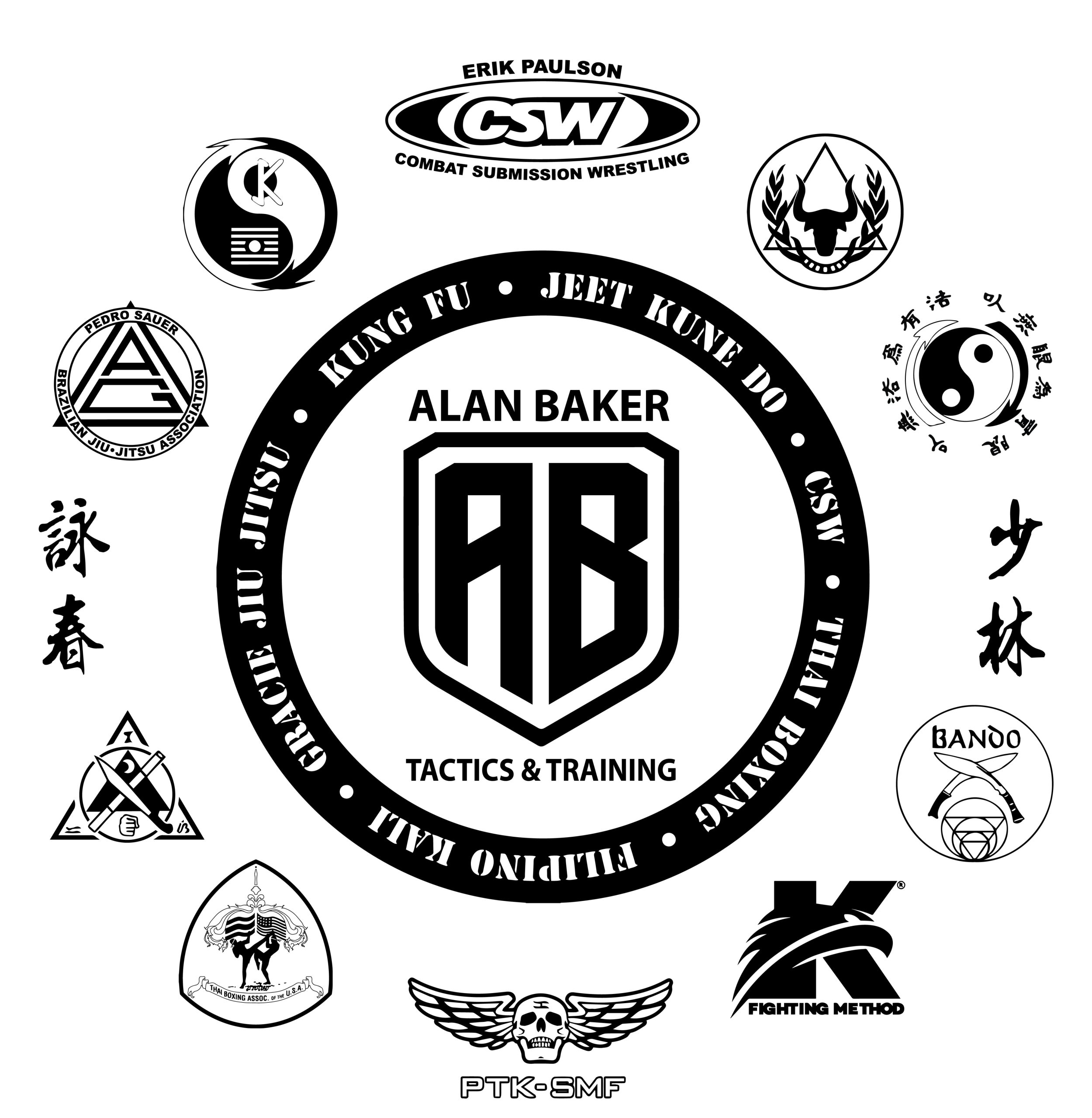
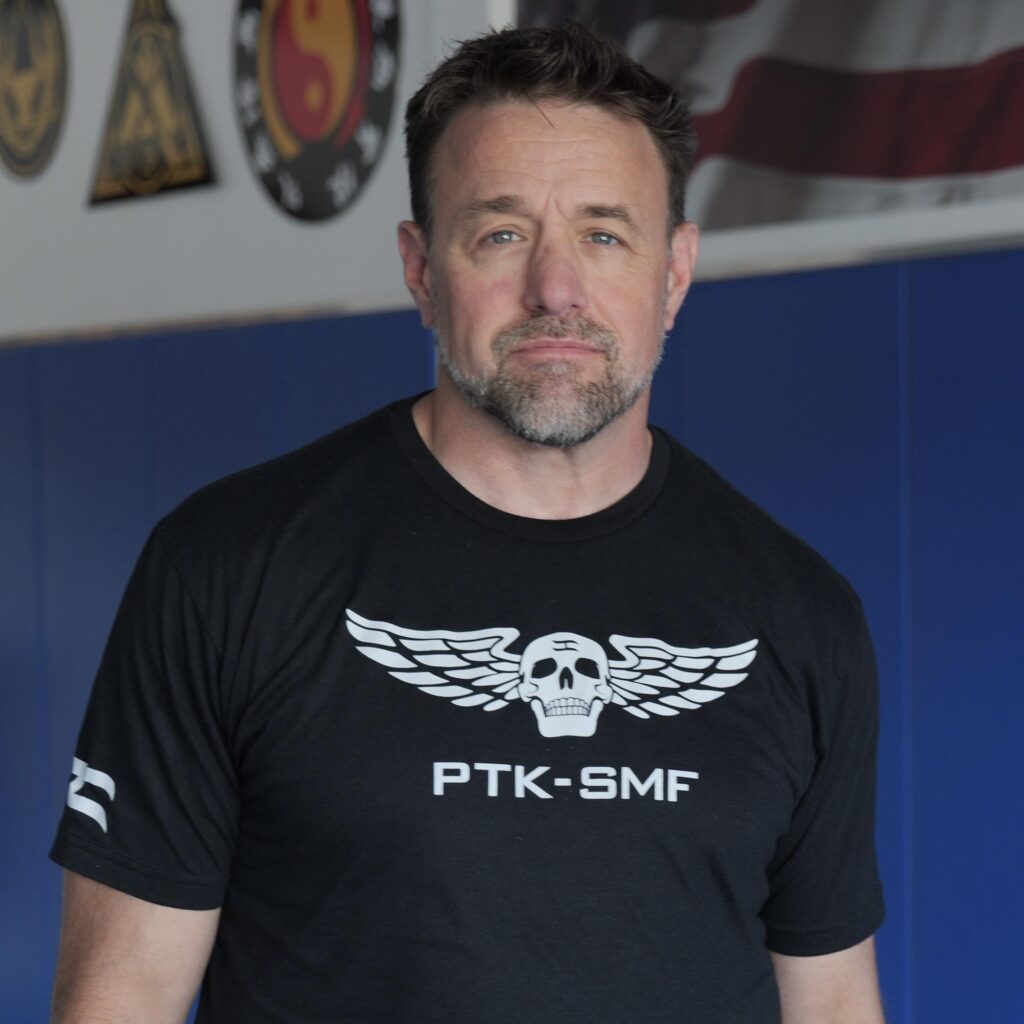
Sifu Alan Baker is a nationally respected authority in Defensive Tactics Program Development, High-Performance Coaching, and martial arts, with over 45 years of training experience across multiple systems. As a lifelong martial artist and tactical instructor, Alan has dedicated his career to creating practical, adaptable, and effective training systems for real-world application. He has worked extensively with law enforcement agencies, military units, and private security professionals, designing programs that emphasize scenario-based training, everyday carry (EDC) integration, and combative efficiency under pressure.
Alan’s client list includes elite organizations such as the Executive Protection Institute, Vehicle Dynamics Institute, The Warrior Poet Society, ALIVE Active Shooter Training, Tactical 21, and Retired Navy SEAL Jason Redman, among many others. He is the creator of both the C-Tac® (Civilian Tactical Training Association) and Protection Response Tactics (PRT) programs—two widely respected systems that provide realistic, principle-based training for civilians and professionals operating in high-risk environments.
In addition to his tactical and martial arts work, Alan is the founder of the Warrior’s Path Physical Culture Program, a holistic approach to strength, mobility, and long-term health rooted in traditional martial arts and the historic principles of physical culture. This program integrates breathwork, structural alignment, joint expansion, strength training, and mental discipline, offering a complete framework for building a resilient body and a powerful mindset. Drawing from his training in Chinese Kung Fu, Filipino Martial Arts, Indonesian Silat, Burmese systems, and more, Alan combines decades of experience into a method that is both modern and deeply rooted in timeless warrior traditions.
Alan is also the architect of multiple online video academies, giving students worldwide access to in-depth training in his systems, including Living Mechanics Jiu-Jitsu, C-Tac® Combatives, breathwork, functional mobility, and weapons integration. These platforms allow for structured, self-paced learning while connecting students to a growing global community of practitioners.
Beyond physical training, Alan is a sought-after Self-Leadership Coach, working with high performers, professionals, and individuals on personal growth journeys. His coaching emphasizes clarity, discipline, focus, and accountability, helping people break through mental limitations and align their daily actions with long-term goals. His work is built on the belief that true mastery begins with the ability to lead oneself first, and through that, to lead others more effectively.
Alan is also the author of three books that encapsulate his philosophy and approach: The Warrior’s Path, which outlines the mindset and habits necessary for self-leadership and personal mastery; The Universal Principles of Change, a practical guide for creating lasting transformation; and Morning Mastery, a structured approach to building a powerful daily routine grounded in physical culture and discipline.
To explore Alan’s books, digital academies, live training opportunities, or to inquire about seminars and speaking events, visit his official website and take the next step on your path toward strength, resilience, and mastery.