In C-Tac, we teach a principle called Layered Skill Development, and it serves as one of the foundational strategies behind how we build effective, real-world ability. This principle isn’t just about organizing your training; it’s about creating depth over time. Too often in martial arts and self-defense systems, there’s an overemphasis on collecting techniques. Students jump from move to move, system to system, chasing novelty instead of mastery. That kind of training might feel productive on the surface, but it rarely results in true, reliable skill under pressure.
Layered Skill Development flips that mindset. It acknowledges that techniques are just the surface level. They’re necessary, of course, but they’re only the starting point. As a student progresses, the goal isn’t to stack more techniques, but to revisit the core ones from new perspectives, applying increasing levels of resistance, context, timing, stress, and adaptability. Each revisit adds a new layer of understanding and application.
The highest level performers in any field, not just in martial arts, don’t succeed because they know more. They succeed because they’ve built more depth into what they know. They’ve refined the fundamentals until those fundamentals operate under pressure, fatigue, confusion, and chaos. That’s what this principle ensures: that your training isn’t just wide, but deep. That it becomes functional, durable, and usable when it counts.
Layered Skill Development gives instructors a structure for building this kind of training, and it gives students a clear path to progress, not by memorizing more, but by mastering what matters most.
In our training methodology, we view this principle, or what I often refer to as a “mind tool” as having four distinct levels of progression. Each level builds upon the one before it, leading to deeper, more integrated skill development.These levels are:
Technique
This is the foundation. At this level, students learn the mechanics of a movement, how to execute it correctly and efficiently. This includes understanding the structure, timing, and application of individual techniques. It is essential, but it is only the beginning. Technique is the most recognizable starting point in martial arts training. If you’ve spent any time in the arts, you’ve likely encountered a structured list of techniques, movements, strikes, defenses, or transitions that form the foundation of a particular system or methodology. These techniques are typically rooted in the philosophy and strategies of the art you’re studying, and naturally, they can vary widely from one style to another. While learning techniques is essential, it’s important to understand that this is just the surface layer of skill development. Technique provides the vocabulary, but true mastery comes from learning how to express it fluently under pressure, with control, precision, and adaptability.
Attribute Development
Once the technique is understood, we shift focus to developing the physical and mental attributes that support performance. These include speed, timing, rhythm, coordination, strength, flexibility, and sensitivity. This stage ensures the body can express the technique effectively under various conditions. When I discuss this topic on a higher level, I like to categorize it into two areas: temporary attributes and those I refer to as timeless tools.
Temporary attributes include things like strength and speed. These are absolutely valuable and should be trained, but they come with a shelf life. As we age and move further along in our journey, these attributes begin to decline. This natural process is why I don’t consider them timeless. They are powerful tools while you have them, but not something you can rely on forever.
On the other hand, timeless tools include attributes such as timing and placement. Placement, for example, is the ability to position your body correctly in space, being in the right place at the right time. These tools, once developed, are not only effective but also sustainable. Even as you get older, you can maintain and even improve them with focused practice. They are not dependent on youth or peak physical condition. Instead, they are rooted in awareness, precision, and the ability to read and respond to the moment.
That is why in C-Tac and many of the systems I teach, we emphasize timeless attributes. They give you a functional edge regardless of what stage you are in your physical development.
Body State Development
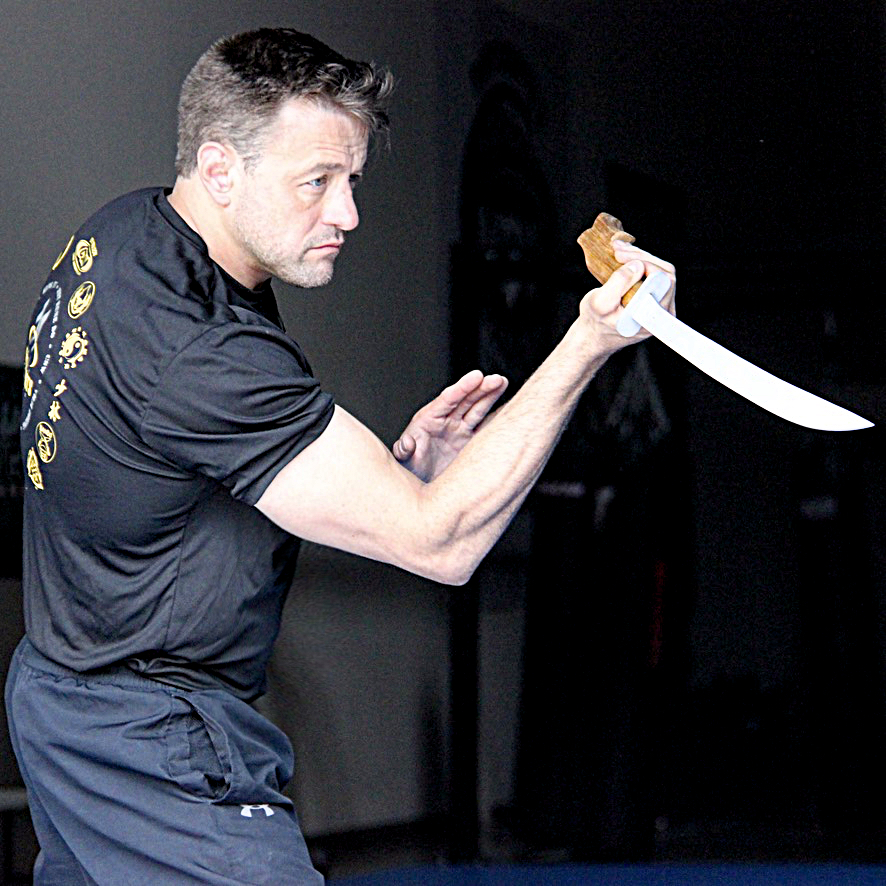
Here, we focus on how the practitioner holds and uses their body moment to moment. This includes awareness of posture, breath control, structural alignment, and relaxation under pressure. It is about cultivating the internal mechanics that fuel consistent performance, both in training and in high-stress situations. Body state development refers to the condition or state of your body while performing any task, particularly under pressure or in combative situations. In the C-Tac system, one of the first elements we introduce is the ability to control muscular tension. I often explain this through a scale of one to ten.
At the low end of the scale, around a one, you have a body that is completely void of muscular contraction. It’s limp, soft, and at rest. At the opposite end, around a ten, you have full activation where the entire body is engaged and contracted at the highest possible level. A well-trained combat artist needs the ability to access and control both ends of this scale with intention and precision.
In this section, I want to focus on the lower end of that spectrum: the ability to release tension. Most people carry unnecessary residual tension in their bodies, and they don’t even realize it. This constant, unregulated tension robs them of mobility, fluidity, and true power. More importantly, it shows a lack of connection between the mind and body. Many people simply cannot fully relax or fully contract because they’ve never been taught how to develop that kind of neuromuscular control.
You can find excellent examples of body state mastery in certain Kung Fu systems. The more relaxed the body becomes, the more effortless power it can produce. This also contributes to a grounded, commanding physical presence. In my experience, advanced grapplers often develop a version of this over years of training, but it is typically acquired passively, as an unconscious result of long-term experience rather than a structured, intentional process.
This is one of the things I deeply appreciate about Kung Fu. Many systems provide a clear and methodical path to developing body state control, including high-level relaxation. Unfortunately, many modern systems don’t emphasize it in the same way. As a result, students often miss out on a key element that could elevate their performance and protect their longevity.
Body state control is what I call a timeless tool. Once it is developed, it stays with you. Unlike attributes like speed or brute strength, which diminish with age, the ability to regulate your body state, especially to relax and release tension, remains and often improves over time. That’s why you see this kind of training preserved in traditional arts. The practitioners knew they were investing in something that would serve them throughout their entire martial journey, not just during their physical prime.
There are many forms of body state development beyond tension control. Breath integration, skeletal alignment, fluidity, and posture awareness all play a role. But mastering tension control is foundational. It opens the door to greater awareness, sharper technique, and deeper presence. It’s not just about how strong or fast you are. It’s about how intelligently and efficiently you move. And that is something you can carry with you for life.
Mind State Development
This is the highest level. It involves cultivating your internal mind state: your mindset, emotional control, focus, and presence. It is the development of the warrior’s internal landscape. In this stage, we emphasize remaining calm under pressure, making clear decisions in chaos, and staying connected to purpose. This is where martial training crosses over into personal development and leadership. Developing your mindset and internal landscape is one of the most powerful and often overlooked areas in martial development. It is also the fourth layer in the Layered Skill Development principle. This aspect of training goes far beyond physical techniques. It shapes how you interpret the world, how you handle adversity, and ultimately how you show up under pressure.
I was fortunate to be introduced to this concept early in life. One of my Kung Fu instructors, when I was in my early teens, began teaching me about internal development, what we might now call state cultivation. At the time, I didn’t fully grasp the depth of what I was being given. But as I matured, it became clear that this internal training would shape the course of my life in profound ways. The habits of self-reflection, discipline of thought, and awareness of internal state all stemmed from those early lessons.
This layer is about more than just mindset in a general sense. It is about developing a warrior’s internal command system. What are you thinking when you execute technique? What lens are you seeing the world through in moments of conflict? Are you fearful or focused? Are you reactive or responsive? This level of awareness and intentionality can dramatically change the outcome of a situation.
To me, this becomes very clear once you begin to experience it. The same technique performed by two different people will not have the same effect if their internal states are wildly different. One might deliver a strike out of panic. Another may do so with calm precision and presence. One may crumble under stress. The other remains centered and adapts fluidly. That difference does not come from strength or technique alone, it comes from the mind.
Your mindset influences how you move, how you respond to pressure, and how you lead yourself when adversity strikes. As a combat scientist, your mind is one of your most powerful tools. Like the body, it must be trained. You need tools that sharpen your perspective, guide your inner dialogue, and help you regulate emotional states with purpose. These practices help build resilience, clarity, and focused presence under pressure.
There are many areas of study within this domain, including breath control, meditation, emotional regulation, visualization, self-inquiry, and the ability to shift state intentionally. Entire martial systems have been built around developing mental control and inner discipline. In my own path, I’ve drawn from ancient traditions, modern psychology, neuroscience, and philosophy. Each has added something valuable to the whole.
The truth is, this area is far too deep to cover fully in a single article. My goal here is to simply introduce the concept and encourage you to make it part of your training. If you are serious about growth as a martial artist, or as a leader, protector, or high performer, then developing your internal state should be a top priority.
If you are not actively training the inner landscape, you are only developing part of your potential. And in high-stakes environments, it is often the part that determines success or failure.
Finding Your Gaps In Knowledge
You can use this concept of Layered Skill Development not only as a student but also as an instructor. It serves as a strategic filter to make sure nothing essential is being missed, whether in your own training or in the structure of what you’re passing on to others.
As a student, this tool acts like a checklist to ensure that you’re developing across all dimensions of the art. It’s easy to fall into the habit of collecting techniques, but without depth, those techniques won’t hold up under pressure. This framework reminds you to ask, “Am I just learning techniques, or am I also developing the attributes that make those techniques functional? Am I learning how to control my body and refine my state? Am I working on my mindset so I can access my training under stress?”
Let’s say your instructor teaches you a specific technique, great. Once you’ve trained and drilled it, go back and ask for attribute development drills. These are often overlooked, but a skilled teacher will have intelligent, principle-based exercises that sharpen timing, positioning, sensitivity, or pressure application. And remember, you want to make sure you’re developing timeless attributes. These are the skills, like timing, distance control, and precision, that stay with you for life and do not fade as your athletic peak declines.
After attribute development, the next layer is body state development. This involves learning how to manage and control your internal physical condition, such as tension levels, structural alignment, and energy conservation, as well as how to relax or activate the body on command. A knowledgeable instructor should have training to help you build this type of control. If not, that’s a blind spot.
Finally, you want to address mind state development. This is the foundation that determines how you apply everything else. Ask your instructor what practices they recommend for improving your mental clarity, composure under pressure, focus, and emotional control. This could include breath training, visualization drills, or mental rehearsal techniques. A good instructor will not only have tools for this, but they’ll model the mental strength themselves.
This layered tool doesn’t just help you organize your training; it enables you to evaluate the depth of your education. If you’re going to invest your time and energy into a teacher or a school, you should expect them to be able to guide you through all four levels: technique, attribute development, body state development, and mind state development.
If they can’t? That’s not necessarily a reason to leave immediately, but it is a signal that you may need to supplement your training elsewhere. A strong instructor will welcome these kinds of questions. They won’t be threatened by your desire to go deeper. In fact, they’ll encourage it. Because good instructors don’t just teach, they build thinkers, leaders, and warriors.
Ultimately, this concept serves as a guiding compass. It helps you navigate your development as both a practitioner and a teacher. It ensures that you’re not just collecting more moves but actually forging lasting skill, presence, and mastery.
Becoming A Better Instructor
As I mentioned earlier, this tool is not just useful for students; it’s just as crucial for instructors. By following this framework, instructors can ensure they’re providing the answers students are looking for, even if those students haven’t yet learned how to ask the right questions. I often say, “You don’t know what you don’t know,” and part of our job as instructors is to help illuminate those blind spots. That’s where tools like the Layered Skill Development principle come into play.
For me, this principle has become one of the cornerstones of how I structure training sessions and design curriculum, especially when working with high-level clients. I rely on it heavily in our C-Tac Instructor Program. That program is divided into two tracks, one for students who want to train in the system and another for instructors who wish to implement C-Tac in their academies or agencies. When working with the instructor development group, I emphasize this mind tool as a foundational element. It gives them a map for how to teach with depth and how to avoid shallow, checklist-style instruction.
Instructor development should be a thoughtful and deliberate process. Unfortunately, in today’s martial arts world, it’s become all too common for individuals to begin teaching simply because they’ve spent time training in a system. While time on the mat is important, it doesn’t automatically make someone a good teacher. Teaching is its own discipline. A trueinstructor studies not just techniques but also how to transmit those techniques, how to communicate, how to structure learning, and how to adapt to different types of students.
Our goal in the C-Tac Instructor Program is to create some of the most well-rounded, competent, and adaptable instructors in the defensive tactics and combat training industry. That level of skill does not come from passive time spent in a system. It comes from actively pursuing the craft of education itself. A great instructor is not only a skilled practitioner, they are a skilled communicator, coach, and guide.
This principle, the Layered Skill Development framework, is one of the tools that helps bridge the gap between being a technician and being a teacher. It ensures you are building depth, not just expanding a list of techniques. It reminds us to guide our students through every layer: the technique, the attributes, the body state, and the mindset. This layered development approach lays the foundation for instructors who don’t just pass on knowledge, but actually create transformation.
Shift Your Perspective, Take Action, And Create Change
~ Sifu Alan ┃ www.sifualan.com ┃ www.civtaccoach.com┃www.prtinstructor.com
Sifu Alan Baker is a nationally respected authority in Defensive Tactics Program Development, High-Performance Coaching, and martial arts, with over 45 years of training experience across multiple systems. As a lifelong martial artist and tactical instructor, Alan has dedicated his career to creating practical, adaptable, and effective training systems for real-world application. He has worked extensively with law enforcement agencies, military units, and private security professionals, designing programs that emphasize scenario-based training, everyday carry (EDC) integration, and combative efficiency under pressure.
Alan’s client list includes elite organizations such as the Executive Protection Institute, Vehicle Dynamics Institute, The Warrior Poet Society, ALIVE Active Shooter Training, Tactical 21, and Retired Navy SEAL Jason Redman, among many others. He is the creator of both the C-Tac® (Civilian Tactical Training Association) and Protection Response Tactics (PRT) programs—two widely respected systems that provide realistic, principle-based training for civilians and professionals operating in high-risk environments.
In addition to his tactical and martial arts work, Alan is the founder of the Warrior’s Path Physical Culture Program, a holistic approach to strength, mobility, and long-term health rooted in traditional martial arts and the historic principles of physical culture. This program integrates breathwork, structural alignment, joint expansion, strength training, and mental discipline, offering a complete framework for building a resilient body and a powerful mindset. Drawing from his training in Chinese Kung Fu, Filipino Martial Arts, Indonesian Silat, Burmese systems, and more, Alan combines decades of experience into a method that is both modern and deeply rooted in timeless warrior traditions.
Alan is also the architect of multiple online video academies, giving students worldwide access to in-depth training in his systems, including Living Mechanics Jiu-Jitsu, C-Tac® Combatives, breathwork, functional mobility, and weapons integration. These platforms allow for structured, self-paced learning while connecting students to a growing global community of practitioners.
Beyond physical training, Alan is a sought-after Self-Leadership Coach, working with high performers, professionals, and individuals on personal growth journeys. His coaching emphasizes clarity, discipline, focus, and accountability, helping people break through mental limitations and align their daily actions with long-term goals. His work is built on the belief that true mastery begins with the ability to lead oneself first, and through that, to lead others more effectively.
Alan is also the author of three books that encapsulate his philosophy and approach: The Warrior’s Path, which outlines the mindset and habits necessary for self-leadership and personal mastery; The Universal Principles of Change, a practical guide for creating lasting transformation; and Morning Mastery, a structured approach to building a powerful daily routine grounded in physical culture and discipline.
To explore Alan’s books, digital academies, live training opportunities, or to inquire about seminars and speaking events, visit his official website and take the next step on your path toward strength, resilience, and mastery.
1 thought on “Technique, Attributes, or Body State: Which Are You Training”