
Civilian Tactical Training Association
Ahead of Time
Why Early Recognition Matters in Self-Protection
Situational awareness is not a slogan. It is a trainable ability to prepare, observe, recognize change, and make sound decisions before a developing problem takes control of the timeline.
People are constantly told to be more observant. The self-protection industry uses phrases such as situational awareness because they sound important, but repeating the phrase does not create the skill. Telling someone to pay attention is not the same as teaching that person what to notice, when to notice it, or how to act on what has been seen.
A capable training system needs more than impressive terminology. Does it have methods that teach the eyes to recognize meaningful information in the environment? Does it include drills that develop those observations into reliable habits? Is there an organized educational process that connects perception to judgment, positioning, movement, and appropriate action?
That is part of the work we do in C-TAC. We call it training the eyes to see. It is closely connected to a universal training concept we call the Principle of Time.
Awareness is not what you say. It is what your training has prepared you to notice.
The Governing Principle
Ahead, On, or Behind Time
Every developing problem has a timeline. In C-TAC, we examine that timeline from three positions:
Ahead of Time
You recognize useful information early enough to preserve options and make a deliberate decision.
On Time
You recognize the event as it develops and respond within the moment available.
Behind Time
The problem has progressed faster than your recognition, preparation, or decision-making.
This principle can be applied far beyond a physical exchange. It can shape travel planning, social interaction, positioning, movement, threat recognition, and the management of an emerging confrontation. Being ahead of time does not mean predicting the future. It means noticing available information soon enough to make better choices.
For example, ahead of time may mean checking a destination and choosing where to park before leaving home. On time may mean recognizing a sudden change in someone’s behavior and creating distance. Behind time may mean discovering that an exit is blocked only after a confrontation has begun.
Know Before You Go
Preparation Is the First Layer
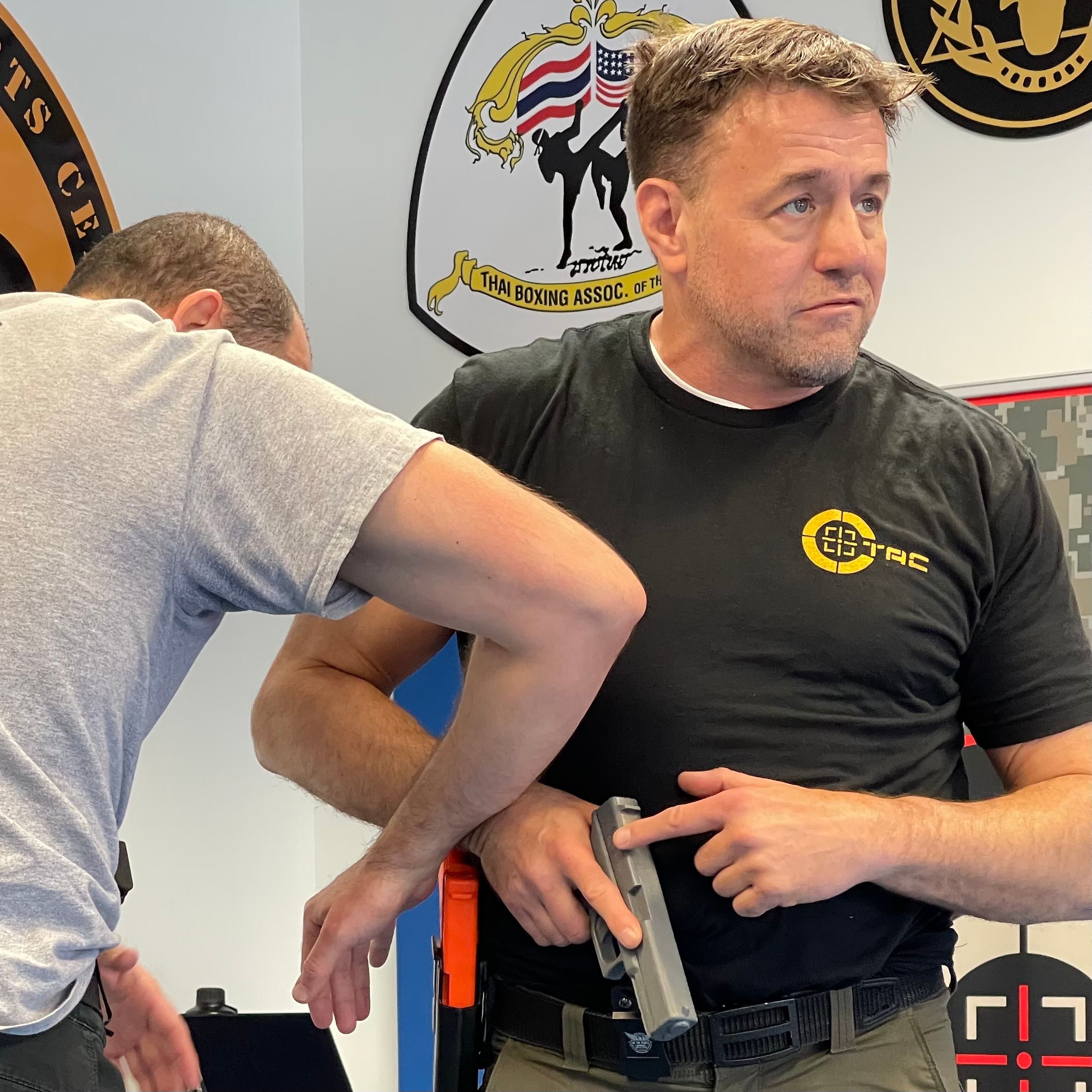
Getting ahead of time begins before you enter an environment. A professional protection agent conducts advance work. Civilians can apply the same principle at an appropriate scale by becoming their own bodyguard.
Ask practical questions before you go. Where are you going? What is the surrounding area like? Which route provides the best options? Where will you park? What entrances and exits are available? Who will be with you? What resources could you reasonably need? What will you do if conditions change?
The fastest route is not always the route that offers the best visibility, access, or alternatives. The most convenient parking space may also place you in a predictable or restricted position. Good planning does not require paranoia. It requires a brief, honest assessment of conditions.
Five Vulnerability Factors
Conditions You Can Assess and Reduce
- Predictability Repeated routines can make your location, timing, and behavior easier to anticipate.
- Accessibility Consider how easily an unknown person can reach, isolate, follow, or restrict you.
- Lack of appropriate resources Resources may include communication, transportation, trained companions, light, distance, or access to help.
- Poor planning Entering without understanding routes, exits, surroundings, or alternatives reduces available choices.
- Poor training Information must be converted into habits, judgment, and skills that remain available under pressure.
These factors never transfer responsibility from an offender to a victim. They give us a practical way to identify conditions we may be able to improve before a problem develops.
Preparation Creates Options
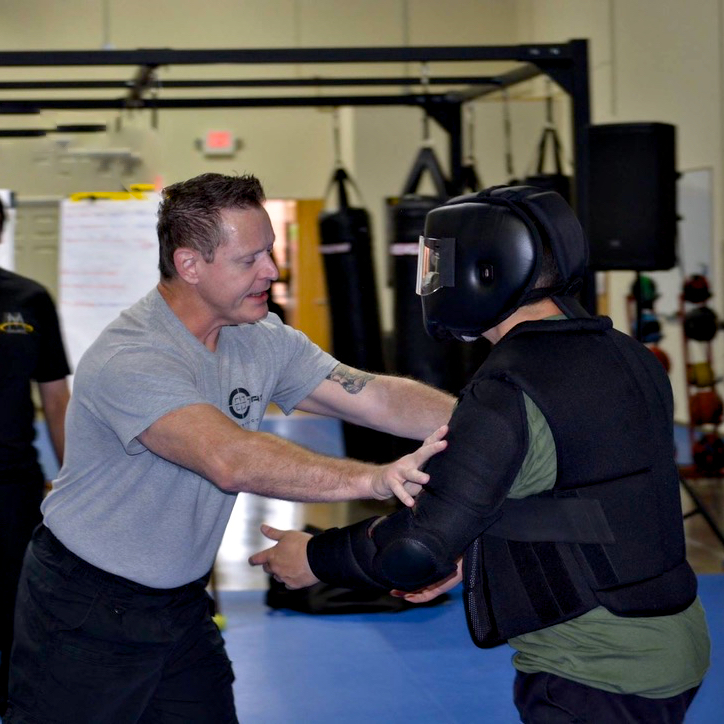
Know the environment, recognize the available exits, and consider what could limit movement before those details become urgent.
Recognizing Development
Violence Can Be a Process
Not every act of violence develops in the same way. Some events are sudden, chaotic, or driven by circumstances that offer little warning. However, many predatory encounters involve decisions and actions before the physical assault. An offender may select an environment, observe potential targets, seek access, close distance, test boundaries, or position for advantage.
Thinking of violence as a possible process gives the student more points at which to observe and reassess. A predatory person may consider where people gather, how accessible an individual is, whether movement is restricted, whether witnesses are present, and whether the location provides an easy exit. The goal is not to teach people to profile strangers. It is to recognize behavior, context, and meaningful change.
Is someone watching people, routines, belongings, entrances, or movement patterns?
Does the person continue to appear after you change direction, speed, location, or activity?
Is distance closing without a clear or reasonable purpose?
Is someone waiting, intercepting, using a choke point, or limiting access to an exit?
Are requests, boundaries, tone, proximity, or consequences escalating?
One observation by itself may be harmless. Context matters. A useful assessment looks for combinations, persistence, incongruence, and change. Counter-surveillance begins with a simple idea: see them seeing you. Notice attention directed toward you, then observe whether the behavior continues as circumstances change.
Nonverbal Information
What Does a Potential Offender Perceive?
A frequently discussed study by Betty Grayson and Morris I. Stein examined whether convicted offenders perceived differences among pedestrians shown on video. More than sixty people were recorded walking through an area of New York City, and inmates convicted of assaultive crimes rated the pedestrians as potential targets. Movement analysis found differences between those perceived as easier targets and those perceived as less vulnerable.
The 1981 study was small, dated, and based on perceived selection rather than a prediction of actual attacks. It should not be used to claim that a particular gait causes victimization or that posture guarantees safety. It does support a narrower and more useful conclusion: people communicate information nonverbally, and predatory individuals may notice cues that the person displaying them has never considered.
For training purposes, this reinforces the value of organized movement, purposeful attention, environmental engagement, and having the head out of the phone. Like an animal moving through its environment, observation should become part of how we travel through daily life, not a temporary performance adopted only when we feel afraid.
Teaching the Eyes to See
Optics Must Be Trained
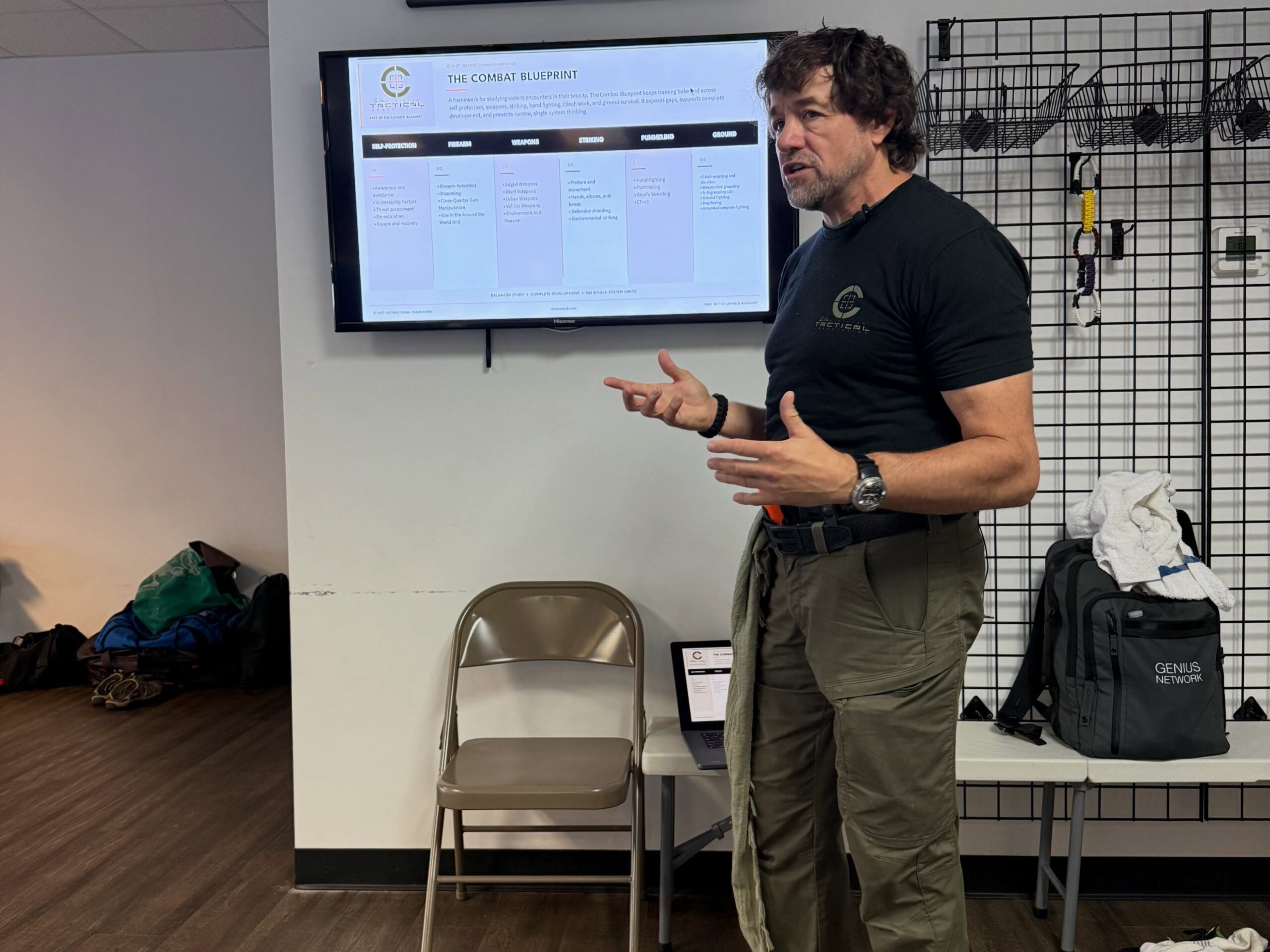
Looking is a physical action. Seeing is an educated process. C-TAC optics training develops the student’s ability to read useful information such as posture shifts, changes in muscular tension, unusual attention, preparation of movement, hands, distance, pathways, and environmental position.
This work must go beyond a lecture. Students need carefully designed drills that direct attention toward specific information, allow them to recognize it repeatedly, and connect recognition to appropriate decisions. Complexity and pressure can then be introduced progressively. The objective is not to make every exercise look like a fight. It is to correct small habits, develop perception, and give the nervous system better information to work with when stress increases.
Judgment is the ability to select an appropriate option at an appropriate time based on what is actually happening. Technique without judgment can produce poor timing, unnecessary escalation, or the wrong answer to the problem. Good training therefore develops decision-making and emotional control alongside physical capability.
A Durable Advantage
Timing and Placement Beat Speed
Physical speed is useful, but it is also perishable. It changes with age, health, fatigue, surprise, environment, and the actions of another person. If speed is the only answer a system offers, it is not a durable answer.
A more capable approach is to arrive sooner through recognition. Preparation can place you in a better location. Observation can identify change earlier. Positioning can preserve movement. Judgment can prevent hesitation or unnecessary action. These skills help you be in the right place at the right time, and they can continue to improve throughout a long training journey.
Getting ahead of time is not about becoming fearful or suspicious of everyone. It is about becoming more available to reality. When you recognize what is changing, you have more time to communicate, reposition, leave, seek help, or select another appropriate response.
Beyond Surface-Level Awareness
Build the Skill, Not the Slogan
There is deeper knowledge available than the surface-level instruction to “pay attention.” Real development requires an educational model: preparation, trained optics, recognition of escalation, positioning, judgment, and progressive practice that makes these abilities part of how a person moves through the world.
C-TAC brings these elements together inside an organized training process. Students do not merely collect phrases or techniques. They learn to observe, decide, and act with greater clarity across changing levels of pressure.
Explore C-TAC TrainingReference
Grayson, Betty, and Morris I. Stein. “Attracting Assault: Victims’ Nonverbal Cues.” Journal of Communication, vol. 31, no. 1, 1981, pp. 68–75. View the publication record .

The Social Layer
The Interview and Wolfing
Some developing encounters begin with communication rather than obvious aggression. An apparently ordinary question may be entirely innocent. It may also function as an interview through which a person evaluates attention, boundaries, confidence, resources, willingness to comply, or the presence of companions.
Wolfing describes escalating social pressure intended to move another person toward compliance. The pressure may exploit politeness or deliberately create an awkward situation. A request becomes an insistence. A boundary is ignored. Distance continues to close. The story changes. The person attempts to redirect your movement or make refusal feel unreasonable.
The lesson is not that every uncomfortable conversation is a threat. The lesson is to notice escalation. Words, tone, hands, distance, positioning, additional people, and access to exits should be understood together. Hands deserve particular attention because they may reveal preparation, concealment, access to a weapon, or the beginning of physical action.