
C-Tac Instructor Development
Stress Is a Programmer
Why scenario training must be designed, developed, and introduced with intelligence.
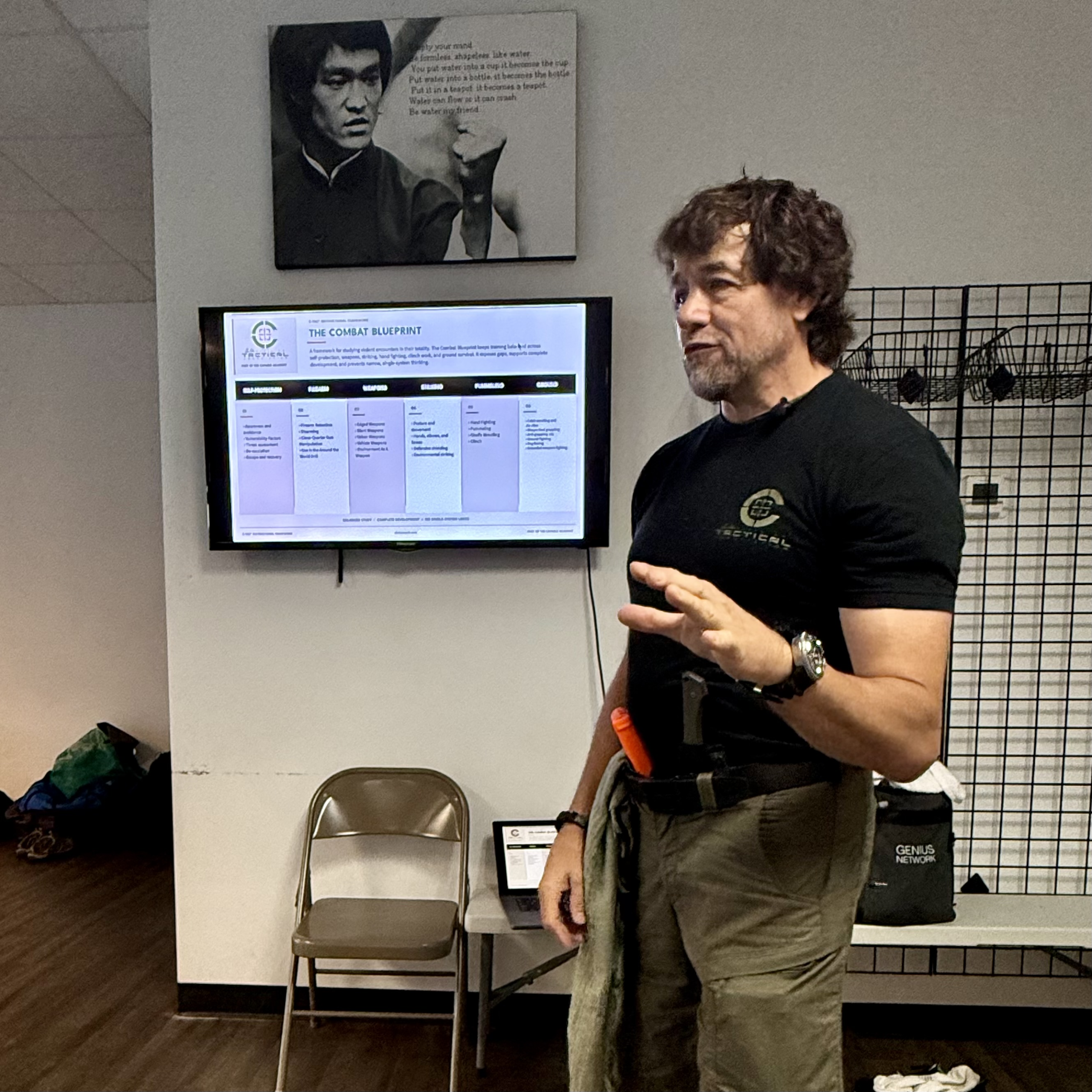
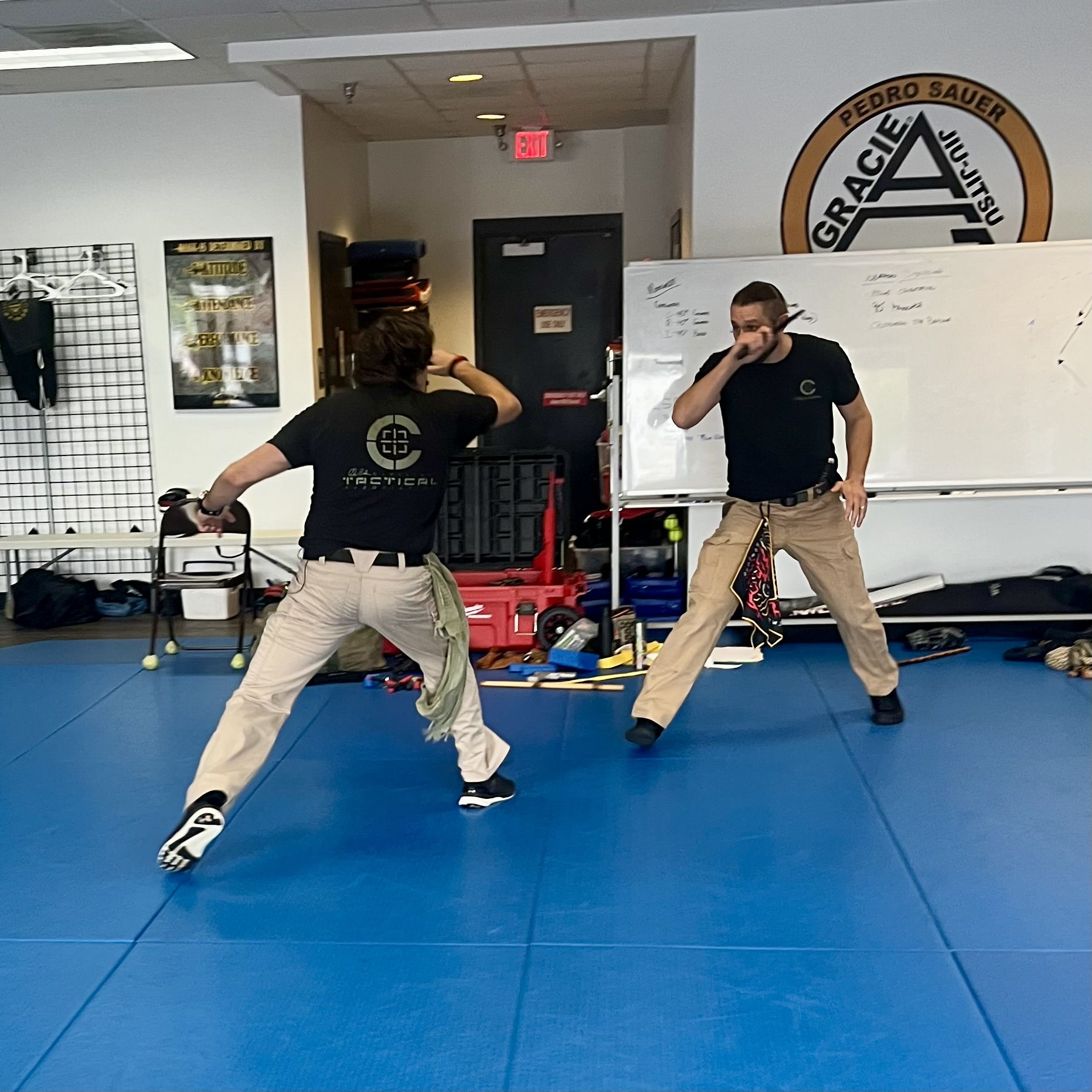
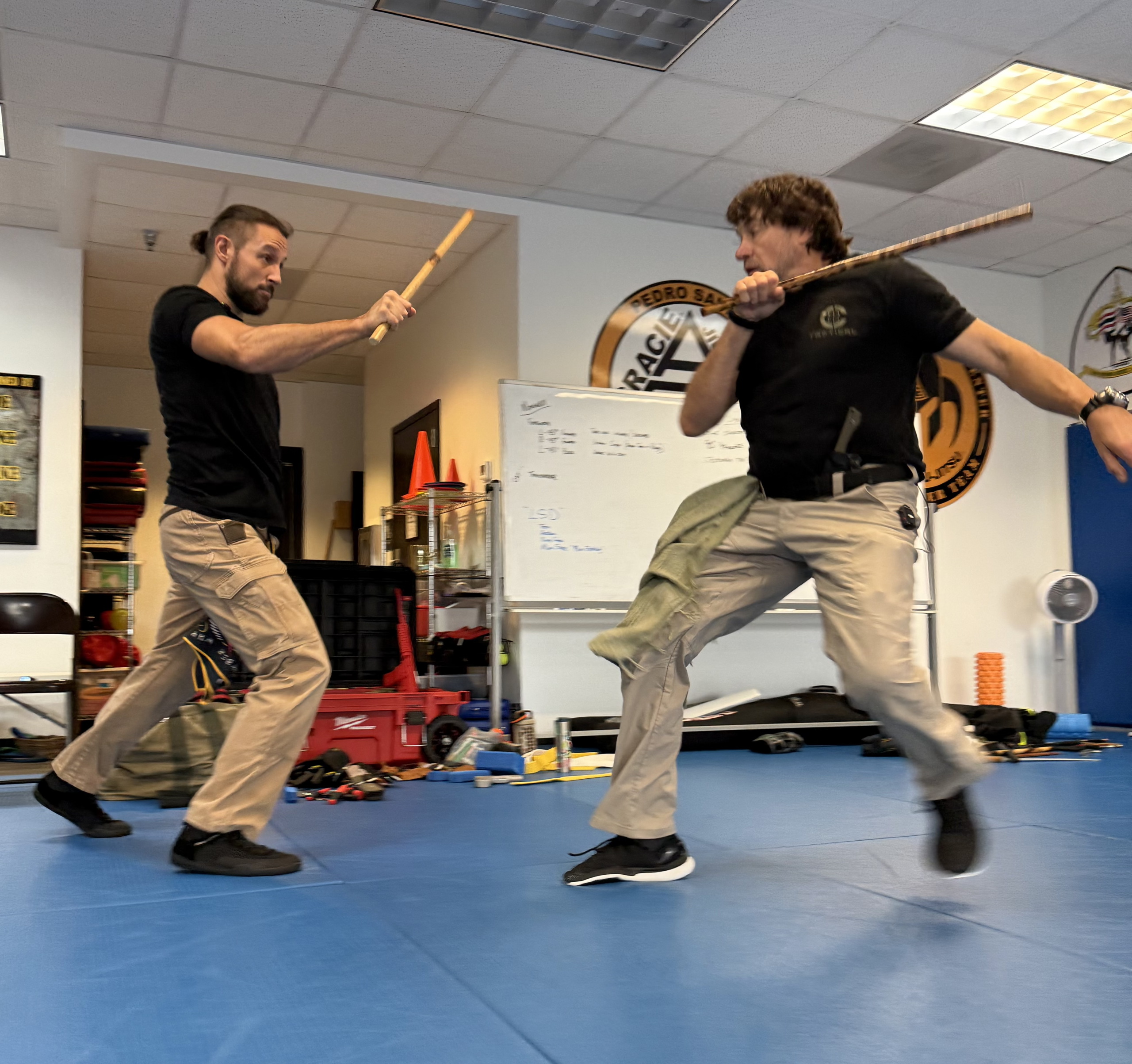
This weekend, we held the second of our three annual C-Tac instructor events at the Atlanta Martial Arts Center in Woodstock, Georgia.
We had a strong group of instructors in the room, along with two experienced visitors who came to observe what we do. Their presence created an interesting kind of accountability. They were not simply watching techniques. They were looking at the thinking behind the training.
This camp gave them an opportunity to see an important transition inside the C-Tac instructor group. We have reached the point where we can begin intelligently constructing stress-based scenarios.
A stressful experience is not necessarily an educational experience.
Scenario training can create intensity, adrenaline, noise, confusion, and physical pressure. It can also produce dramatic photographs and video. None of those things automatically make it good training.
If the exercise has not been designed correctly, stress may reinforce the very behavior we are trying to eliminate.
A Deliberate Progression
The Three Phases of C-Tac Development
The progression is intentional. Before the pressure rises, the group must share a curriculum, a language, a set of safety habits, and an understanding of how the environment should be constructed.
01
Boot Camp
The foundation. Instructors establish shared material, training habits, safety standards, and an instructional framework.
02
The Car Phase
Vehicle-Centric Defensive Tactics and the Dog Boxing subsystem introduce confined space, barriers, restricted movement, and environmental structure.
03
The War Phase
Instructors begin building demanding scenarios and may progress toward body armor, motorcycle helmets, and protective equipment for hostile training environments.
Build Before You Test
Stress Does More Than Test You
We often use stress to test performance. Can the student execute while tired? Can they recognize the problem while someone moves aggressively? Can they make a decision while processing noise, contact, restricted space, and uncertainty?
Those are valuable questions, but they are only part of the picture. Stress is not merely a testing mechanism. Stress is also a programming mechanism.
Research suggests that acute stress can impair working memory and cognitive flexibility, although the effects vary by person and situation. Other research has found that stress can shift behavior away from deliberate choices and toward previously learned habitual responses. A meta-analysis of acute stress and executive function and research examining stress and habitual behavior both support the need to be careful about what we repeatedly practice under pressure.
In plain language, when the pressure becomes high enough, the ability to calmly analyze every option may begin to decline. At that point, the body may begin making decisions for you.
What has the body been trained to select?
Programming the Response
Drilling Is Widely Misunderstood
Drilling sometimes gets a bad reputation in the martial arts and defensive-tactics industries because a well-designed drill does not always look like a fight.
People compare the visual appearance of the drill to the visual appearance of violence and decide that the drill is unrealistic. That misses the point.
A drill may isolate positioning, movement, recognition, protection, decision-making, or the transition from one environment to another. The instructor identifies the attribute or response that needs to be developed and then finds or builds a drill capable of developing it.
- Rhythm matters.
- Tempo matters.
- Consistency over time matters.
- The quality of each repetition matters.
- Gradual increases in resistance, unpredictability, and stress matter.
The sequence matters. Stress should be layered onto a program that has been deliberately constructed. It should not be used as a substitute for construction.
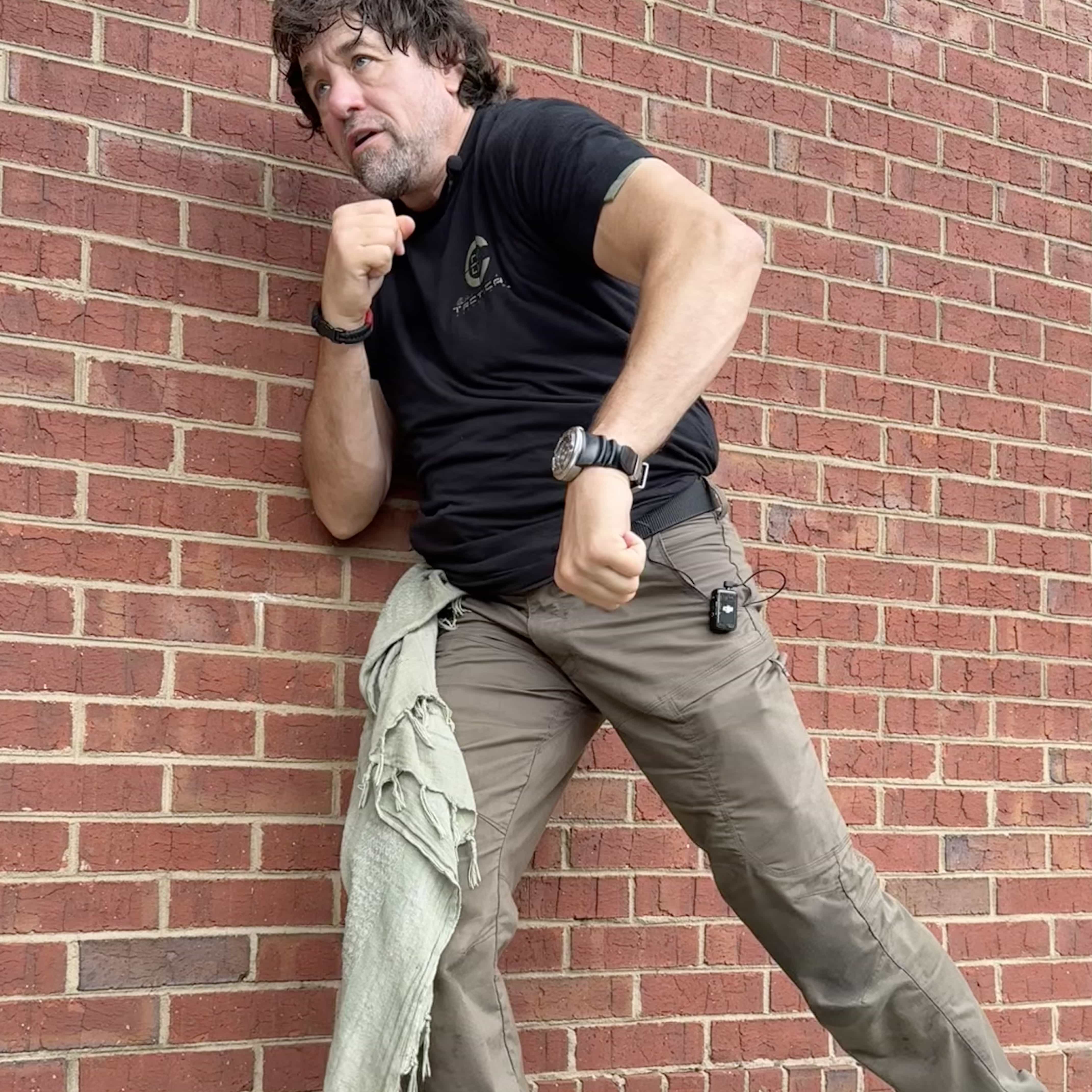
Do not add stress until you are confident in what the stress will reinforce.
The Installation Problem
Stress Reinforces What Is Already There
People often remember highly stressful experiences with unusual detail. Stress and emotional arousal can affect memory in complex ways. Depending on timing, intensity, and context, they may strengthen certain memories while interfering with others. Research reviewing stress and memory systems makes it clear that the relationship is not as simple as saying stress always improves learning.
For the instructor, the practical lesson is straightforward. Stress can help drive a trained response deeper, but it does not independently determine whether that response is useful.
If the underlying program is good, pressure may help strengthen it. If the underlying program is poor, pressure may help strengthen that too.
This is why we take time on the front end to examine the techniques, tactics, decisions, and safety processes that will be placed into the training environment. Once a habit has been installed deeply enough, it can be difficult to remove.
A Culture of Control
Safety Must Be Part of the Program
Safety cannot be something the instructor discusses for two minutes immediately before beginning a scenario. It has to be part of the group’s underlying culture.
Participants need standard processes for managing equipment, communicating, stopping an exercise, controlling dangerous positions, protecting the head and spine, managing falls, and recognizing when the environment has become unsafe. Those habits must remain present when the intensity rises.
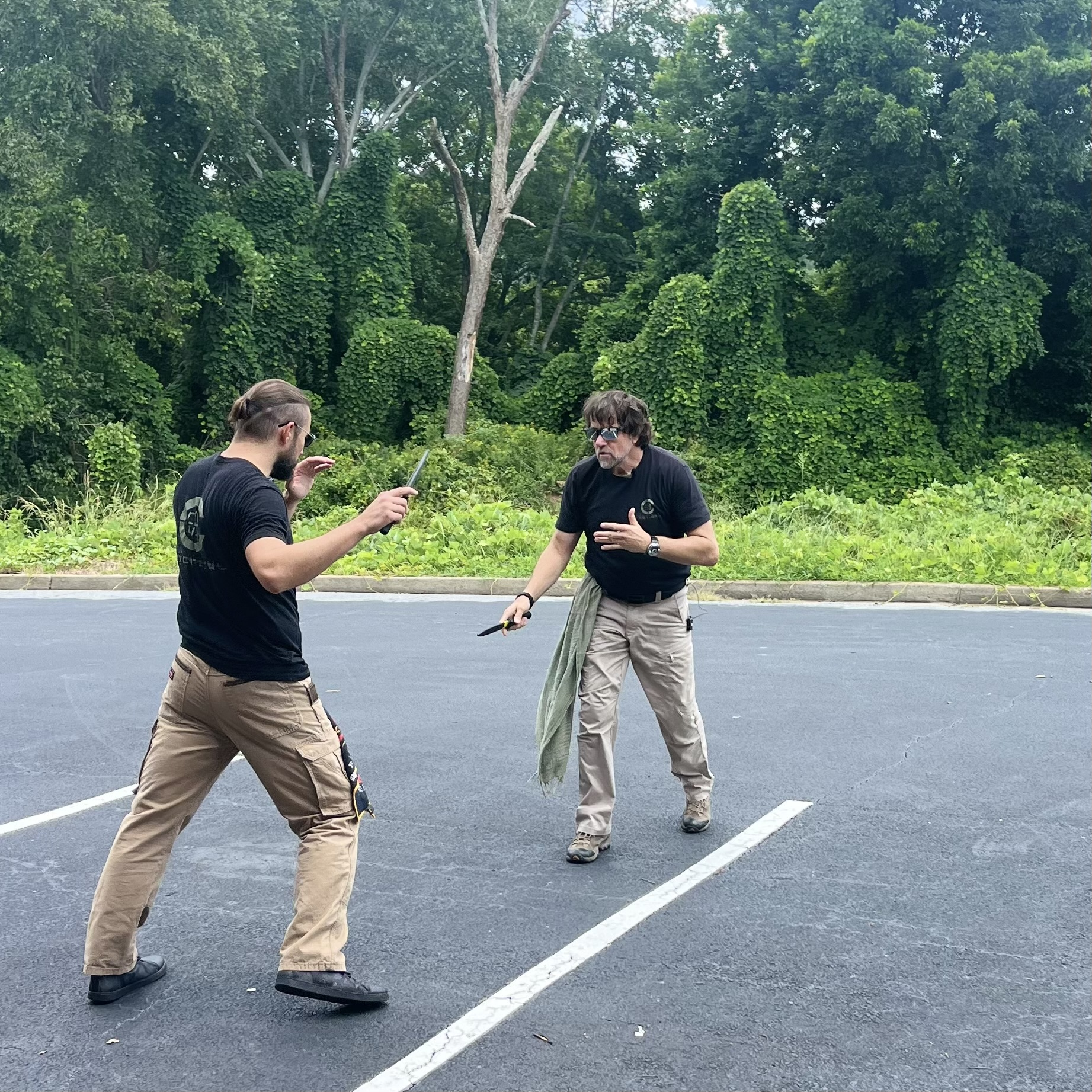
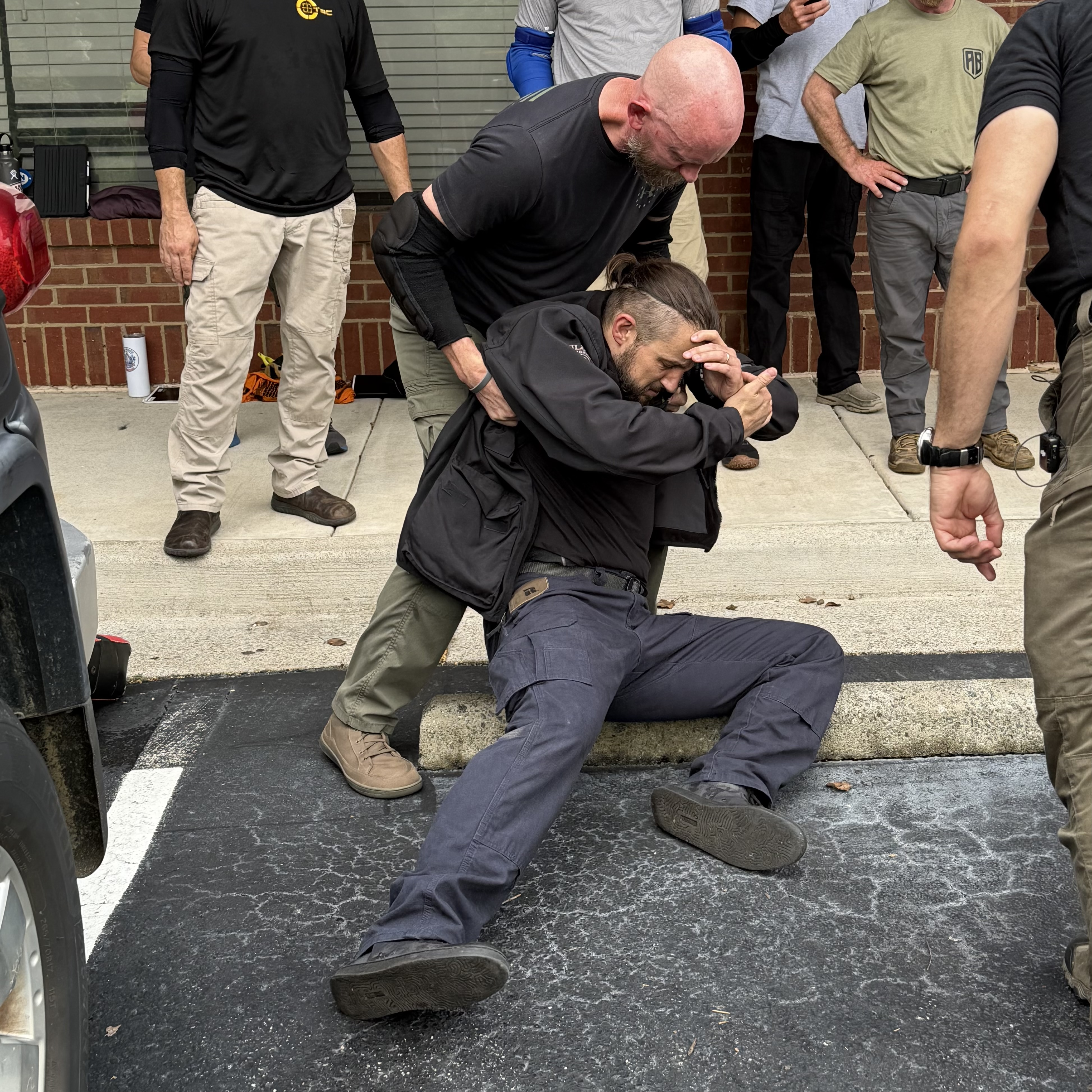
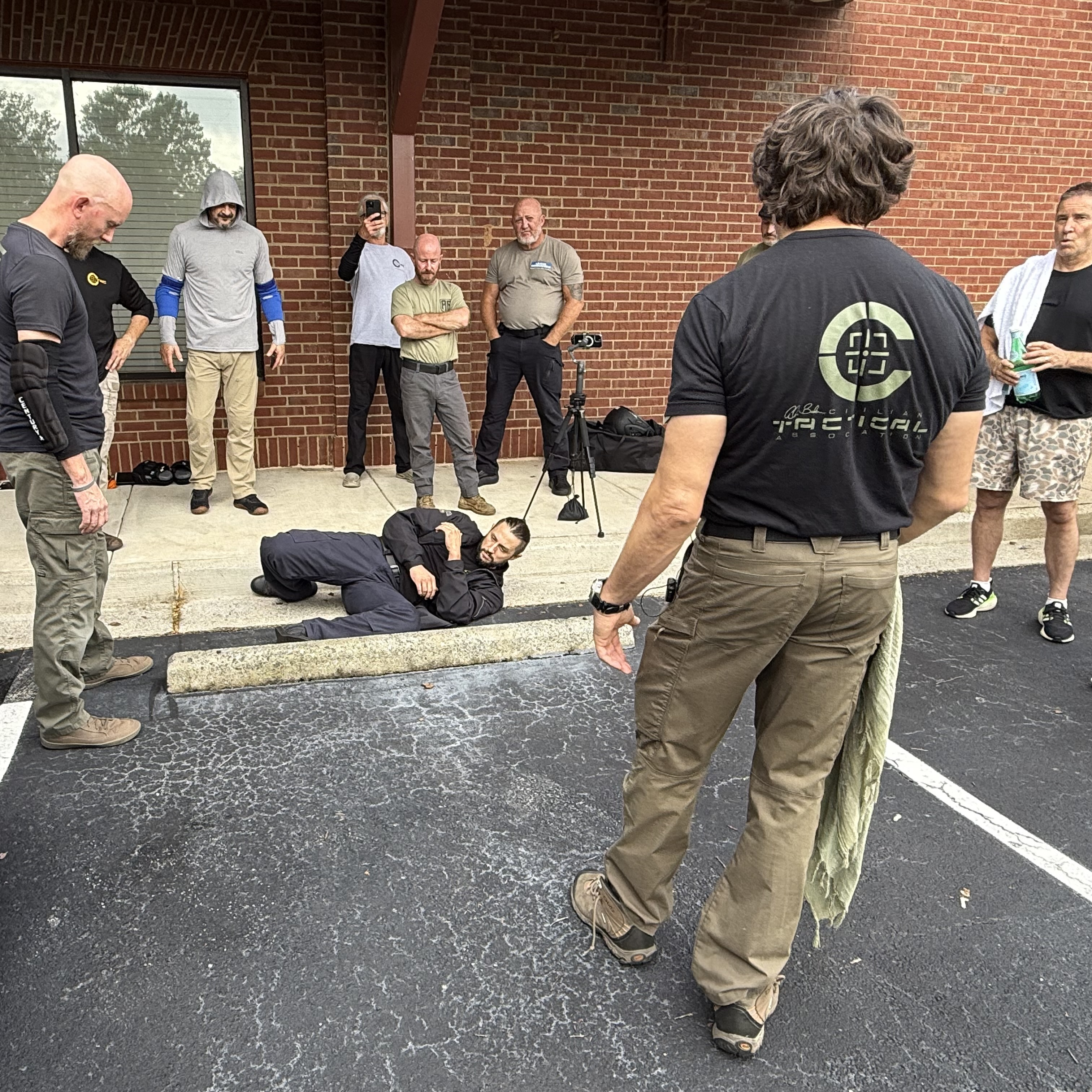
This became especially important during the camp because we moved into the parking lot. We worked beside curbs and between vehicles. Participants moved through standing and kneeling positions, and several exchanges ended on the ground.
The academy floor gives us a controlled place to build skills and protect the body while learning. The parking lot forces us to study how those skills function when the environment becomes less cooperative. Neither environment replaces the other.
Beyond the Harder Mindset
Faster and Harder Will Only Take You So Far
I have watched the same pattern repeat throughout more than 45 years of training and teaching. Someone enters the room believing that faster, harder, and stronger must always be better.
That mindset may allow them to progress to a certain level. Moving beyond that level safely requires better mechanics, awareness, communication, training partners, control, and systems.
Without those things, increasing intensity eventually begins to break down the training rather than improve it. People get injured. Partners stop trusting one another. Bad habits are hidden beneath speed. The exercise becomes something to survive instead of something from which to learn.
Intelligent training allows people to work at higher levels because it creates a structure capable of supporting those levels. The structure does not remove intensity. It makes productive intensity possible.
The Real Objective
Build the Program Before You Test It
The scenario is not where the educational process begins. It is where the process is examined under pressure.
The real work begins earlier, during curriculum design, drilling, repetition, discussion, experimentation, safety development, and honest evaluation.
The purpose is not to create the most aggressive exercise in the industry. It is to help the student perceive more clearly, decide more effectively, move more efficiently, and respond more appropriately when the environment becomes uncertain.
Before increasing the intensity, decide what you want the body to learn.
Build the response carefully. Develop the safety habits surrounding it. Test it gradually. Observe what actually emerges. Then refine the program before driving it deeper.
Capability Is Built Through Immersion, Not Exposure
C-Tac is a long-term instructor-development culture built around structured learning, responsible pressure, shared standards, and continued refinement.