
You can spend years training in a traditional martial art, earn rank, move beautifully in forms, flow through drills, and even do well in sparring, yet still be completely unprepared for real violence. That is uncomfortable to admit, especially if you have invested a big part of your life in your art. But if you care about protecting yourself, your family, or the people you are responsible for, you have to be willing to look at some hard truths. Being good at your art is not the same thing as being prepared for chaos.
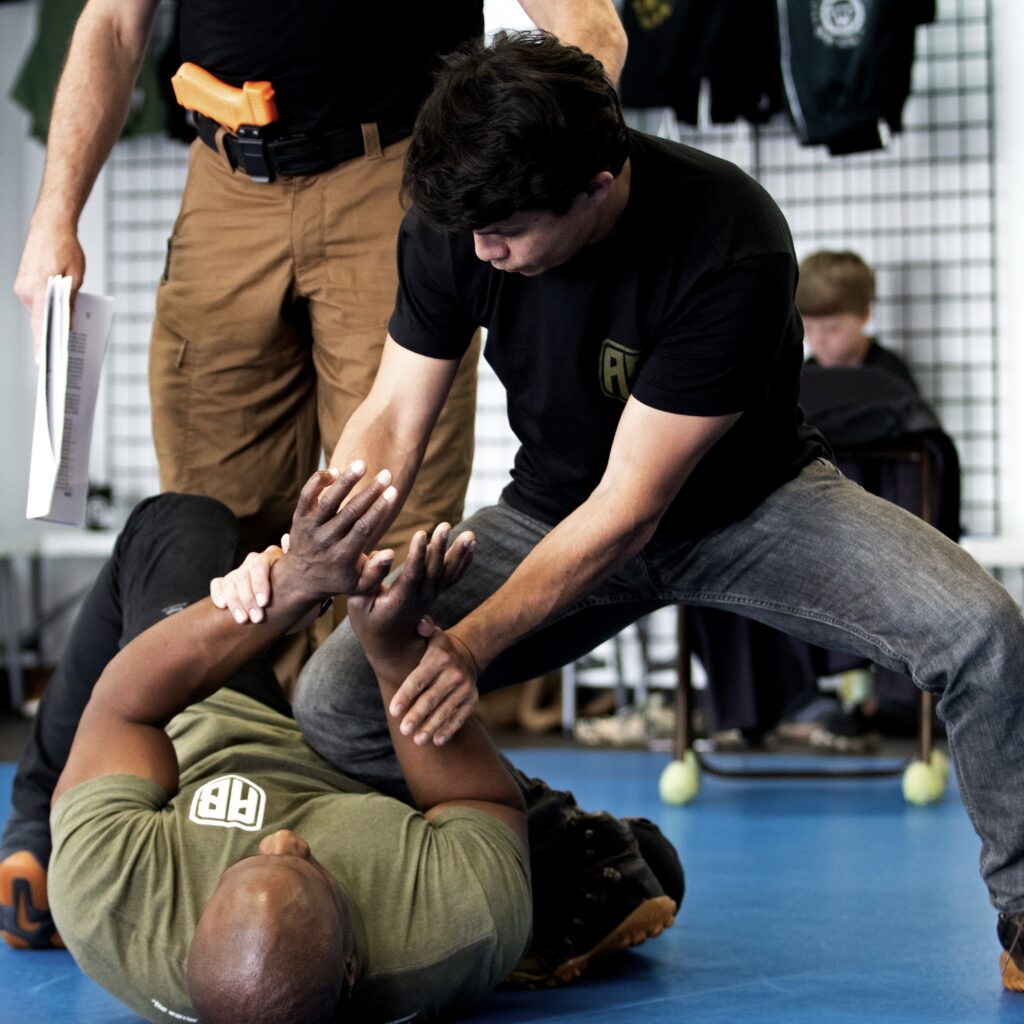
Real violence is fast, ugly, and full of bad variables. It does not care about your favorite stance, your clean academy distance, or how many years you have been on the mat. It shows up in parking lots, restaurants, hallways, vehicles, and at family events. It happens when you are tired, distracted, carrying bags, holding a child, or sitting in a chair. The person across from you may be larger, chemically altered, more committed to harm, or simply more ruthless than the people you usually train with.
The problem is not that traditional martial arts are useless. Most of them were born in violent times. The problem is that the way many people practice these arts today does not align with the world we live in today. Modern violence lives inside camera phones and legal reviews. It lives inside social media outrage, workplace policies, and a culture that will judge you not just on what you did, but on how it looks in a ten-second clip with no context. The C Tac program I teach was explicitly designed to live in that modern reality, and the mindset I will share in this article comes directly from that work.
My goal here is simple. First, I want to show you why so many traditional martial artists struggle when things get real. Then I want to give you a clear pathway to close that gap without throwing away your art, your lineage, or your history. Along the way, I will connect to several related articles on my site so you can go deeper into specific topics if they resonate with you.
Traditional Training Was Not Built For Modern Cameras And Courts
One of the biggest problems with how martial arts are taught today is that the training was not designed with our current social structure and legal system in mind. Most arts were developed in cultural environments where personal violence was handled very differently. Today, every serious altercation is potentially a legal event and a social media event. The moment something happens, there is a good chance someone is filming. Your actions may be replayed in slow motion by people who were not there, do not understand the context, and are only seeing a tiny slice of the incident.
Because of that, any answer you give a student has to pass three tests. It has to be visually appropriate, socially acceptable, and legally explicable.
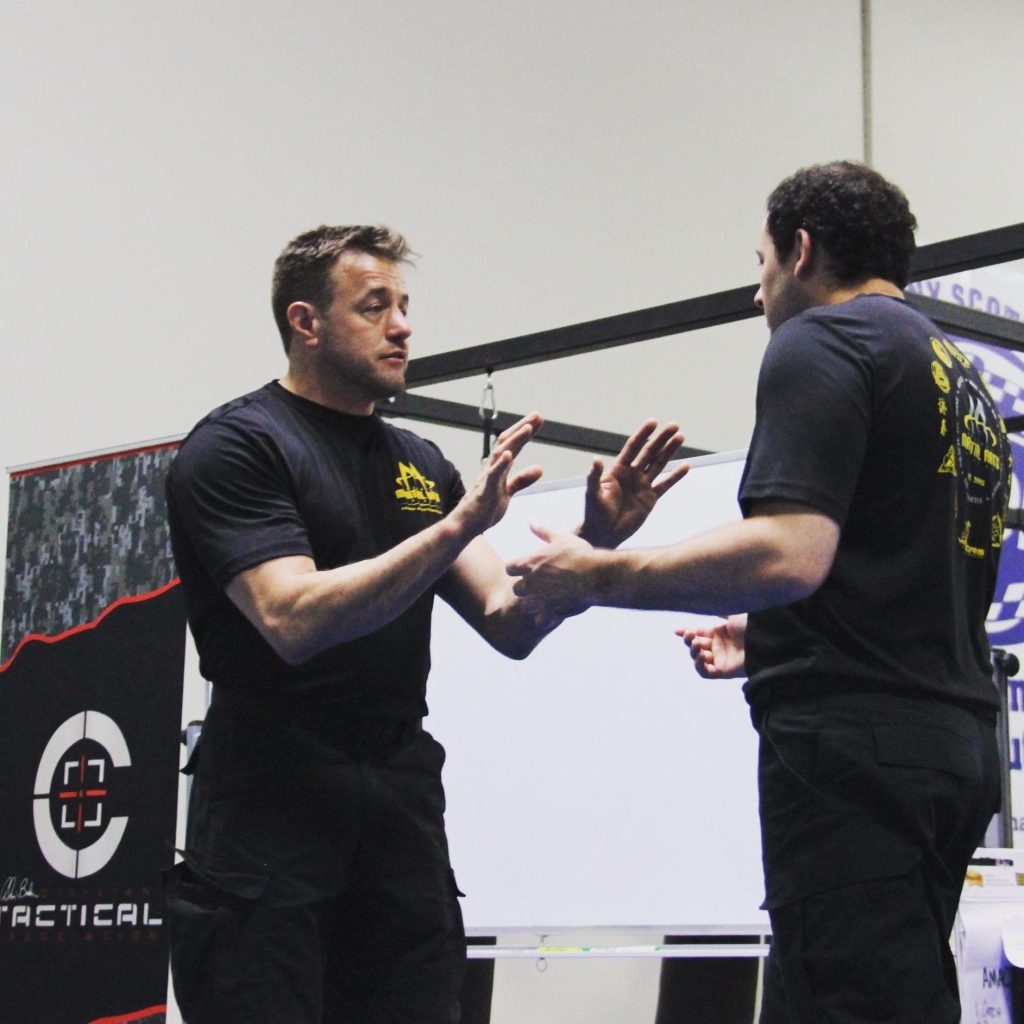
Visually appropriate means that if someone watches the footage with no sound and no backstory, what you are doing looks proportional to what is happening. If it looks like you are beating someone who is simply arguing with you, it will not matter how justified you feel. Socially acceptable means your actions fit current social norms, not the norms from twenty or thirty years ago. Our culture has shifted. What used to be shrugged off as “just a fight” is now enough to cost you your job, your reputation, and your relationships. Legally explicable means you can explain, in clear language, what you did and why you did it, in a way that makes sense to law enforcement, to a prosecutor, and possibly to a jury.
Traditional training almost never talks about any of this. The underlying assumption is that once things go physical, it is just “go time.” That mindset might work for a fantasy duel where there are no cameras, no bystanders, and no aftermath. It does not match how modern incidents unfold or how they are judged afterwards.
Another place most traditional systems fail is in the “missing middle” between no contact and full assault. Real life is full of low-level, socially messy situations. Someone is too close, too aggressive, too drunk, too handsy, or simply refuses to leave a space. You may need to put your hands on them, move them, or contain them, but do it in a way that does not insult them, does not spike ego, and does not look brutal on video. Many martial arts skip this altogether. They train cooperative drills on one end and lethal techniques on the other, with nothing in between. C Tac treats that middle ground as a major focus, and we will return to how to build it later in the article.
Why Self Protection, Self Defense, And Self Offense Are Not The Same Thing
A lot of the confusion in traditional training comes from lumping everything into one bucket labeled “self-defense.” In my writing, I break this into three separate zones: self-protection, self-defense, and self-offense. If you want a full deep dive on this framework, you can read my article “Self Protection, Self Defense, and Self Offense: What’s the Difference and Why It Matters” here:
Self-protection is everything you do before the incident. This is the idea that you can be your own bodyguard. If you hired a professional protector, there are specific things they would do long before someone throws a punch. They would assess threats, look at routes, manage standoff distance, control where you sit, where you park, and who can get close to you. They would pay attention to patterns, locations, and people that increase your risk. That is self-protection, and it is a full-fledged science in its own right.
I was introduced to this way of thinking almost two decades ago through the Executive Protection Institute, and the Vehicle Dynamics Institute where I have been a faculty member and on staff for many years. Working as an instructor and as a protector for high-level clients gave me an inside look at what real self-protection looks like behind the scenes. That experience heavily shapes how I designed the C Tac program. When you look at the martial arts industry as a whole, almost none of that reality shows up in the curriculum. Most schools never teach you how to live like your own bodyguard, even though that might be the most important piece of the puzzle.
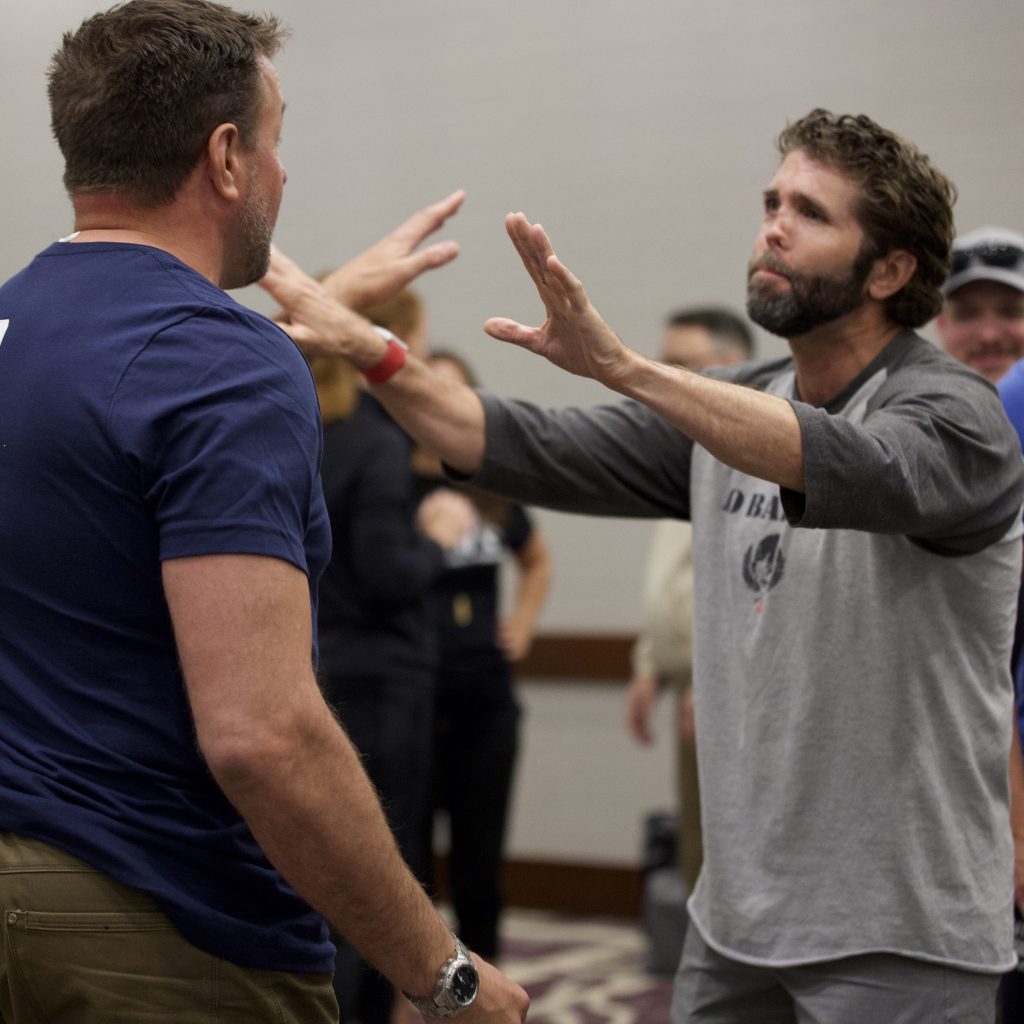
Self-defense is the physical encounter itself, the moment when another person is trying to put their hands on you, hurt you, or hurt someone you care about. This is where most martial arts try to live, but even here, they often have a very narrow view. Training tends to assume one opponent, right in front of you, at a neat distance, with time for you to step into a stance and get your hands up. In real life, you may be sideways, off balance, seated, carrying something, or dealing with more than one threat at once.
Self-offense is the part most people are nervous to talk about. It is the moment where, based on everything you have seen and felt up to that point, you make the decision to act first. That might be a preemptive strike, a decisive movement to take control, or a very firm physical intervention to stop something before it explodes. Without a clear framework for self-defense, people either hesitate too long or launch too early at the wrong level of force.
Most traditional schools blur these three together. They teach a handful of techniques and call it “self-defense” without ever giving you the mindset, the planning tools, or the decision-making framework that belong in self-protection and self-defense. C Tac treats them as distinct areas of study, each with its own skills, drills, and thought process. When you separate them, you can see how big the gap really is in most martial arts training.
The World Is Weapons Based, Whether You Train That Way Or Not
Another core reason traditional martial artists struggle in real violence is that they unconsciously imagine an empty-hand duel. Two people square up, exchange strikes, maybe add some grappling, and one person wins. That is a sport-shaped picture. It is not how violence is normally approached by people who do this for a living on the wrong side of the law.
The truth is that real violence is usually weapons-based. The bad guy wants an advantage. Advantage often means a weapon. They may have a firearm, an edged weapon, an impact tool, or some improvised weapon within reach. On your side, if you are serious about protecting yourself or your family, there is a good chance you also carry something in your everyday life that can function as a weapon, whether that is a dedicated tool or an improvised one.
In the C Tac program, I use what I call the Hierarchy of Weaponry Principle. If you want to see this laid out in detail, you can read “The C Tac Hierarchy Of Weaponry Principle” here:
In that hierarchy, projectile weapons such as firearms sit at the top. Below that, you have edged weapons, then impact tools, then, at the bottom, pure empty hand. The hierarchy is not about ego. It is about acknowledging that certain tools change the rules of the encounter in dramatic ways. If you ignore that, you are training for a world that does not exist.
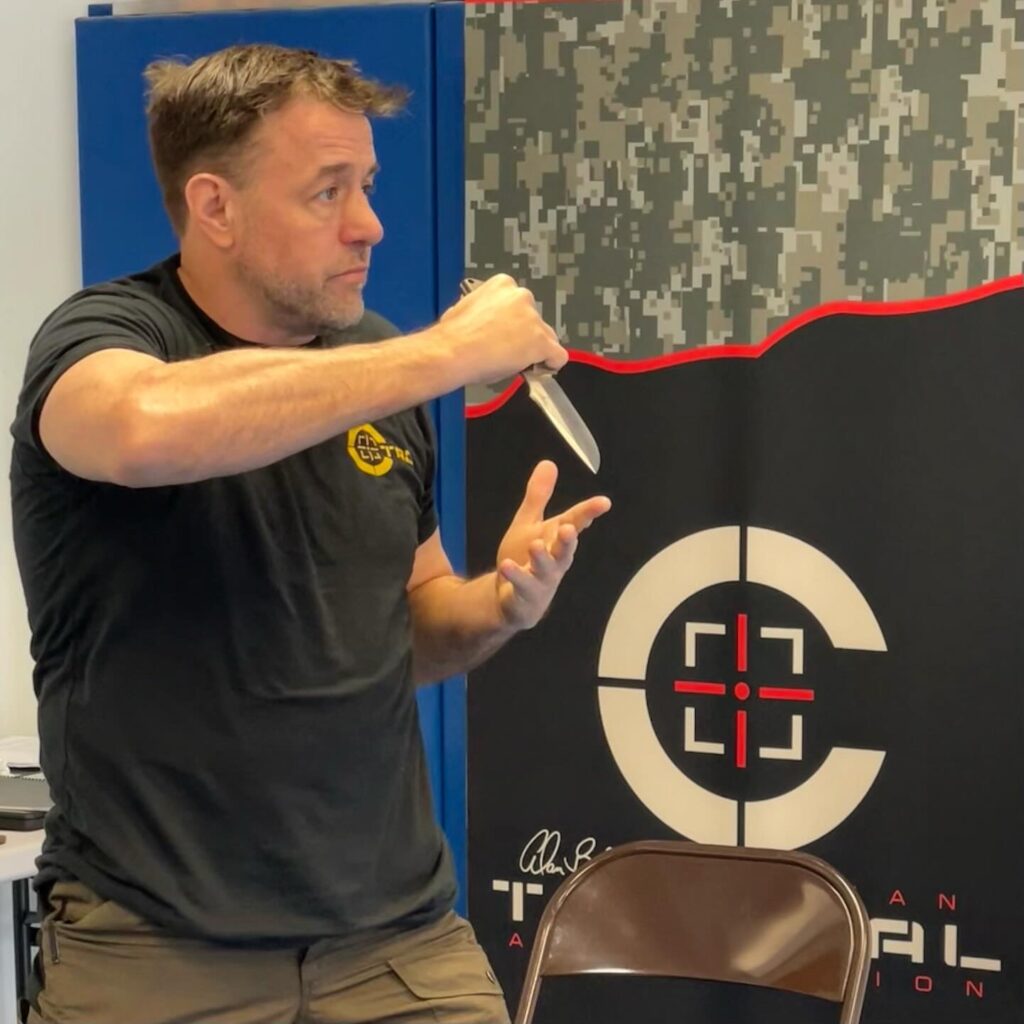
Once you accept that you are likely to face a weapon, everything shifts. Your stance is no longer just about balance and power. It also has to protect access to your own tools and interfere with the other person’s ability to reach theirs. Your clinch and grappling work has to include weapon access and weapon denial. Your ground game has to include the very real possibility of blades and firearms in the entanglement. You also have to think differently about range. Moving into what seems like a strong boxing range may be the last thing you want to do if there is a hidden blade.
Historically, many traditional systems were built as weapon-based systems first, with empty hands as a backup for when you did not have time to access your tools. Over time, commercial pressures, safety concerns, and Hollywood fantasy have flipped that picture in a lot of schools. Now the marketing often centers on the idea that you can handle everything with your bare hands. It looks good in movies, but it is not an honest reflection of modern violence.
A responsible approach means training empty-hand skills and weapon skills together, as one integrated system. C Tac is designed that way on purpose. It treats weapons and empty hands as parts of one problem, not separate hobbies that never speak to each other.
Sport-Shaped Training And The 360 Degree Reality
Even when an art is not officially a sport, the training often becomes sport-shaped. Students line up. They face one direction. The opponent stands in front of them. They build a stance. They measure distance. They prepare to engage from that stable, front-facing position. I often refer to that structure as a fighting measure. It is useful in training, and it has value, but it is built on assumptions that are rarely guaranteed in the real world.
Most real incidents do not start with two people facing off in perfect fighting measure. They start with people in normalsocial postures. You are sideways in conversation, walking past someone, seated at a table, leaning into a car, or bent over picking something up. The person who intends harm may be beside you or behind you when they make their move. You may not have time to turn and square up before the first impact lands.
If your entire training is built around the idea that you will get into a stance and then fight, you are basing your personal safety on a very shaky assumption.
In my article “360 Degrees of Destructive Force: Training Beyond the Traditional Fighting Stance,” I go into this in more detail:
The core idea is that you should be able to generate functional, destructive force in any direction around your body, from imperfect postures, at any moment. That means building strikes, covers, and movement patterns that still work when you are half turned, off balance, pinned against a wall, or entangled in a crowd. It means learning to hit while you are recovering from being shoved, while you are stepping around obstacles, or while you are protecting someone else behind you.
From a training standpoint, this changes how you look at “basic techniques.” They are no longer clean, static moves that only work from ideal conditions. They become adaptable tools that you can fire from the middle of chaos. In C Tac, this is woven into the way we approach striking, grappling, and weapon access. We assume a 360-degree threat and build from there, rather than assuming that everything will neatly happen in front of us.
Traditional martial artists who never step outside the straight line, square up model are often shocked the first time something hits them from the side, from behind, or while they are entangled with someone else. That is not because their art has no answer. It is because their training never reflected the full reality.
Technique, Attributes, Body State, And Mind State
Another big reason traditional martial artists struggle in real violence has nothing to do with the system itself and everything to do with how training time is used. Most schools spend the majority of their time on one layer of development: technique.
In C-Tac and in my broader teaching, I break development into four layers: technique, attributes, body state, and mind state.
Technique is the actual movement. It is the armbar, the strike combination, the takedown, the disarm. Attributes are the physical qualities that support those techniques, such as timing, sensitivity, endurance, strength, reflexes, and coordination. Body state is how you organize your structure, your breathing, and your tension so that you can still apply those techniques under load. Mind state is your internal environment, your ability to stay present, regulate your emotions, and make clear decisions under stress.
Most traditional schools live almost entirely in the technique layer. Some touch attribute training through conditioning drills and light sparring. Very few deliberately train body state and mind state as primary goals.
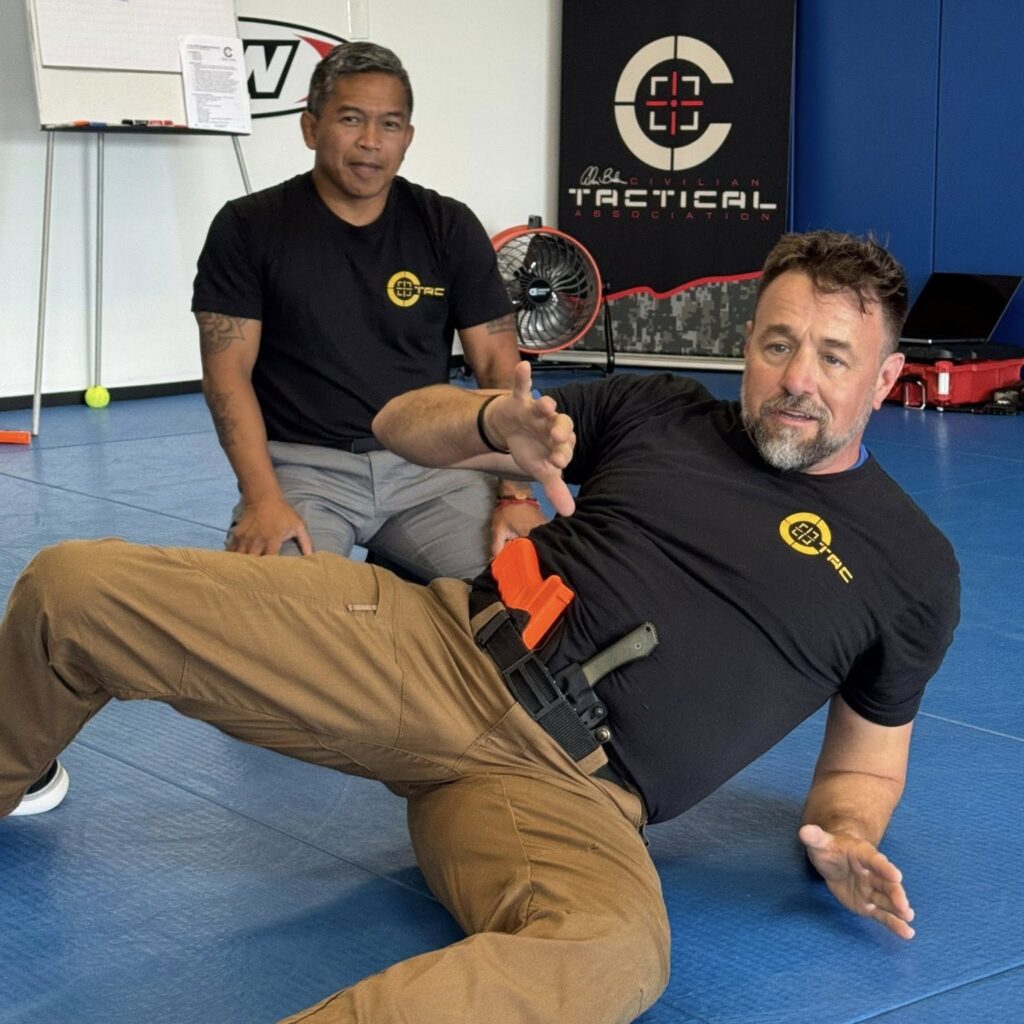
In real violence, the failure often runs in reverse order. Under pressure, the mind state cracks first. People panic, freeze, or emotionally overreact. Then the body state collapses. Breathing goes shallow, tension fills the body, posture falls apart. When that happens, attributes like timing and coordination fall apart, and the techniques that felt so sharp in class vanish.
That is why you can watch someone with years of training suddenly look like they have never been on the mat when something real happens. The deeper layers were never trained under realistic pressure, so they fall apart and take everything else with them.
Closing the gap means designing training that deliberately touches all four layers. That might look like integrating breath work and state management into your classes, not as an afterthought, but as a core skill. It might mean running drills that begin with elevated heart rates, time pressure, and environmental noise so students learn to find structure and calm in the middle of that stress. It means using techniques as vehicles to train attributes, body state, and mind state, instead of treating them as collectibles you are trying to hoard.
When you build someone from the inside out like this, they are far more likely to be able to access what they know when it matters.
The Missing Pillars Of Verbal Tactics And Tactical Medicine
Two of the most important pillars in real-world self-protection are almost completely absent in most martial arts schools: verbal tactics and tactical medicine.
Verbal tactics are what I often call the gift of gab. In C Tac, we treat them as a trained skill set, not a personality trait. In many confrontations, the real fight is verbal long before anyone throws a punch. There is testing, ego, humiliation, humor, and social pressure. The person across from you may be trying to draw you into a fight, provoke you to overreact, or bully you into giving them what they want without ever touching you.
In the article “Verbal Tools & Tactics In An Altercation,” I lay out how verbal skills can and should be trained just like physical skills:
You need tools for setting boundaries, de-escalating, distracting, and redirecting. You need practice delivering those under stress so that when someone is in your face, yelling, insulting, or trying to crowd you, you do not freeze or babble. Just like you would spar in a physical range, you can spar verbally, with training partners playing roles and pushing different emotional buttons.
Most traditional schools never touch this. Students may be physically capable of dealing with the encounter, but they do not have the verbal tools that could prevent it from becoming physical in the first place, or that could let them control the social narrative while they manage space and position.
Tactical medicine is the second missing pillar. Once an incident has happened, there may be bleeding, broken bones, or other trauma on the ground. The person who is most able to act in those first few minutes is often you, not a paramedic, because you are already present. Yet most martial arts training treats this as “call 911 and hope.”
In my own training, I am actively working to raise my standard in tactical medicine, and I am fortunate to have passionate instructors in that area who are helping me grow. Over time, I am integrating more of that mindset into how I talk about self-protection in C Tac. Even a basic understanding of bleeding control, airway management, and shock can make the difference between life and death.
If you think of yourself as a protector of your family or your community, tactical medicine is not optional. It is part of the job. Martial arts that never touch it are leaving a huge hole in their students’ capability.
Force Continuum, Social Games, And Low To Medium Levels Of Violence
Professionals in law enforcement and protection often work with a formal force continuum. They make decisions about when and how to apply force at different levels, from verbal presence all the way up to potentially lethal force. Every step has to be justified in terms of policy and law.
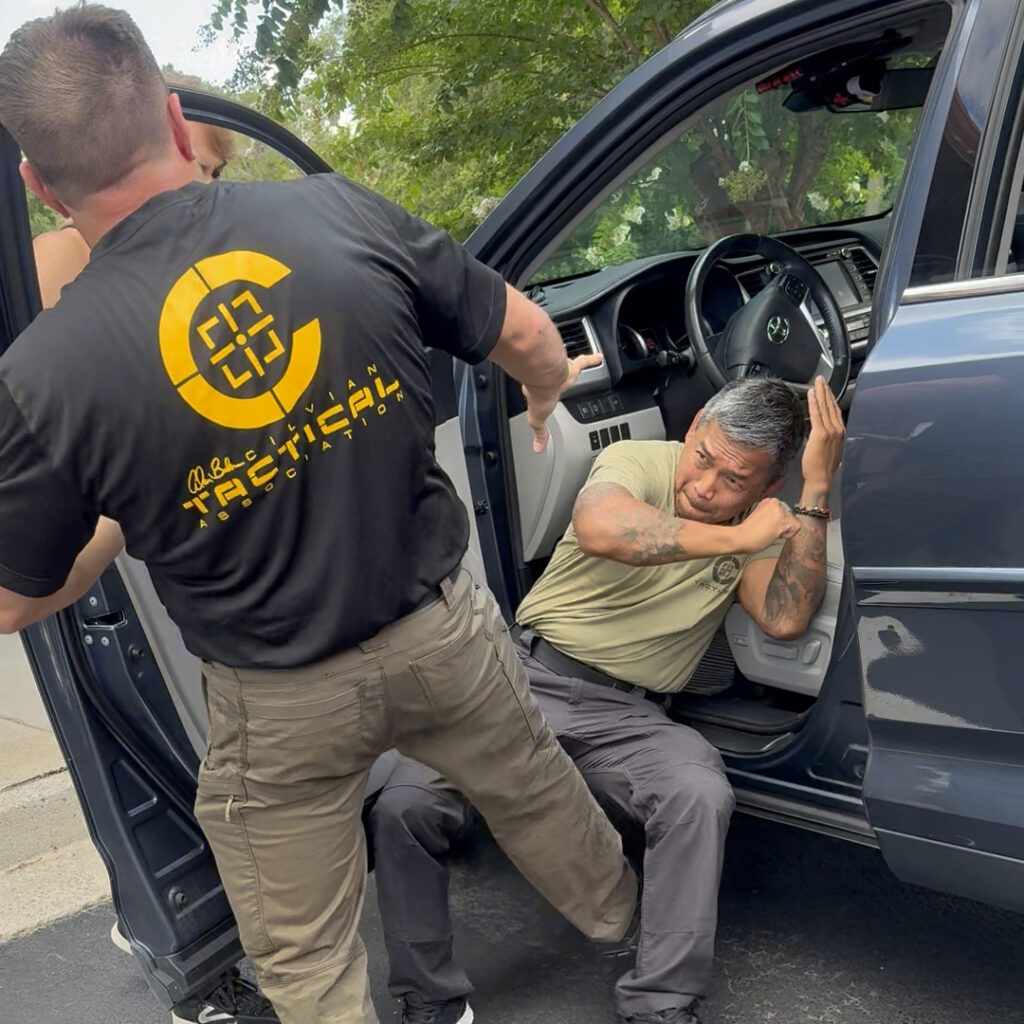
As civilians, we live in the same legal world even if we do not have a badge. We do not always start at a high level of force. Most real exchanges begin at low to medium levels. The threat may push, shove, crowd, grab a wrist, grab clothing, or verbally corner someone long before they commit to a real attack.
In fact, many bad actors rely on this. They put you at a social disadvantage on purpose. They know most people are unprepared to deal with low-level force in public without either overreacting or backing down. They hope you will give them what they want simply to avoid embarrassment or escalation. They are not always looking for a fight. They are looking for compliance.
Traditional martial arts training rarely addresses this honestly. The cues students are given are usually very clear. “When they do this big attack, you do your big defense.” Real life is not that clean. C Tac treats low-level, socially acceptable physical control as a critical part of the curriculum. You need ways to put your hands on someone who looks like management, not like assault. You need the ability to apply off-balance, movement, and control in ways that lower the temperature rather than spike it.
When you combine that with verbal skill, you can often handle situations that would send an untrained person straight into fight or flight. You can control the space and the narrative without escalating to a level of force that will get you into trouble.
Why The Martial Arts Bubble Fails Under Real Pressure
When you stack all of these pieces together, it becomes obvious why traditional martial artists struggle when things get real if they never step outside the training bubble.
They often have no self-protection mindset. They have no working model of self-offense. They train in a way that ignores cameras, law, and public perception. They lack training in low level social force and verbal tools. They imagine empty-hand duels instead of weapon-based encounters. Their bodies and minds have never been pressure-tested in realistic environments. They have no plan for the aftermath if someone is badly hurt.
Individually, any one of these weaknesses would be a concern. Together, they create a dangerous illusion of capability. People walk around believing that years of traditional training have prepared them, when in reality, they have never faced anything that resembles the worst 10 seconds of a real incident.
The good news is that nothing I have described is mystical. These are all trainable skills and perspectives. You do not have to abandon your art or your lineage. You simply have to hold your training up against reality and be willing to make adjustments.
How To Start Closing The Gap
If you are a traditional martial artist or instructor who wants to close this gap, here are some practical directions to explore.
First, keep your art but change your questions. Instead of asking “Is this technique cool” ask “Where in a real incident would this actually show up” and “How does this look on video” and “Can I explain this to a jury as a reasonable choice” and “What happens if a weapon is in the picture.” When you start asking those questions, you will naturally begin to refine and sometimes discard drills that do not make sense in the real world.
Second, reorganize your thinking around the three categories from the self-protection article I linked earlier. Build training time for self-protection, not just for physical self-defense. Teach your students how to live like their own bodyguard. Show them how a professional protector thinks about routes, locations, and human behavior. Give them simple habits that reduce exposure long before anything physical happens.
Third, accept the weapon reality. You do not have to turn your school into a live fire range. But you can begin teaching people how weapons change distance, timing, and decision-making. Use the C Tac Hierarchy of Weaponry as a mental model. Talk about what changes when a blade or firearm is likely to be present. Let your students feel what it is like when someone tries to access a tool in the middle of a clinch, so they stop pretending every fight is an empty-hand boxing match.
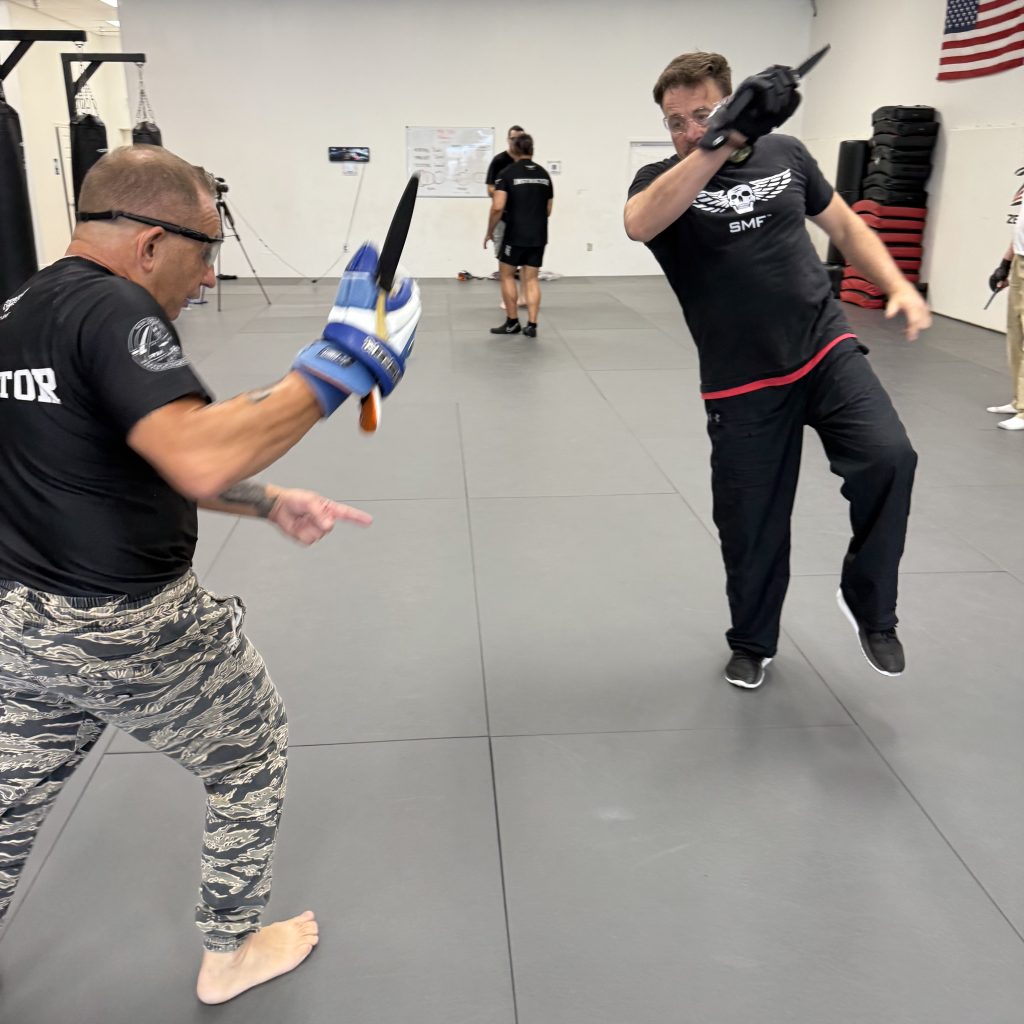
Fourth, bring a 360-degree destructive force into your training. Start doing drills where you strike, cover, and move from imperfect positions instead of perfect stances. Put people in chairs, against walls, in doorways, or half turned, and then begin the drill. Teach them to send power in any direction around their body, not only straight ahead. Use that work to challenge your own assumptions about what “basic technique” really means.
Fifth, deliberately train attributes, body state, and mind state. Make breath work and state control part of every class. Build drills that elevate heart rate before students have to perform a technique. Add time constraints, noise, and simple decision-making problems so they have to sort input quickly. Then slow down, debrief, and help them notice what changed inside them when the pressure went up.
Sixth, introduce simple, non-insulting control options for low-level force. Practice moving people with minimal impact instead of always knocking them down. Create scenarios where the “win” is getting someone to leave an area without a dramatic takedown. Layer in phones as props so students always know the possibility of being filmed is there.
Seventh, start training verbal tactics on purpose. Use the “Verbal Tools & Tactics In An Altercation” article as a foundation and build drills where people actually speak, not just stand silently in fighting stance. Give them scripts for boundary setting, de-escalation, and redirection. Let them practice those scripts under mild social pressure, so they become natural.
Finally, raise your awareness of tactical medicine. At a minimum, learn and teach basic bleeding control and the use of simple medical tools that a normal person can carry. Build scenarios that end not when the fight ends, but when basic medical steps have been taken, and help has been called.
Where C Tac Fits In
Everything I have laid out in this article is part of the mindset and structure behind the C Tac system. C Tac was built to live in the real world, not in an idealized training bubble. It assumes cameras, courts, weapons, social pressure, and the messy reality of real violence. It integrates self-protection, self-defense, and self-offense. It uses tools like the Hierarchy of Weaponry Principle, the Combat Blueprint, and 360 Degrees of Destructive Force to make sure you do not leave major blind spots in your development.
If you are a traditional martial artist who is starting to feel that the way you train and the world you live in no longer match, you do not have to throw everything away. You can keep your art and plug it into a more honest framework. You can begin to think like a protector instead of just a practitioner. You can keep the depth and beauty of your lineage while adding the modern, legally aware, weapons-conscious, verbally capable layers that real self-protection demands.
The first step is always the same: accept that there is a gap between the dojo and real violence. The second step is to start closing it on purpose.
If you would like help with that process, you can explore more of the C Tac material and related articles on my site, including:
“Self Protection, Self Defense, and Self Offense: What’s the Difference and Why It Matters”
“The C Tac Hierarchy Of Weaponry Principle”
“360 Degrees of Destructive Force: Training Beyond the Traditional Fighting Stance”
“Verbal Tools & Tactics In An Altercation”
Read them, reflect on where your own training sits, and then start making small, intelligent adjustments. Over time, those adjustments will transform your art from something that only works well in the bubble into something that truly serves you in the real world.
Shift Your Perspective, Take Action, And Create Change
Gentleman in Conduct. Scholar in Thought. Savage in Action.
~ Sifu Alan ┃ www.sifualan.com ┃ www.civtaccoach.com┃www.prtinstructor.com
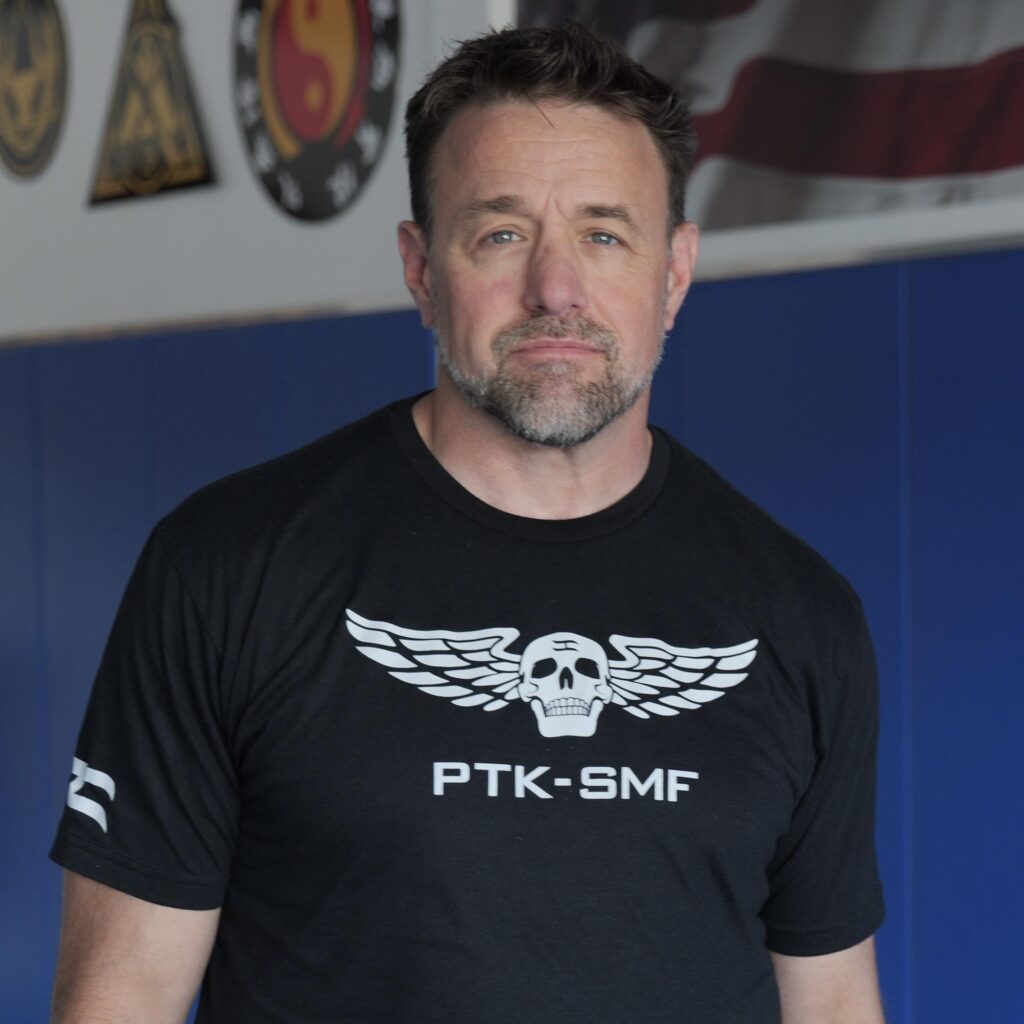
Sifu Alan Baker is a nationally respected authority in Defensive Tactics Program Development, High-Performance Coaching, and martial arts, with over 45 years of training experience across multiple systems. As a lifelong martial artist and tactical instructor, Alan has dedicated his career to creating practical, adaptable, and effective training systems for real-world application. He has worked extensively with law enforcement agencies, military units, and private security professionals, designing programs that emphasize scenario-based training, everyday carry (EDC) integration, and combative efficiency under pressure.
Alan’s client list includes elite organizations such as the Executive Protection Institute, Vehicle Dynamics Institute, The Warrior Poet Society, ALIVE Active Shooter Training, Tactical 21, and Retired Navy SEAL Jason Redman, among many others. He is the creator of both the C-Tac® (Civilian Tactical Training Association) and Protection Response Tactics (PRT) programs—two widely respected systems that provide realistic, principle-based training for civilians and professionals operating in high-risk environments.
In addition to his tactical and martial arts work, Alan is the founder of the Warrior’s Path Physical Culture Program, a holistic approach to strength, mobility, and long-term health rooted in traditional martial arts and the historic principles of physical culture. This program integrates breathwork, structural alignment, joint expansion, strength training, and mental discipline, offering a complete framework for building a resilient body and a powerful mindset. Drawing from his training in Chinese Kung Fu, Filipino Martial Arts, Indonesian Silat, Burmese systems, and more, Alan combines decades of experience into a method that is both modern and deeply rooted in timeless warrior traditions.
Alan is also the architect of multiple online video academies, giving students worldwide access to in-depth training in his systems, including Living Mechanics Jiu-Jitsu, C-Tac® Combatives, breathwork, functional mobility, and weapons integration. These platforms allow for structured, self-paced learning while connecting students to a growing global community of practitioners.
Beyond physical training, Alan is a sought-after Self-Leadership Coach, working with high performers, professionals, and individuals on personal growth journeys. His coaching emphasizes clarity, discipline, focus, and accountability, helping people break through mental limitations and align their daily actions with long-term goals. His work is built on the belief that true mastery begins with the ability to lead oneself first, and through that, to lead others more effectively.
Alan is also the author of three books that encapsulate his philosophy and approach: The Warrior’s Path, which outlines the mindset and habits necessary for self-leadership and personal mastery; The Universal Principles of Change, a practical guide for creating lasting transformation; and Morning Mastery, a structured approach to building a powerful daily routine grounded in physical culture and discipline.
To explore Alan’s books, digital academies, live training opportunities, or to inquire about seminars and speaking events, visit his official website and take the next step on your path toward strength, resilience, and mastery.