
A client recently approached us with a request to design and implement a defensive tactics program for their private security team. This team operates at a high level, tasked with protecting a well-known, affluent principal. Their previous training experiences reflected a pattern we see all too often in the industry, what I call the “combatives death spiral.”
They had cycled through a series of martial arts instructors, each bringing in their personal system, claiming it was “the answer.” These instructors often had legitimate skills, but their focus was on teaching their art rather than solving the client’s problem. Unfortunately, this flavor-of-the-year approach is incredibly common in the protection and law enforcement world. Why? Because you don’t know what you don’t know, and paid marketing can be influential.
If your professional background is in security, executive protection, or law enforcement, it’s easy to assume that any high-level martial artist will be able to tailor their system to your environment. But martial arts and protective services are not the same thing. Just because someone can fight well in the ring or the academy doesn’t mean they understand the legal, visual, social, or operational demands of protective work.
Simply having a background in one or even two martial arts systems isn’t enough to build a truly effective and well-rounded defensive program. To design something solid, especially for real-world applications, you need a foundation in all the major domains of combat science. That includes firearms handling, edged and blunt weapon systems, striking, hand fighting, and pummeling, as well as the various dimensions of ground fighting. And yes, I said various, because there isn’t just one kind of ground fight. Each environment and context brings its unique demands. Without experience across this full spectrum, you’re building on a shaky foundation.
The reality is this: the last thing your team needs is a martial arts system force-fed into your team’s daily routine.
A better approach is to start by learning your world first.
We study your team’s daily operations, tactics, and movements. We ask questions. How do you work? What are your SOPs? What’s your mission profile? What house rules do you operate under? How do you drive? What kind of clients do you work with? Where do you go? What threats do you face?
Once we understand that, we design a defensive tactics program around your environment.
This approach ensures the system is built from your team outward, not from a martial arts lineage inward. It should fit into the culture and tactics of your team instead.
Beyond being operationally aligned, the program should be built on a force continuum, something most martial arts systems simply don’t offer. Your team needs practical answers across a wide range of force levels, from verbal de-escalation and soft control to high-level defense tactics if things go sideways. Without these tools, a teammate may resort to inappropriate levels of force when faced with a high-stress encounter, and that can lead to even bigger problems.
The techniques and applications must also be visually appropriate.
In today’s world of ever-present surveillance, every move your team makes is potentially recorded. The techniques you use must appear professional, measured, and justified, even when employed under stress.
The system must also be socially acceptable.
What may have been fine 20 years ago can now destroy reputations or land your team in court. Your tactics must match the cultural expectations of today’s public and media.
And finally, and critically, your program must be legally explicable.
The law should not be an afterthought. Legal considerations must be integrated into the curriculum from the outset, rather than being added as a secondary discussion after training. Every movement, every tactic, every level of force must be justifiable in a courtroom.
This is the difference between checking a box on your training schedule and building a professional-level defensive tactics program that makes your team safer, sharper, and better prepared to operate in the real world. I point this out because this is precisely what we do, and we have been doing it for over 18 years.
Building the Core Curriculum
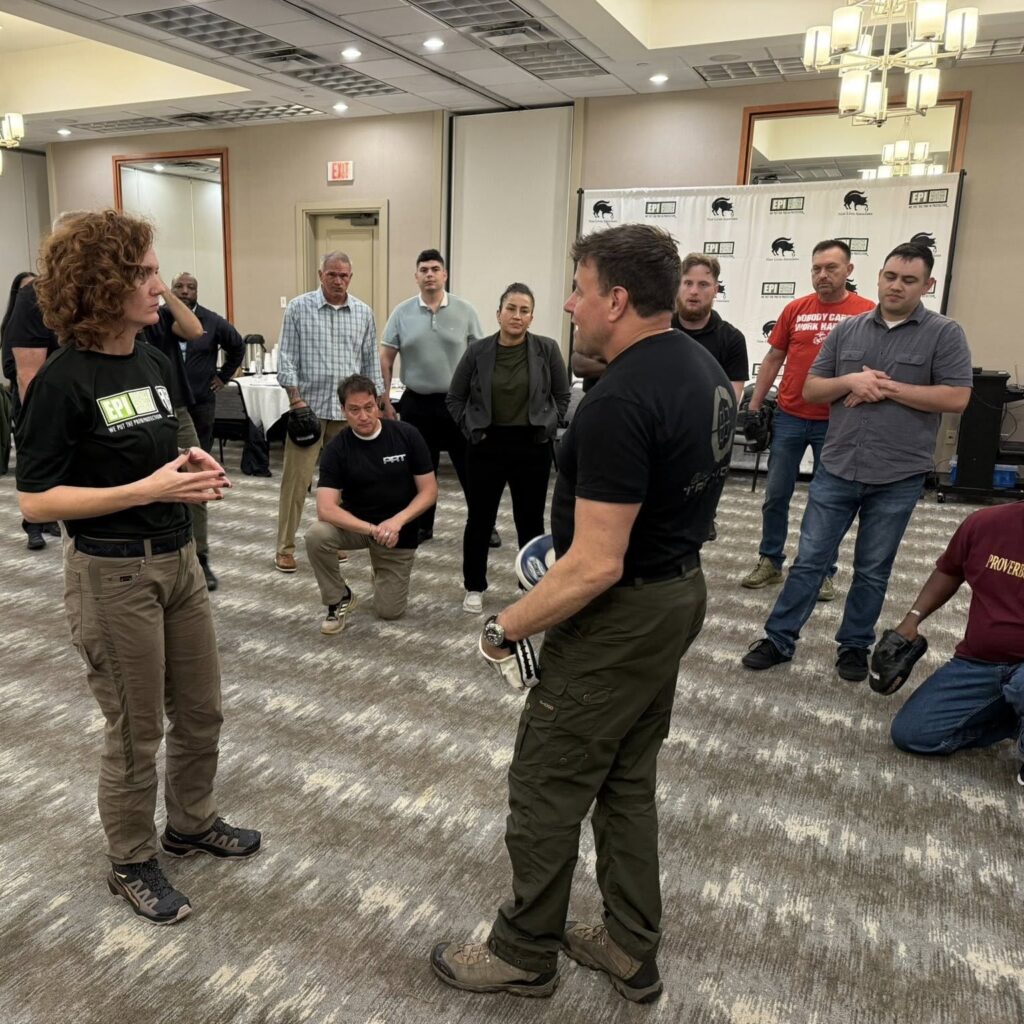
We were first introduced to the protection industry through The Executive Protection Institute (EPI), one of the most respected names in the field. At the time of our introduction, EPI was facing a challenge that is the “combatives death spiral.”
Like many professional protection organizations, they had cycled through various martial arts instructors, each bringing their own system, philosophy, and techniques. While these instructors were often skilled, their material didn’t align with the actual operational environment of protection work. The training was often too aggressive, too stylized, or simply impractical for the discreet, legally appropriate, and visually measured nature of real executive protection.
When I came on board, we made it a point not to just throw another system into the mix. Instead, we took the time to study the EPI methodology, understand the protection industry’s unique requirements, and observe the realities of the working agent’s environment. We asked the right questions. How do agents move? What constraints are they under? What are the legal boundaries? What tools do they carry? What environments do they operate in: corporate, residential, or public events?
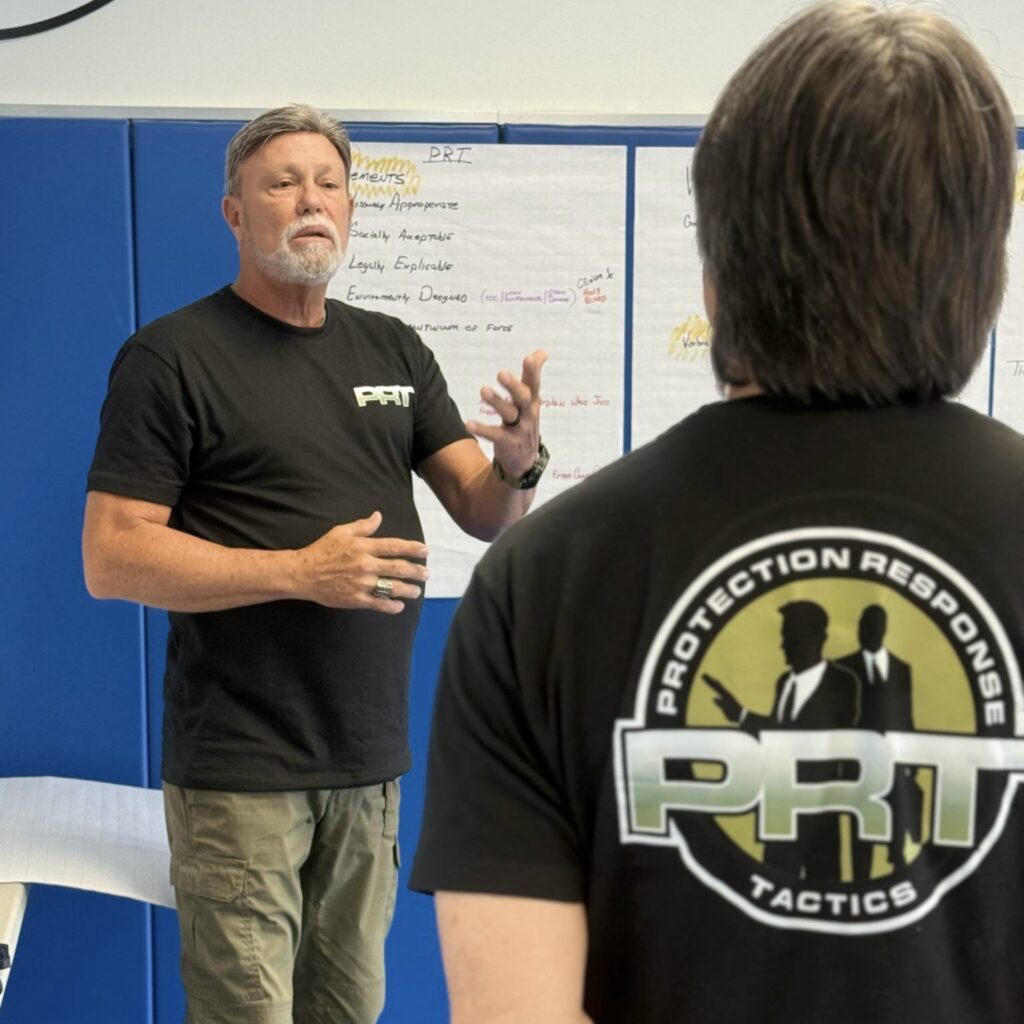
This in-depth study led to the design and development of the Protection Response Tactics (PRT) program, a defensive tactics system engineered specifically for protection professionals. It’s a program built from the ground up to be legally defensible, visually appropriate, and functionally effective in the real world of executive protection.
Unlike traditional martial arts, PRT is structured on a force continuum and considers factors like optics, SOP integration, liability concerns, and the use of force reporting standards that protection agents must live with every day. It was never meant to replace a martial arts background but to provide a purpose-built system that aligned directly with the unique demands of the protection mission.
Now, after more than 17 years of successfully teaching the program at EPI, the Protection Response Tactics system has proven itself time and again, not only in the classroom but also in the field. It continues to evolve as we adapt it to the ever-changing world of protection work, and it remains a cornerstone of training for those who take the responsibility of protection seriously.
Shift Your Perspective, Take Action, And Create Change
Gentleman in Conduct. Scholar in Thought. Savage in Action.
~ Sifu Alan ┃ www.sifualan.com ┃ www.civtaccoach.com┃www.prtinstructor.com
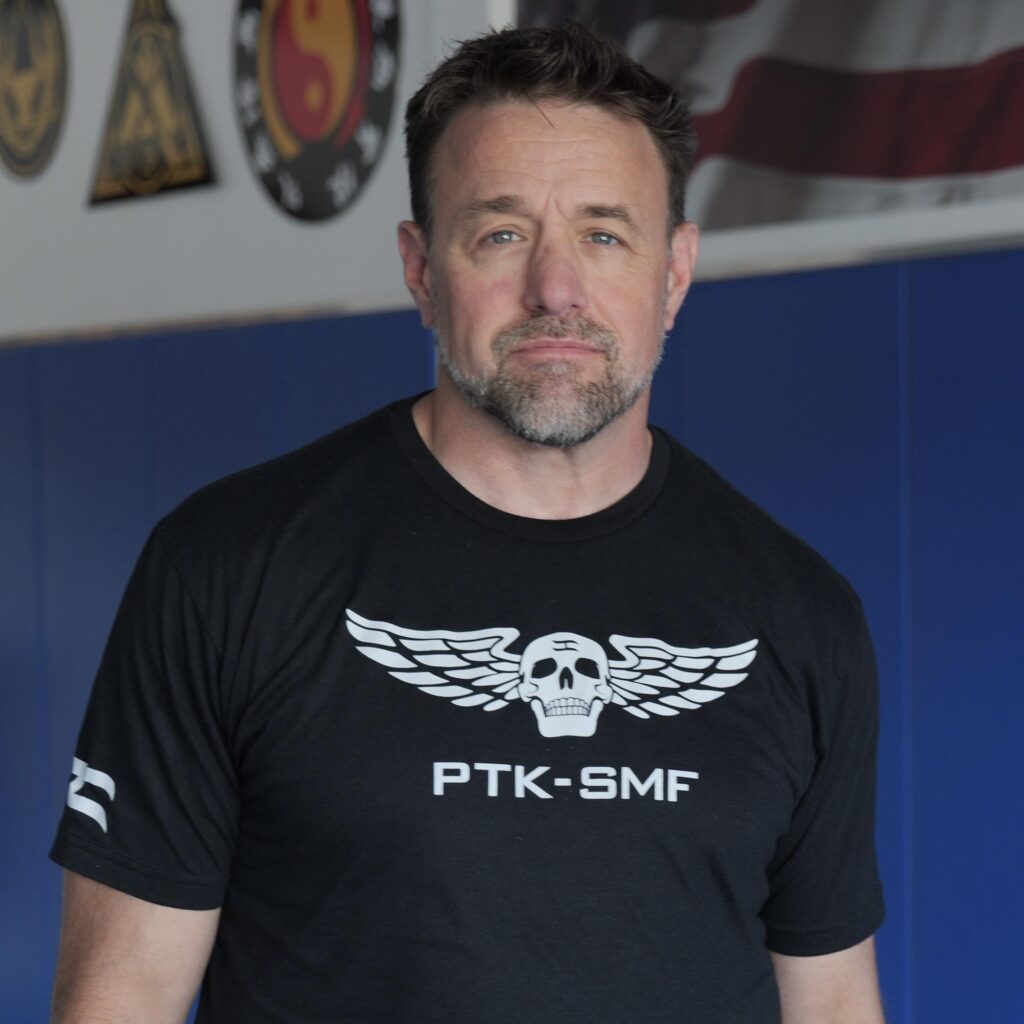
Sifu Alan Baker is a nationally respected authority in Defensive Tactics Program Development, High-Performance Coaching, and martial arts, with over 45 years of training experience across multiple systems. As a lifelong martial artist and tactical instructor, Alan has dedicated his career to creating practical, adaptable, and effective training systems for real-world application. He has worked extensively with law enforcement agencies, military units, and private security professionals, designing programs that emphasize scenario-based training, everyday carry (EDC) integration, and combative efficiency under pressure.
Alan’s client list includes elite organizations such as the Executive Protection Institute, Vehicle Dynamics Institute, The Warrior Poet Society, ALIVE Active Shooter Training, Tactical 21, and Retired Navy SEAL Jason Redman, among many others. He is the creator of both the C-Tac® (Civilian Tactical Training Association) and Protection Response Tactics (PRT) programs—two widely respected systems that provide realistic, principle-based training for civilians and professionals operating in high-risk environments.
In addition to his tactical and martial arts work, Alan is the founder of the Warrior’s Path Physical Culture Program, a holistic approach to strength, mobility, and long-term health rooted in traditional martial arts and the historic principles of physical culture. This program integrates breathwork, structural alignment, joint expansion, strength training, and mental discipline, offering a complete framework for building a resilient body and a powerful mindset. Drawing from his training in Chinese Kung Fu, Filipino Martial Arts, Indonesian Silat, Burmese systems, and more, Alan combines decades of experience into a method that is both modern and deeply rooted in timeless warrior traditions.
Alan is also the architect of multiple online video academies, giving students worldwide access to in-depth training in his systems, including Living Mechanics Jiu-Jitsu, C-Tac® Combatives, breathwork, functional mobility, and weapons integration. These platforms allow for structured, self-paced learning while connecting students to a growing global community of practitioners.
Beyond physical training, Alan is a sought-after Self-Leadership Coach, working with high performers, professionals, and individuals on personal growth journeys. His coaching emphasizes clarity, discipline, focus, and accountability, helping people break through mental limitations and align their daily actions with long-term goals. His work is built on the belief that true mastery begins with the ability to lead oneself first, and through that, to lead others more effectively.
Alan is also the author of three books that encapsulate his philosophy and approach: The Warrior’s Path, which outlines the mindset and habits necessary for self-leadership and personal mastery; The Universal Principles of Change, a practical guide for creating lasting transformation; and Morning Mastery, a structured approach to building a powerful daily routine grounded in physical culture and discipline.
To explore Alan’s books, digital academies, live training opportunities, or to inquire about seminars and speaking events, visit his official website and take the next step on your path toward strength, resilience, and mastery.