
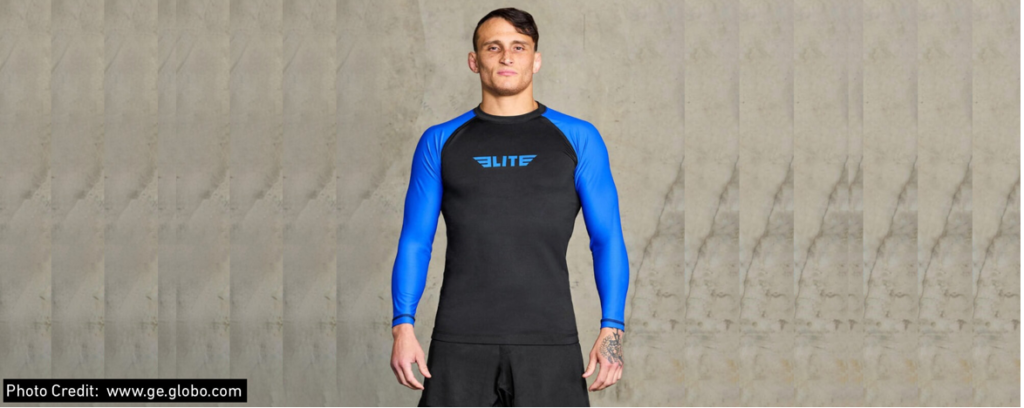
Most people treat rash guards like they’re just “No Gi shirts.” They’re not. A good rash guard is part of your training equipment. It affects how you move, how your skin holds up, how comfortable you are under pressure, and how clean your training stays over time. If you train hard and you train consistently, the wrong rash guard will show up as chafing, mat burn, slipping, overheating, and wear and tear way sooner than it should. I go through a lot of rash guards, not just in BJJ; I use them in multiple other arts I train in as well. I will also use them daily as undershirts, which is important for your EDC. It keeps the weapon system off your body, and the tightness of a good rashguard keeps it clear from the weapon as you move around during your daily routine.
Here’s what I think actually matters when you’re picking one.
Fit and sizing come first.
The first job of a rash guard is to fit like a second skin. Tight enough to protect you from mat burn and friction, and snug enough that it doesn’t snag, fold, or become something your opponent can grab. Loose rash guards turn into handles. They also bunch up, twist, and create hot spots that turn into irritation.
At the same time, “tight” does not mean “cutting off your circulation.” You should be able to breathe, rotate, and move freely without feeling like you’re fighting your gear. If it feels restrictive when you’re dry, it’s going to feel worse once you’re sweaty and your heart rate is up.
One more point on fit. Compression can be a plus. A snug compression-style rash guard tends to feel cleaner in movement, and some athletes like how it supports blood flow and recovery. But the real win is simple. When it fits correctly, it disappears while you train.
Material quality matters more than branding.
You want a material blend that can handle daily grinding and repeated washing without stretching out, tearing, or turning into a swamp. In general, a polyester and spandex blend is the sweet spot.
Polyester is lightweight, durable, and does a good job of wicking sweat. Spandex gives you the stretch you need for a full range of motion. Together, they let you move without restriction, and they hold their shape under stress.
What you want to avoid is cotton. Cotton absorbs sweat, gets heavy, and stays wet. That turns into discomfort, and it can become a hygiene problem in a hurry.
Stitching is the difference between “good” and “it fell apart”
Strong stitching is not exciting, but it is what keeps your rash guard alive when you’re training hard. Look for stitching that lies flat and feels smooth against the skin. Flat seams help reduce chafing and irritation, especially in the armpits, around the neck, and along the torso where friction builds during scrambling.
Cheap stitching starts to pull, fray, and split. And once that starts, it goes downhill fast. If you train consistently, spend the money on quality seams. You’ll save money long term because you won’t be replacing gear every few months.
Sleeve length is about your environment and your preference.
Sleeve length is not a “right vs wrong” decision. It’s about what you want out of the rash guard and what kind of gym you train in.
Long sleeves give more skin protection. Less mat burn. Less scratching. Less exposure. If your gym is not the cleanest place on earth, long sleeves are a smart choice because you’re reducing skin contact, and that helps lower your chances of picking up something nasty.
Short sleeves feel lighter and less bulky to some people. They also breathe a little easier. If you run hot or you prefer a more open feel, short sleeves can be the move. Just understand the tradeoff. Less coverage means more skin exposure.
Design and competition rules
If you’re just training No Gi, you can wear whatever you want. Colors, logos, wild graphics, simple black, it doesn’t matter. Pick something you like and something that holds up.
If you like graphics, make sure they’re printed into the fabric, not something that will peel and crack after a few washes. You’ll see that quickly with lower-quality gear.
If you plan to compete, then you need to think about the rules. Different organizations have different requirements, and IBJJF has specific standards for rash guards. Don’t wait until the week of the tournament to find out your rash guard is illegal. If you compete under those rules, choose gear that clearly aligns with them, including rank-color requirements.
Extra features that are worth paying attention to
Two features can make a big difference.
An anti-slip waistband helps keep the rash guard from riding up when you’re moving. If you’ve ever had your rash guard bunch up around your ribs mid-round, you already know how annoying that is.
Antimicrobial treatment can be a plus for hygiene. It’s not magic and it doesn’t replace showering and washing your gear properly, but it can help reduce odor and bacteria buildup.
And if you’re newer to training or you’re building out your gear bag, you don’t need to buy the most expensive rash guards on the market. You need quality, fit, and durability. Affordable and high-quality is the target. Get a couple that you can rotate, wash, and rely on.
A simple checklist before you buy
It fits snug like a second skin, not loose and not restrictive
It’s polyester and spandex, not cotton
The stitching is strong and lies flat
Sleeve length matches your gym hygiene and comfort preference
If you compete, it matches the rules you’re competing under
It stays in place and doesn’t ride up
It’s durable enough for real training, not just looking good in photos