Capability Academy • Firearms Training • Target Transitions
Dry Fire Target Transitions: Vision, Shot Confirmation, And The Time Between Shots
Target transitions are where many shooters lose time, not on the trigger, but between shots. In this private lesson, Coach Dennis Rousseau works with Sifu Alan Baker on dry fire drills that improve vision, transitions, and shot confirmation.
Video Guide
In This Video
- 00:00 Bringing Coach Dennis in for a private lesson
- 00:28 Setting up the dry fire transition drill
- 00:43 Starting on target one and transitioning to target two
- 01:17 Key point: transition without firing on the first target
- 01:54 Eyes move first in target transitions
- 02:13 Recoil, bounce, and visual tracking
- 02:38 Two shots on the first target, transition without firing
- 03:19 Drag on and drag off explained
- 04:12 Multiple transitions across different target zones
- 05:00 Transition speed and the gap between shots
- 06:04 Body, body, head, head drill
- 06:42 Acceptable hits versus desired hits
- 07:25 Head, body, head, body drill
- 07:40 Different confirmation levels
- 08:16 Closing thoughts and training at home
Media Description
The Time You Lose Between Shots
Target transitions are where many shooters lose time.
It is easy to focus only on trigger speed, split times, or how fast the gun fires. But a lot of useful time is lost in the space between shots, when the eyes move, the gun follows, the sight picture settles, and the shooter decides whether the shot is ready.
In this video, I brought in Coach Dennis Rousseau for a private lesson focused on dry fire transition drills. The goal was to work on vision, target transitions, shot confirmation, and understanding how to train the gap between one shot and the next.
This is the kind of firearms lesson I value because it gives the student something they can practice without needing to be on the range. Dry fire, done responsibly and correctly, gives the shooter a way to isolate mechanics, vision, movement, and confirmation.
The shot is not only what happens when the trigger breaks. The shot begins with what your eyes are doing before the gun arrives.
Capability Academy PrincipleTraining With Coach Dennis Rousseau
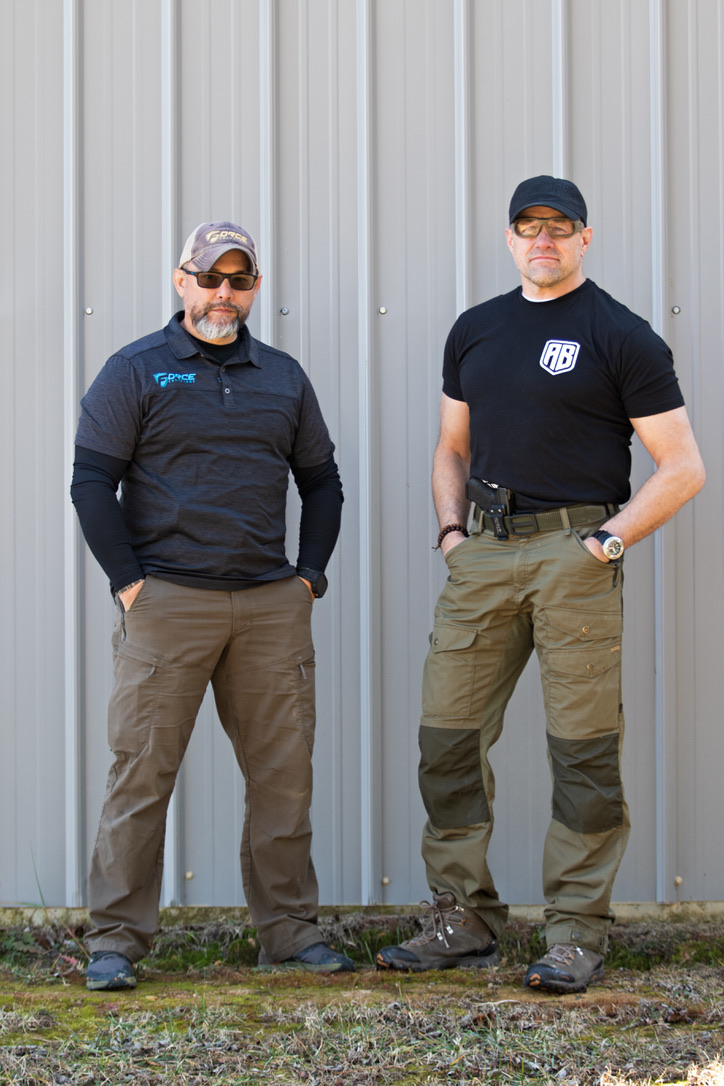
Sifu Alan Baker with Coach Dennis Rousseau. Dennis has been one of the most influential firearms instructors in Alan’s personal development.
Dennis Rousseau is the head instructor behind Force Solutions and has been one of the most influential instructors in my personal firearms development.
I have been working with Dennis for a while now, and one of the things I appreciate is his ability to take a specific skill and break it down into trainable parts. He does not just tell you to go faster. He shows you where the time is being lost, what the eyes should be doing, what the gun should be doing, and what level of confirmation the shot requires.
Dennis brings a wide background that includes decades of martial arts, firearms instruction, military experience, law enforcement training, defensive tactics, and self-defense education. Force Solutions describes its mission around helping responsible citizens build firearm safety, fundamentals, and practical firearm skills.
If someone wants to connect with Dennis, they can contact us through sifualanbaker.com, and we can point them in the right direction. You can also learn more about his work at forcesolutions.co.
Key Lessons From The Private Lesson
Eyes Move First
The gun follows the eyes. The faster and cleaner the eyes move, the better the transition can become.
Train The Gap
A lot of time is lost between shots. Dry fire lets the shooter isolate that transition time.
Confirm The Shot
Different targets require different levels of visual and trigger confirmation.
Eyes Before Gun
One of Dennis’s first coaching points is that the eyes should move first.
In a transition, many shooters try to drag the gun from one target to another without clearly moving the eyes first. That creates wasted motion, poor confirmation, and inconsistent hits.
Dennis explains that the quicker the eyes move to the next target, the quicker the gun can arrive. The eyes lead the transition. The body and gun follow.
This sounds simple, but it is a major principle. In firearms training, martial arts, driving, movement, and self-protection, vision organizes action. If the eyes are slow, unclear, or late, the body follows that confusion.
Why Dry Fire Works For Transitions
Dry fire removes recoil so the shooter can study the transition more clearly.
On the range, recoil creates movement. The gun lifts, settles, tracks, and returns. That is valuable to study. But in dry fire, the shooter can isolate where the eyes move, where the gun lands, and whether the sights or dot arrive where they are supposed to.
Dennis uses this to break apart the drill. Sometimes the shooter transitions and fires. Sometimes the shooter transitions and does not fire. That second version is especially valuable because it reveals whether the gun actually landed where the eyes intended.
The goal is not to stare at the laser. The goal is to watch what the gun does and build better visual discipline.
Dry fire lets you remove noise from the problem so you can see the mechanic more clearly.
Training PrincipleDrag On And Drag Off
Dennis explains two common transition errors: drag on and drag off.
Drag on happens when the shooter fires too soon as the gun is arriving on target. The shot breaks before the sight picture is where it needs to be.
Drag off happens when the shooter is already leaving the target as the shot breaks. The eyes or gun are moving away too early.
Both errors come from trying to move faster than the confirmation level allows.
This is why the drill is useful. It gives the shooter a way to check whether the gun is arriving where the eyes are looking and whether the shot is being confirmed before the trigger breaks.
The Gap Between Shots
One of the most important moments in the video is when Dennis says that the time we are not shooting is what we need to speed up.
That is the gap.
If the shooter can move the eyes and gun more efficiently between targets, they gain more time to make a precise shot. The goal is not to rush the trigger. The goal is to make everything between the shots cleaner and faster.
This is an important distinction. Going faster does not mean abandoning confirmation. It means removing wasted time from the transition so the shooter has more time to see and press properly.
Different Targets Require Different Confirmation
Dennis also points out that different target areas require different levels of confirmation.
A body A-zone shot may allow a different level of visual confirmation than a smaller head box. That means the transition speed may be similar, but the trigger press and confirmation may need more attention depending on the target.
This is where shooters often make mistakes. They treat every target as if it requires the same visual patience or the same trigger speed.
The better answer is to understand the shot requirement. Where does the hit need to be? How much confirmation is enough? How much time do I have? What is acceptable, and what is the specific point I actually want to hit?
That is where shooting becomes decision-making.
Capability Principle
Capability is built when the student learns to see what is actually costing them performance.
In this lesson, the problem is not simply trigger speed. The problem is vision, transition efficiency, confirmation, and the time between shots.
A capable shooter learns to move the eyes first, bring the gun to the visual point, confirm at the right level, and press without disturbing the shot.
That is not just speed. That is organized performance.
Why This Matters Beyond The Range
This lesson is about dry fire and target transitions, but the larger lesson applies beyond firearms.
Many people try to improve performance by pushing harder at the most obvious part of the task. In shooting, that might mean trying to press the trigger faster. In martial arts, it might mean trying to hit harder. In business, it might mean trying to work longer.
But sometimes the real time loss is somewhere else.
In this drill, Dennis shows that the loss often lives between the shots. The transition, the eyes, the confirmation, and the decision all matter.
That is a useful way to think. Improvement begins when you find the actual bottleneck.
Training With Force Solutions
Force Solutions offers firearms safety education, live fire courses, simulations courses, private training, self-defense classes, and related instruction.
Dennis’s teaching reflects the kind of practical, structured coaching that helps students understand what they are doing, why it matters, and how to improve safely and responsibly.
If you are interested in connecting with Dennis or learning more about training with Force Solutions, visit forcesolutions.co or contact us through sifualanbaker.com.
FAQ
What are target transitions?
Target transitions are the movement of the eyes, gun, and attention from one target or target zone to another.
Why do the eyes move first?
The gun follows the eyes. Moving the eyes first helps the shooter move the gun more efficiently and land the sights or dot where the shot needs to be confirmed.
Can target transitions be trained in dry fire?
Yes. Dry fire is useful for isolating vision, gun movement, sight confirmation, and transition mechanics, as long as it is done with proper safety procedures.
What does drag on and drag off mean?
Drag on means the shot breaks too early as the gun arrives on target. Drag off means the shot breaks as the gun or eyes are already leaving the target.
Who is Dennis Rousseau?
Dennis Rousseau is a firearms, martial arts, and defensive tactics instructor associated with Force Solutions. He has been one of the most influential instructors in Alan Baker’s personal firearms development.
Sifu Alan Baker
Founder of the Capability Academy
Shift Your Perspective, Take Action, And Forge Your Path To Greatness