
Keysi Fighting Method • Close-Quarter Self-Protection
What To Do When Someone Grabs You At Close Quarters
In this video, Sifu Alan Baker and Jennifer work through a viewer question about what to do when someone grabs you at close range before they can strike.
Video Guide
In This Video
- 00:00 Jennifer sets up the viewer question
- 00:28 What to do when someone grabs you
- 00:42 The “recording for the gram” defense
- 01:18 Getting gear and testing the problem
- 01:53 Shielding against the incoming strike
- 02:52 Ram attack and forward pressure
- 03:47 Attacking the grabbing arm
- 04:47 Adding gear and testing the response
- 05:31 What worked in the exchange
- 05:56 How to train the answer
- 07:53 Why the grab usually means something else is coming
- 08:53 The ghost in the room and multiple opponent awareness
- 10:04 Recap of the close-quarter grab problem
- 13:14 Closing and viewer questions
Media Description
A Grab Is Usually Not The Whole Problem
In this video, Jennifer brings in a viewer question about what to do when someone grabs you at close quarters.
Like many good questions, it sounds simple at first. Someone grabs you. What do you do?
But in real-world self-protection, the grab is rarely the whole problem. The grab is usually the beginning of something else. It may be used to hold you in place, pull you off balance, set up a punch, create intimidation, drag you, or keep you from escaping.
That means the answer cannot be limited to a wrist release or a neat technique. You have to ask what the grab is doing, what comes next, and whether you are behind time or ahead of time.
This is where shielding, forward pressure, ram attacks, arm attacks, wing elbows, hammer fists, and multiple-opponent awareness all become part of the conversation.
The grab is rarely the whole fight. It is usually the handle they use to start the next problem.
Keysi Training PrincipleThe Humor Helps The Lesson Land
One of the reasons this video works is because Jennifer is part of the setup. The question turns into a live problem, and at one point she gives me a slap as we explore what the attacker might actually do after grabbing.
The humor makes the video more human, but the lesson is serious.
Many assaults begin inside social distance. Someone is close enough to grab, slap, shove, punch, pull, or intimidate before you have time to build a clean fighting stance. That is where real self-protection has to be studied.
The fact that the video has some humor does not reduce the value of the training. It actually shows something important: good training can be serious without becoming stiff. You can test an idea, laugh, correct it, and still extract a useful lesson.
Shielding When You Are Behind Time
If someone grabs and immediately starts to hit, you may already be behind time.
In that case, shielding becomes a very useful answer. Shielding protects your head, gives structure to your body, and creates a frame that can become both defensive and offensive.
This is one of the reasons Keysi Fighting Method places so much emphasis on protective structure. You may not have time to read the full attack. You may not have time to make a perfect choice. You may have to cover, survive the first impact, and then move immediately into pressure.
Shielding is not just hiding. It is a way to protect while entering, crashing, and taking back initiative.
Training Close-Quarter Problem Solving
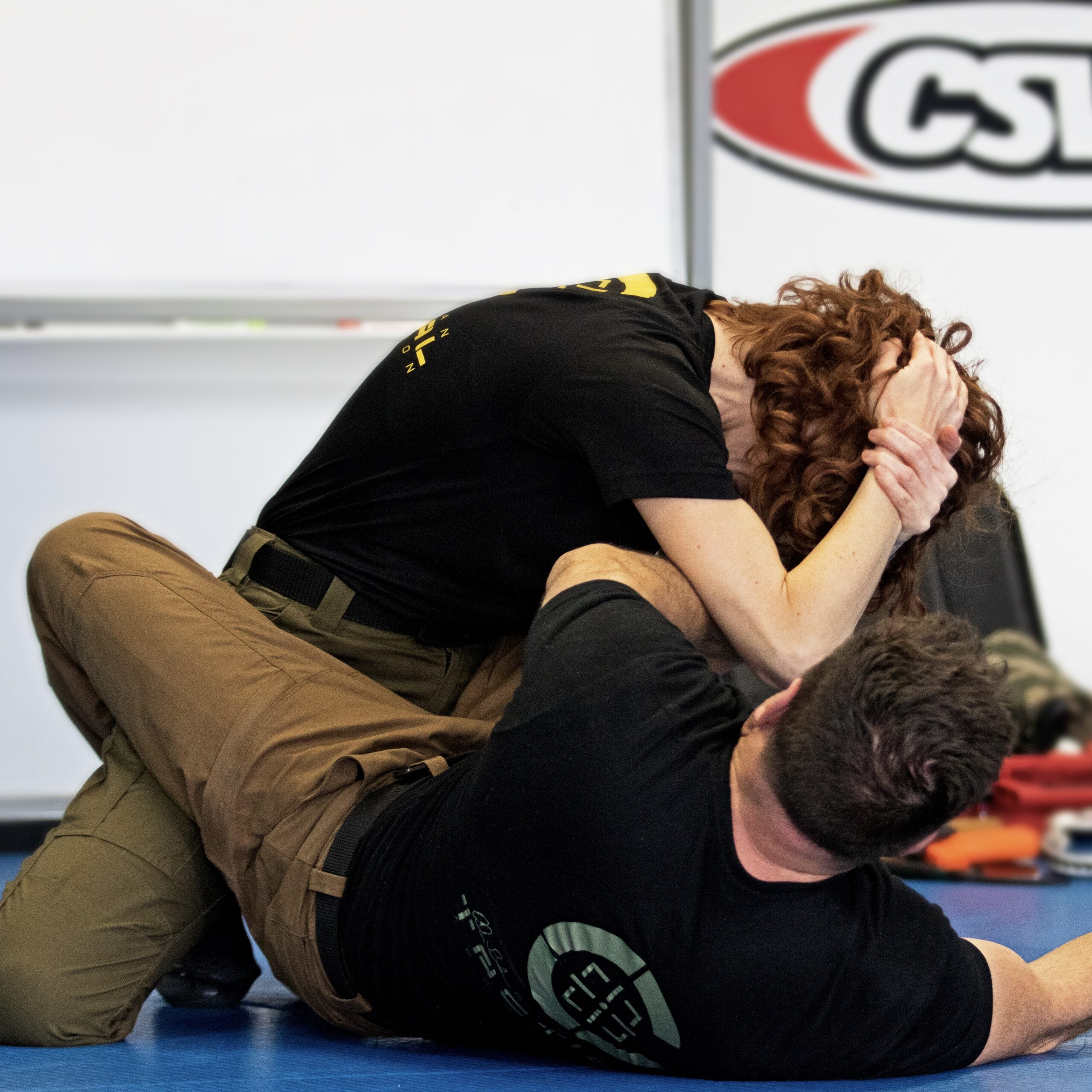
Keysi Fighting Method training develops protective movement, close-quarter pressure, and the ability to solve problems when the range has already collapsed.
I serve as the U.S. Director for Keysi Fighting Method and lead the development of the official U.S. training program. The instructor path is designed for instructors, academy owners, and serious practitioners who want structured progression, direct coaching, training camps, testing, certification, and the opportunity to earn the right to teach and represent the method.
A close-quarter grab is exactly the type of situation Keysi helps students study. The method is built around instinctive protective movement, adaptability, environmental awareness, and the ability to respond when the space is compressed and the pressure is already present.
You can learn more about the U.S. Keysi Fighting Method Instructor Program here: Keysi Fighting Method Instructor Program.
Key Lessons From The Video
Assume More Is Coming
A grab is often used to set up a punch, slap, shove, drag, or takedown.
Shield If You Are Late
If the strike is already coming, shielding can protect your head and help you enter.
Attack The Attachment
If the person keeps holding on, the grabbing arm can become the target and the path to their head.
Forward Pressure And The Ram Attack
When the situation allows it, I like the answer of going straight down center line with forward pressure.
If the attacker grabs and loads to strike, the shield can become a ram attack. Instead of waiting to see everything they are going to do, you can enter, crash the structure, and force them to deal with your pressure.
This is an important principle. If you are always reacting, you are always behind. At some point, you have to take back initiative.
Forward pressure can disrupt their plan, jam the strike, affect their balance, and create opportunities for elbows, hammer fists, knees, stomps, headbutts, and attachment.
Attacking The Grabbing Arm
If the person keeps holding on, that arm becomes available.
In the video, we explore attacking the arm at different angles. Depending on how the force travels, that attack can pull the head toward you, turn the person away, collapse their structure, or open them for follow-up tools.
This is why the grab can become a liability for the attacker. If they attach to you and do not let go, they have given you a point of contact.
That point of contact can be used to move them, hit them, break their structure, or create a pathway to the head and body.
In the video, Jennifer starts to find the combination of hitting the arm, bringing the head into position, and following with a winging elbow and hammer fist.
If they grab you, one of their hands is busy. That means the attachment can become your opportunity.
Close-Quarter LessonThe Ghost In The Room
Toward the end of the video, we talk about the ghost in the room.
This is the idea that there may be another person present even if you are focused on the one directly in front of you. Real-world situations are rarely as clean as one person standing still in front of you.
There may be a second person, a third person, a friend of the attacker, an environmental hazard, a wall, a vehicle, furniture, bystanders, or an escape path you have not seen yet.
This is another reason I like shielding. It helps protect the head while allowing the eyes to work. The student should build the habit of checking the environment, looking around the shield, and returning to a protected position.
You cannot solve what you do not see.
Capability Principle
Capability is not one answer. Capability is the ability to read the moment and choose the response that fits the pressure.
In this video, the same grab creates several possible answers. If you are late, you shield. If you see the strike forming, you enter. If they hold on, you attack the arm. If their structure breaks, you take the next tool. If there may be someone else in the room, you protect your head and keep your optics working.
That is the larger lesson. Real self-protection is not about memorizing one response to one grab. It is about understanding pressure, range, attachment, timing, and awareness.
Why This Matters For Self-Protection
A close-quarter grab can feel simple until you add the next problem.
What if the grab is followed by a slap? What if it is followed by a punch? What if they are trying to pull you into a wall? What if they are trying to hold you for someone else? What if your back is near furniture, a vehicle, or a corner?
These questions matter because the technique has to live inside context.
The best answer is rarely just “break the grip.” Sometimes you may need to shield. Sometimes you may need to go forward. Sometimes you may need to attack the arm. Sometimes you may need to disengage. Sometimes you may need to move the attacker into the environment.
That is why training has to include decision-making, not only movement.
Study Keysi Fighting Method In The United States
If you are interested in studying Keysi Fighting Method in the United States, there are opportunities for both serious students and instructors.
The U.S. Keysi instructor path provides structured progression, direct coaching, camps, testing, certification opportunities, and ongoing curriculum support for those who want to develop properly inside the method.
Learn more here: https://sifualanbaker.com/keysi-fighting-method-instructor-program/
FAQ
What should you do if someone grabs you at close range?
First, assume the grab may be setting up another attack. Depending on timing, you may need to shield, enter with forward pressure, attack the grabbing arm, disengage, or control the person’s structure.
Why is shielding useful against a close-quarter grab?
Shielding protects the head while allowing you to enter, crash, attack, and continue working if the other person begins striking.
What is a ram attack?
A ram attack is a forward-driving protective structure used to enter the space, pressure the opponent, and disrupt their attack.
Why attack the grabbing arm?
If the attacker keeps holding on, the arm becomes a point of attachment. Attacking that arm can break the grip, move their body, bring their head into position, or create follow-up opportunities.
How does this connect to Keysi Fighting Method?
Keysi Fighting Method studies close-quarter pressure, protective movement, environmental awareness, multiple opponent awareness, and the ability to adapt when the range collapses.
Sifu Alan Baker
Founder of the Capability Academy
Shift Your Perspective, Take Action, And Forge Your Path To Greatness